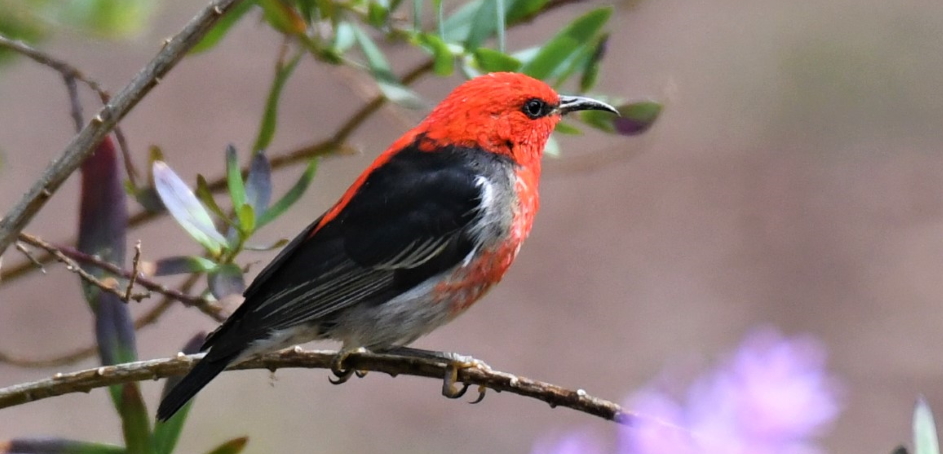
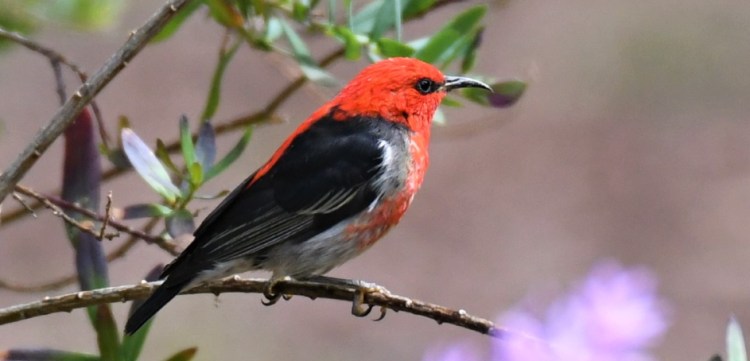
Mallacoota Area Bird Report: February 2020
by Martin Butterfield
The big ticket item is that an extraordinary 134 species were observed in the area in February 2020. This requires a little commentary!
I usually don’t name observers in these reports as a policy of privacy. However a major factor underlying this month’s report is the eBird lists submitted by Rohan Clarke for 4 – 6 February as a result of his mission with a primary purpose to save Eastern Bristlebirds in the Howe Flat area.
In addition to that species a number of other species which specialise in the heath habitat of the Flat including Ground Parrot and Southern Emuwren were recorded and some birds infrequently recorded in Mallacoota including Brush Bronzewing and Olive Whistler.
On the morning of 6 February Rohan birded in the area around town recording 88 species in ~4 hours. eBird list
I think that in total he added 42 species to the month list.
Read about why Rohan was here: ABC News Bristlebirds rescued by Chinook
…
64 species were common to Rohan’s lists and those of other observers. The others recorded an additional 28 species. These included smaller species (Red-capped Plovers, Red-necked Stints and Little Terns) visible from the ocean shore from Bastion Point and some less common species (including Ruddy Turnstone, White-bellied Cuckooshrike, Grey Goshawk and Emu – from Nauta Tce!) seen around town.
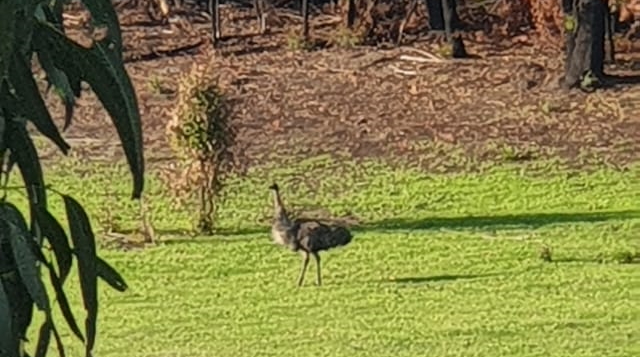
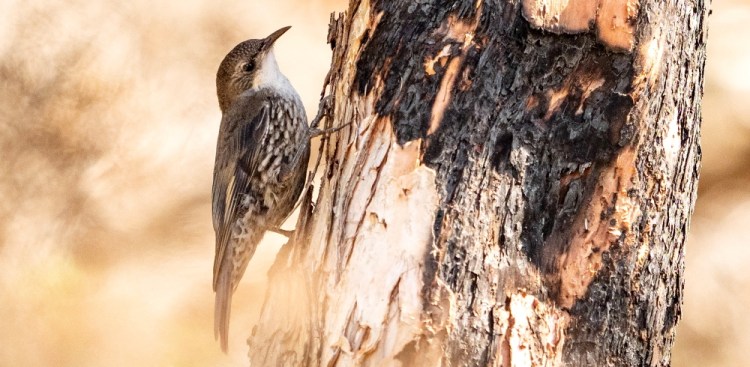
That is the good news. The less-good news is that the birds not tightly linked to water (ducks, waders etc) were largely restricted to the unburnt area in the centre of the town. The burnt areas of heath and woodland – where able to be assessed – were largely devoid of birds. Thus any analysis of the recovery of birds after the bush fires needs to look closely at a site x site analysis rather than the overall outcome.
By way of example I have driven the area around the airport 3 times this month recording a total of 5 species. As the area is well endowed with grasshoppers I would have expected a wide range of insectivorous species.
To try to get a handle on the types of birds found more, or less, frequently I have used my set of 14 broad categories again. 5 categories seem worthy of comment.
It is important to remember that a % distribution is a zero-sum game: if some elements are below normal others must be above.
Looking at the chart above that is a partial explanation for the good result for waders and ducks. As the Inlet and the ponds at the Mallacoota Recycled Water Treatment Plant were not greatly affected by the fires seeing all the usual suspects at those locations made those categories look better than the other categories which were depressed.
The good result for flycatchers may be a reflection of the fire forcing the birds into town and thus them being more easily observed. That being said there are some less common species in the list (Olive Whistler, Black-faced Monarch, and Satin Flycatcher).
Of the two categories with particularly poor outcomes it appears that the result for Kingfishers etc is influenced by the almost complete absence of the Cuckoo family. In past Februaries 6 species have been recorded: this year, none.
Seabirds are a small category in February, but only 1 (Australasian Gannet) of the 6 possible species was reported. Unlike January this year no flocks of shearwaters were noted inshore.
List of birds seen around Mallacoota post fire February 2020:
| Species | Australian conservation status |
| Emu | |
| Pink-eared Duck | |
| Black Swan | |
| Australian Shelduck | |
| Hardhead | |
| Australasian Shoveler | |
| Pacific Black Duck | |
| Grey Teal | |
| Chestnut Teal | |
| Australian Wood Duck | |
| Hoary-headed Grebe | |
| White-headed Pigeon | |
| Spotted Dove | Introduced |
| Wonga Pigeon | |
| Brush Bronzewing
Common Bronzewing |
|
| Crested Pigeon | |
| Topknot Pigeon | |
| Australian Owlet-nightjar | |
| White-throated Needletail
Eurasian Coot |
|
| Australian Pied Oystercatcher | |
| Sooty Oystercatcher | |
| Grey Plover | Near threatened |
| Pacific Golden-Plover | |
| Red-capped Plover | |
| Double-banded Plover | |
| Hooded Plover | Vulnerable |
| Masked Lapwing | |
| Eastern Curlew | Critically Endangered |
| Bar-tailed Godwit | |
| Ruddy Turnstone | Near threatened |
| Red Knot | Endangered |
| Sharp-tailed Sandpiper | |
| Red-necked Stint | Near threatened |
| Silver Gull | |
| Little Tern | |
| Caspian Tern | |
| Common Tern | |
| Crested Tern | |
| Crested Tern | |
| Australian Pelican | |
| Nankeen Night-Heron | |
| Great Egret | |
| White-faced Heron | |
| Little Egret | |
| Australian White Ibis | |
| Royal Spoonbill | |
| Australasian Gannet | |
| Little Pied Cormorant | |
| Great Cormorant | |
| Little Black Cormorant | |
| Australasian Darter | |
| Wedge-tailed Eagle | |
| Spotted Harrier | |
| Grey Goshawk | |
| White-bellied Sea-Eagle | |
| Whistling Kite | |
| Sooty Owl | |
| Southern Boobook | |
| Azure Kingfisher | |
| Laughing Kookaburra | |
| Nankeen Kestrel | |
| Australian Hobby | |
| Peregrine Falcon | |
| Yellow-tailed Black-Cockatoo | |
| Gang-gang Cockatoo | |
| Galah | |
| Australian King-Parrot | |
| Crimson Rosella | |
| Ground Parrot | |
| Musk Lorikeet | |
| Little Lorikeet | |
| Rainbow Lorikeet | |
| Superb Lyrebird | |
| Satin Bowerbird | |
| White-throated Treecreeper | |
| Superb Fairywren | |
| Southern Emuwren | |
| Eastern Bristlebird | Endangered |
| Scarlet Honeyeater.
Crescent Honeyeater |
|
| New Holland Honeyeater
White-eared Honeyeater |
|
| White-naped Honeyeater | |
| Eastern Spinebill | |
| White-fronted Chat | |
| Lewin’s Honeyeater | |
| Little Wattlebird | |
| Red Wattlebird | |
| Yellow-faced Honeyeater | |
| Bell Miner | |
| Spotted Pardalote | |
| Striated Pardalote | |
| Brown Gerygone | |
| White-browed Scrubwren | |
| Striated Thornbill | |
| Brown Thornbill | |
| Black-faced Cuckooshrike | |
| White-bellied Cuckooshrike | |
| Rufous Whistler | |
| Golden Whistler | |
| Grey Shrikethrush | |
| Eastern Whipbird | |
| Australasian Figbird | |
| Pied Currawong | |
| Australian Magpie | |
| Grey Butcherbird | |
| Dusky Woodswallow | |
| Willie Wagtail | |
| Rufous Fantail | |
| Grey Fantail | |
| Little Raven | |
| Australian Raven | |
| Satin Flycatcher | |
| Magpie-lark | |
| Black-faced Monarch | |
| Rose Robin | |
| Jacky Winter | |
| Eastern Yellow Robin | |
| Mistletoebird | |
| Beautiful Firetail | |
| Red-browed Finch | |
| House Sparrow | Introduced |
| Australasian Pipit
Little Grassbird |
|
| Fairy Martin | |
| Tree Martin | |
| Welcome Swallow | |
| Silvereye | |
| Common Starling | Introduced |
| Bassian Thrush | |
| Common Blackbird | Introduced |
 Mallacoota Birds