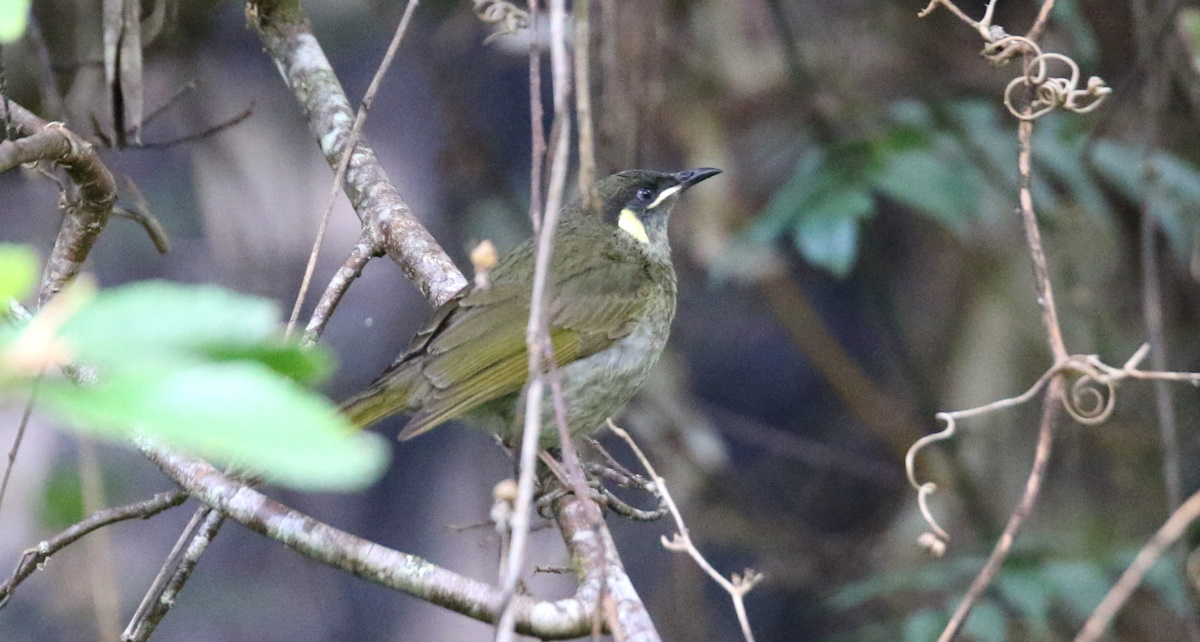
Mallacoota Bird of the Week: Lewin’s Honeyeater 11 September 2020
The call of this bird is one of the sounds of East Gippsland. So often the machine gun rattle is the backdrop for any walk in the rainforest or wet forests.
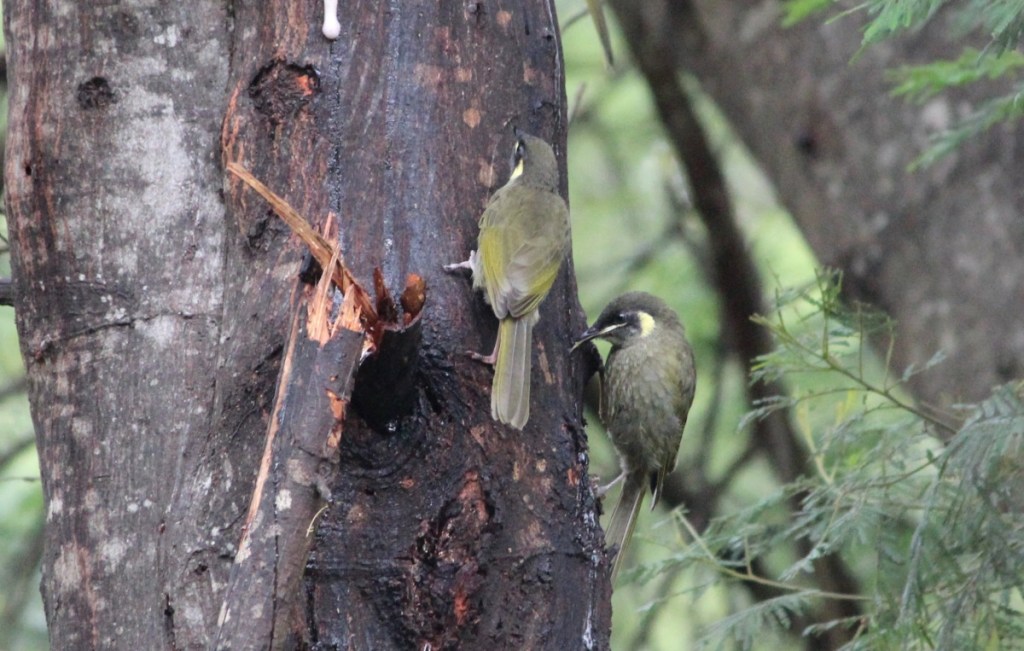
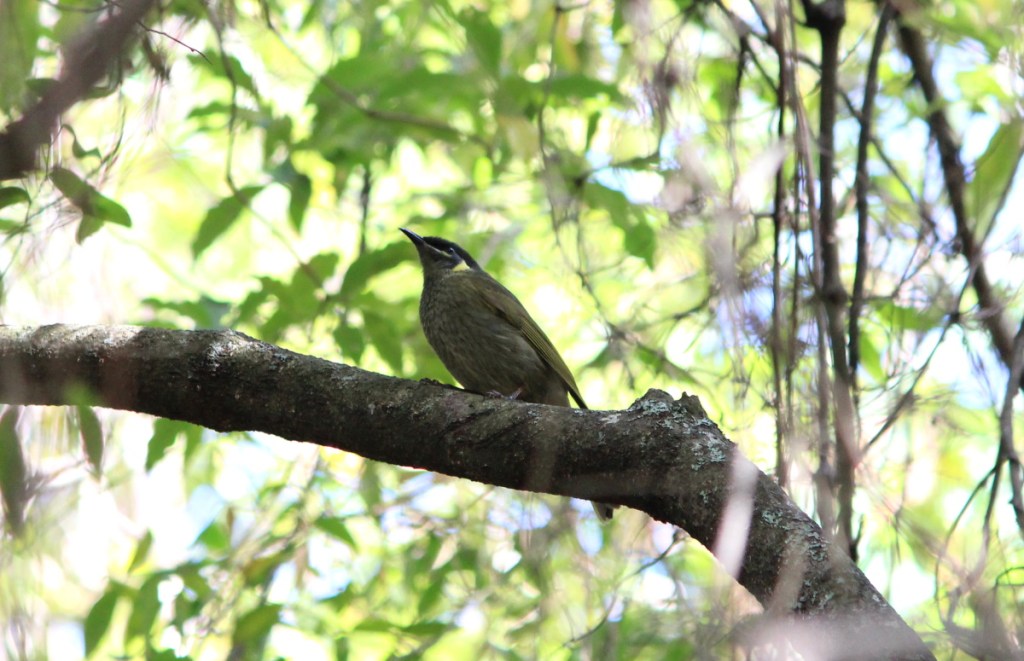
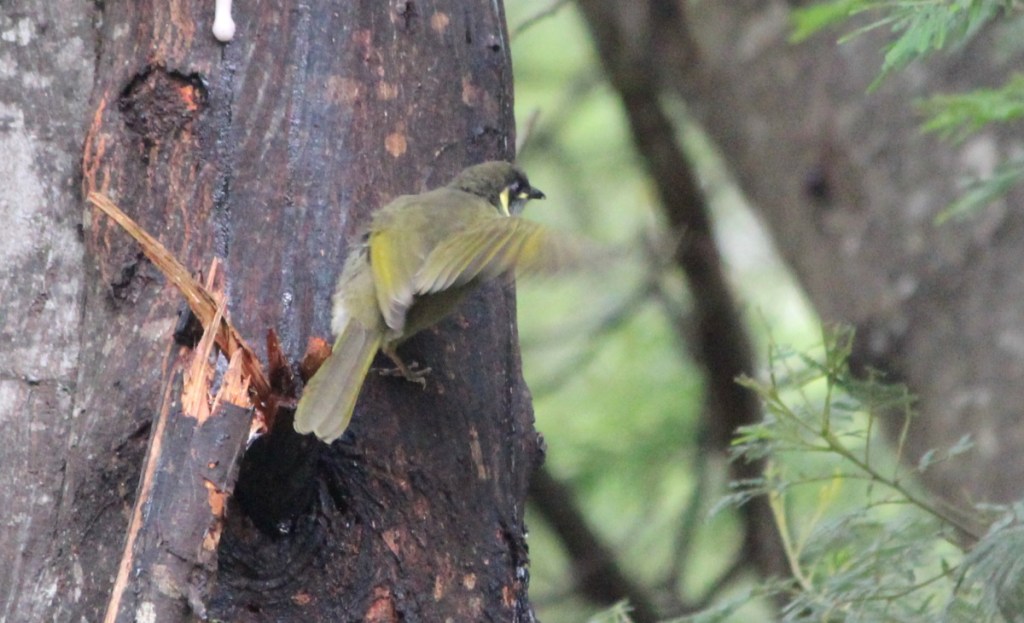
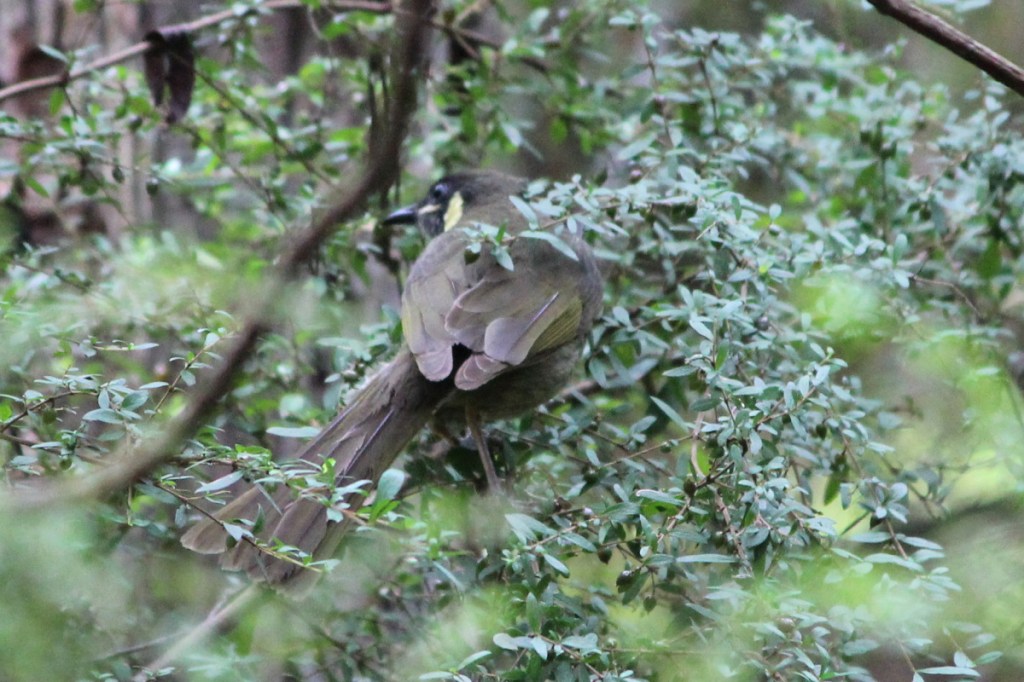
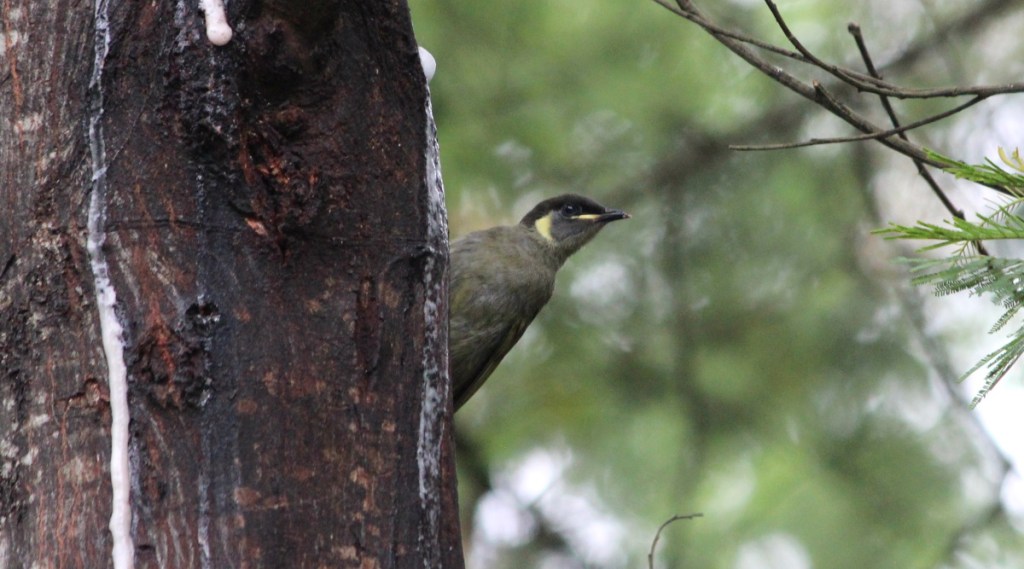
They are more often heard than seen, though, as their dark olive green, grey and yellow plumage blends into the shadows in the damp forests they love. They eat fruits, insects and nectar, and I have seen them licking sap from a wattle. We’d love to hear from you what you’ve seen them eating.
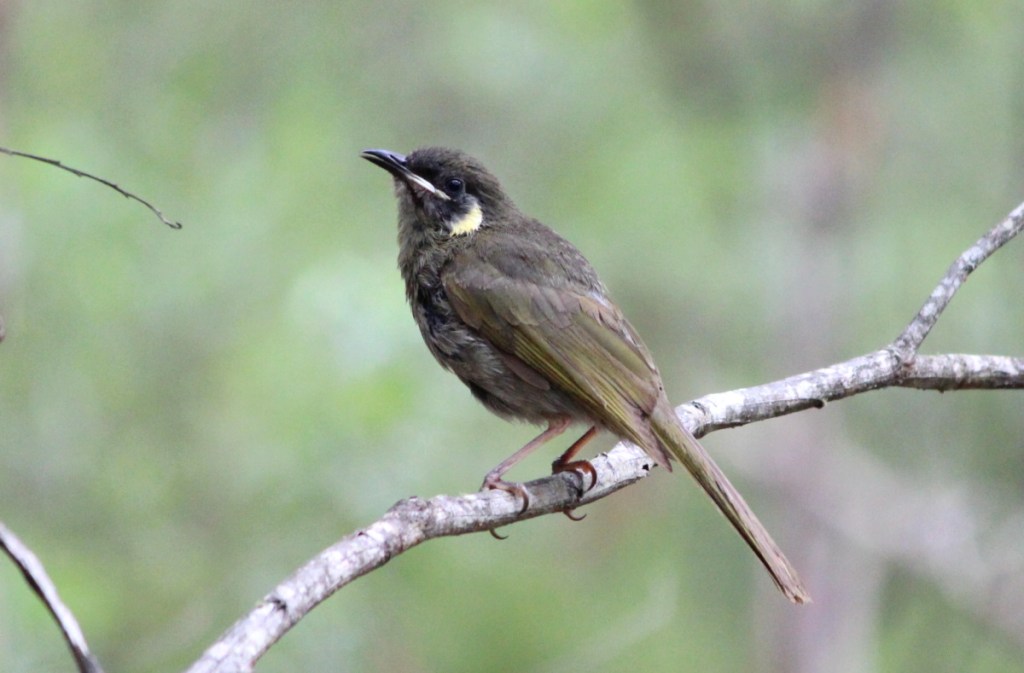
They live in the Mallacoota area year-round. It is possible that they go higher up the hills in summer, and descend closer to the coast in winter – so you are possibly a bit more likely to see them in Mallacoota in winter. They also like gardens, so some of you lucky people might see them in your backyard.
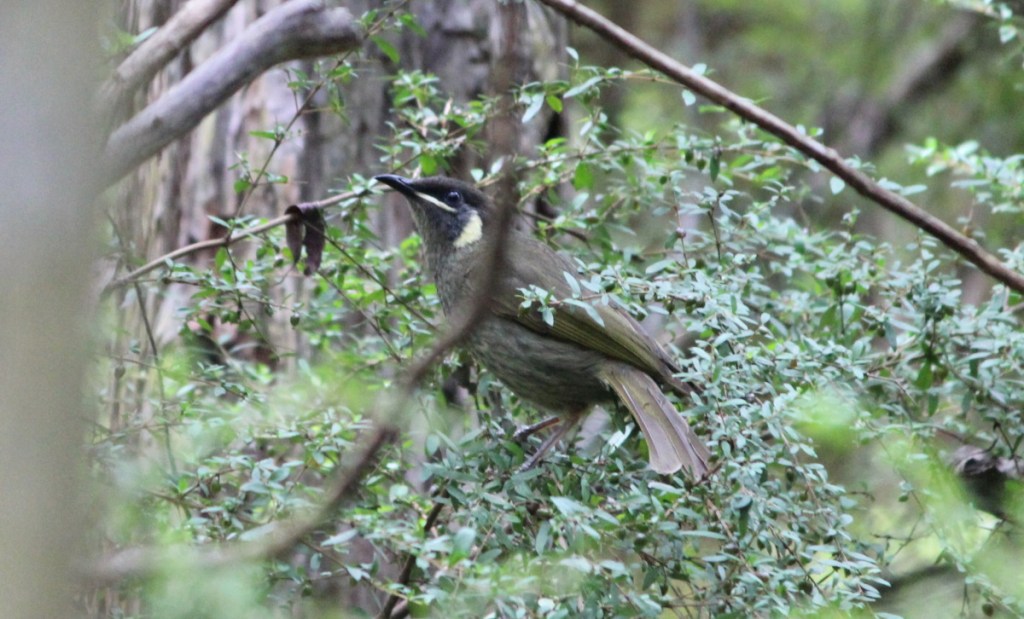
Adult females and males look the same, and have blue eyes. Juveniles have brown eyes, their forehead and face are blackish. All of them, adults included have a fleshy pale gape.
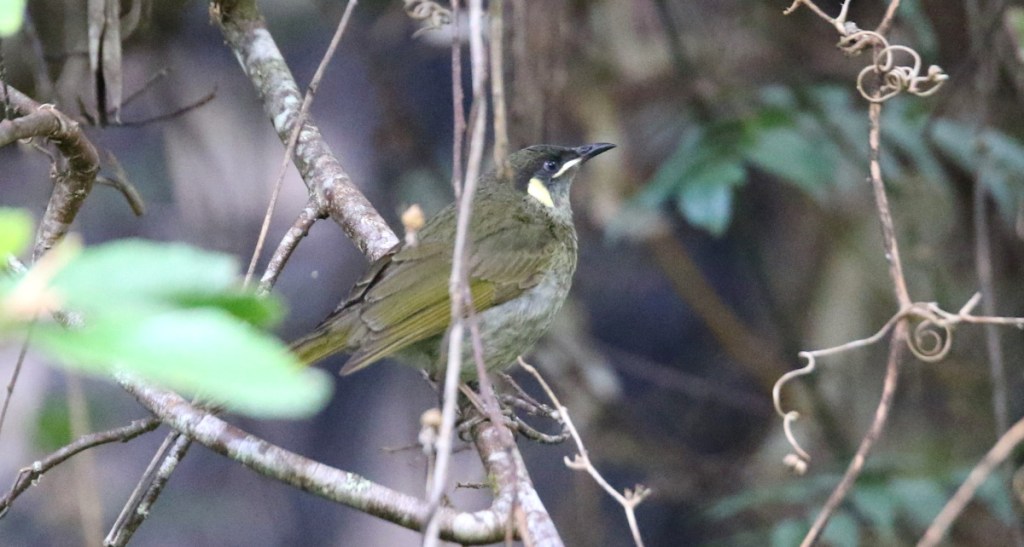
There is really no other bird that looks just like them in Mallacoota. The dark olive colour and yellow crescent on the cheek are super distinctive. Eastern Whipbird has that same dark olive colouring when seen in good light, but they look much darker (adults have a black head & bright white cheek), and even juveniles have a little crest. They are most often near the ground too.
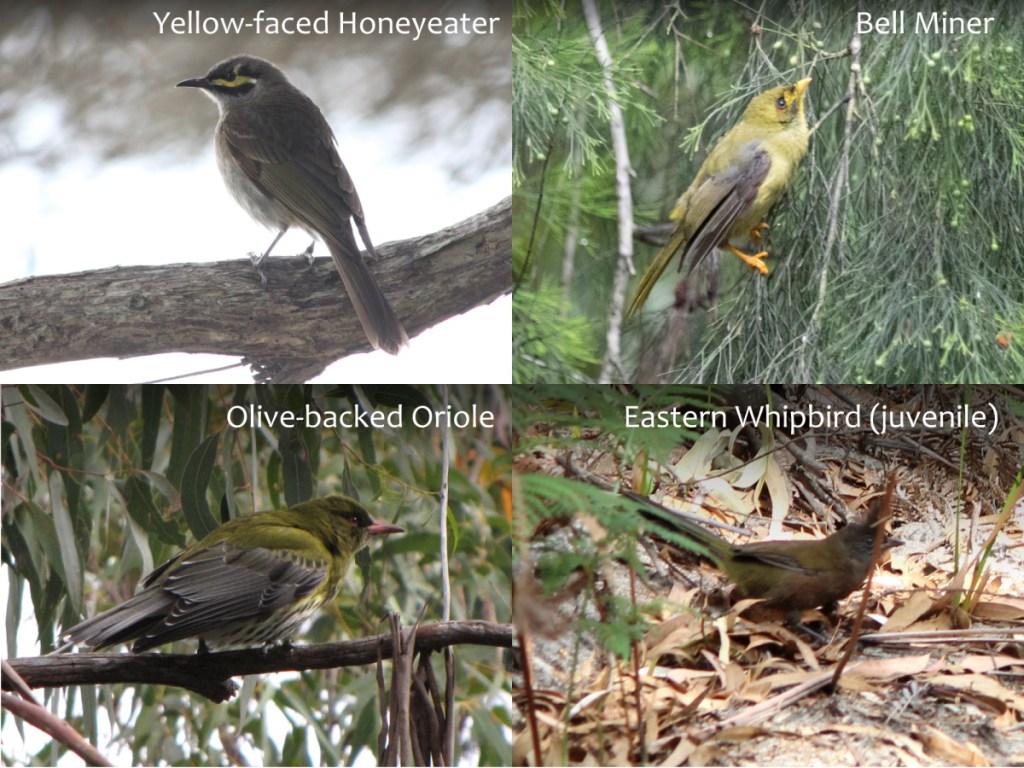
Yellow-faced Honeyeater is lighter overall, and the yellow goes from their bill, below the eye and past the cheek. Bell Miners live in similar forests, but have a stubby orange beak and orange legs. Olive-backed Oriole juvenile is bigger, lighter and has a white belly with black streaks. No other bird has that yellow crescent on the cheek.
Listen to the calls:
Normal call: https://www.xeno-canto.org/244287
High pitched call: https://www.xeno-canto.org/218063
Scolding call: https://www.xeno-canto.org/146117
See some great pics on this site:
https://www.graemechapman.com.au/library/viewphotos.php?c=258&pg=1
Scroll through tonnes of images here: eBird
Learn about them from BirdLife Australia: http://www.birdlife.org.au/bird-profile/lewins-honeyeater
..
Details:
Lewin’s Honeyeater Meliphaga lewinii lewinii
Location: Overall, the species ranges from east of Melbourne to near the tip of Cape York QLD, on the coast side of the Great Divide. Our subspecies lewinii extends to southern Qld.
Conservation status: Considered secure in Victoria.
 Mallacoota Birds