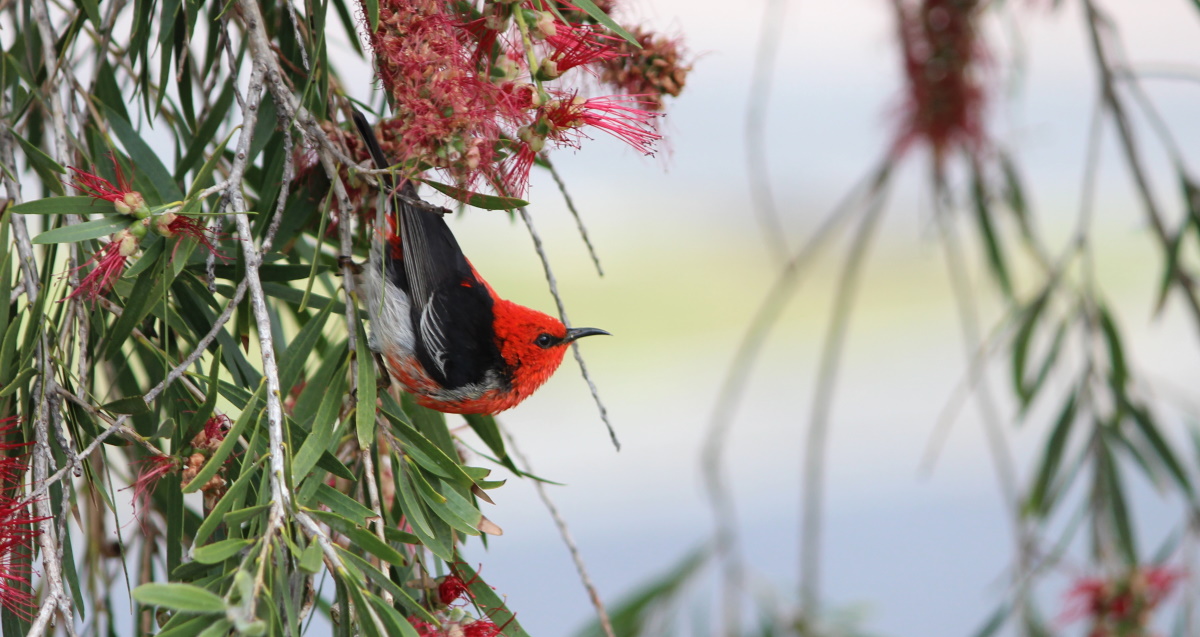
Bird of the Week: Scarlet Honeyeater 9 October 2020
These adorable birds are really tiny – they are half the size of a Yellow-faced Honeyeater.
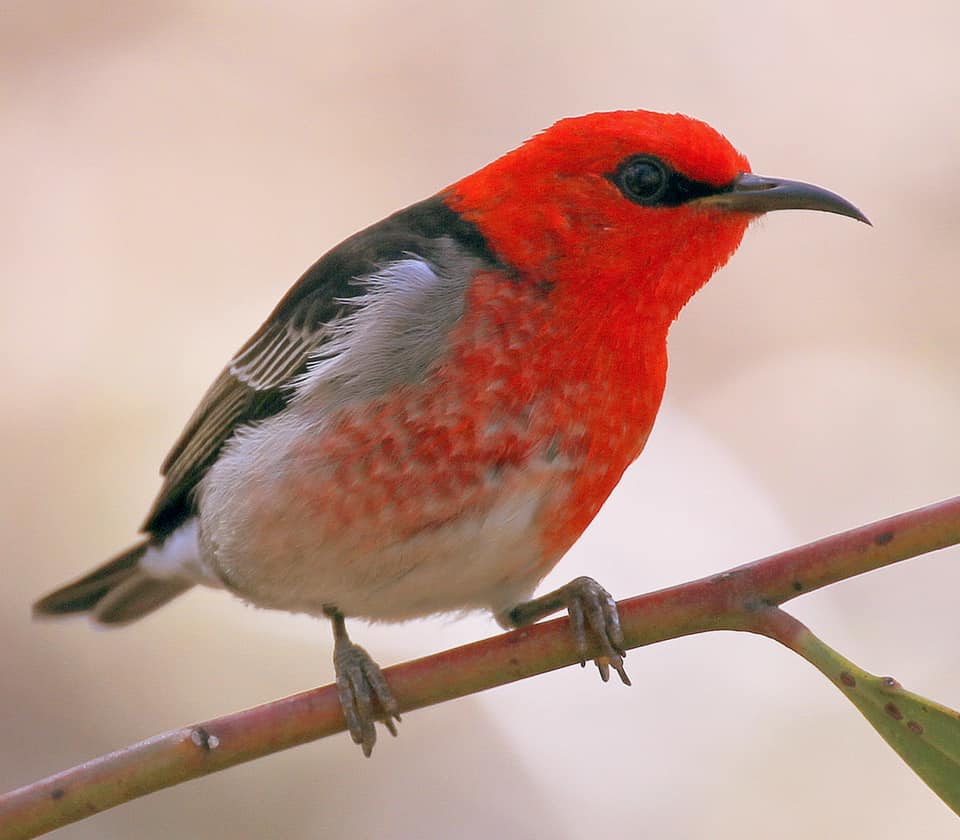
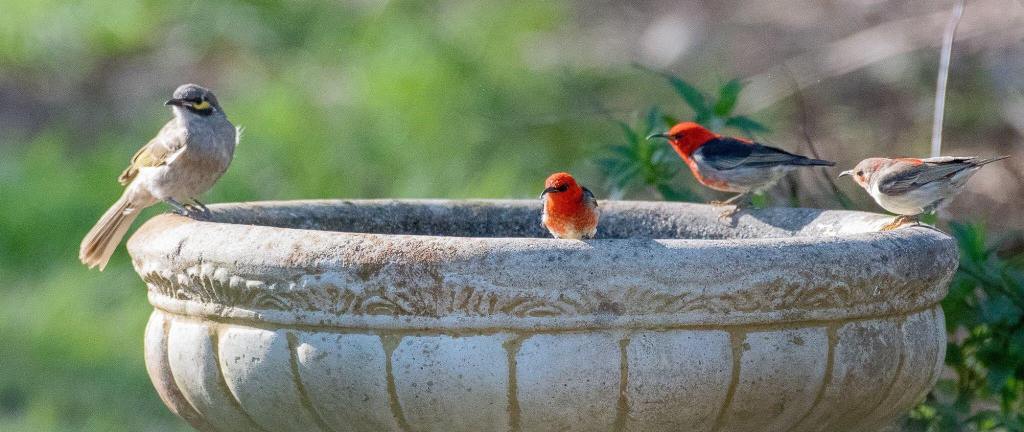
Some sites call them Scarlet Myzomela.
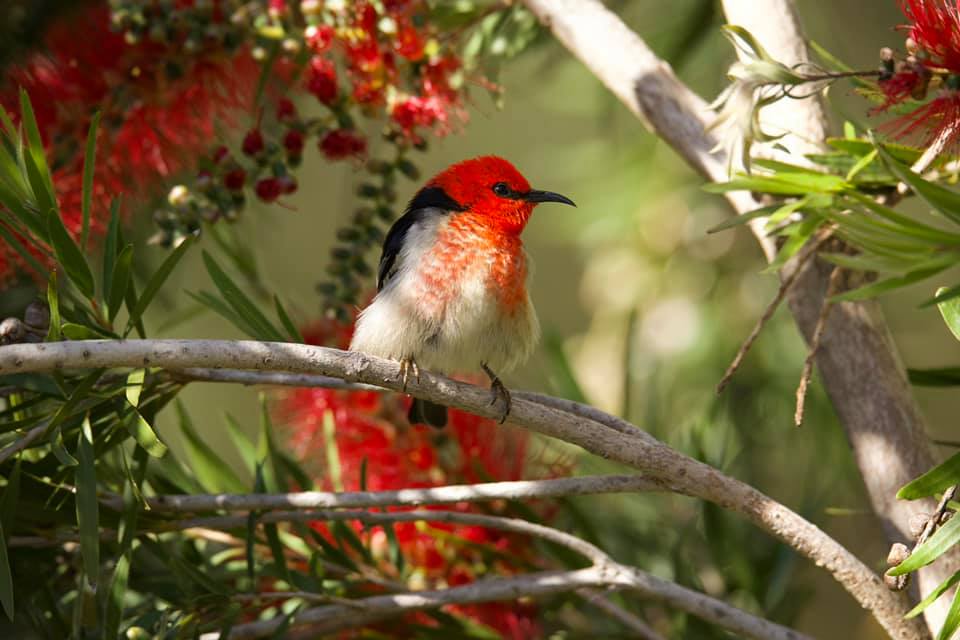
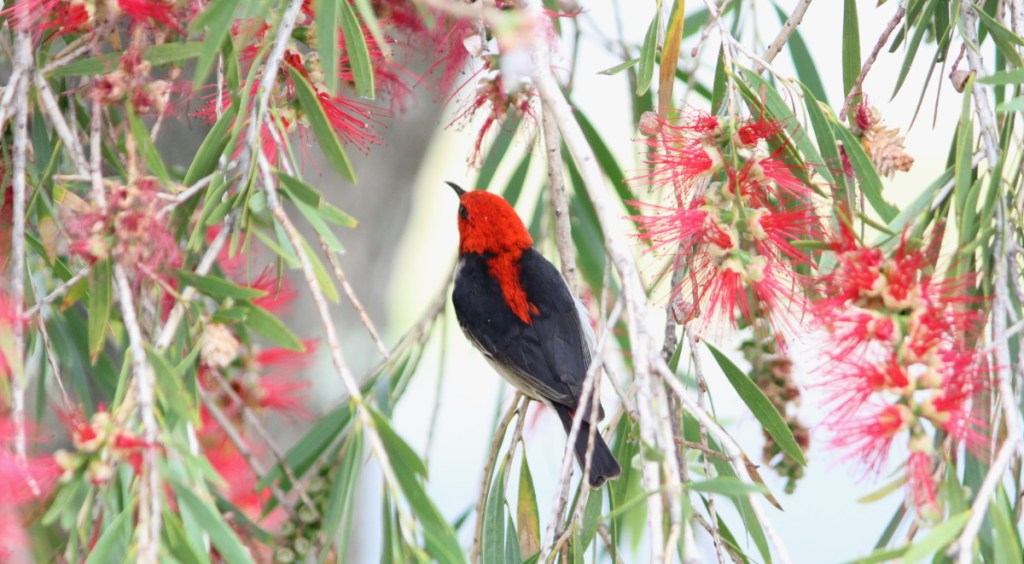
Adult males have red on the head, back, rump and some on the breast – though the extent of that seems to vary. I’d be interested to hear if anyone knows if that’s an age thing, or just individual variation. The pic below shows a male with a mostly white breast. He is still quite young, with a touch of yellow on the gape and patchy pale juvenile feathers around his head.
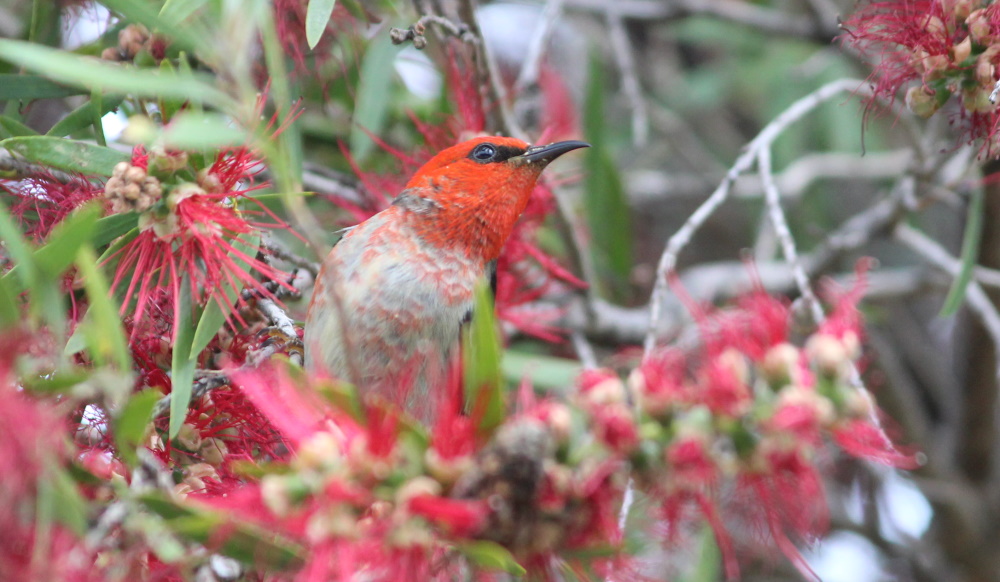
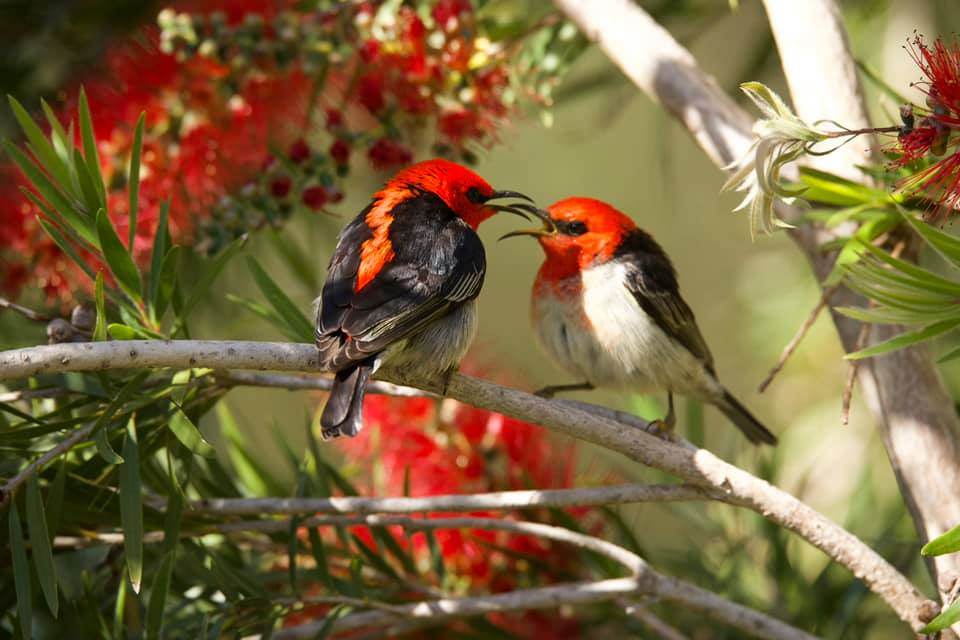
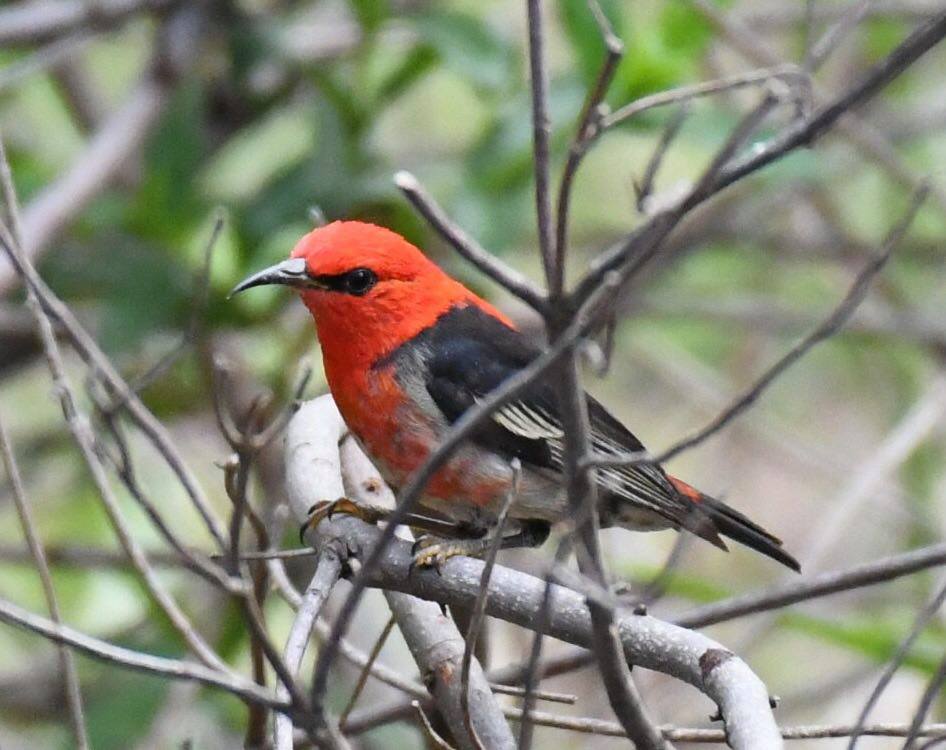
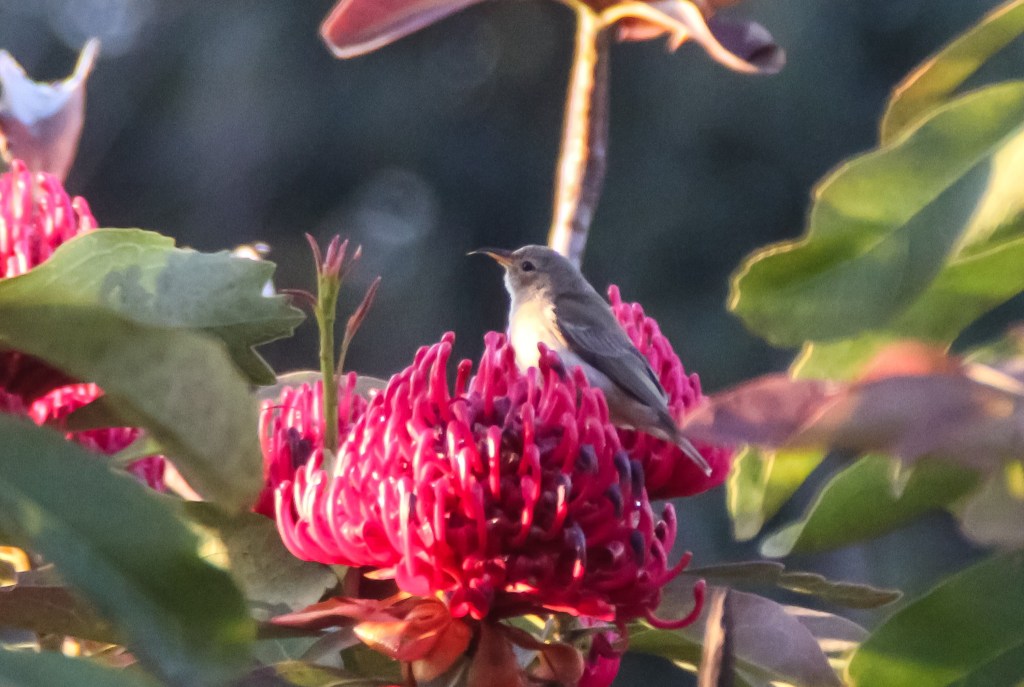
Adult females have an orange blush to the face, particularly under the eye and on the chin. It can be very faint, almost non-existent. But they don’t have red feathers scattered elsewhere.
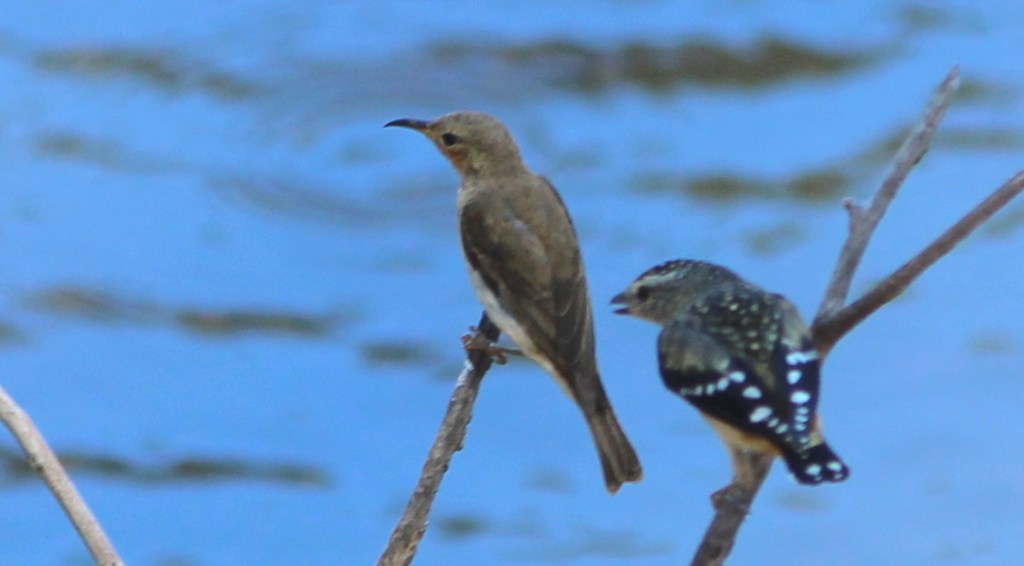
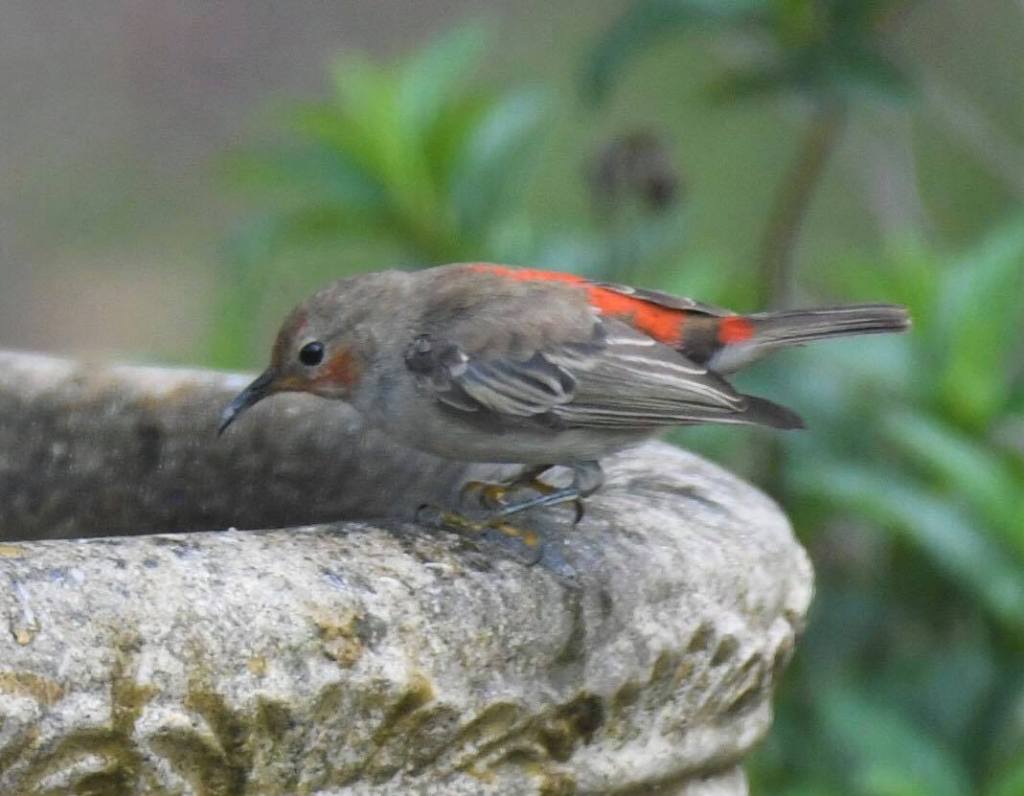
Young males can have patchy red on the face, back, breast & rump. If you see a Scarlet Honeyeater with bright red feathers anywhere, it’s probably a male.
In the 1990’s, far East Gippsland was really the only place in Victoria you could see them, and only in summer. See this eBird map 1990-1999. Now they start arriving in August and by now, October, they are already being seen in Pakenham. Compare the eBird map of this decade.
They really seem to love the Crimson Bottlebrushes that are planted throughout the streets of Mallacoota.
Here’s some stories about them:
Karen Weil: When I built my home in Gembrook, near Melbourne, I planted my pride, the Waratah Bush, which I could sit at my front window and watch the birds feed. One day in October 2016, there was so much activity, so many honeyeaters, I just kept taking photos. When I looked back, there was one I could not identify. I put this picture on social media and started a twitching frenzy because this little bird didn’t come to Gembrook…..this was a female Scarlet Honeyeater. The following year was the famous influx – Scarlet Honeyeaters everywhere!
Tim Dolby’s family have summer holidayed in Mallacoota for the last 20 years. He says: “After the long drive from Melbourne, we’d turn off the Princes Hwy onto the Genoa-Mallacoota Rd (the road into Mallacoota). Winding down the window, I’d listen out for the sounds of bird calls. Once I’d heard the sweet call of the Scarlet Honeyeater, I’d think ‘We’re here!’ The start of our holiday. Definitely my favourite Australian bird!”
I’ve also written a story about their lovely scarlet heads flitting amongst the Crimson Bottlebrush flowers: https://www.echidnawalkabout.com.au/scarlets-of-mallacoota/
They are one of three Myzomela species in Australia, the others are the similar Red-headed Honeyeater in the Top End, and the Dusky Honeyeater in coastal Qld & NT. All have dramatically curved, slender bills like spinebills but a bit shorter.
Myzomela is the largest genus of honeyeaters, with 33 species. They are present throughout Indonesia, New Guinea, Australia and some Pacific Islands as far east as Samoa. Every island seems to have its own species. Most are combinations of black, red and white like ours, but three are all black, another is all red, and several are ashy grey or brown.
Check out the gorgeous Ruby-throated Myzomela: https://ebird.org/species/retmyz1/ and Red-collared Myzomela of New Guinea: https://ebird.org/species/recmyz1/
How about the stunning Cardinal Myzomela of New Caledonia, Vanuatu & the Solomons: https://ebird.org/species/carmyz1/
They remind me of the sunbirds of Africa, which are also small & brightly coloured with curved bills, but they are not related – the similarities are just a result of convergent evolution.
LISTEN TO THE CALLS: https://www.xeno-canto.org/578218 and more here: https://www.xeno-canto.org/species/Myzomela-sanguinolenta
Scroll through to see lots of great pics here: https://ebird.org/species/scamyz1
Details: Scarlet Honeyeater Myzomela sanguinolenta
Location: Coastal east coast Australia from Qld to Victoria.
Conservation status: considered secure in their home states.
Thanks to Karen Weil, Tim Dolby, Mariska Ascher and Rob Clay for providing information and photographs for this post.
 Mallacoota Birds