Bird of the Week: Australian Pelican 16 October 2020
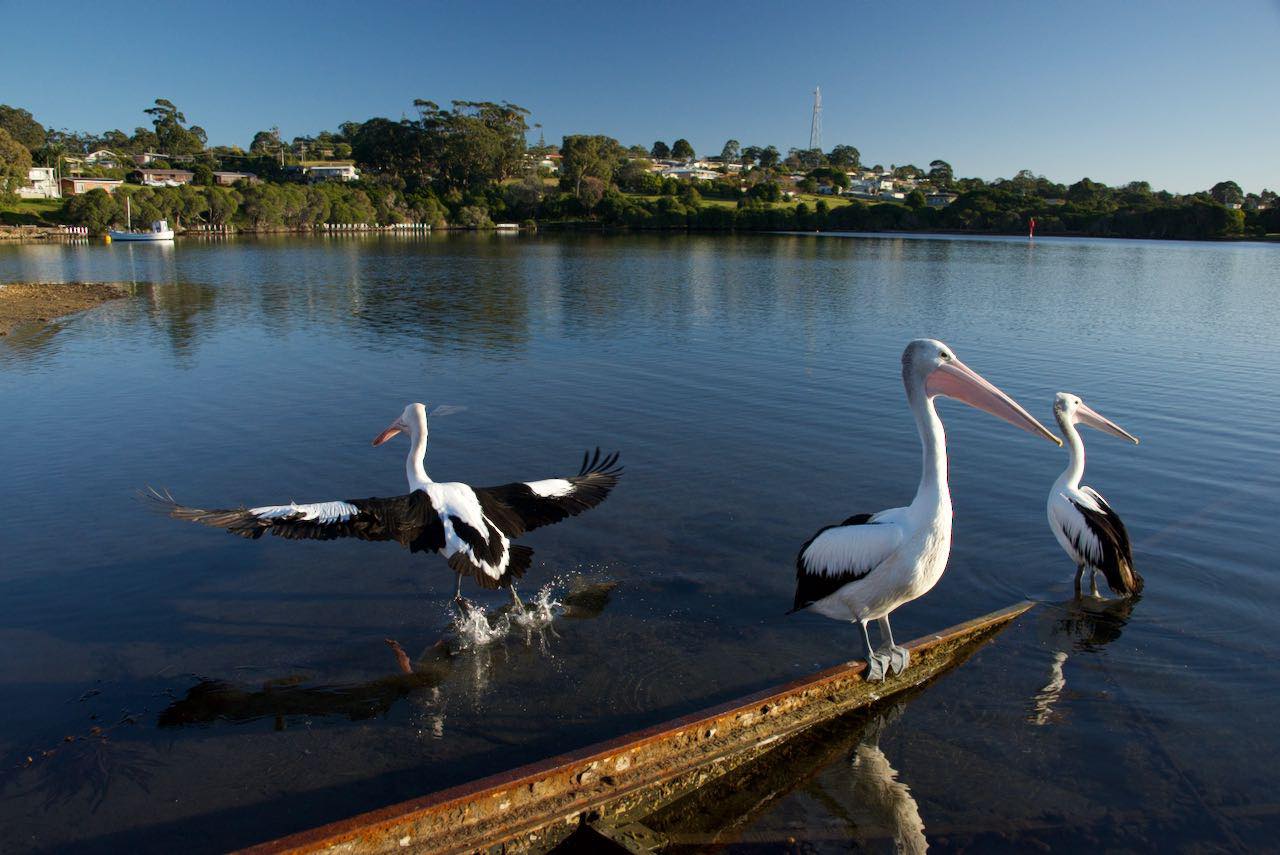
Everyone knows this bird! They are one of the most photogenic and noticeable birds in Mallacoota, seen everywhere on the Inlet and often hanging out on the jetties.
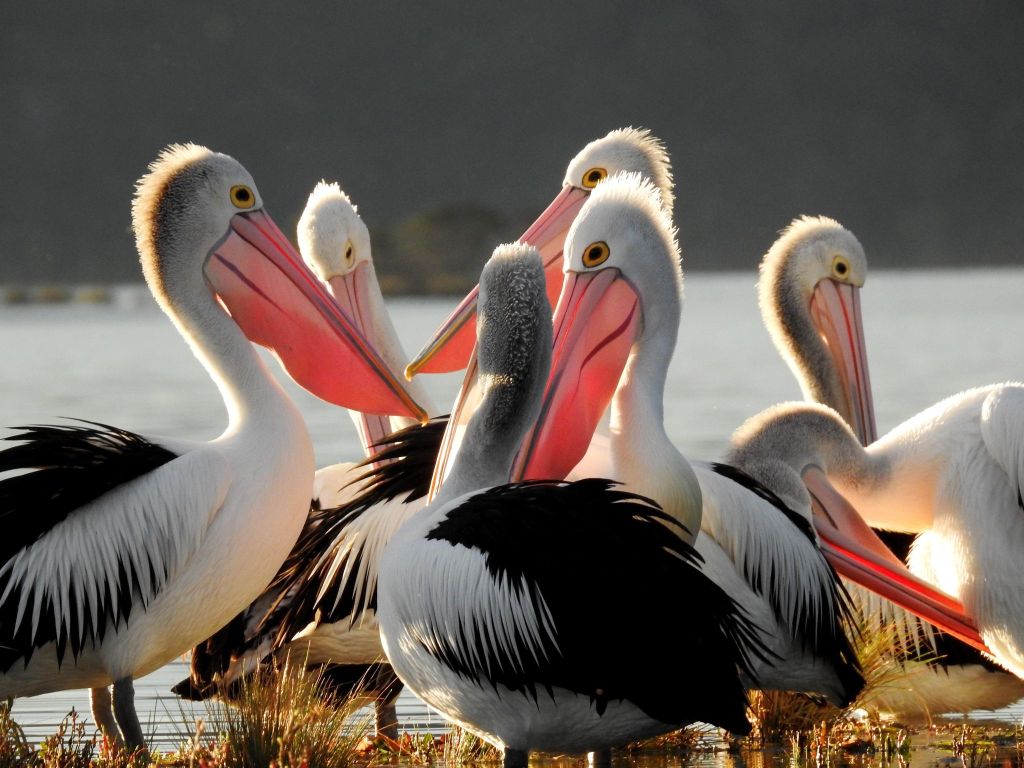
But how much do we really know about this magnificent bird? Where do they breed? How big are they compared to other pelicans? Do they change colour when they are breeding? Luckily we have several very knowledgable researchers in the Mallacoota Birds community: Martin O’Brien, Debbie Sullivan, Andrew Murray, Greg Johnston.
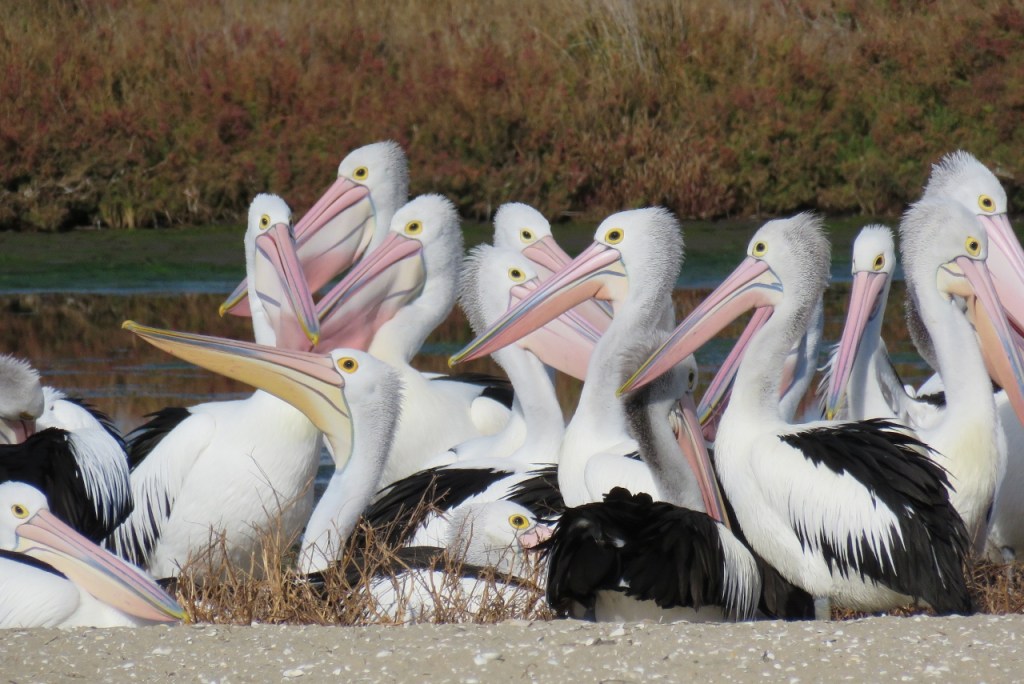
Has anyone seen a baby Pelican? No? Well, you’re not alone. Australian Pelicans don’t breed just anywhere. There are only ~ 10 sites in Victoria that have hosted a pelican breeding event, and 4 of those are/were in East Gippsland. The Gippsland Lakes still have pelicans breeding.
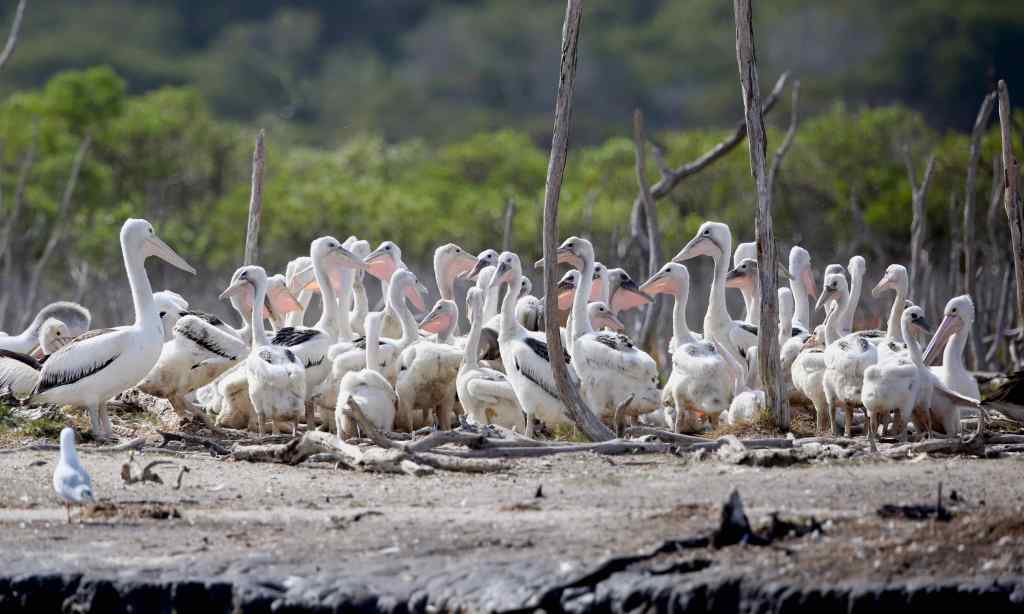
They used to breed at Mallacoota on the Goodwin Sands, but haven’t successfully raised chicks there since 1997*.
Disturbance by humans really upsets breeding pelicans. Something as simple as a couple of fishing boats approaching, a curious photographer, or a dog off leash could be enough to make pelicans quit that site, and abandon their chicks. Fluctuating water levels are also a factor.
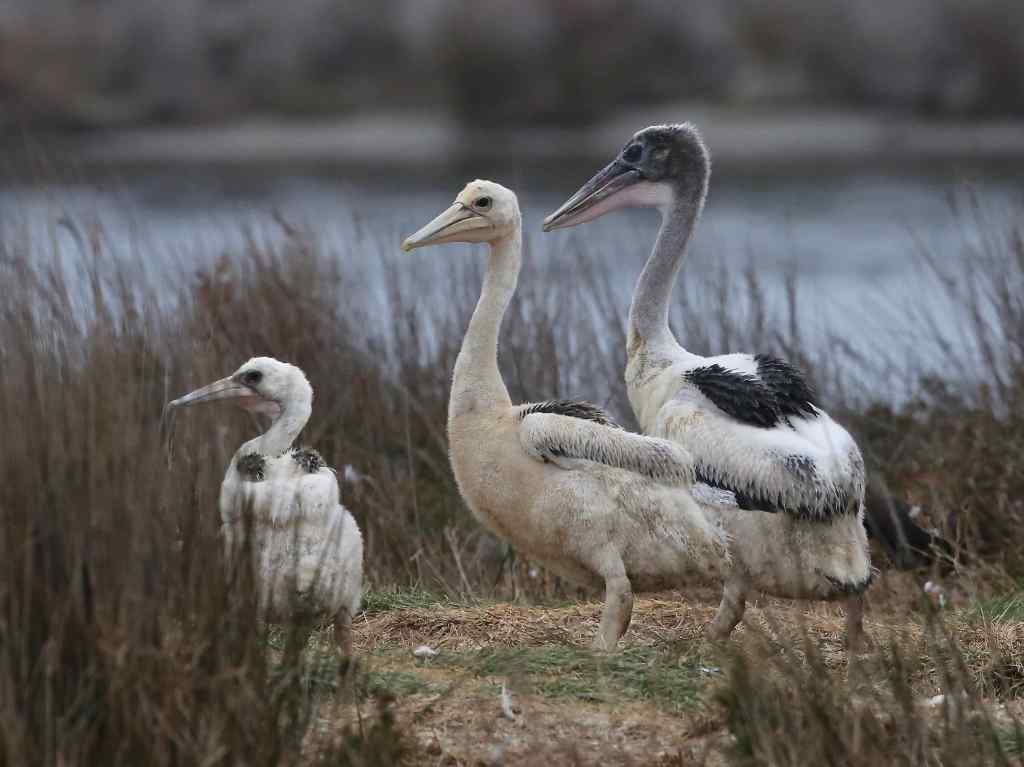
If you do see a sign of pelicans breeding at Mallacoota, please report it and stay well away.
You can read Martin O’Brien’s paper about Pelican breeding here: https://www.birdlife.org.au/afo/index.php/afo/article/view/461/446
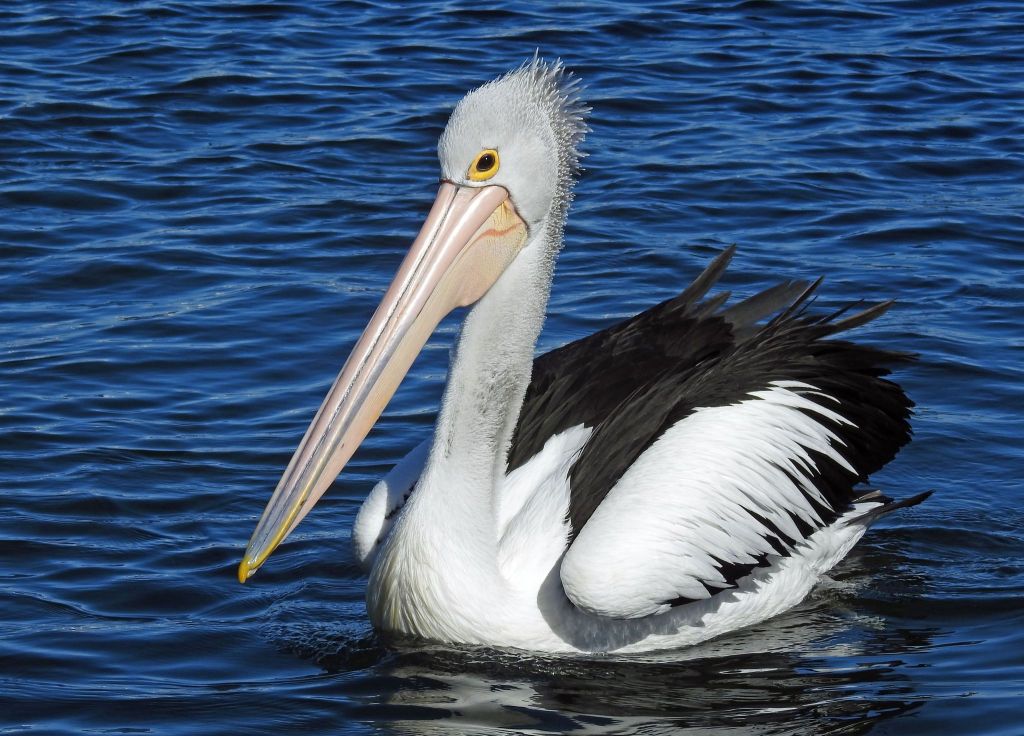
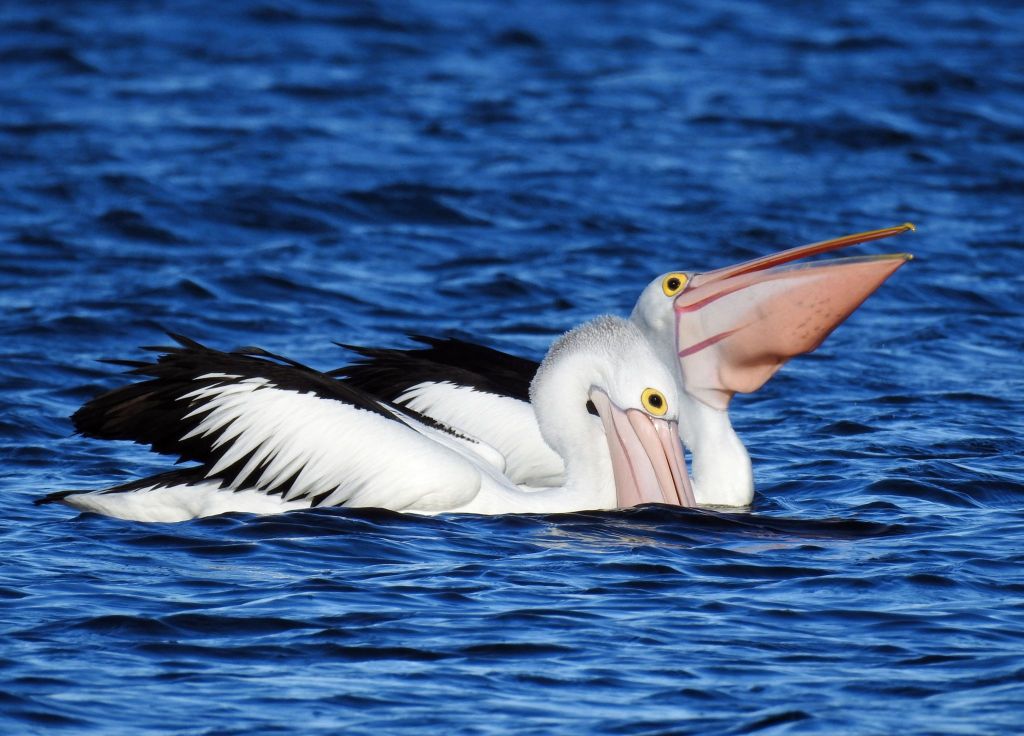
Like many birds, pelicans do change colour a bit when they are breeding, but this ‘breeding flush’ is brief and confined to the bill area. Watch out for it – mostly we see pelicans with a pale pink bill, but in breeding flush the bill goes rainbow: salmon pink, blue and yellow. You can see it in this pic by J Waithman.
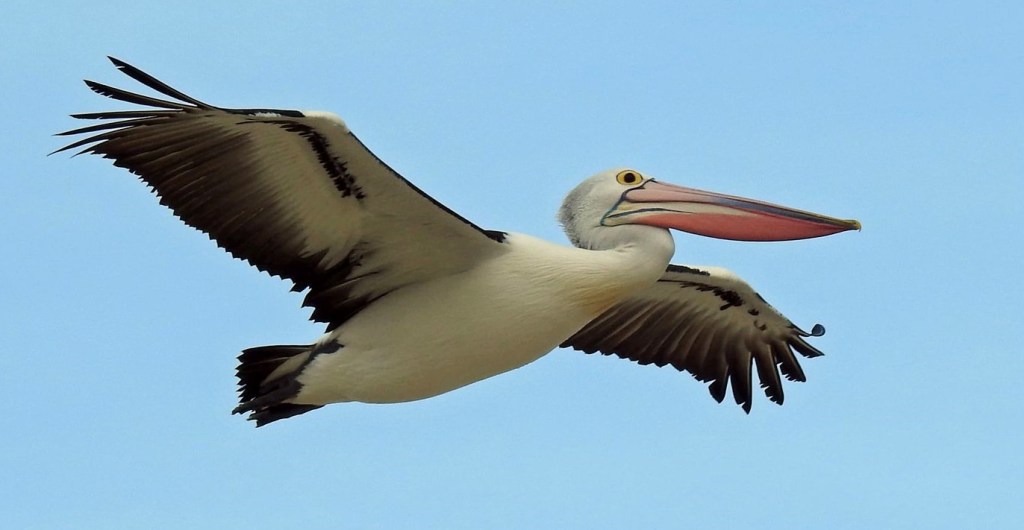
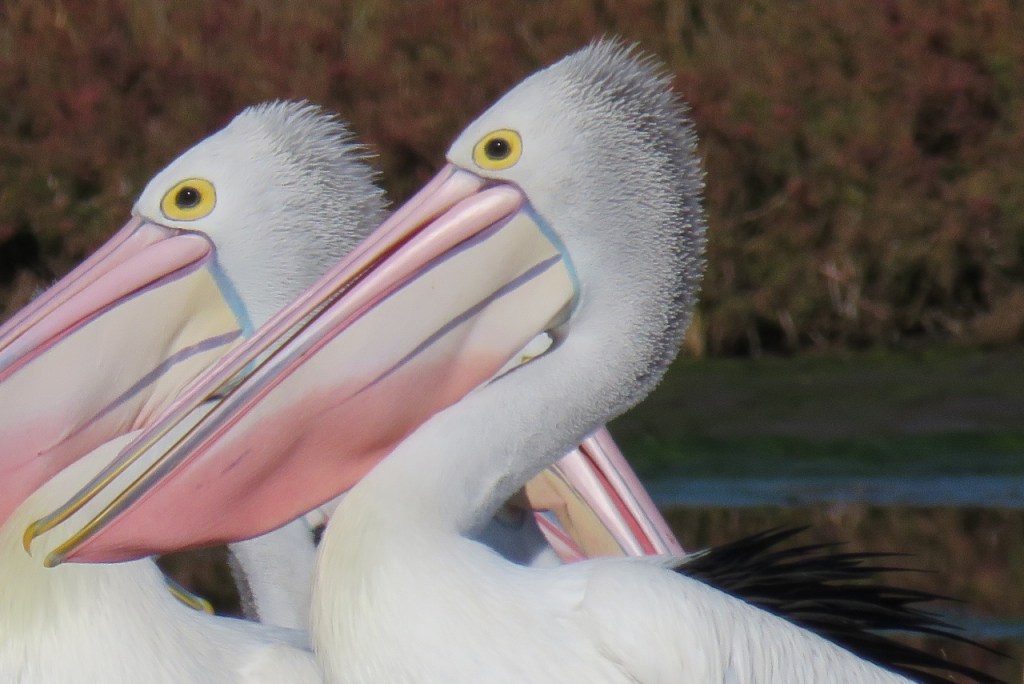
I’ve heard a myth that they are the largest pelican in the world, but it’s not true. They are big, yes, but the Dalmatian Pelican and the Great White Pelican are bigger. (wingspan of both species can be up to 3.5m, and weight up to 15kg – by comparison our Aussie Pelican has a wingspan up to 2.6m and weight up to 13kg)
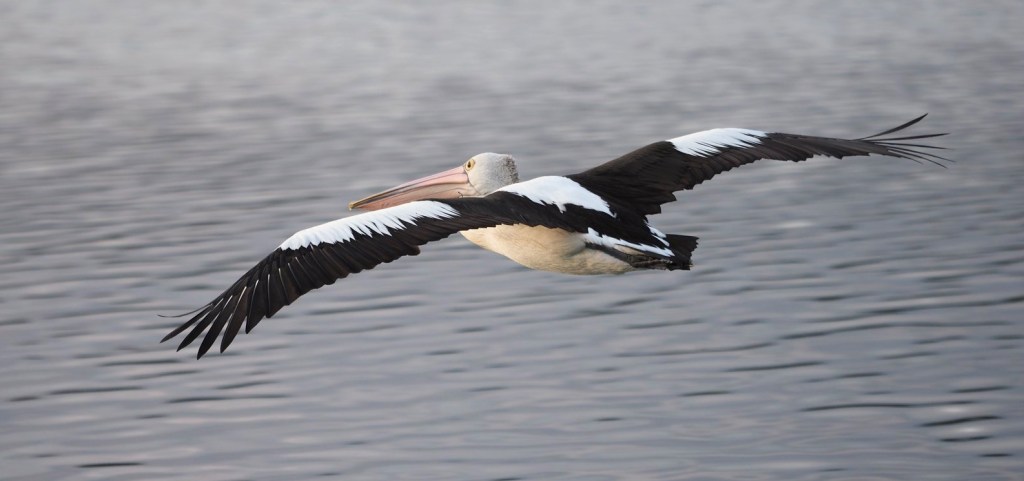
However the Australian Pelican does have the longest bill of any bird.
There are 8 species of pelican around the world. They have a patchy distribution on all continents except Antarctica. Our Aussie Pelican ranges over the New Guinea, the Solomon Islands and eastern part of Indonesia (including Timor L’este, Bali). I might be biased, but our pelican is by far the most handsome of them all.
Scroll through to see lots of great pics here: https://ebird.org/species/auspel1/
Details: Australian Pelican Pelecanus conspicillatus
Location: Most of Australia, but not seen much in inland WA, NT & SA, or in heavily forested land of TAS & VIC/NSW alps.
Learn more: https://birdlife.org.au/bird-profile/australian-pelican
From Debbie Sullivan, Pelican researcher at BirdLife Australia:
“Thank you for your great post. We are indeed fortunate that we still have a breeding rookery in East Gippsland. I’m very fortunate to be working with these great characters. My project population and movement dynamics, as well as health includes a colour banding component. There has been so many highlights to date (out of 3 years) but most impressively is a 6 month old we banded (at 3mths) in East Gippsland was reported and photographed near the QLD border!!
So…If anyone see’s a Pelican with a red and white color band – I would love to hear about it! Please record the number on the band, time, date and where you saw it. How many other birds it was with. A photo would be a great addition to the information if possible.
Information can be sent to me via greatpelicancount@birdlife.org.au or via the project facebook page Love our Pelicans or via Greg Johnston
Stay safe in these crazy times and happy birding. Look forward to meeting many of you in near future.”
..
Thankyou to Martin & Mariska Ascher, Caroline Jones, Jennifer & Cameron Waithman, John Hutchinson, Michael Barnett and Gary & Judy Smith for the use of your beautiful photos.
 Mallacoota Birds