Bird of the Week: Yellow-tailed Black-Cockatoo 6 November 2020
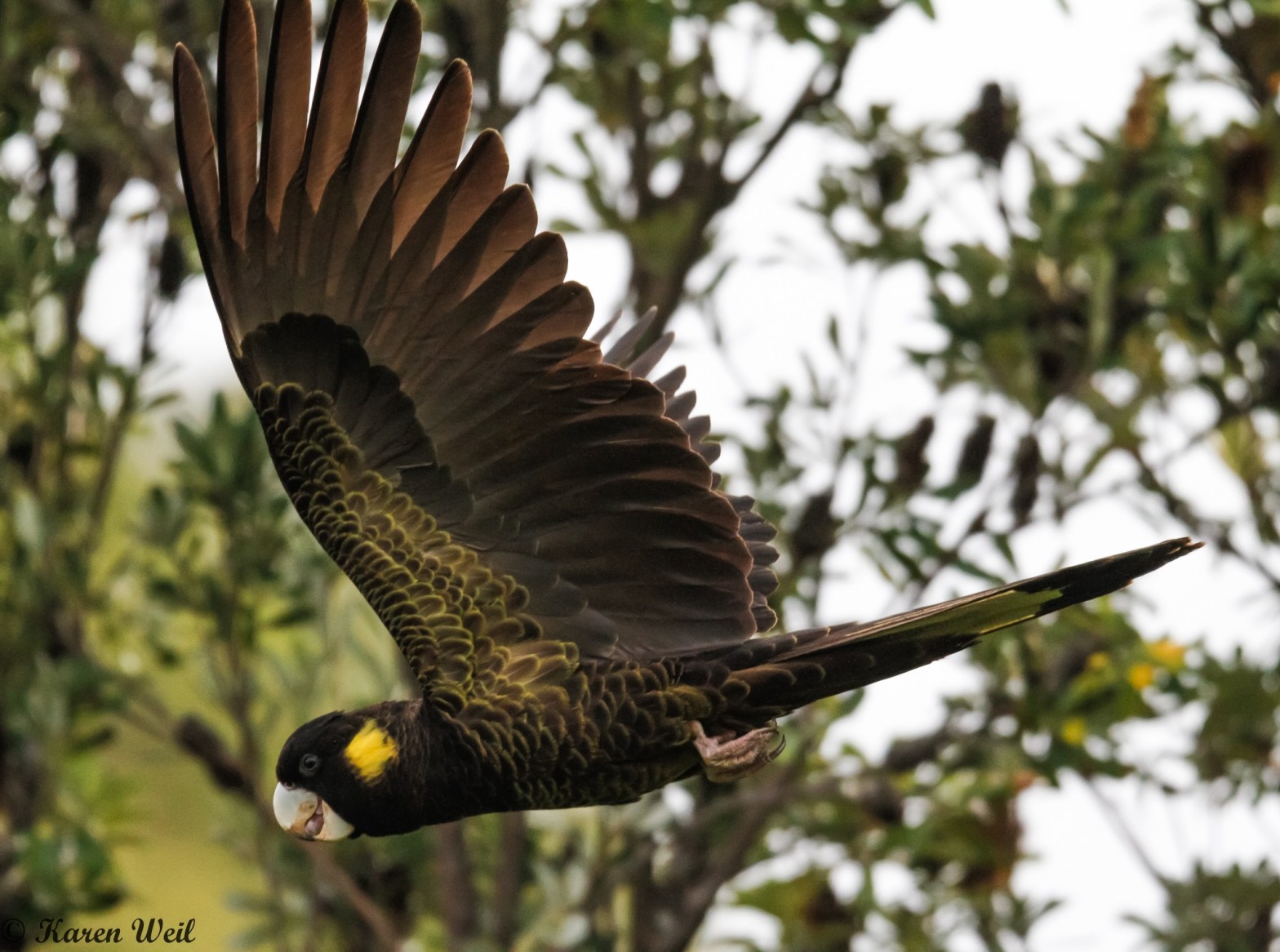
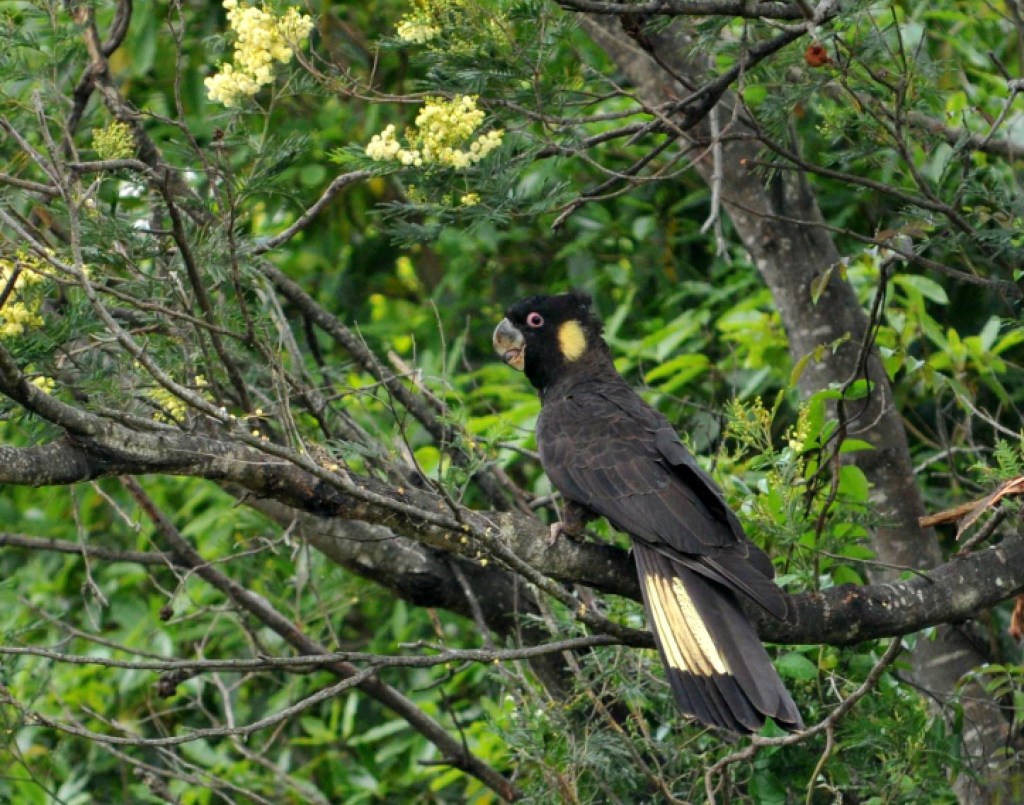
These large, spectacular cockatoos have something of the X factor about them. I find them captivating. Their plumage is like the magnificent giant Blackwoods (Acacia melanoxylon) of East Gippsland’s wet gullies: darkness and shadows with startling splashes of lemon and gold. This picture of Michael Barnett’s (though this is a Black Wattle A. mearnsii) sums them up for me:
I find their call thrilling. Overseas visitors have likened it to a pterodactyl – which is not so far off the mark. When you hear those spine-tingling squeals travelling through the ancient tree fern (Dicksonia) and Mountain Plum-pine (Podocarpus lawrencei) forests of Errinundra Plateau, knowing that dinosaurs also travelled past those trees, its not hard to think of a pterodactyl with yellow-edged black feathers.
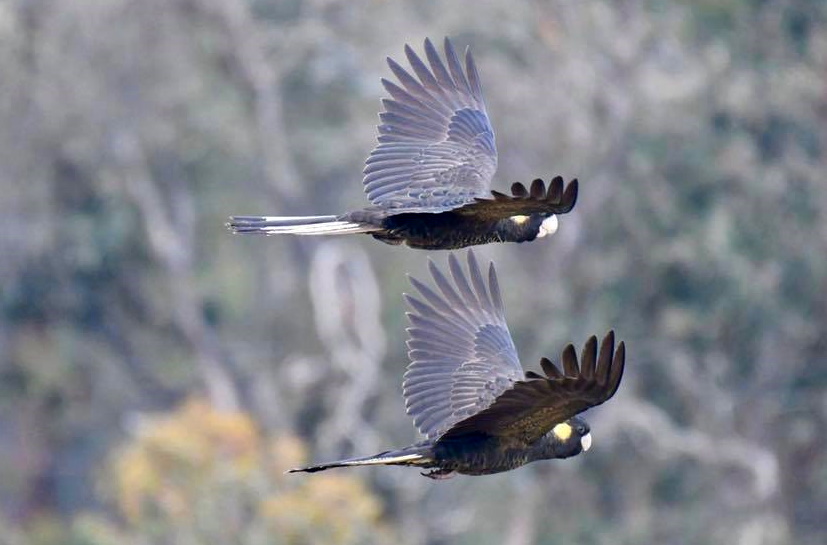
There is an old story that their calls mean rain is coming, or an increase in the birds mean rain is coming. There is another version that says that if you see Yellow-tailed Black-Cockatoos flying from the mountains to the coast, rain is coming.
If you travel a lot in East Gippsland forests you hear Yellow-tailed Black-Cockatoos call almost every day, so it can’t possibly mean that rain is coming every single day.
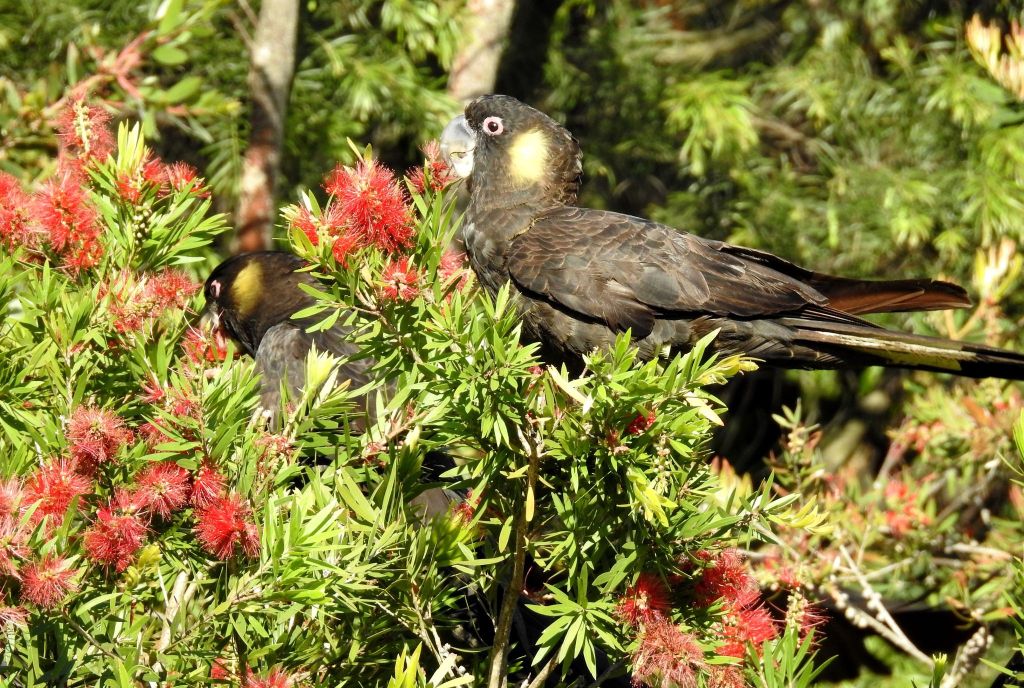
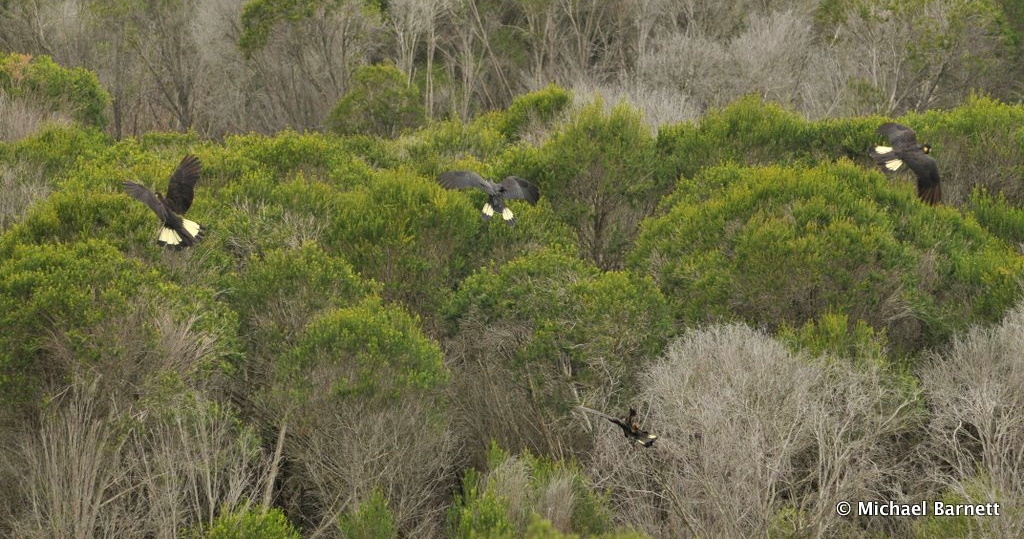
I wonder if Yellow-tailed Black-Cockatoos were a calendar animal (bio-indicator) to local Aboriginal People. In The Grampians (Gariwerd) winter is Cockatoo Season, and Yellow-tailed Black-Cockatoos are on the move and seeking new feeding grounds. This type of knowledge passed on, changed and simplified, could have created the story as we know it.
http://www.bom.gov.au/iwk/calendars/gariwerd.shtml
Their natural foods are seeds of eucalypts, banksias, hakeas, grevilleas & wattles, nectar of grass-trees, and caterpillars and larvae that they gouge out of trees. They have also adapted to eating introduced pine tree nuts.
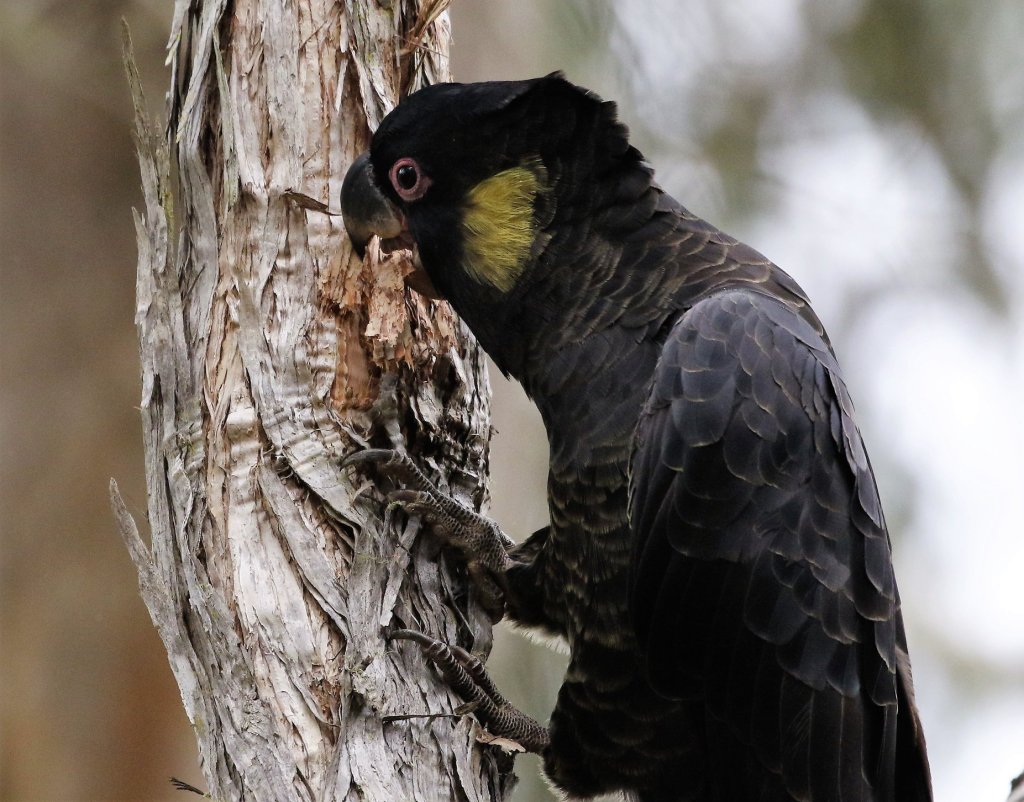
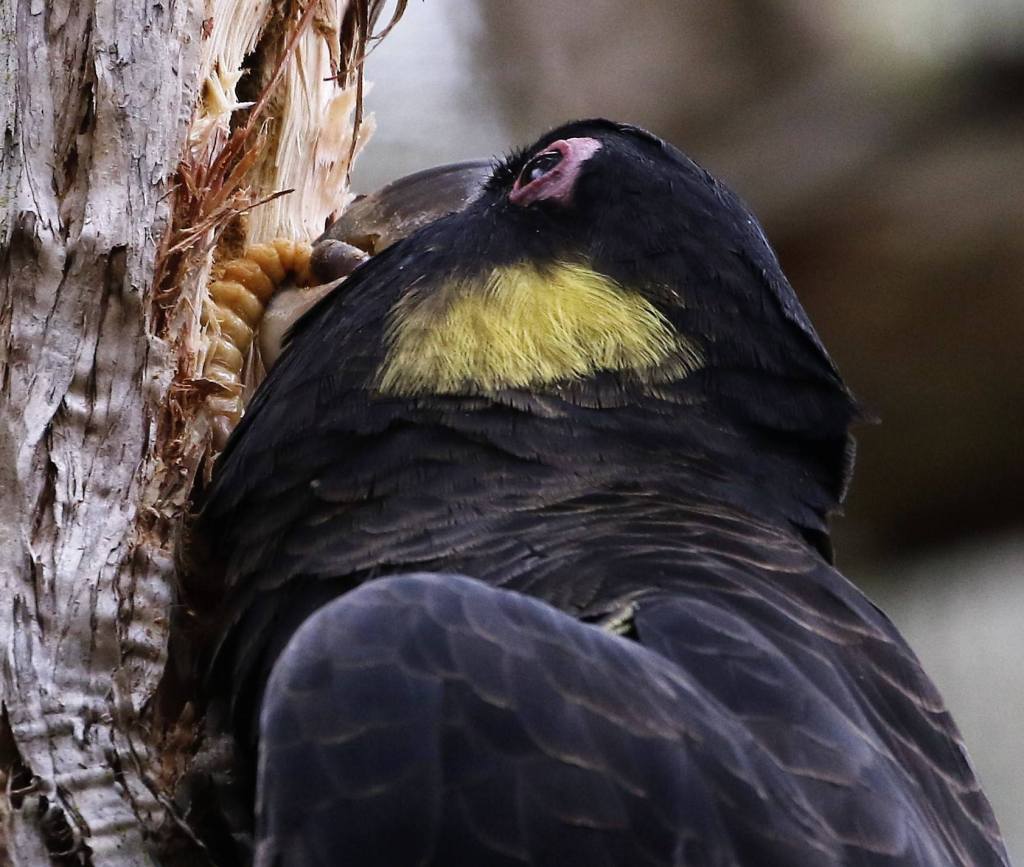
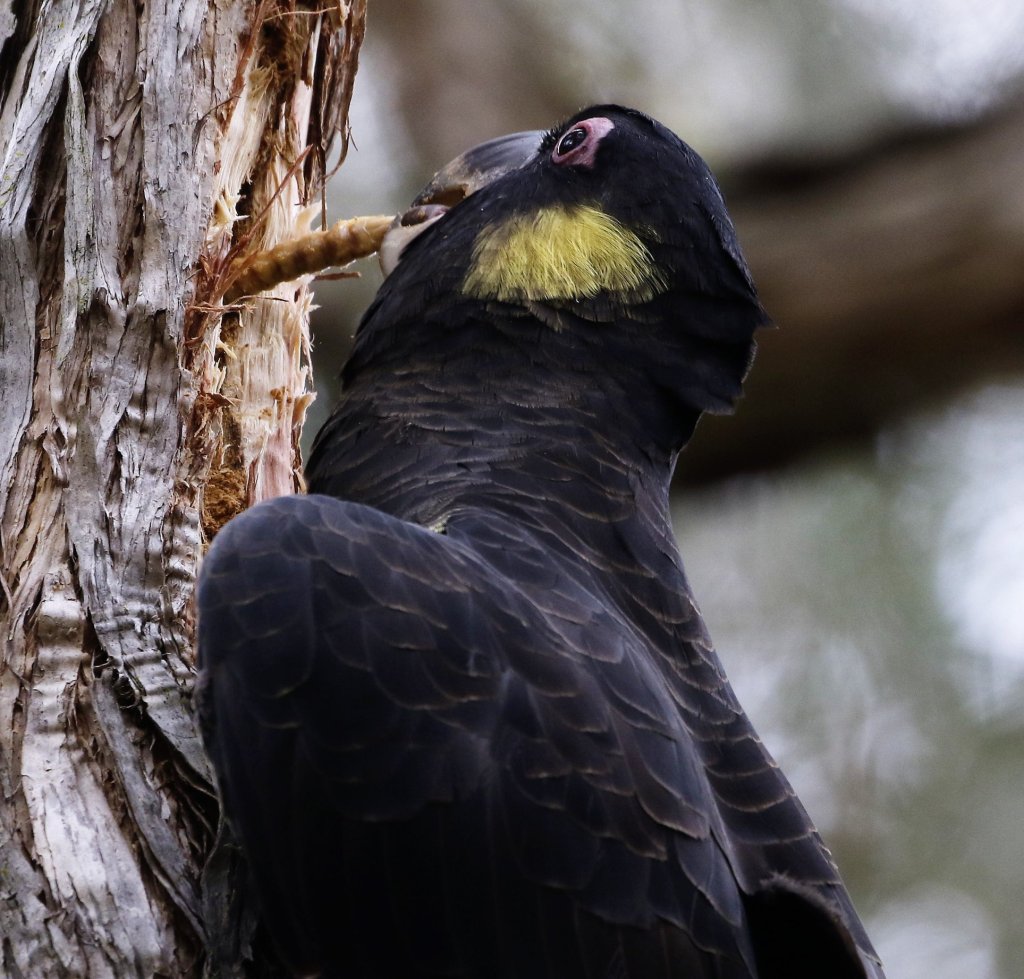
Martin Butterfield tells:
“When we lived in Adelaide I would go orienteering in pine forest and when a flock of YTBC were dining above it was like being in a battlefield. They would often lose their grip on the large cones, which meant objects weighing about 1kg would be dropping all through the area from 20m above. Had one hit a runner the consequences would have been ungood.”
“In the 1980s someone (possibly from RAOU) did a major project looking into the distribution of Yellow-tailed Black Cockatoos. One finding that came out of this was that as they love dining on pine cones they were one of the few species that had benefitted from the mass planting of Pinus radiata across SE Australia.
When we moved to Canberra (1983) the species was quite uncommon being found reliably only in the pine forests of the Cotter catchment. Those forests got burnt completely in the fires of January 2003. This drove the cockatoos out on to the urban area as shown by this chart from the COG Garden Bird Survey.
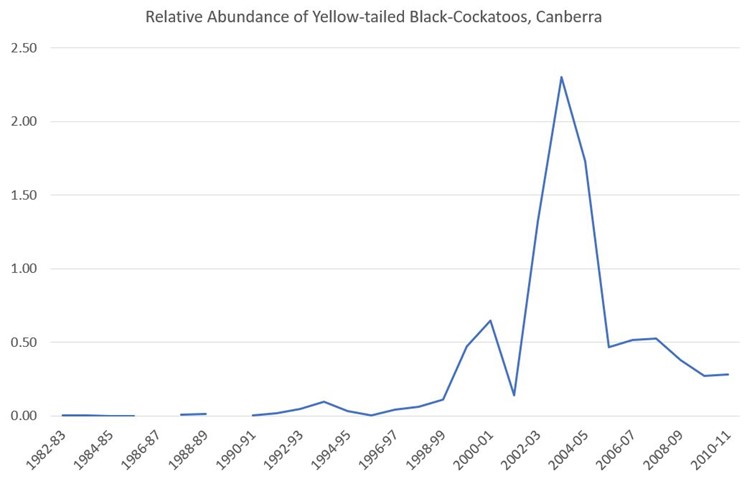
For the rest of 2003 and most of 2004 the birds travelled round the urban area finding isolated pockets of pines and also feeding on their more traditional foods (eucalypt nuts) in Canberra Nature Park. At times they would gather in flocks of over 100 birds. As the mountain habitat regenerated they moved back to ranges and the huge numbers declined. However the numbers in the urban area have remained higher than they were prior to 2000.”
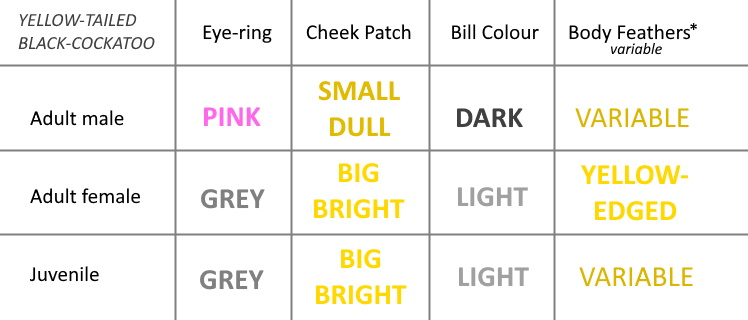
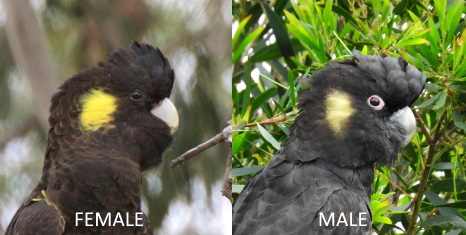
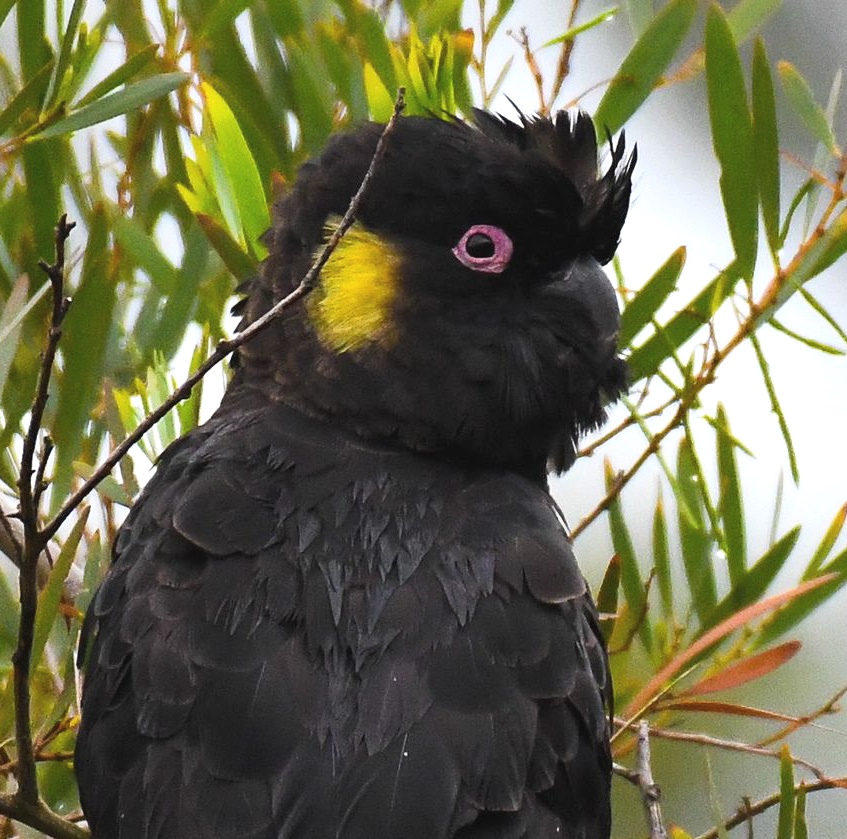
The best way to tell males, females and juveniles apart is from the head. I’ve made a chart to summarise.
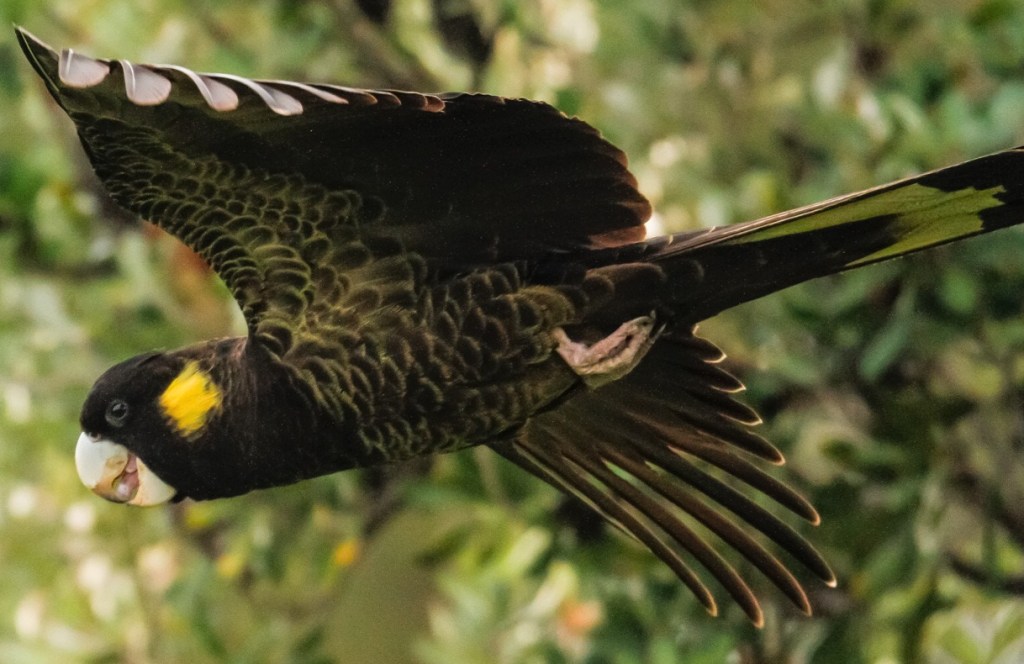
LISTEN TO THE CALLS: https://ebird.org/species/ytbcoc1
Scroll through to see lots of great pics here: https://ebird.org/species/ytbcoc1
Details: Yellow-tailed Black-Cockatoo Calyptorhynchus (Zanda) funereus funereus
Location: Eastern Australia from the Eyre Peninsula, SA along the coast through VIC, NSW and southern QLD. Also TAS.
Our subspecies funereus eastern VIC, NSW, QLD. Subspecies xanthanota in TAS and whiteae in west VIC & SA are smaller and have more yellow in the body plumage and less black flecking in the tail panels.
Conservation status/learn more: https://birdlife.org.au/bird-profile/Yellow-tailed-Black-Cockatoo
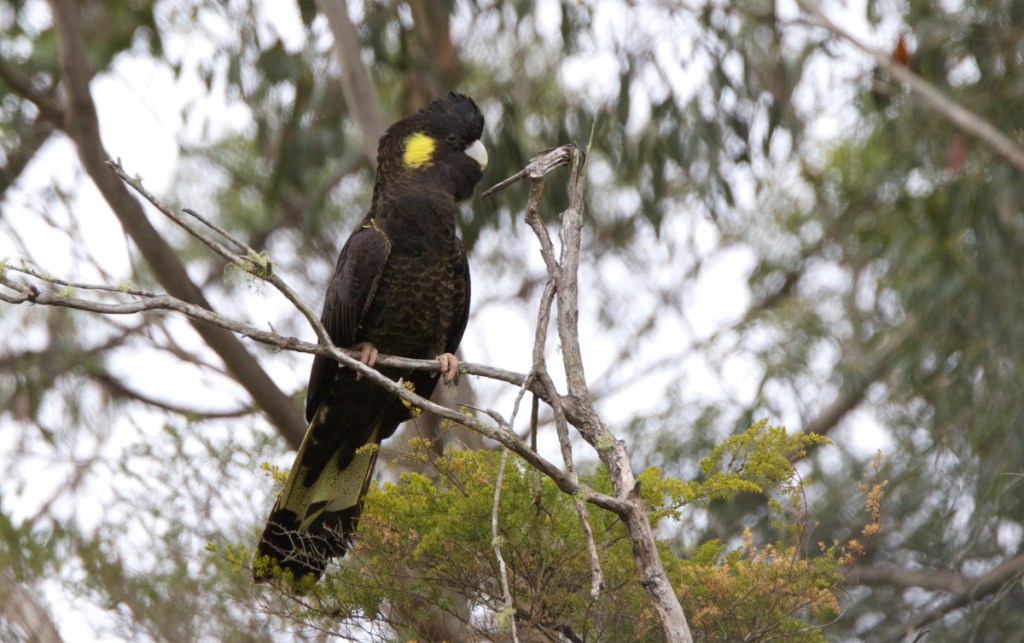
Thanks to Martin Butterfield, Rob Clay, Ron Ricketss, Michael Barnett, Caroline Jones, Karen Weil, Martin Maderthaner for your beautiful pictures and anecdotes.
 Mallacoota Birds