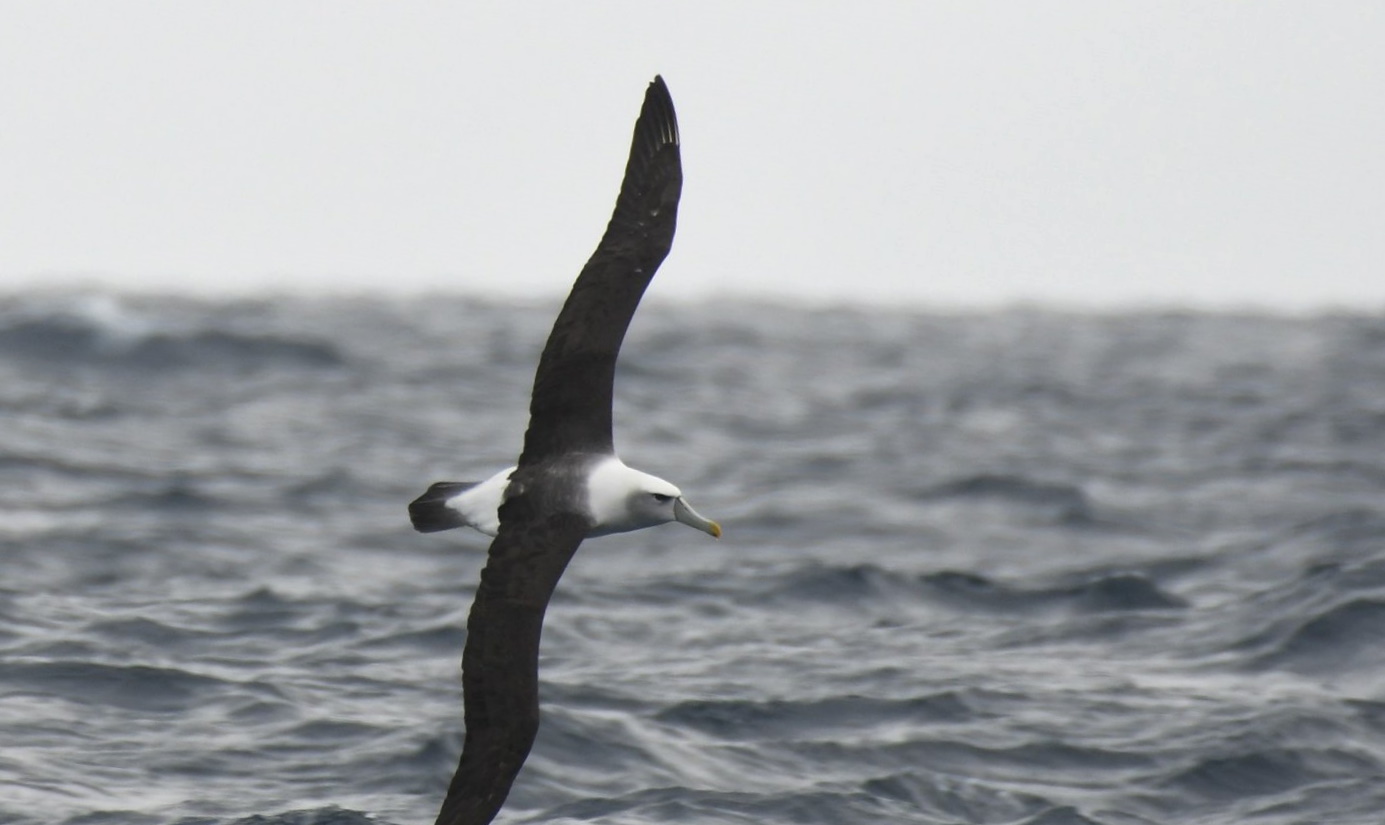
Bird of the Week: Shy Albatross 13 November 2020
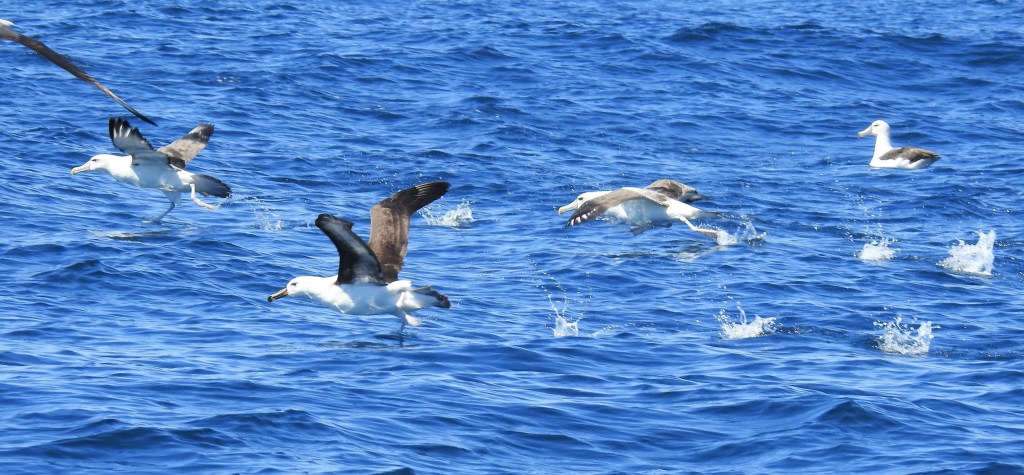
There is no albatross more truly Aussie than this. Shy Albatrosses (ssp cauta) only breed on three Tasmanian islands: Albatross Island in the northwest near Stanley, Pedra Branca and Mewstone Is south of Tas.
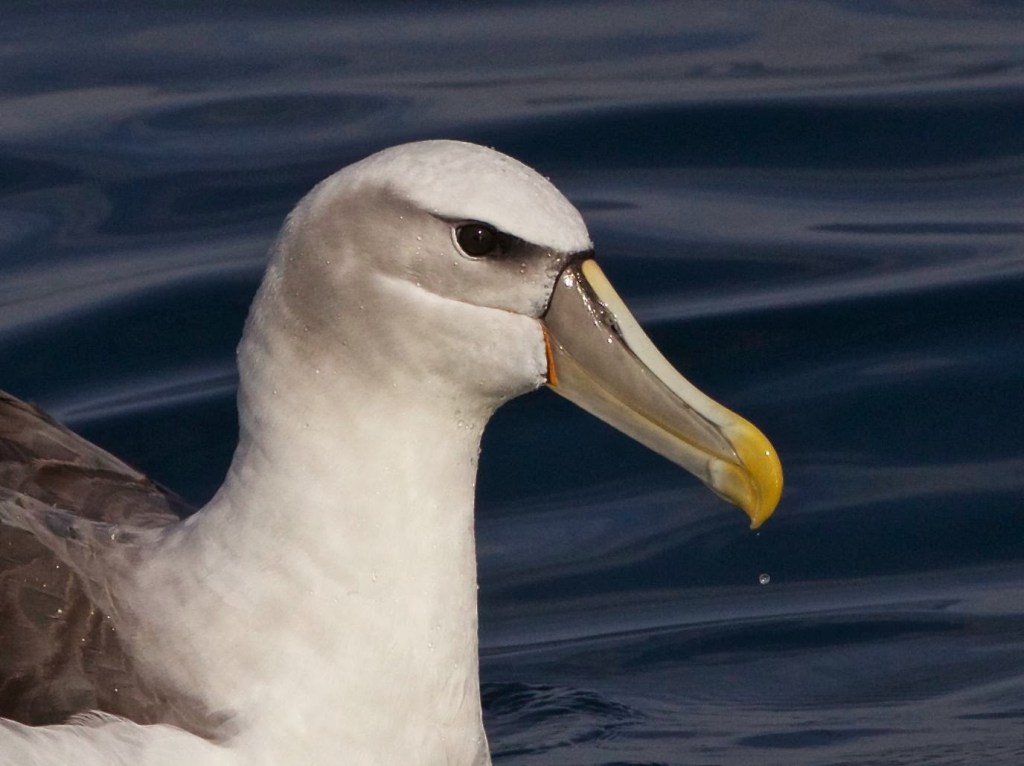
For us lucky people in Australia’s southeast, they are the most frequently-seen albatross. But elsewhere in Australia and around the world the sight of this beauty is a rare and thrilling event.
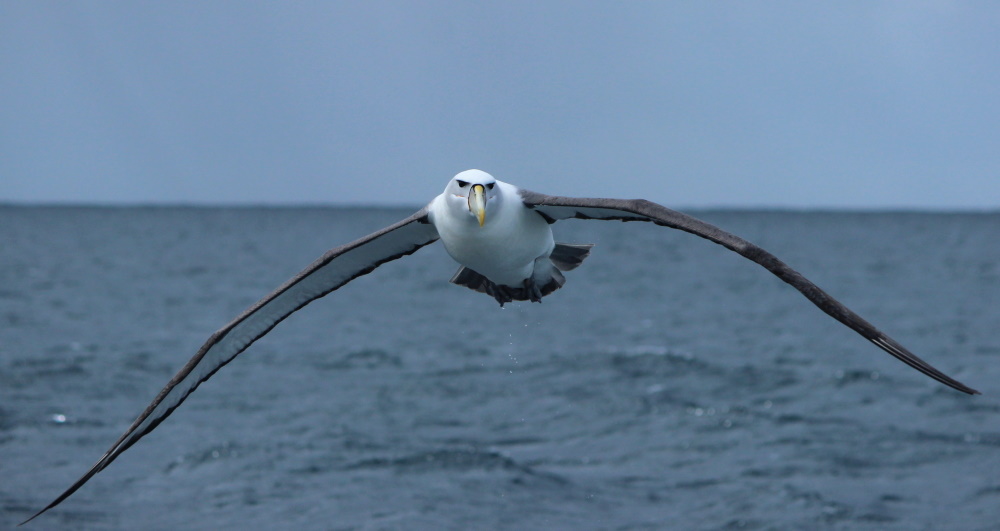
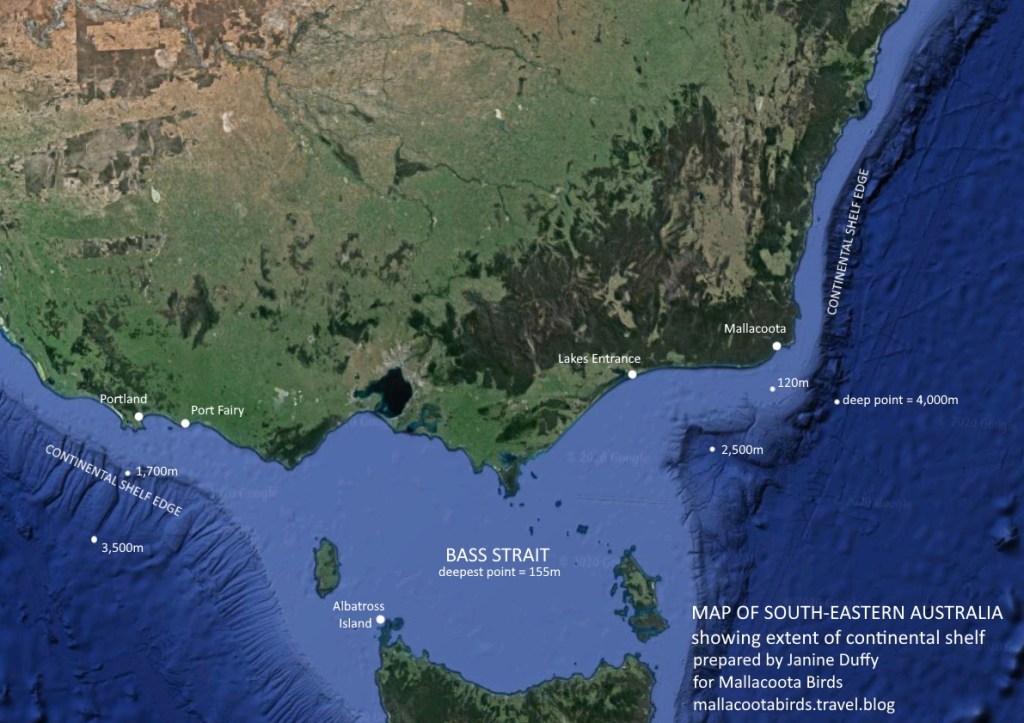
Albatrosses are truly oceanic birds. Most prefer the deep ocean water, and many are best found where the edge of the continental shelf drops off into deeper water. At this point their preferred food – squid, fish and carrion – is swept up to the surface.
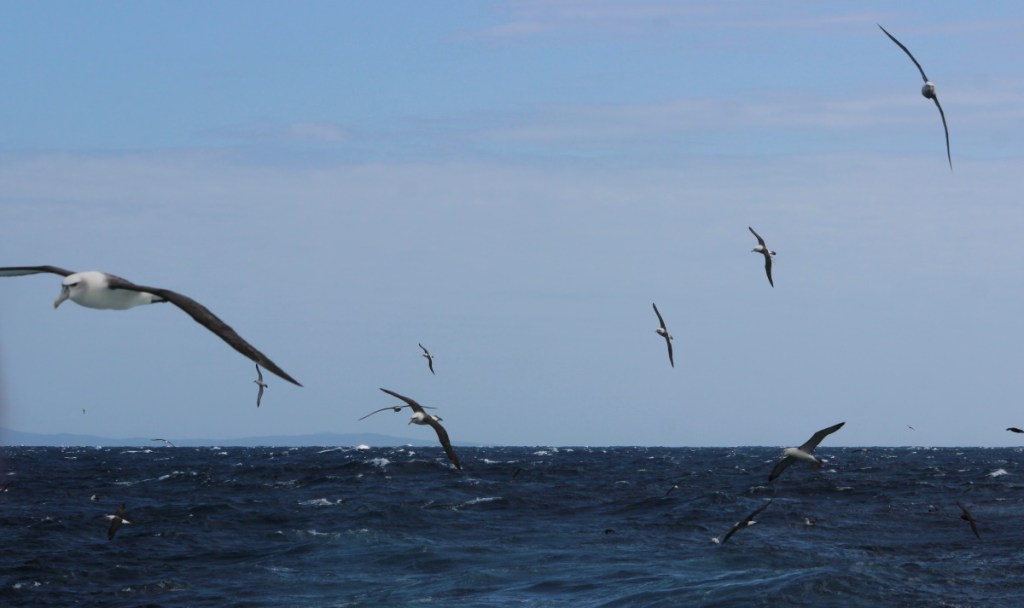
It is fairly difficult to see albatross from land – though it is possible in strong winds, and with good binoculars or a spotting scope. Shy Albatross are a bit more likely to be close to land than other albatrosses, and because they are quite big they can be seen from a distance. It is always worthwhile pointing your binoculars way out to sea on a rough day. You may see them, with their wings fixed out straight, dynamic soaring up and down in great arcs.
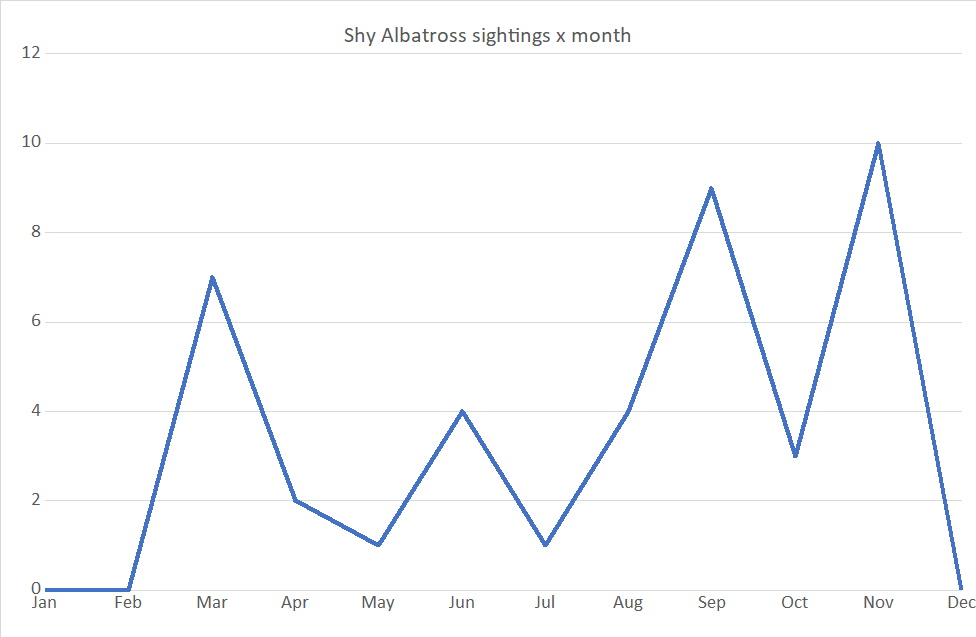
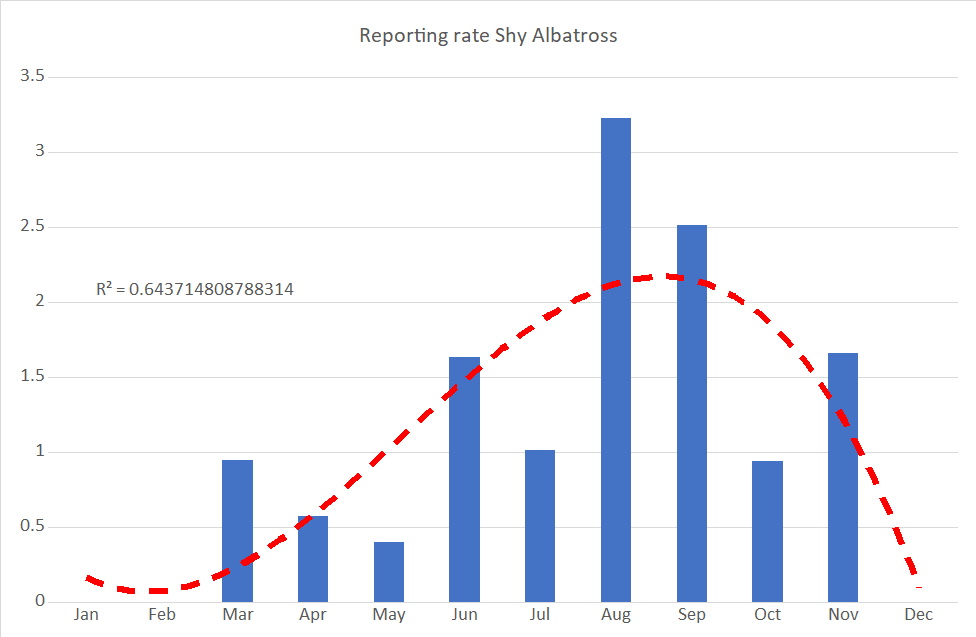
Most sightings of Shy Albatross around Mallacoota occur in September and November, with another little peak in March. They breed in September, chicks hatch by December and fledge in March-April, and all that time the adults forage close by. For an albatross in northern Tasmania, Mallacoota is close!
Martin Butterfield has produced some handy charts of Shy Albatross sightings & reporting rates – see below.
Most of the Victorian coastline is a long way from the edge of the continental shelf – Bass Strait is fairly shallow water all the way to Tassie. But at Mallacoota in the east, and Portland/Port Fairy in the west the continental shelf comes close to the land. In fact near Mallacoota there is a very deep spot – over 4,000m.
John Hutchison says that albatross can be seen quite close to land at Lakes Entrance, possibly as a result of the fishing fleet based there. On one trip he saw 12 albatross gathered behind a fishing boat – mostly Shy Albatross, just outside the entrance. He says that Indian Yellow-nosed and Buller’s Albatross can also be seen, mostly in summer and autumn.
Shy Albatross eat small fish, cephalopods (squid, octopus), tunicates (sea squirts) and scraps. They feed by surface-lunging. Rob Clay tells of their mastery of fish filleting:
My Shy Albatross story is we had a dead Spiky Gurnard floating behind the boat. As the name suggests, they are very spiky fish with very tough skin. A Shy Albatross saw the fish and landed grasped the fish with it’s beak and gave a powerful backwards flap with it’s wings. With that sudden jerking motion, the sharp beak opened up the skin on at tough and spiky fish with amazing ease. It was unbelievable skill and power. I have a hard time getting into a Spiky Gurnard with 2 hands and filleting knife! To watch Shy Albatross master in action was an amazing treat.
Shy Albatross can live 60 years, they mate for life and raise only one chick per year. The entire world population of Shy Albatross is only 15,000 pairs. So if you see one, feel privileged.
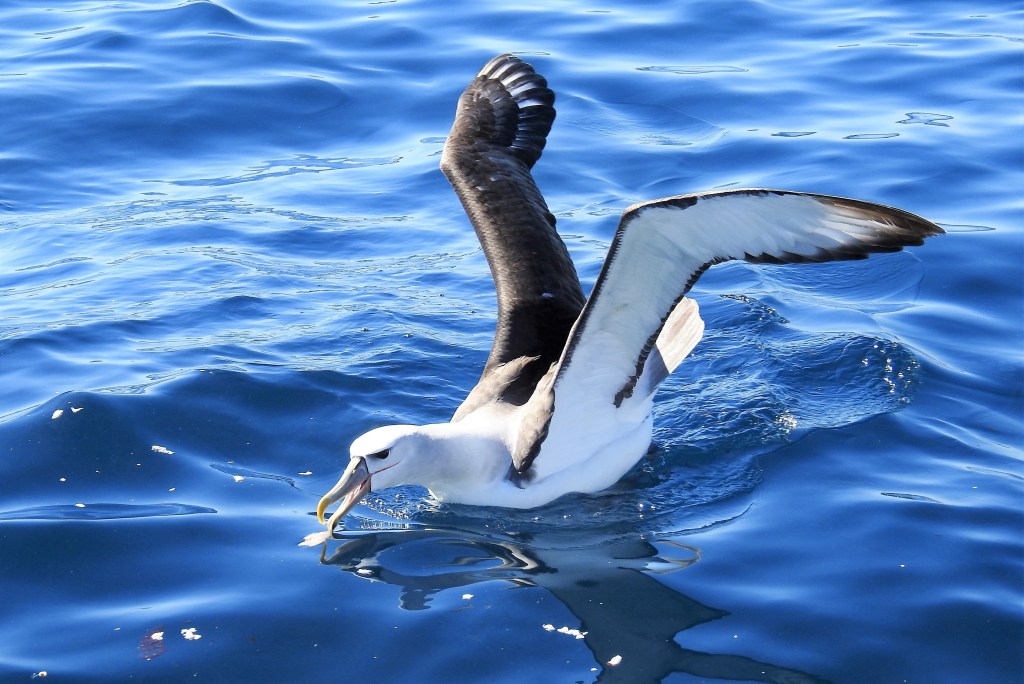
On some pelagic trips off Tassie & East Gippsland I’ve seen hundreds in just one day. I feel extremely honoured.
Great info on John Hutchison’s blog here: http://avithera.blogspot.com/2014/03/shy-albatross.html
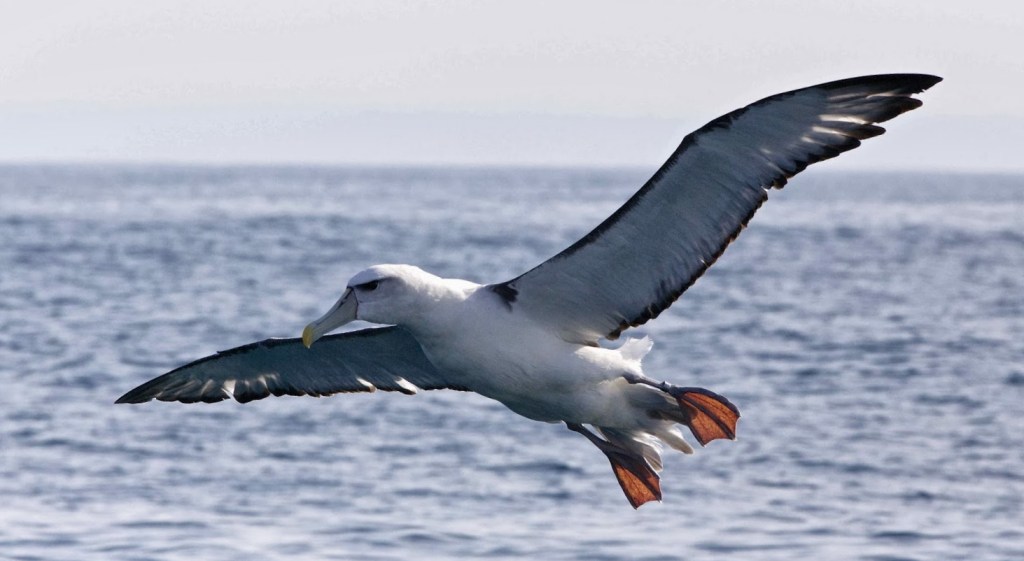
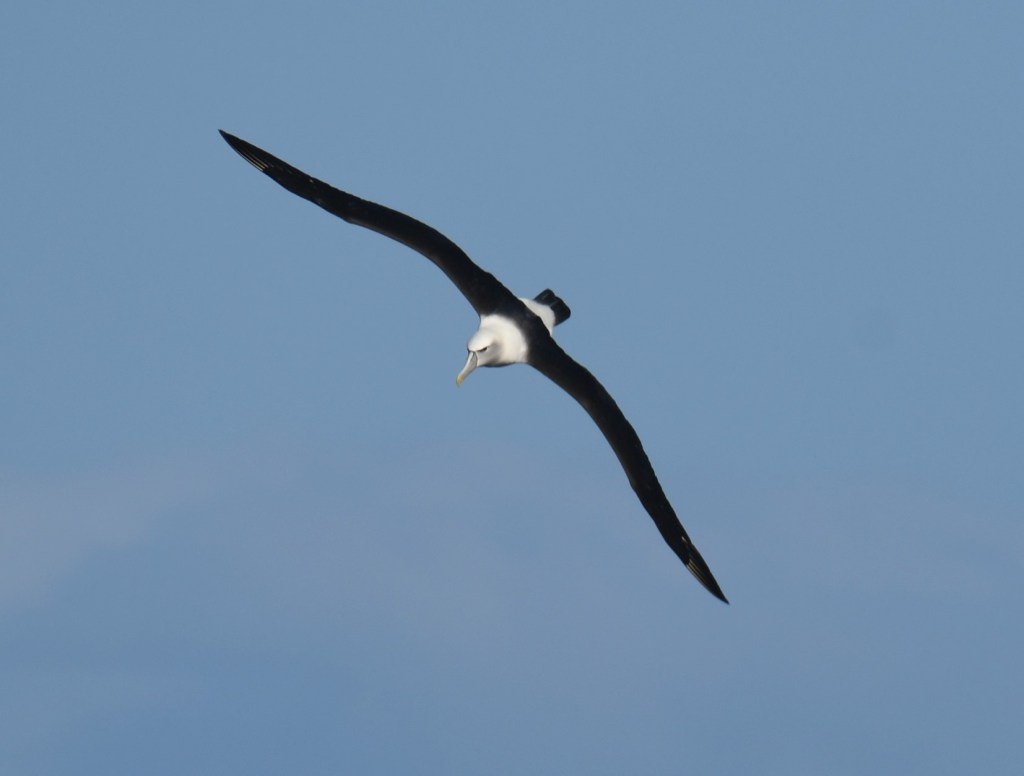
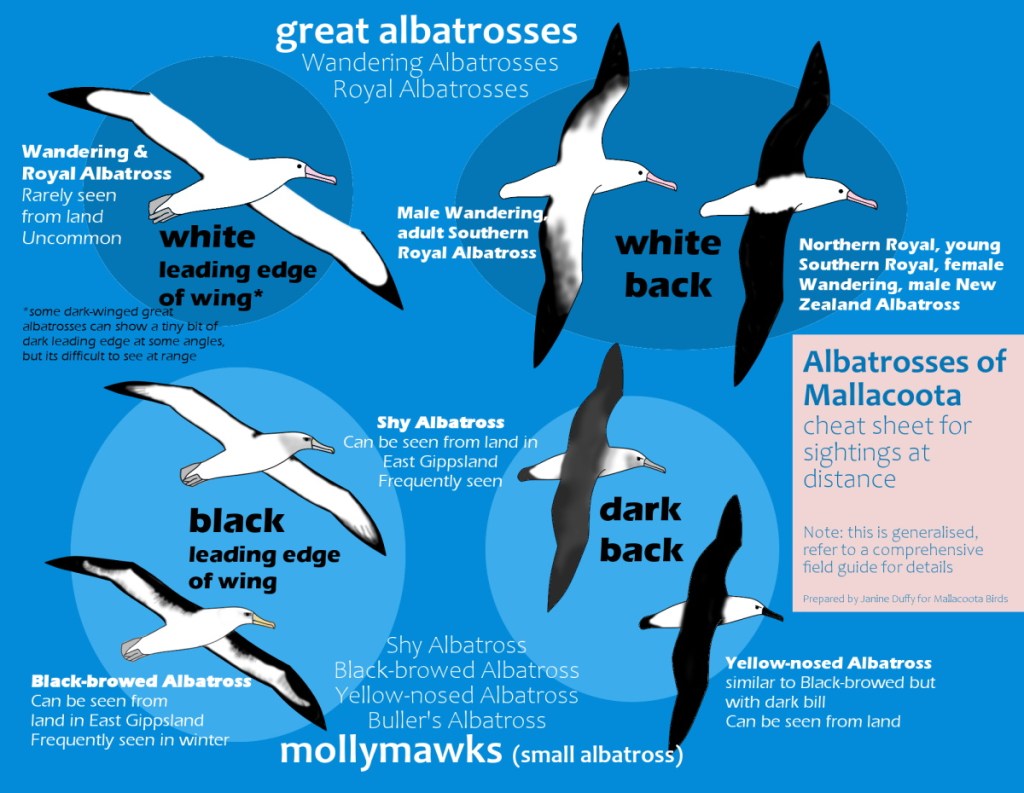
To tell them apart from other albatross, look for the dark grey (not black) upperwings, white flecks in the primaries, thin black edges to the underwings and grey bill with yellow tip. I’ve made a cheat sheet for albatrosses – useful for those you see at distance.
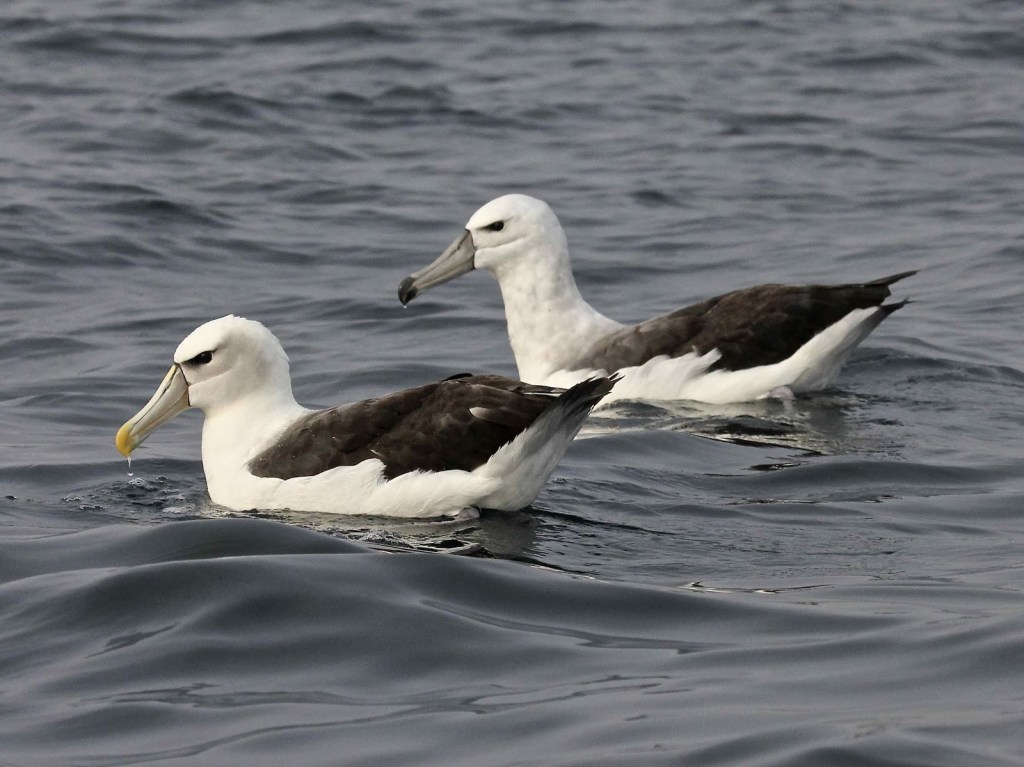
In NZ they call their subspecies (steadi) White-capped Albatross and its very difficult to tell them apart from our Shy Albatross. Some bird lists use this name for our Shy Albatross too.
Scroll through to see lots of great pics here: https://ebird.org/species/whcalb1
Details: Shy Albatross Thalassarche cauta cauta
Location: Breeds Tasmanian islands: Albatross, Pedra Branca & Mewstone. Ranges around Tasmania and throughout Bass Strait while breeding, then disperses (probably) throughout the Southern Ocean. Banded Aussie birds have been found in South Africa, Namibia & New Zealand.
Conservation status/learn more: Recently uplisted to Endangered, due to climate change affecting breeding success and bycatch by longline fishing operations.
https://www.abc.net.au/news/2020-06-28/shy-albatross-gains-endangered-species-listing/12395140
Thanks to Martin Butterfield, Rob Clay, Sue Lee and John Hutchison for your stories and images.
 Mallacoota Birds