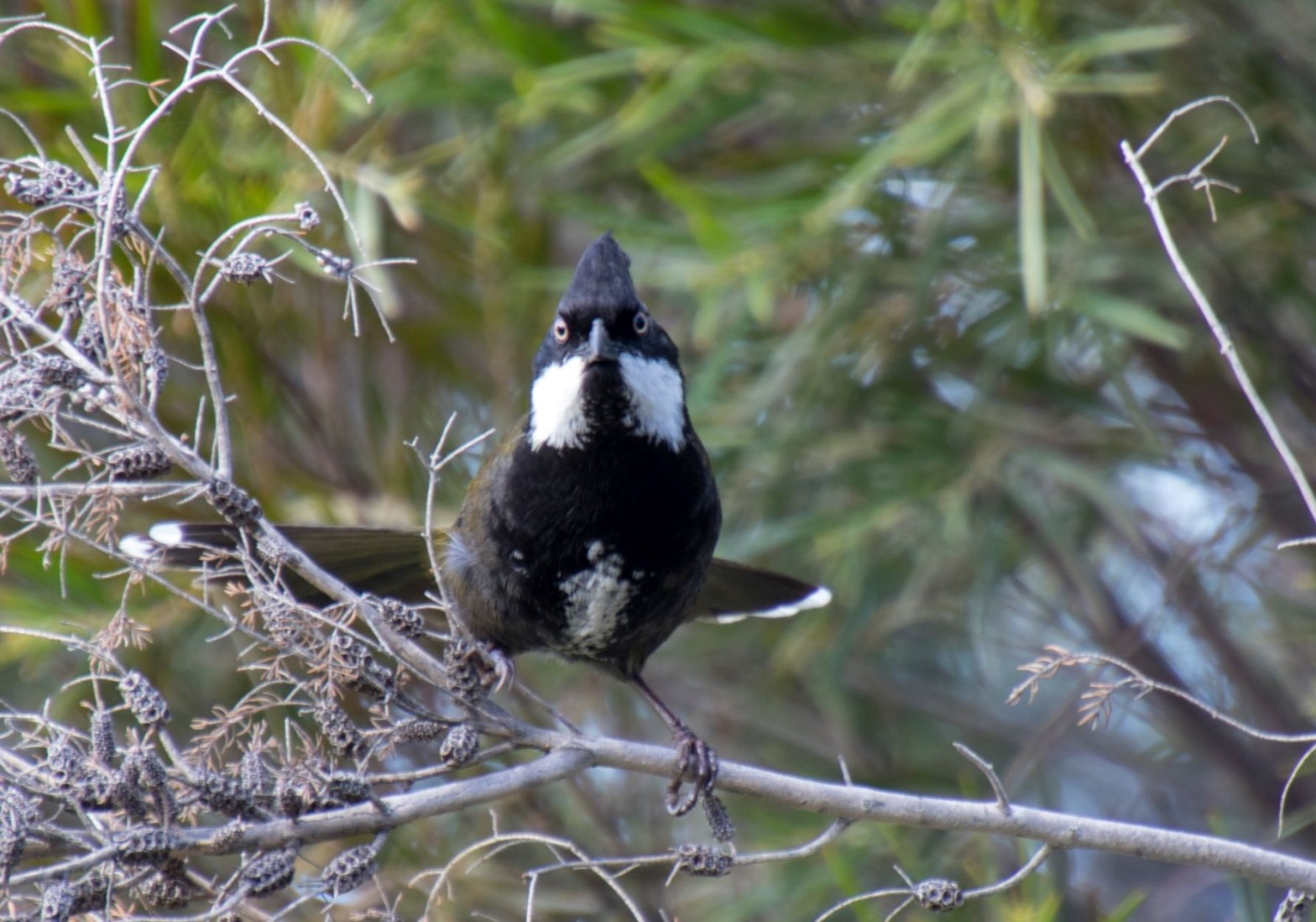
Bird of the Week: Eastern Whipbird 20 November 2020
This bird is so well known – their loud whip-crack call is a feature of the forests of East Gippsland. They are sometimes hard to see, though – they love to forage amongst dense shrubbery near the ground, fossicking around in the leaf litter. Any other bird doing this you just wouldn’t know was present, but the call is so loud and compelling that you find yourself searching for the bird with near-desperation.
It is widely believed that the male does the whip-crack and the female answers with a two note choo-choo! But there is no way to tell the male and female apart as adult plumage, so how do we know which bird is doing what?
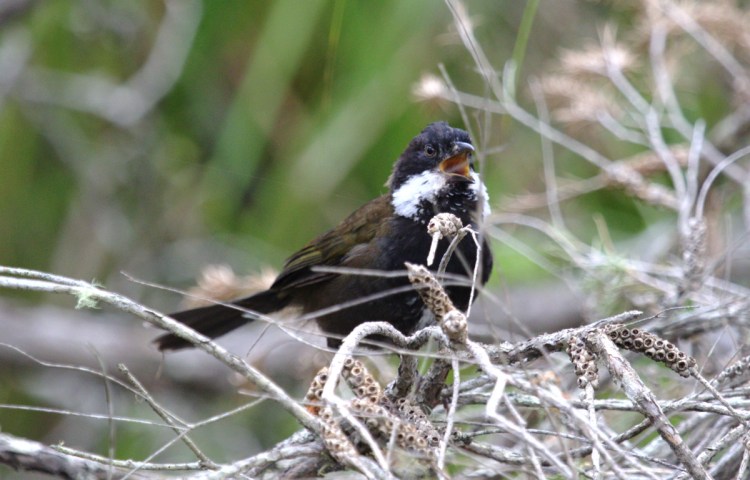
On his excellent site Graeme Chapman tells how he watched a young whipbird mature, and heard the young bird do both male and female calls and a variety of other calls. He also describes their nesting behaviour, which is fascinating. The female sits on the 2 eggs and the male brings her food. https://www.graemechapman.com.au/library/viewphotos.php?c=555
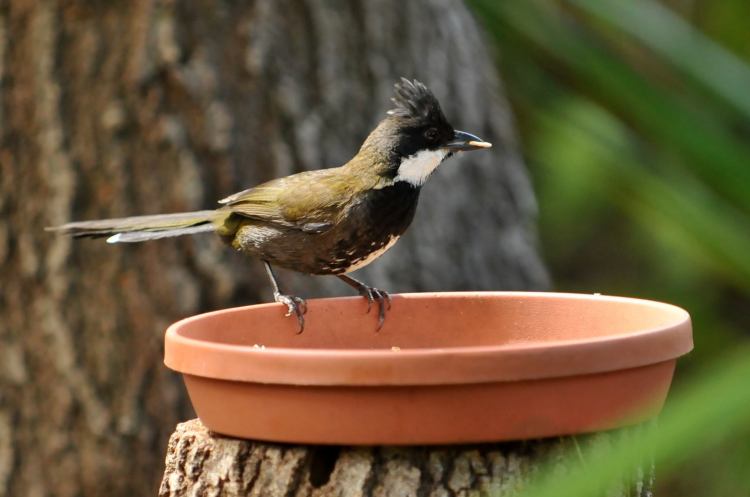
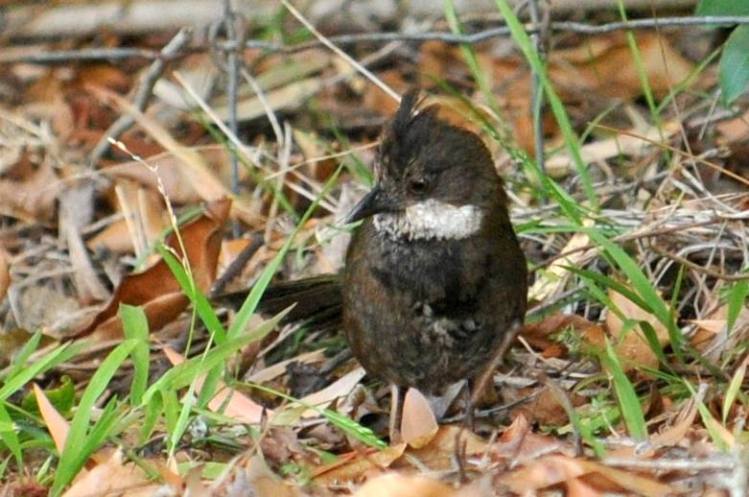
Juveniles are olive-grey-brown all over, with no white on their cheek. They have a little crest, and their bills are pale at the base. But you can see on this pic by Caroline Jones that they can raise their crest to look quite prominent.
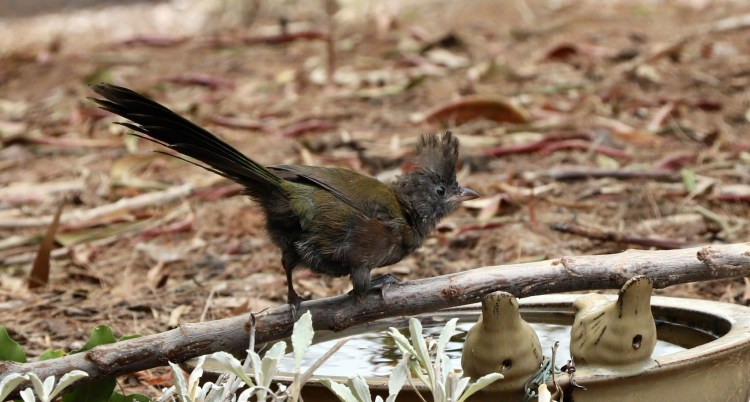
Immatures start to develop the pale cheek and black head, and their bills go dark. They can appear like a washed-out adult – the white throat is not bright, the dark head is not black, but they are almost there.
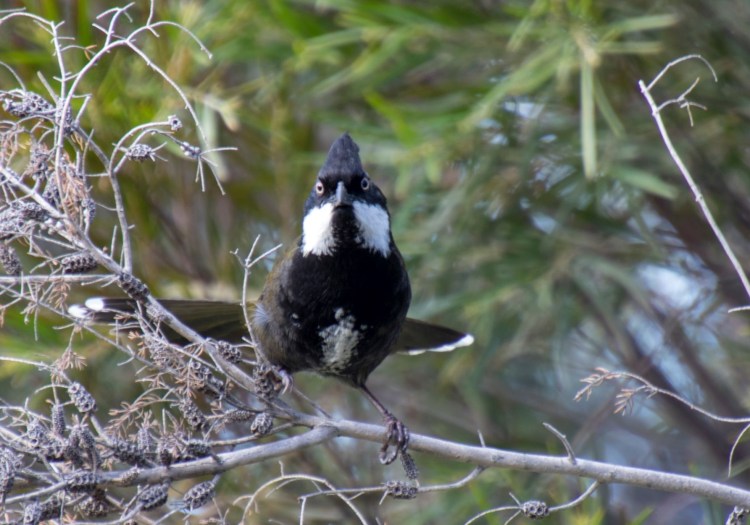
Adult males and females are similar, with a black head and breast, bright, strongly-contrasting white cheek, usually some white on their belly (apparently that is quite variable). They have brown eyes that become golden over time.
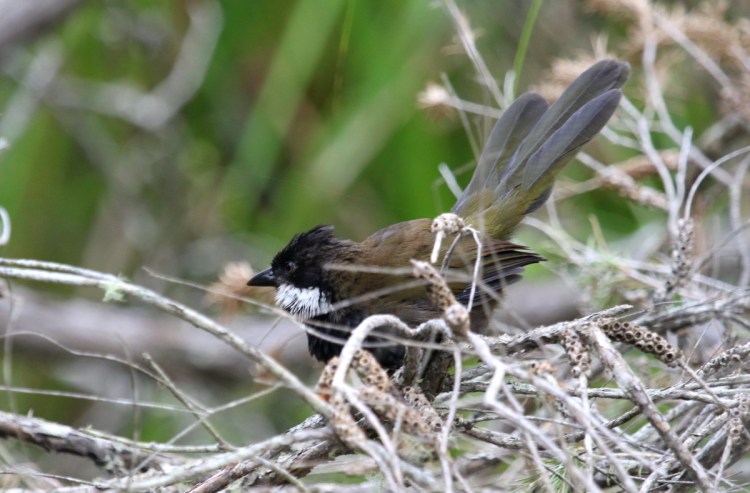
Their tails are usually held straight, but if they are fanned out you can sometimes see white tips to the tail feathers. But that can wear off or become dirty, so it’s not always seen.
LISTEN TO THE CALLS: https://wildambience.com/wildlife-sounds/eastern-whipbird/
Scroll through to see lots of great pics here: https://ebird.org/species/easwhi1
Details: Eastern Whipbird Psophodes olivaceus
Location: East coast Australia VIC, NSW, QLD, from Melbourne’s east to just north of Cairns QLD
Conservation status/learn more: Considered secure in their home states, but the Black Summer bushfires burned through a lot of their range. https://www.birdlife.org.au/bird-profile/eastern-whipbird
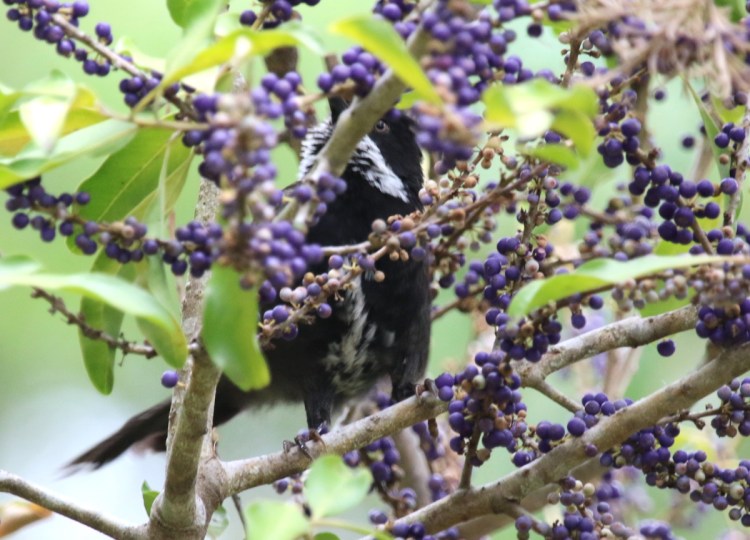
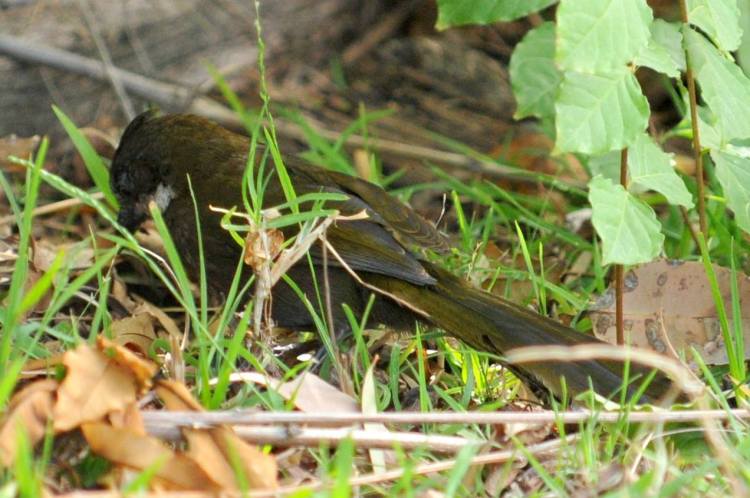
Thankyou to Karen Brockley, Caroline Jones, Martin Maderthaner & Michael Barnett for your photos and videos for this post.
 Mallacoota Birds