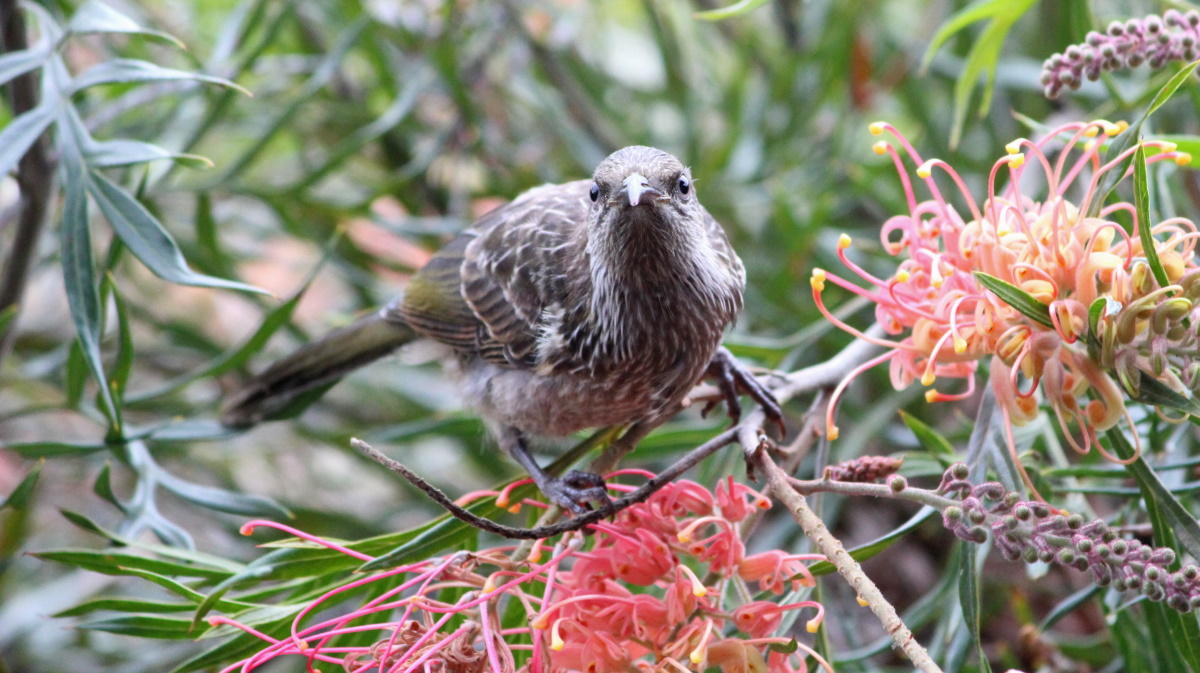
Bird of the Week: Little Wattlebird 4 December 2020
There’s something joyous about these birds. If you were to watch them calling with the sound off, you’d be forgiven for thinking they were operatic masters, with beautiful voices. They have such vigour and pride!
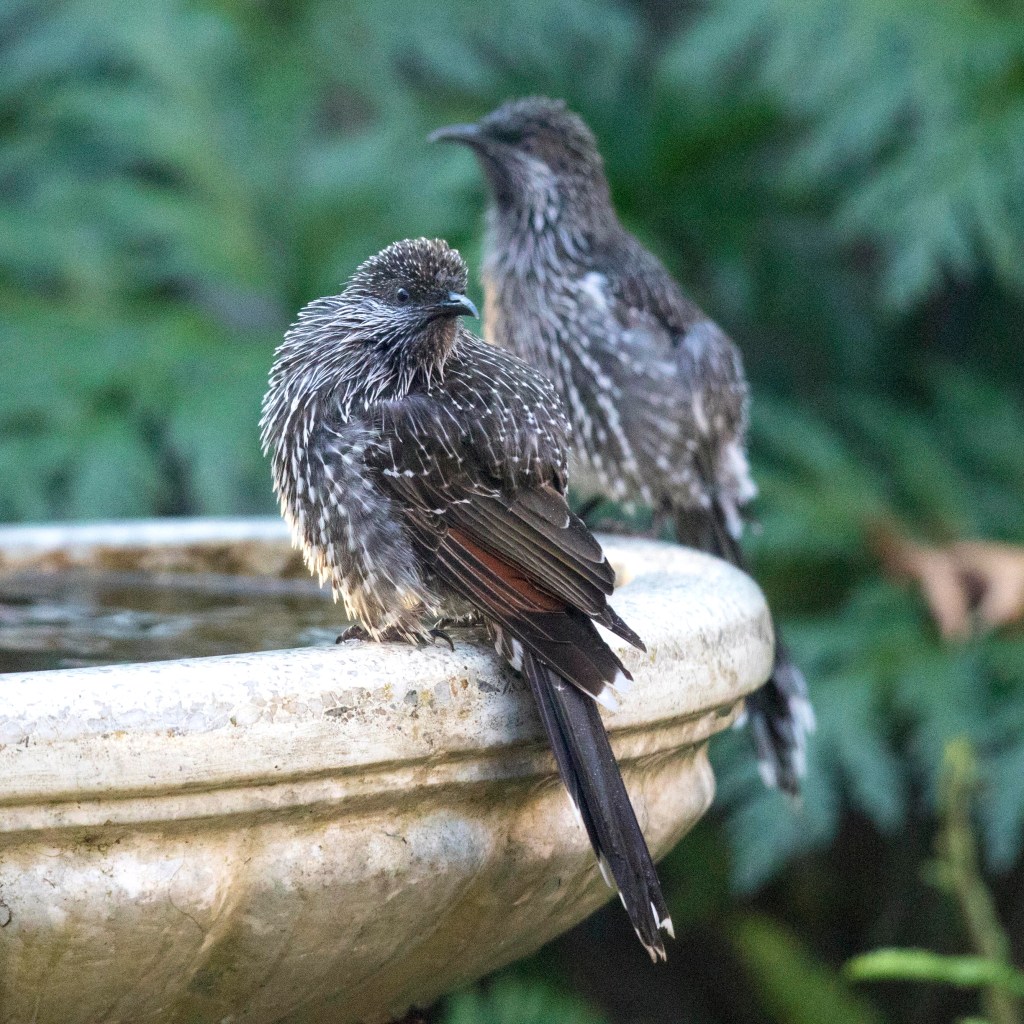
But to hear them is something else altogether. Their ‘song’ is a strangled, hiccuping croak-hoot, usually pitched low. They can do a high-pitched nasal version too. There is often a bill rattle at the start, and the call has a rhythmic, repetitive quality that Red Wattlebirds don’t have as much.
Listen: https://ebird.org/species/bruwat1/
And compare to Red Wattlebird: https://ebird.org/species/redwat1/
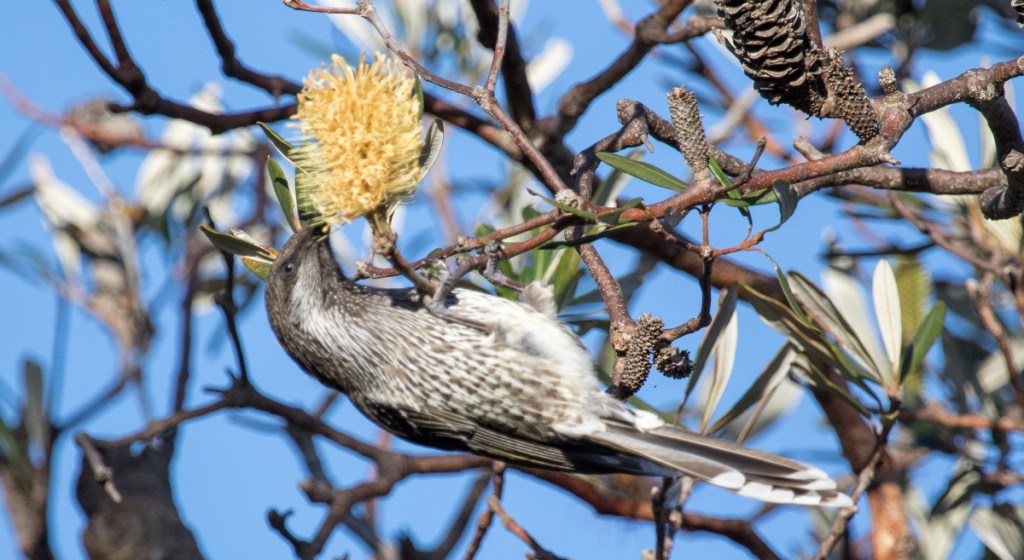
It can be hard to tell the two wattlebirds apart by call. Both do the bill rattle, both do the “Jock!” Both do a version of the “Be-kerk!” Generally I feel that Little Wattlebirds are more tuneful, more inclined to make a memorable tune and repeat it. Red Wattlebirds seem to throw in any note at any time in no particular order.
Little Wattlebirds are the fairly large brown-grey honeyeaters found most commonly along the coast. Both they and Red Wattlebirds are common in gardens around Mallacoota.
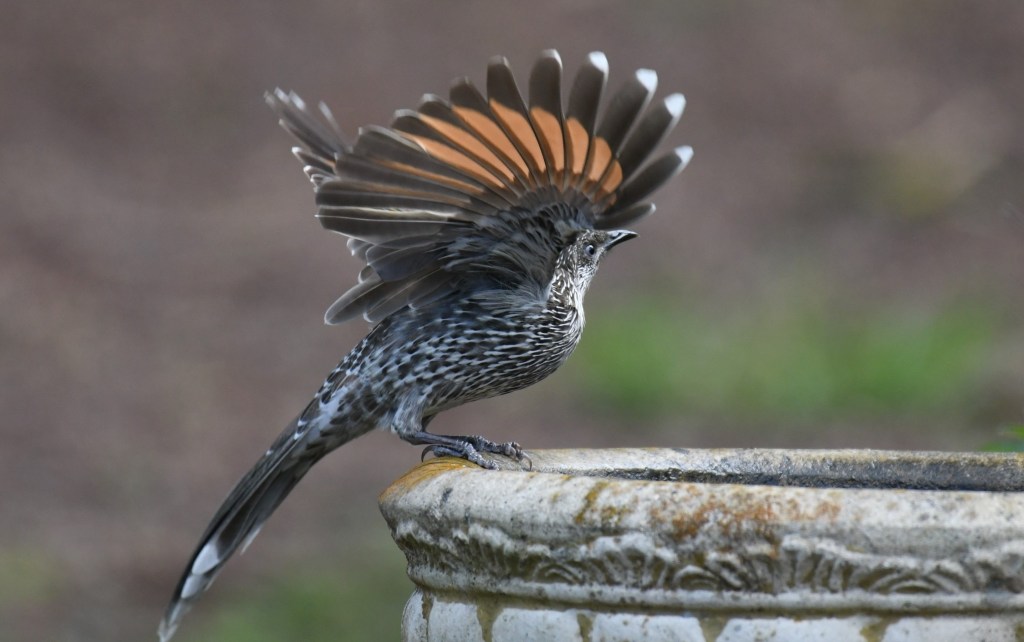
You can tell the Little Wattlebird by their red-orange wing patch in flight – Red Wattlebirds don’t have that. Close up, Little Wattlebirds have a shooting-star pattern on their feathers: a bright white vane, with a little star at the tip of the feather. It’s very beautiful.
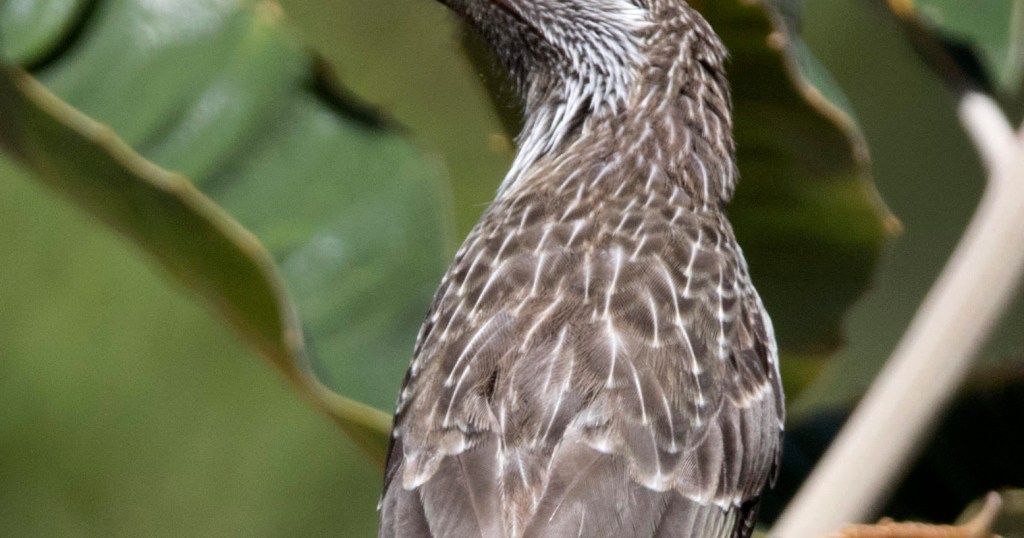
Red Wattlebirds also have a white central vane on their feathers, but it is not as showy and doesn’t have the star at the tip.
Little Wattlebirds have grey legs & blue-grey eyes, whereas Red Wattlebirds have pinkish legs & red eyes.
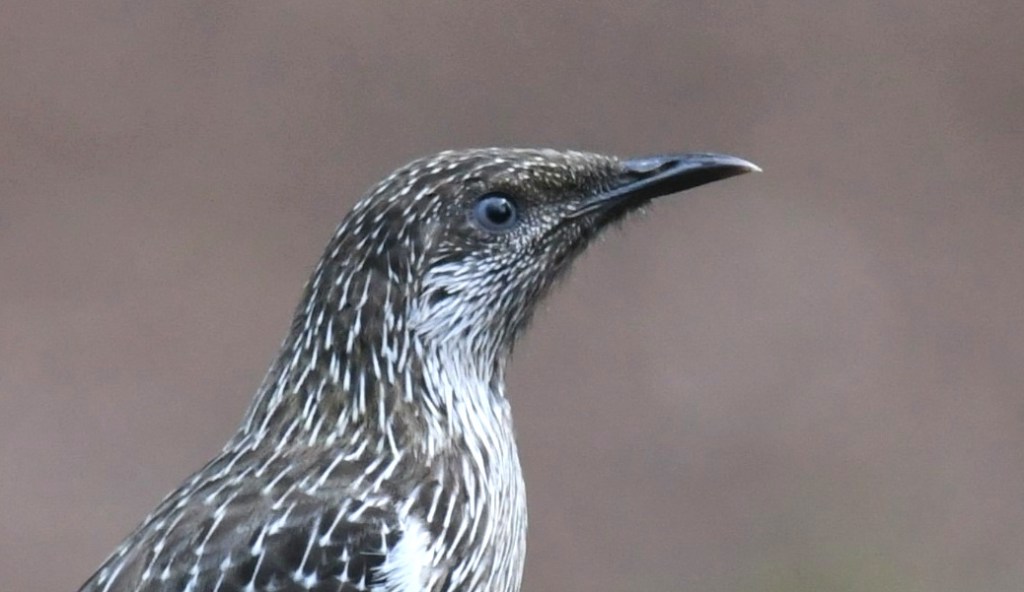
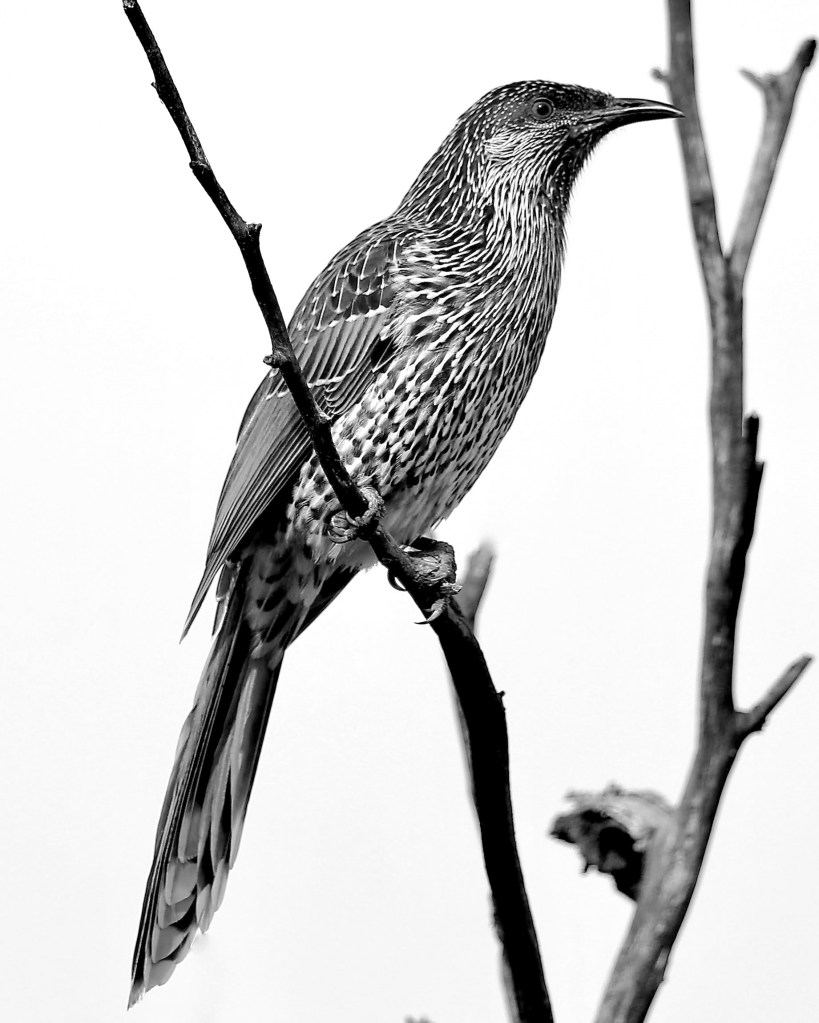
Many people call them just Wattle Bird, I’ve heard others call them Jock and they used to be called Brush Wattlebird in some books (but I don’t think that ever took off). What do you call them at home?
Young Little Wattlebirds look like adults, but less striking and browner.
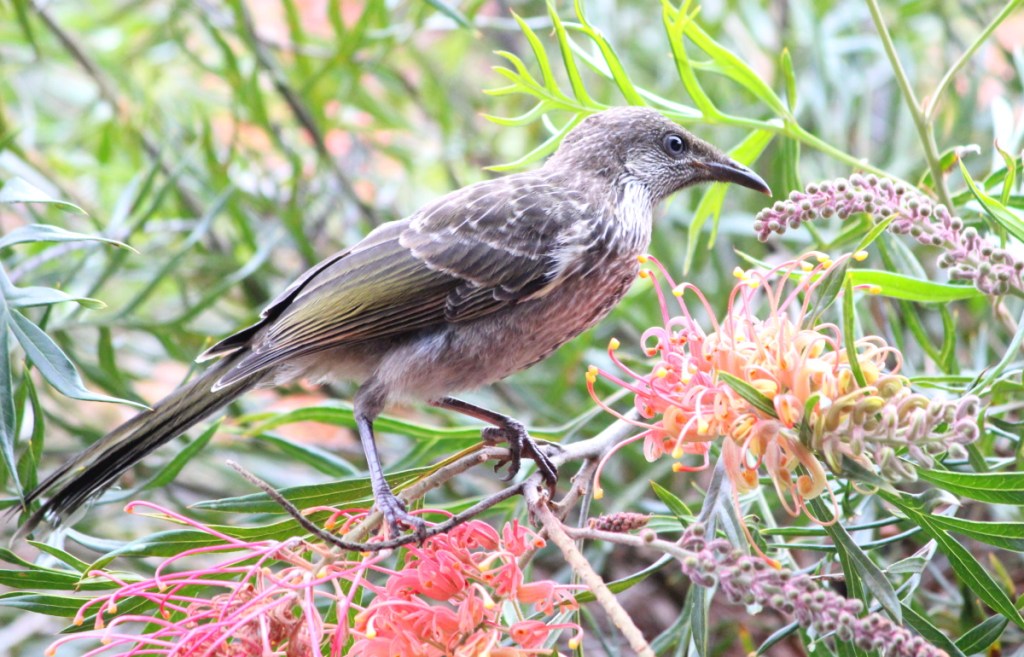
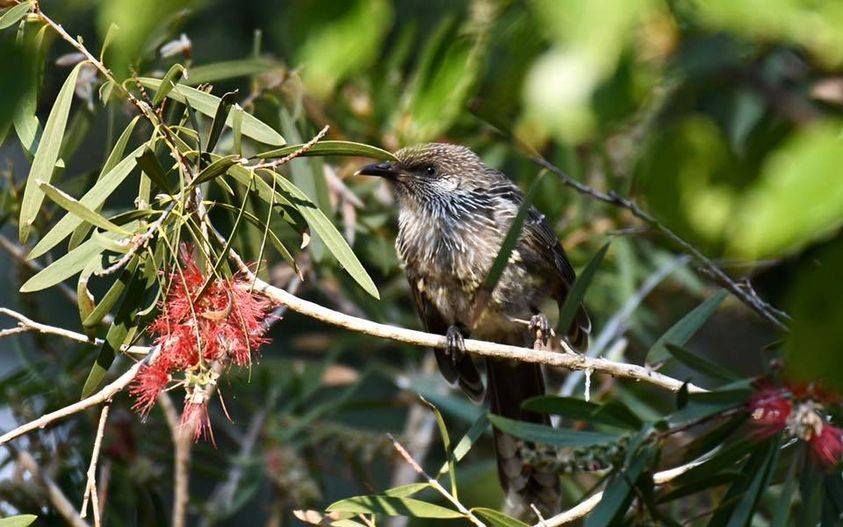
Scroll through to see lots of great pics here: https://ebird.org/species/bruwat1?siteLanguage=en_AU
Details: Little Wattlebird Anthochaera chrysoptera
Location: coastal eastern Australia from southern Queensland to eastern SA, and in Tasmania.
Conservation status/learn more: https://birdlife.org.au/bird-profile/Little-Wattlebird
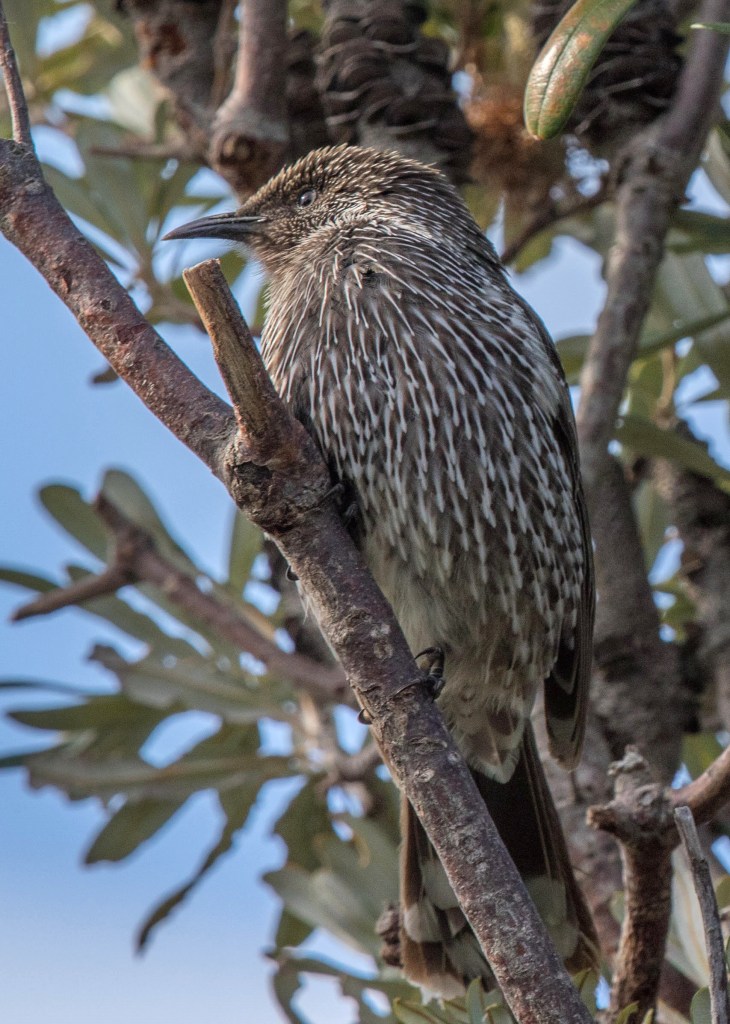
Thanks to Rob Clay, Jack Winterbottom, Martin Maderthaner, John Hutchison & Michael Barnett for sharing your beautiful pictures.
 Mallacoota Birds