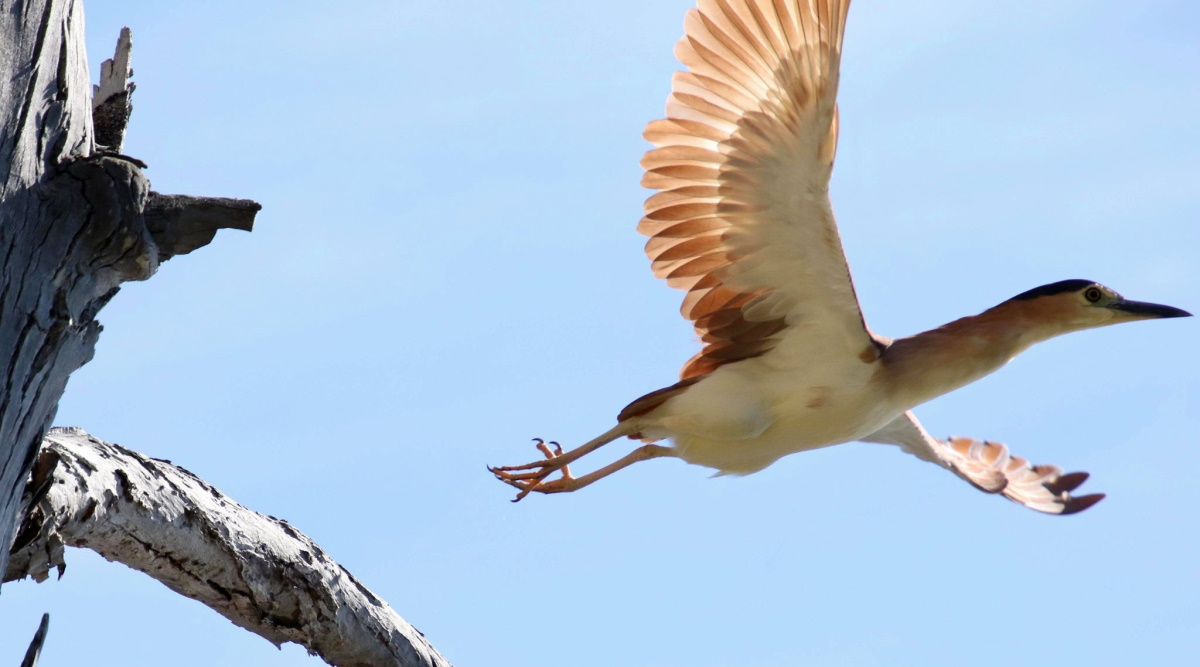
Bird of the Week: Nankeen Night-Heron 11 December 2020
You can live near a Nankeen Night-Heron for years and never notice it.
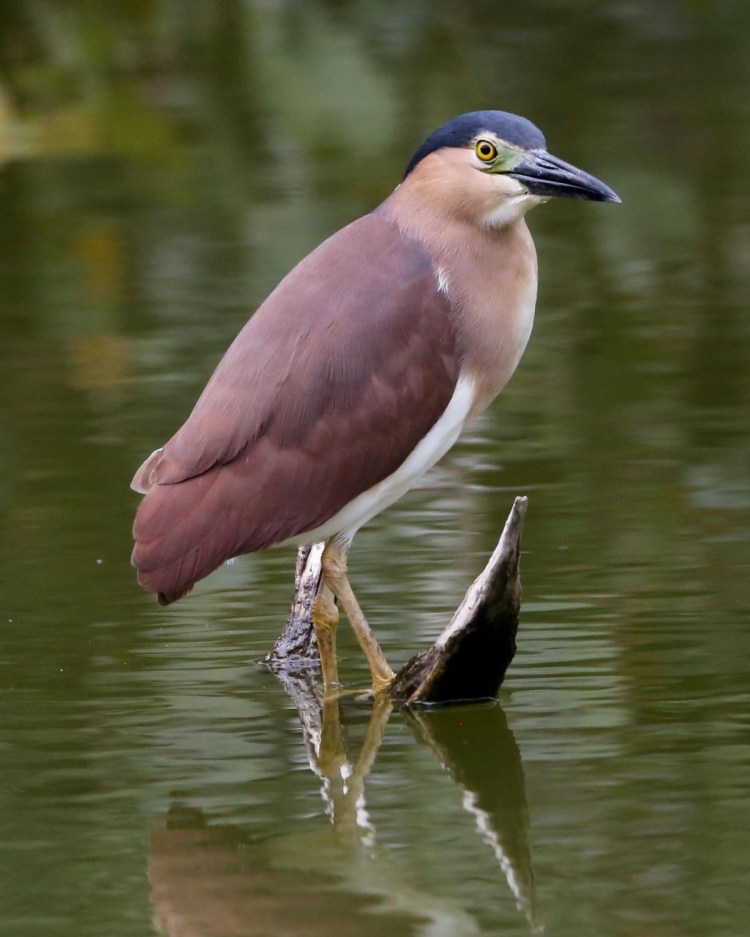
During the day they hide in thick vegetation, staying very still. At night they get active. Like most herons they are hunters of frogs, fish, insects and crustaceans.
Sometimes early in the morning or on dusk you can see one fly out to or from their daytime roost. Their preferred roosts are often near water, but not always – I have seen them in huge pine trees several hundreds metres away from water.
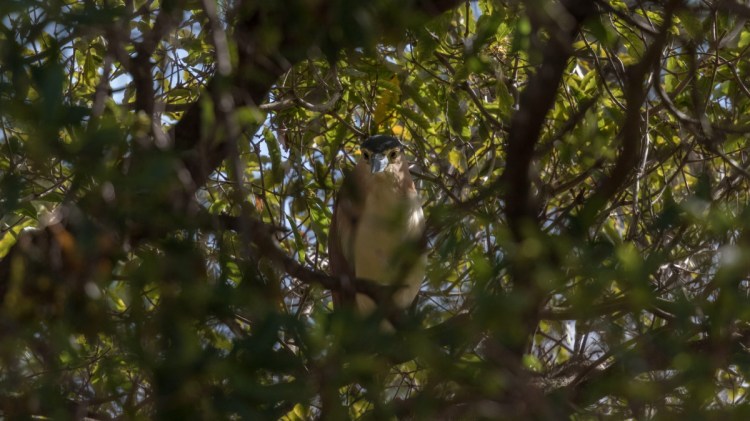
There was a regular Night-Heron that roosted at the Mallacoota Bakery. There is another couple that roost in Pittosporums at Bucklands Jetty – start of Narrows Walking Track.
Martin Butterfield tells:
I first became aware of this species at Mallacoota when someone reported one in the Foreshore Caravan Park. Some how I found that this bird used to be seen around dawn perched on the marker ropes of the boat moorings. About 7am it would then fly into a clump of large trees between the moorings and the road. It was relatively easy to spot due to the white wash on the roost tree. About mid-morning it would fly off towards the road.
At the Bakery, I was able to find it quite easily, although it did switch between roosts a bit. This bird maintained position after the fire with some preference for a tree above a seat on the pavement which became plastered with second hand fish. I had trouble locating it later in 2020 and wondered if pruning the trees had driven it away. However I have spoken with the Bakery owners in December who said it had acquired a friend in about September and both birds had vanished and not been seen for three months.
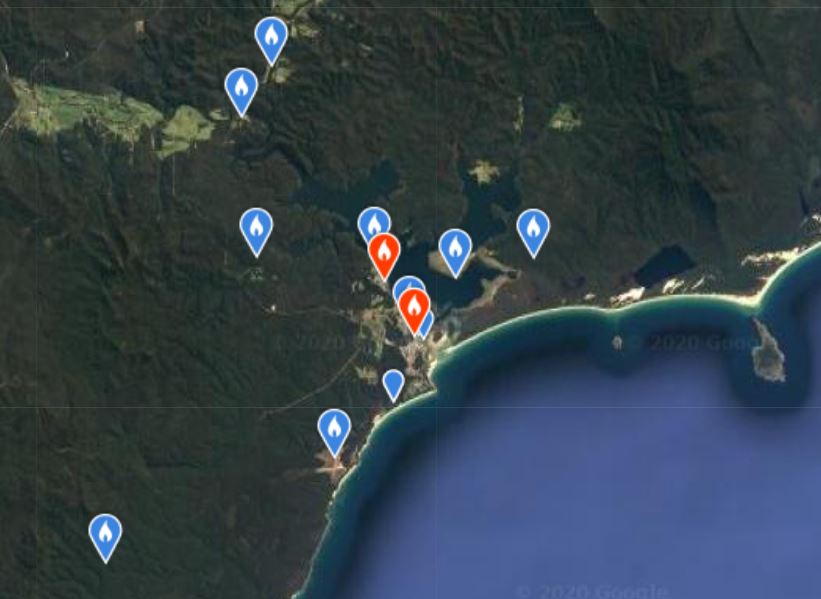
Janine also told me of a location at the turning area at the mouth of the Narrows (Bucklands Jetty). On occasion I found this bird and the Bakery bird on the same day day so there were definitely two herons in the area. Once I had worked out where the bird roosted it became easy to find it , although it seemed very skittish to begin with. I found that if I parked away from the roost trees and walked over it wouldn’t flush but just peer down at me. In August and October 2020 I found 2 birds in the site. (I suspect this means there were 4 birds in the area.) They both then vanished which I suspected meant they were nesting somewhere nearby and I looked carefully in the dense vegetation for evidence of a nest – without success. I then lost track of them for about 2 months until Rohan Clarke found a bird in its usual roost, where we observed it on the first group walk.
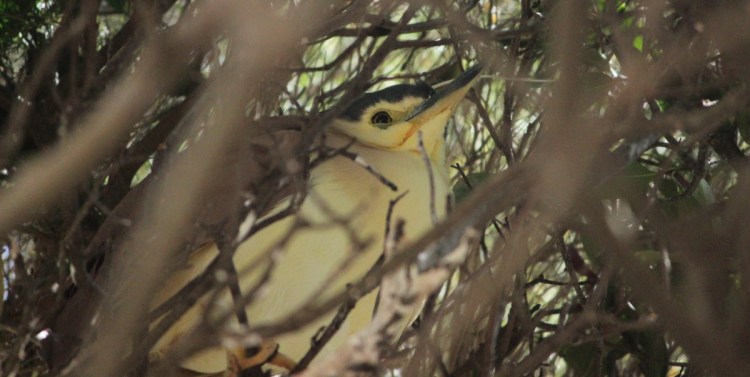
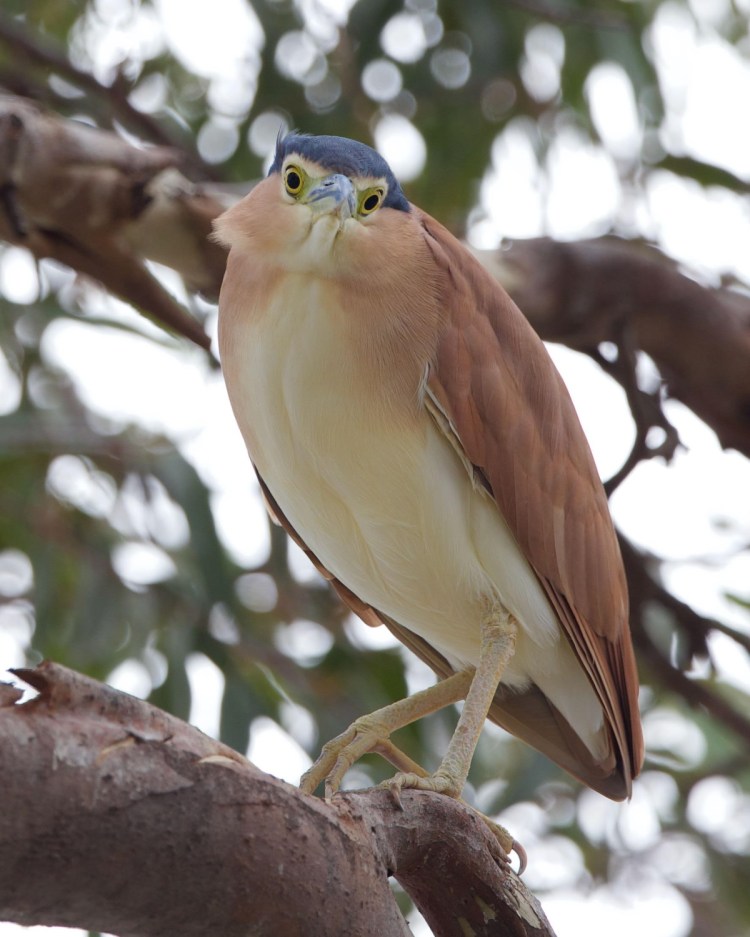
Breeding adults develop three ‘nuptial plumes’ (special showy breeding feathers) on the backs of their heads for the short time they are breeding.
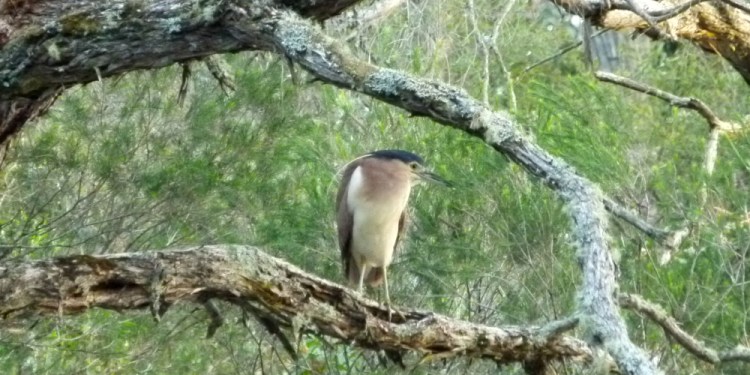
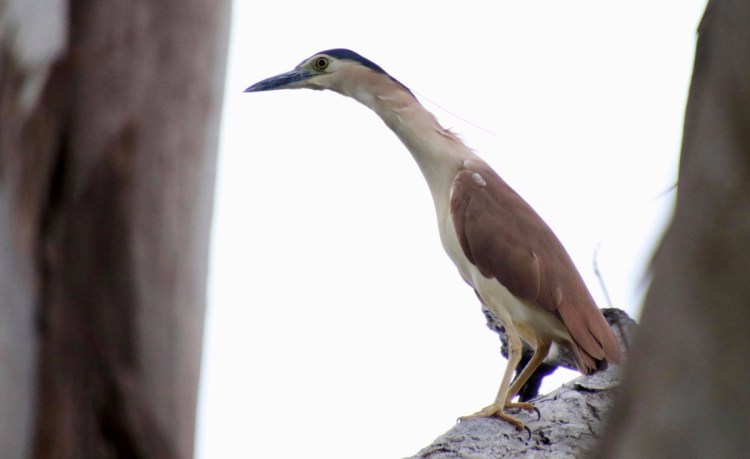
They look a bit different to most herons – partly because they don’t seem to have a long neck. But they can stretch their necks out quite a lot. Most night-herons around the world have this short-necked, big-headed appearance.
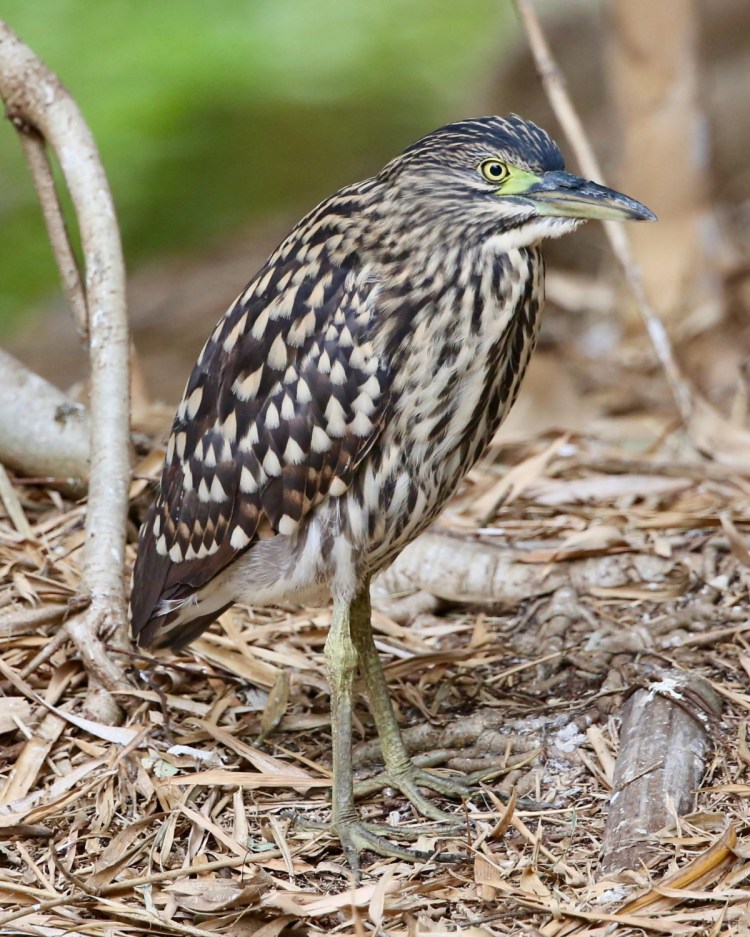
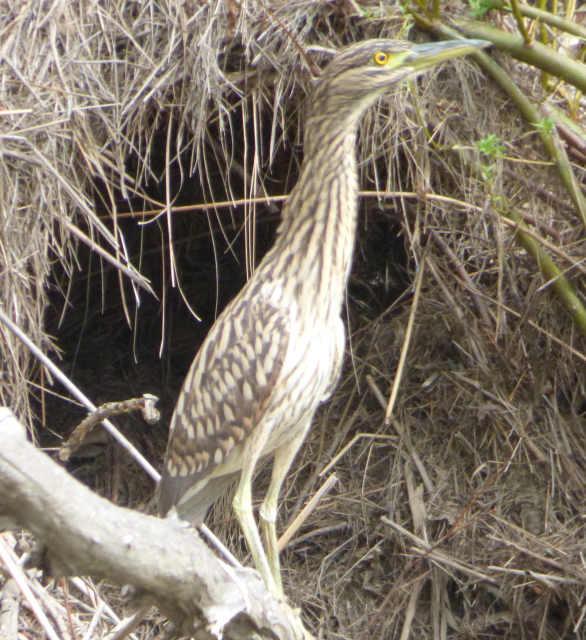
As juveniles they are streaky brown and buff, with a prominent neon green face, eye and lower bill. They look like quite a different bird, and could be confused with (much smaller) Striated Heron, the (much larger) Australasian Bittern or (darker) Black Bittern (though that bird is not likely in Victoria).
Scroll through to see lots of great pics here: https://ebird.org/species/runher1?siteLanguage=en_AU
Details: Nankeen Night-Heron Nycticorax caledonicus
Location: most of Australia except Tas and inland WA/NT/SA. Also New Guinea, Melanesia, Indonesia, the Philippines & Taiwan. Vagrant to New Zealand.
Conservation status/learn more: Vulnerable in Vic. https://birdlife.org.au/bird-profile/nankeen-night-heron
Thanks to Caroline Jones, Jack Winterbottom, John Hutchison, Martin Butterfield and Brett Howell for your wonderful pics and tips.
 Mallacoota Birds