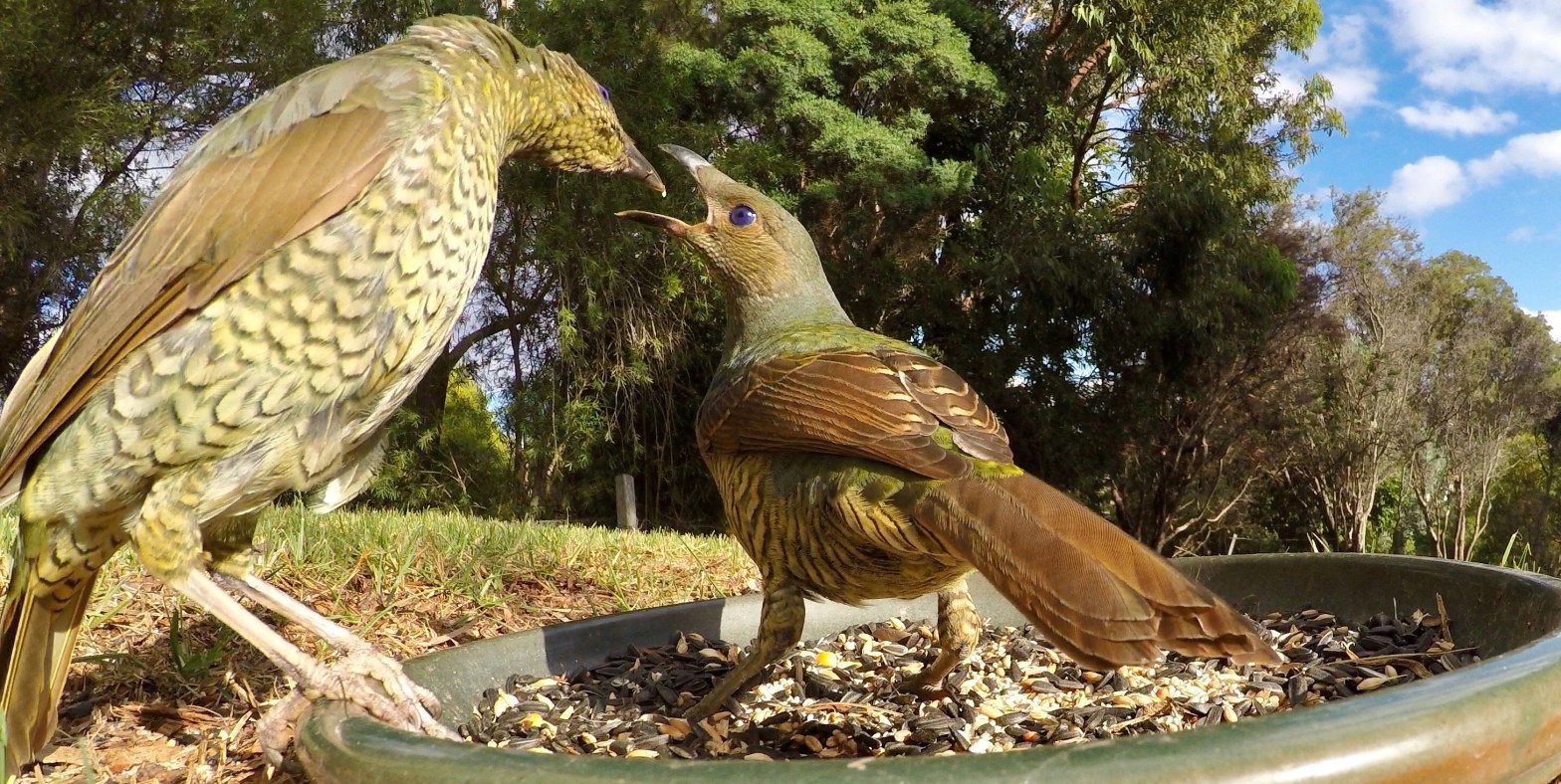
Bird of the Week: Satin Bowerbird 29 January 2021
There are a few occasions in The Bush when coming across a sign made by an animal is as much fun as finding the animal itself. Finding a Satin Bowerbird bower is like that.
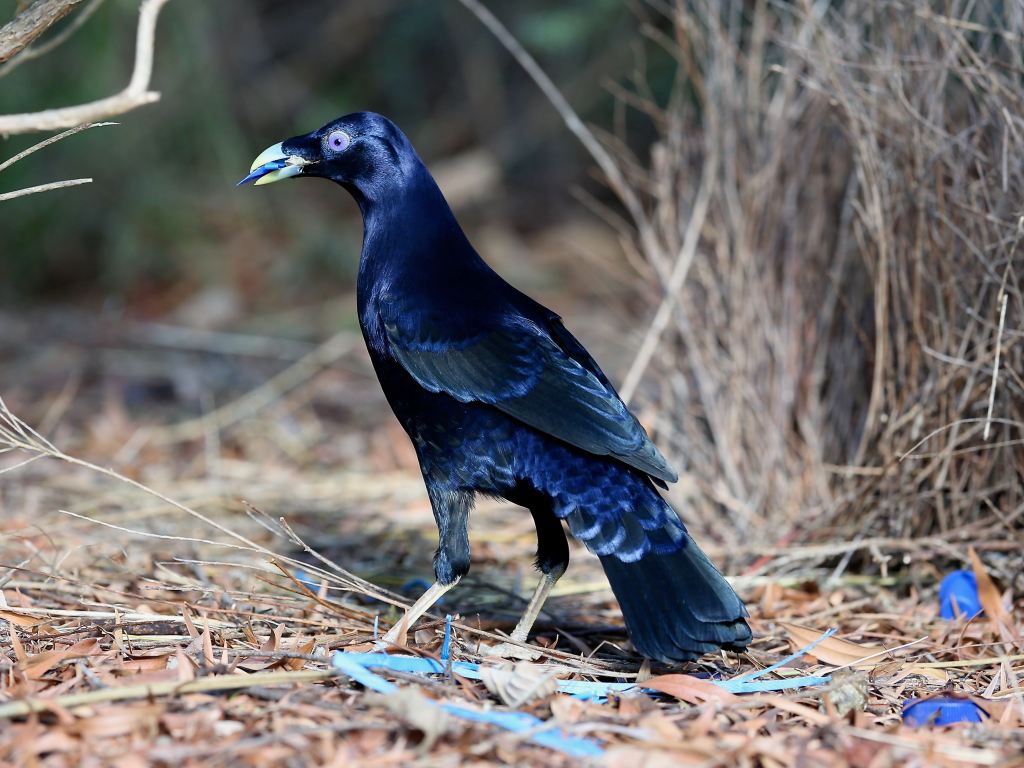
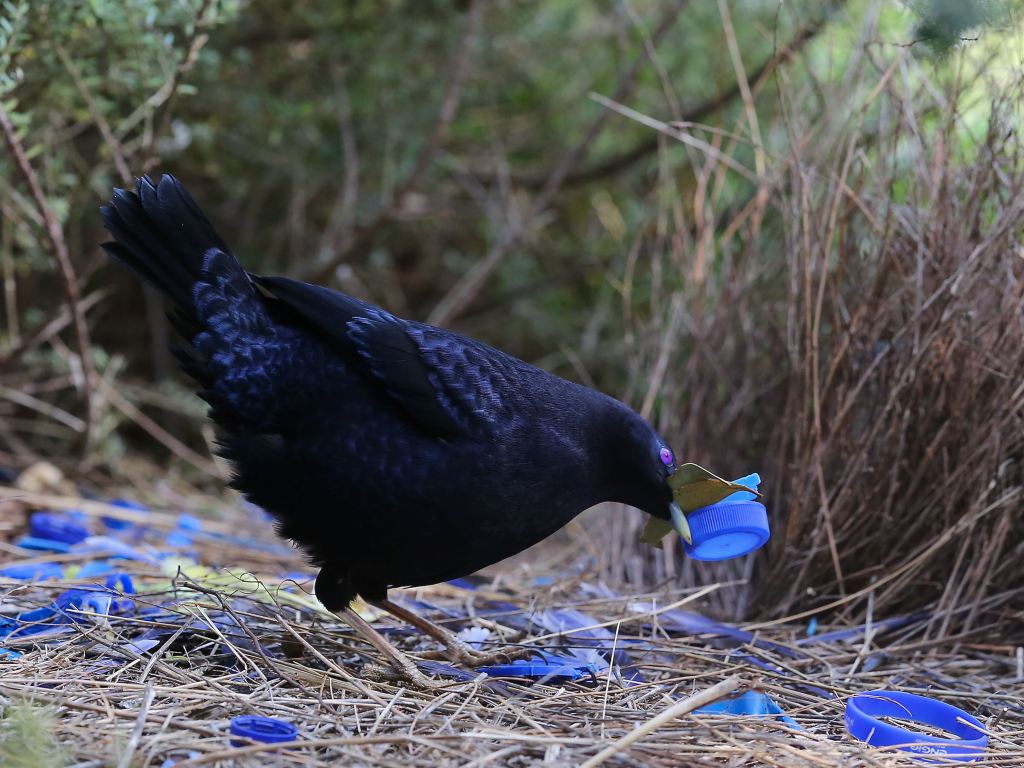
These structures are simply wondrous. Often well-hidden, with slightly-curved reddish walls of grass & sticks, like a little avenue. Out of each end electric blue objects spill, as though scattered by a messy passer-by.
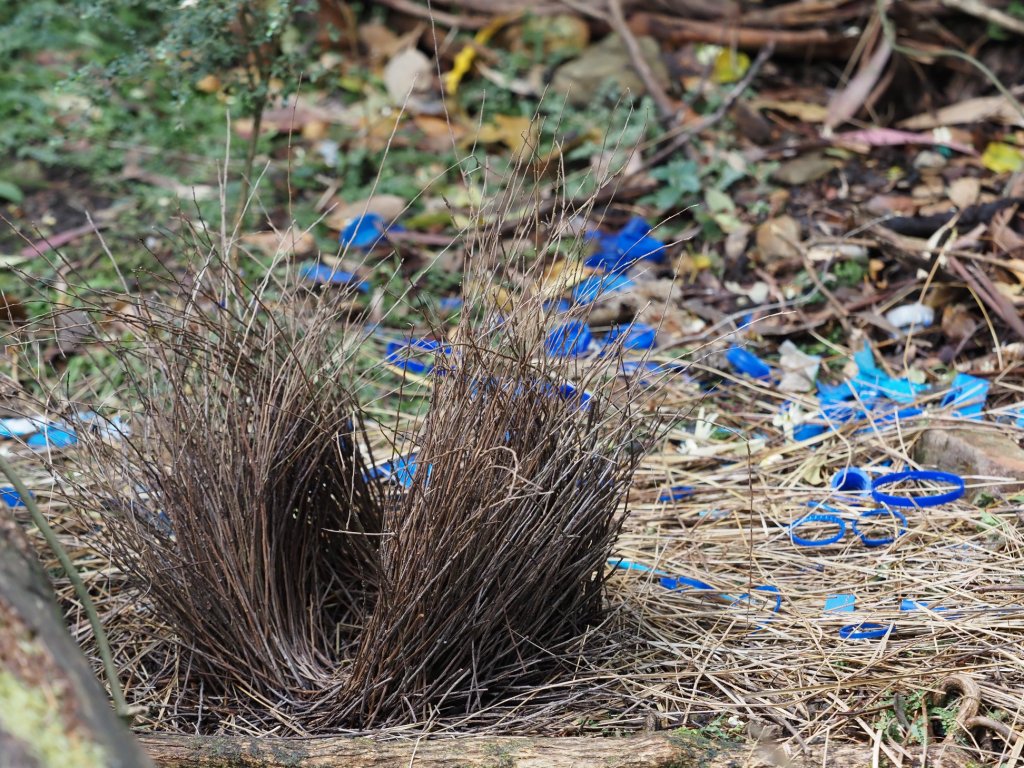
We are very lucky to have this great architect of the bird world amongst us. Very few animals create such elaborate and large structures, and even fewer create them purely for mating.
The blue objects are almost always a deep electric blue that is almost purple. The colour of the tail feathers of a Crimson Rosella (an item that is often part of the display). The colour of the berries of a Dianella flax-lily, also often in the bower. Also, sadly, the colour of many blue pen lids, milk bottle tops, and clothes pegs.
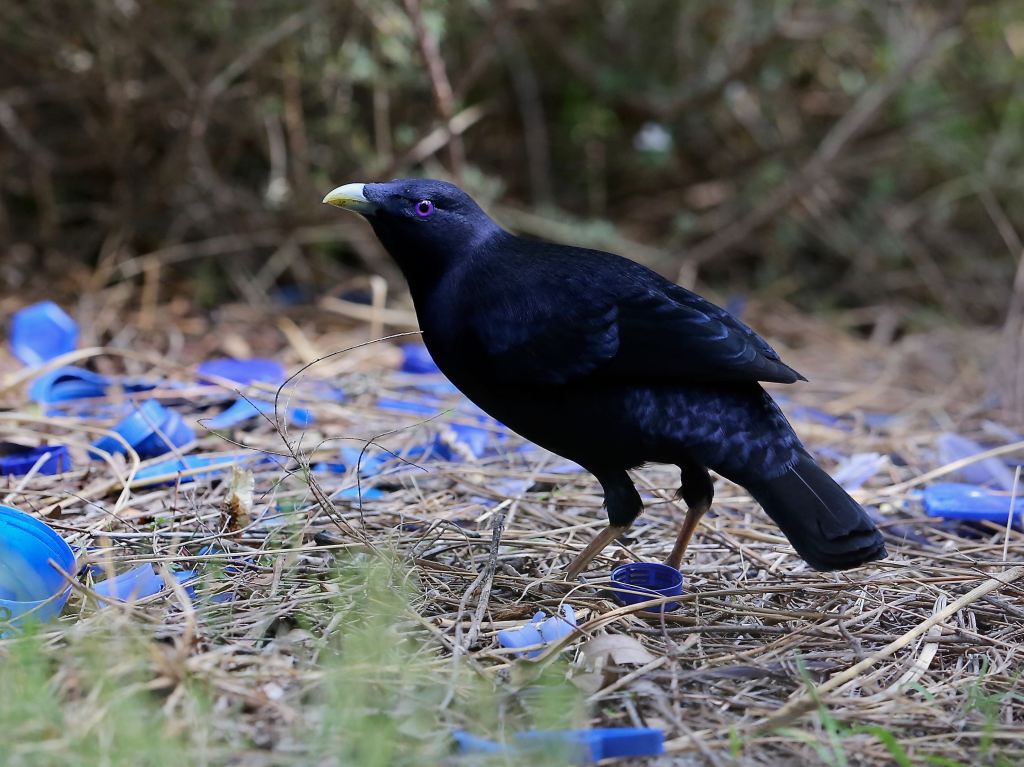
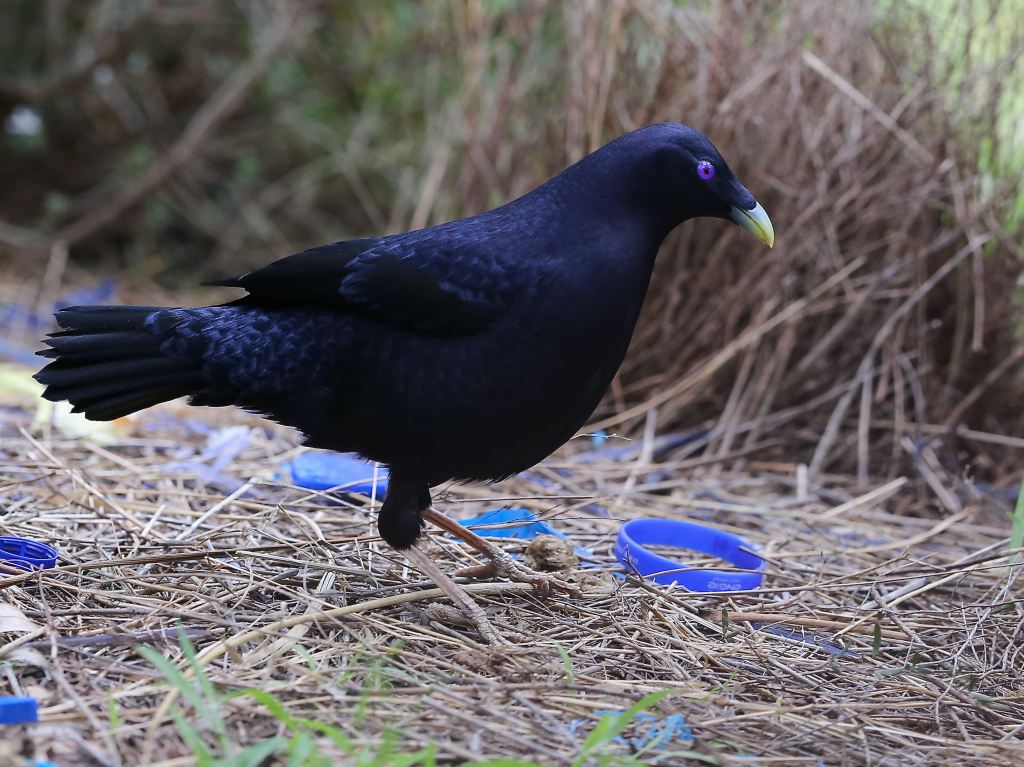
Please, if you love bowerbirds, snip the rings from bottles before binning them. They sometimes get caught around the bird’s head, with fatal consequences.
As anyone with a bower in their garden may know – the arrangement of the decorations in the bower is not random. The artist spends many hours arranging and re-arranging the order. Often the items are passed down and thieved by many generations of bowerbirds, forming a treasure trove as described by John Hutchison in his wonderful blog:
http://avithera.blogspot.com/2016/05/satin-bowerbirds.html, and: http://avithera.blogspot.com/2018/09/satin-bowerbirds-2018.html
There’s about 18 species of bowerbirds in the world, and all are confined to Australia or New Guinea. In Australia we also have the Great Bowerbird across the Top End, Western Bowerbird in WA & NT/SA, Spotted & Regent Bowerbird in NSW & QLD, and Fawn-breasted, Golden and Tooth-billed Bowerbird in Queensland.
A study by Endler (2010) found that Great Bowerbirds use ‘forced perspective’ in their bower design to make themselves seem larger. Great Bowerbirds also build avenue bowers very similar in design to the Satin’s, but their decorations are white, grey with splashes of green or red.
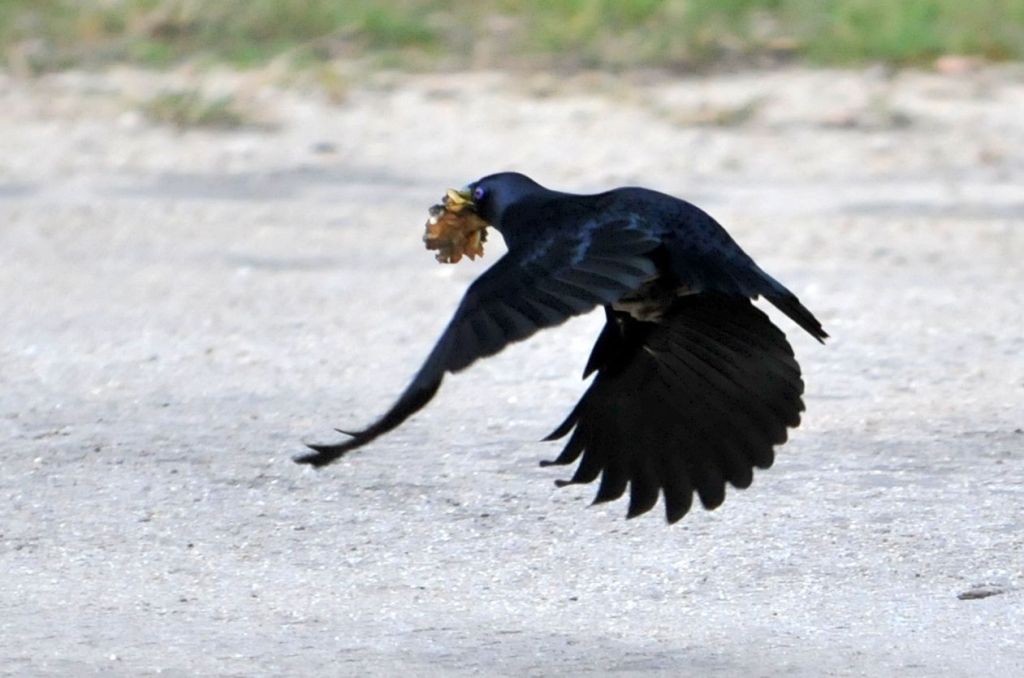
The marvellous inky blue-black plumage of adult males is only achieved at about 5-7 years of age. Until then, males look like females.
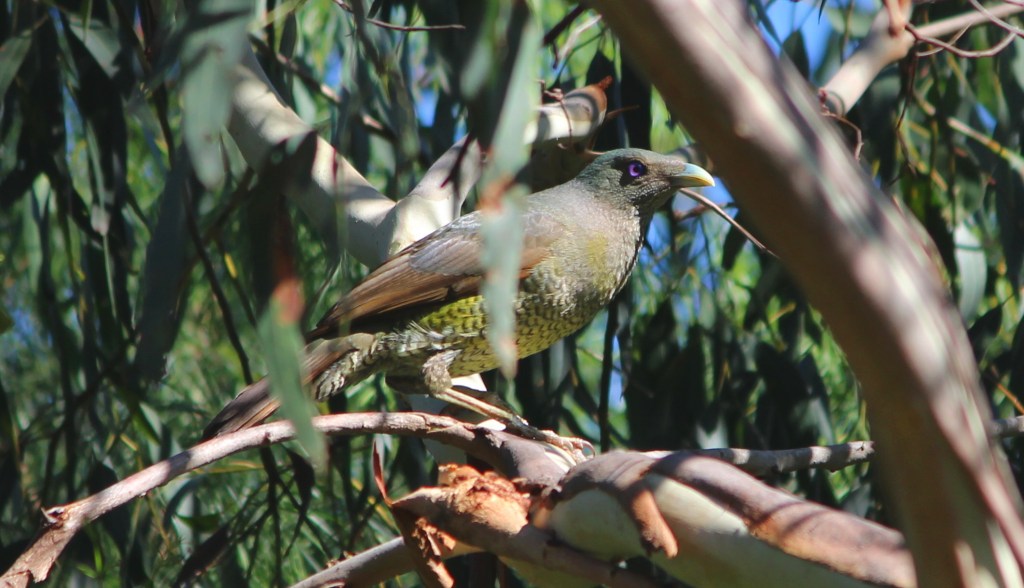
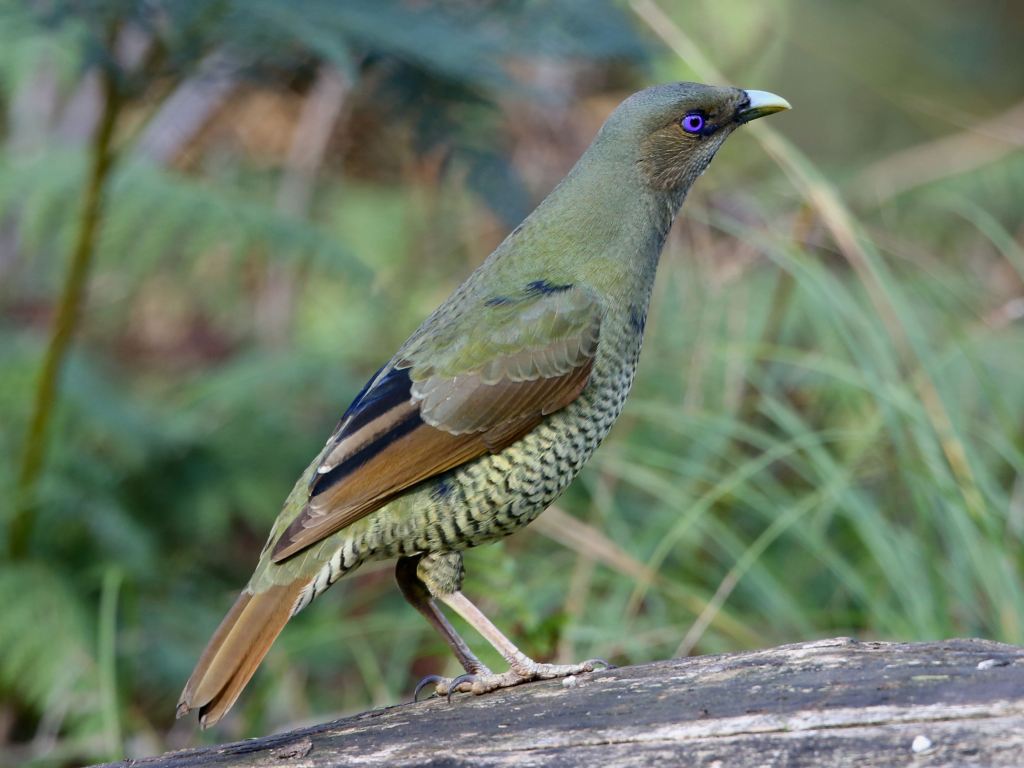
Females are green above with orange-brown wings and tail. Underneath they have yellow feathers with dark chevrons. Black bill.
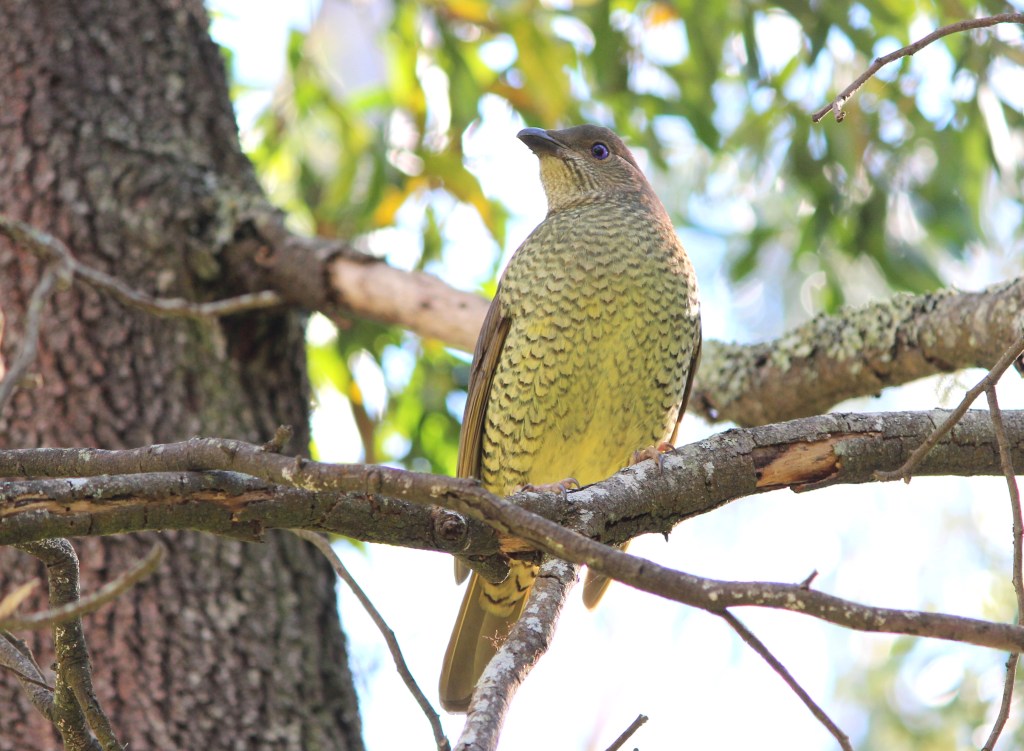
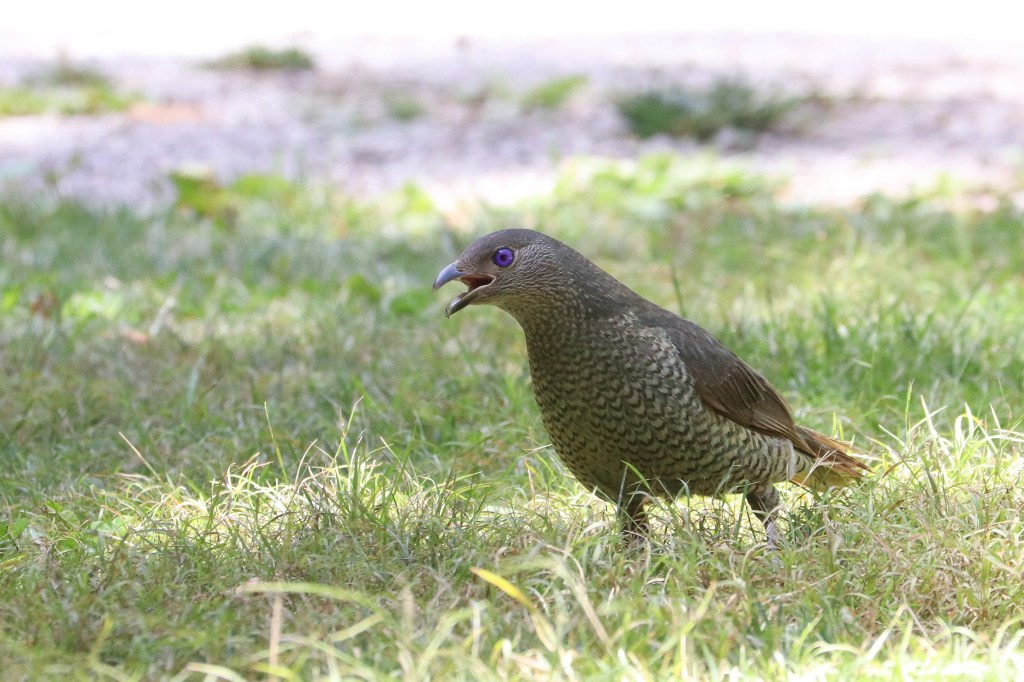
Juvenile birds have more brown on their heads, but otherwise like females. They also have whitish streaks and edges on their upper wing feathers.
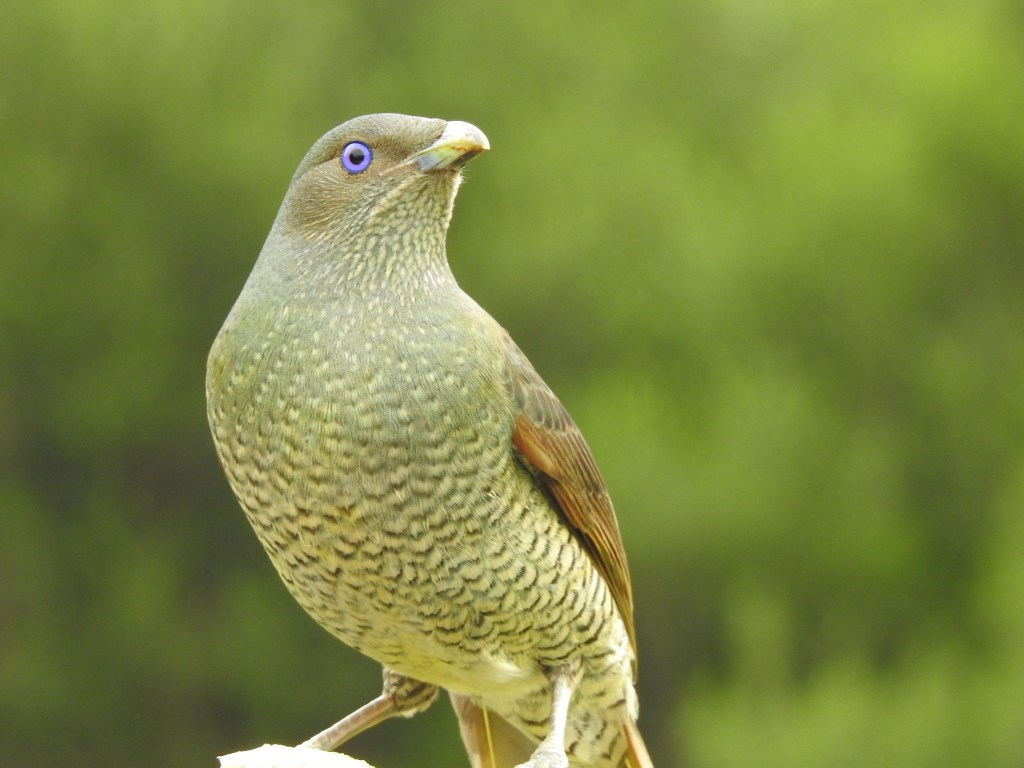
Immature males by about 3-4 years old are developing the pale bill, have more green on their throat than females, and may start to get some black body feathers.
LISTEN TO THE CALLS & Scroll through to see lots of great pics here: https://ebird.org/species/satbow1/
Details: Satin Bowerbird Ptilonorhynchus violaceus violaceus
Location: Eastern Australia only. Our subspecies violaceus in eastern Vic, coastal NSW & south QLD. Subspecies minor in north QLD.
Conservation status/learn more: considered secure in Vic, though lost much habitat in Black Summer fires. https://birdlife.org.au/bird-profile/satin-bowerbird
Thanks to Michael Barnett, Caroline Jones, James Cornelius, Phil Johnstone, John Hutchison, Jack Winterbottom & Rob Clay for your wonderful pics and videos.
Watch a cool video of an adult male having a bath here: https://www.facebook.com/553710148/videos/10157537852635149/
 Mallacoota Birds