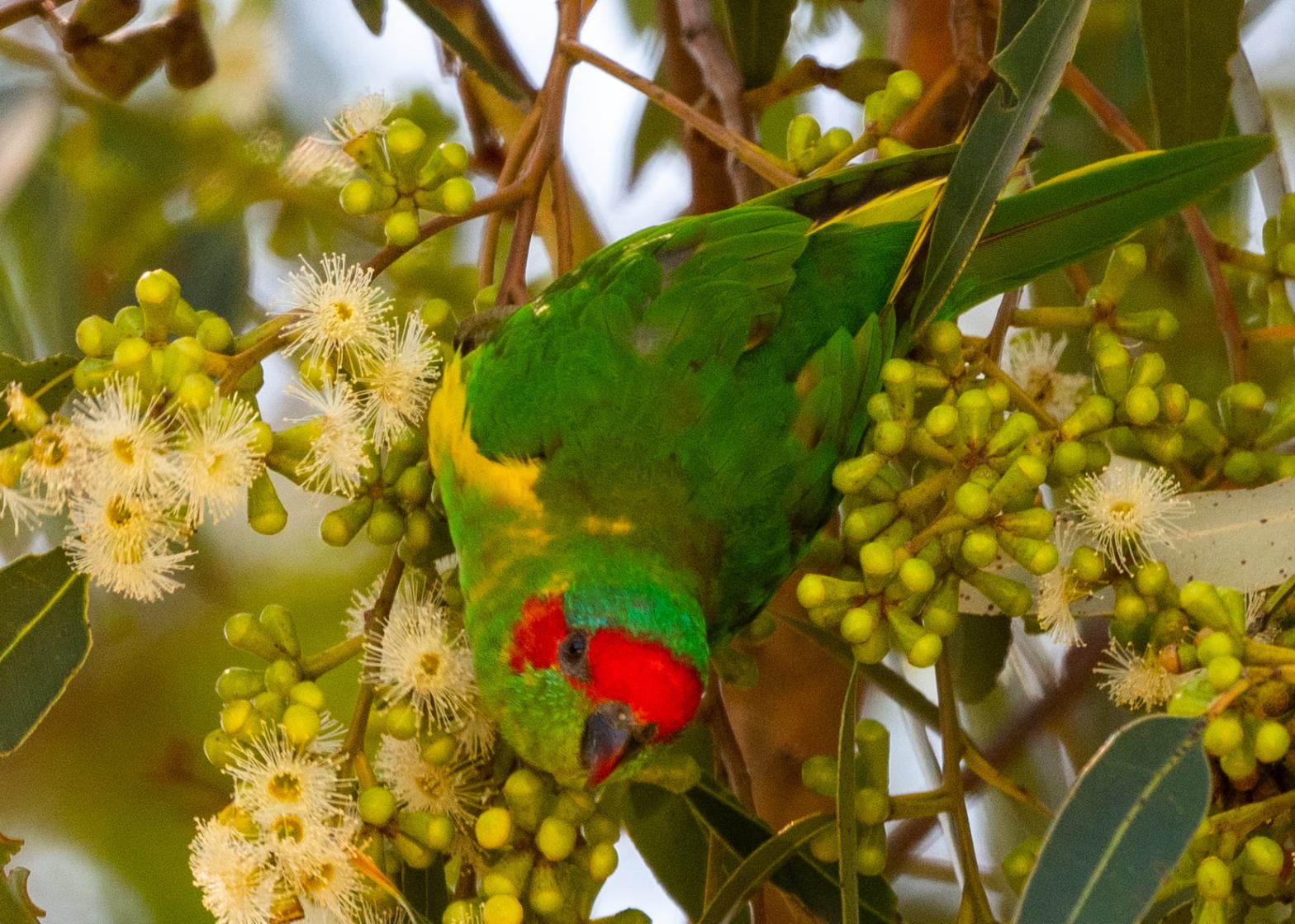
Bird of the Week: Musk Lorikeet 13 February 2021
For some reason lorikeets, though brilliantly-coloured and noisy, can be hard to see. When you hear a cacophony of lorikeets in a big flowering eucalypt, you look up, expecting to see dozens. But you see none. Then, a movement – you focus your binoculars on the spot. Its a wattlebird!
You can do this ten times before you find one of the lorikeets. Then suddenly the flock flies out of the tree, and briefly you see 20 or 30 flashes of bright green… then they’re gone.
Lorikeets have a way of moving through a tree surreptitiously.
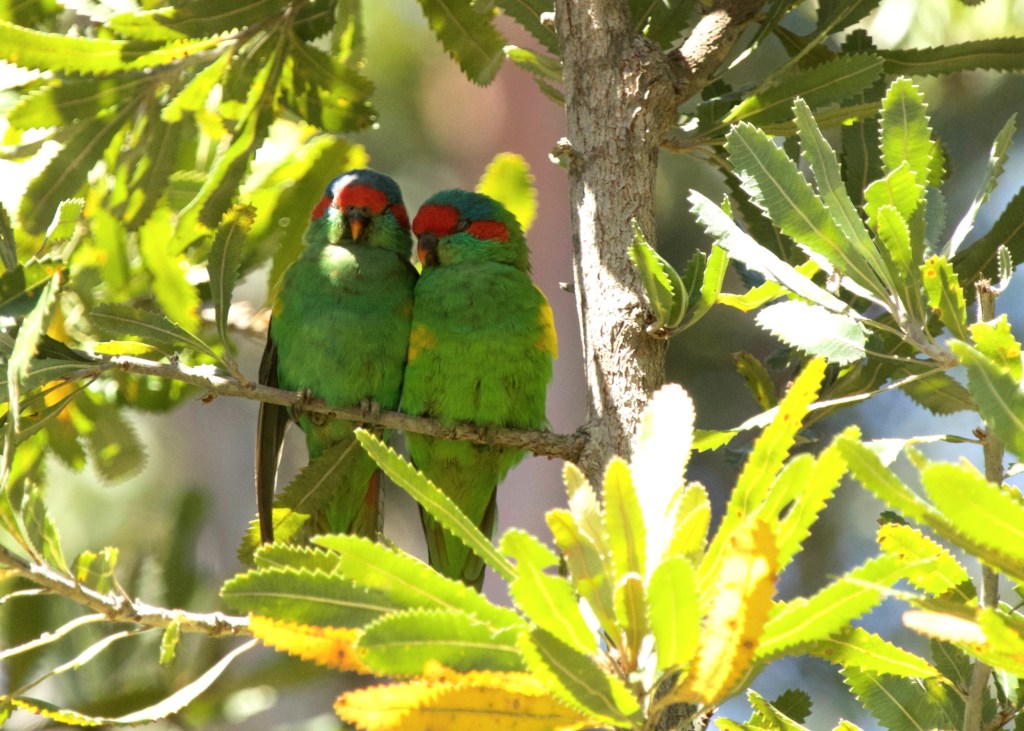
As a result, I think small lorikeets are recorded less often than they occur. Rainbow Lorikeets are big and more inclined to feed low on garden shrubs, so are well known. But medium-sized Musk Lorikeets, and very small Little Lorikeets, also occur in East Gippsland but are less known.
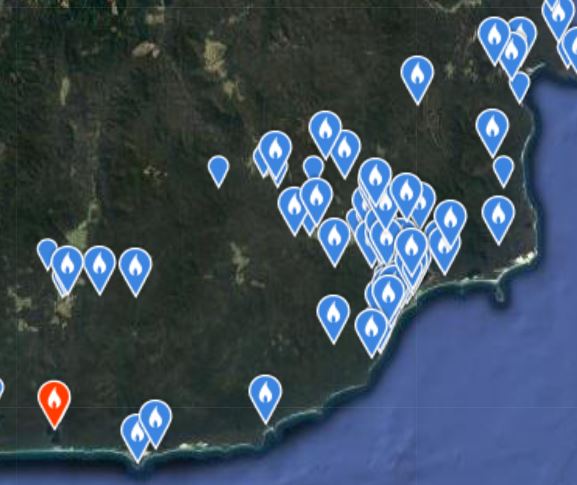
Martin Butterfield has provided this handy map of sightings:
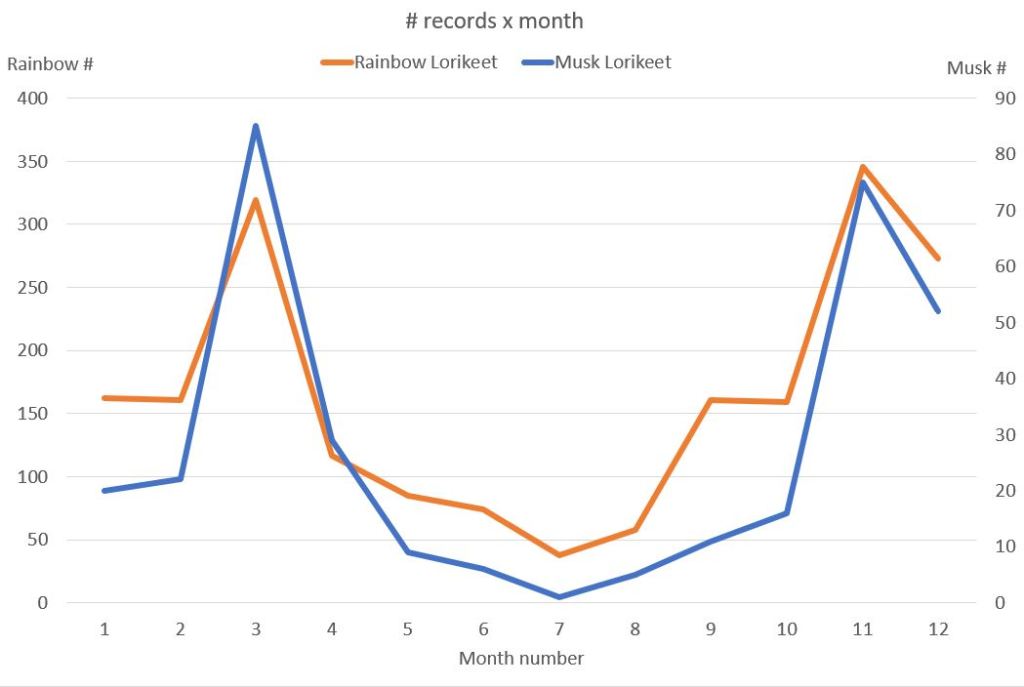
…and a graph showing the observations, compared to Rainbow Lorikeet. Note the different scales – although the pattern is similar, the numbers of birds is far far fewer for Muskies:
Tips to find them which have worked for me:
- watch out for mass flowering of eucalypts, or Grass-trees (Xanthorrhea).
- If you hear lorikeets, don’t assume they are all Rainbows. They often feed together. Look at each one.
- Rather than watching for movement in the whole tree, focus on a few prominent bunches of flowers and wait.
- Look also at shady branches at the top of the tree. They often roost there, and will sit quietly for ages.
- Their call is different to a Rainbow Lorikeet – higher pitched, with more of a bell-like quality. Get to know the call and you’ll find the bird
Does anyone else have any tips?
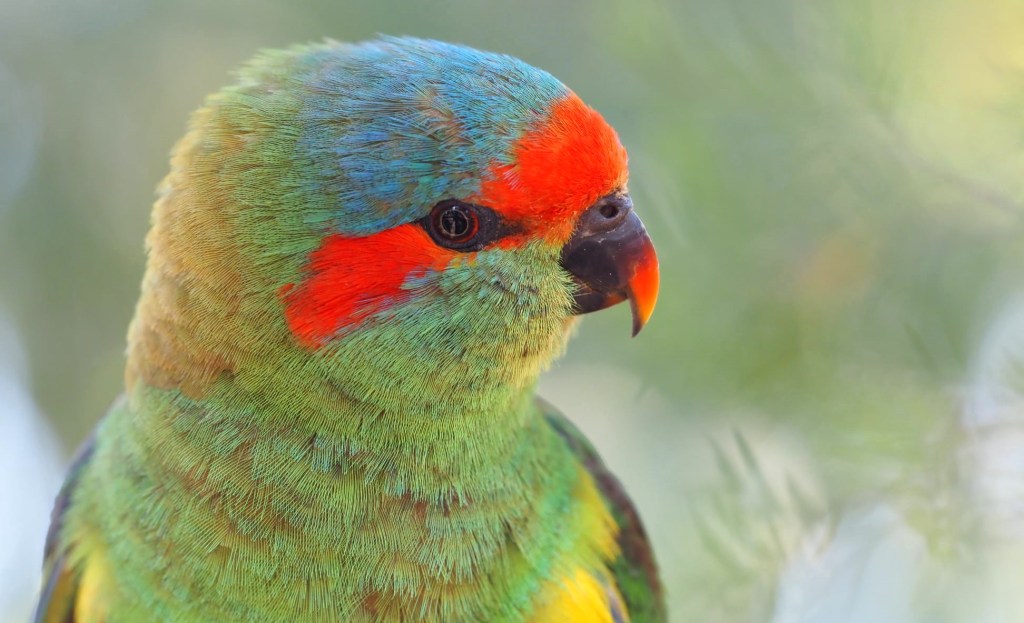
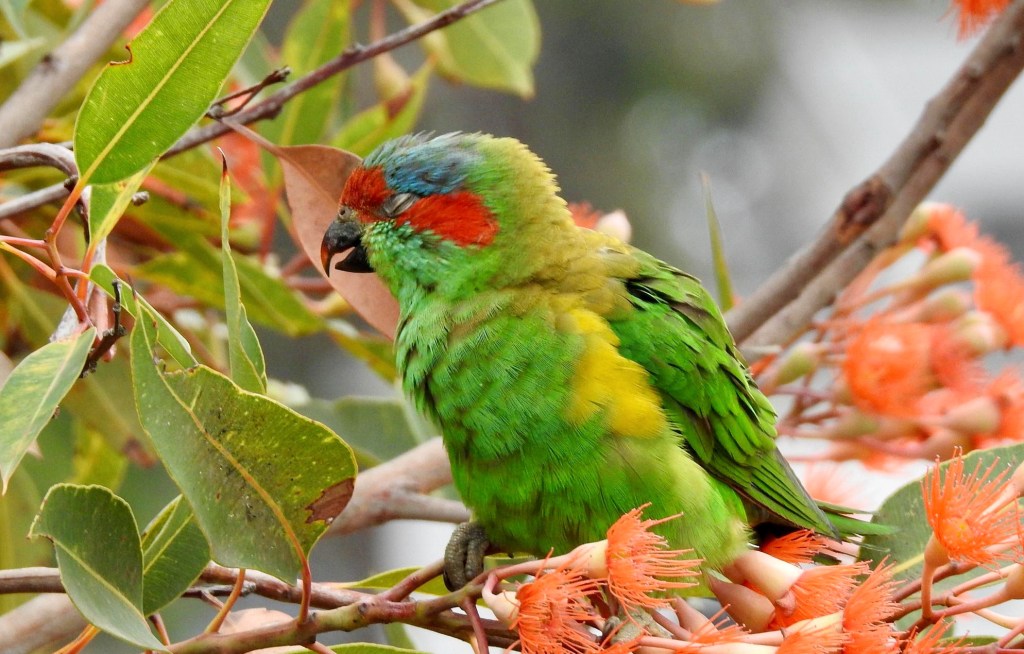
Adult males have teal-blue on the crown and cheeks, and a bit of a bluish wash on the throat and belly. Eye colour is brown or red. Bill is dark with a reddish-orange tip.
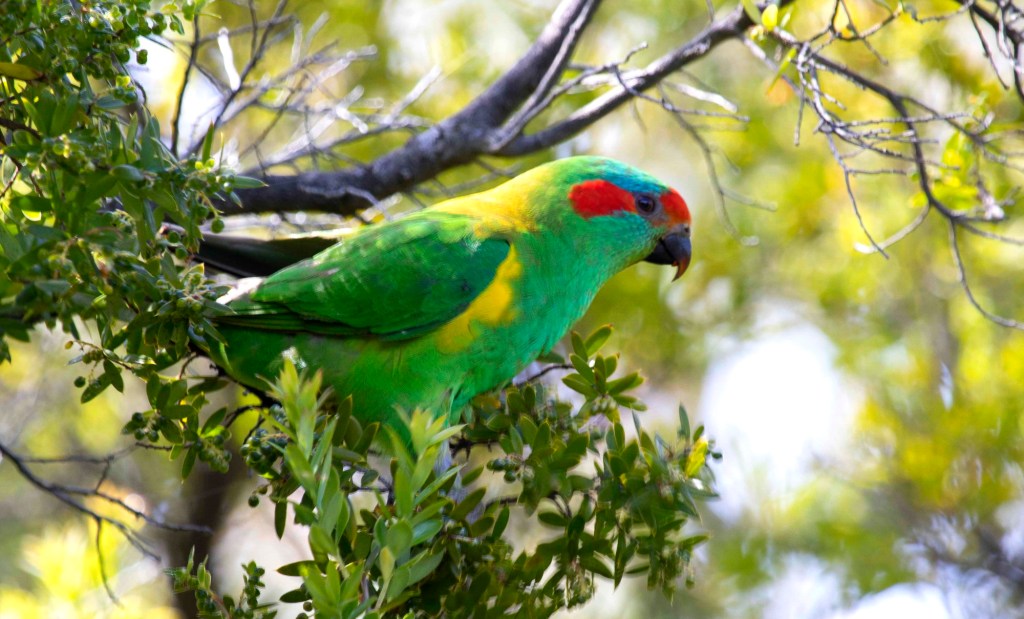
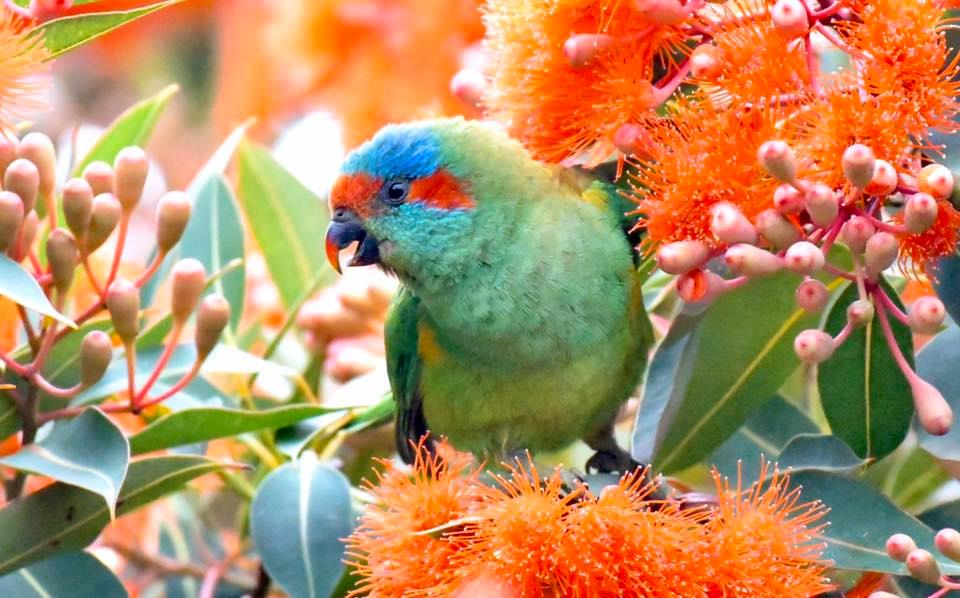
Adult females have less blue on the crown, and all green throat and belly. Bill and eye like male.
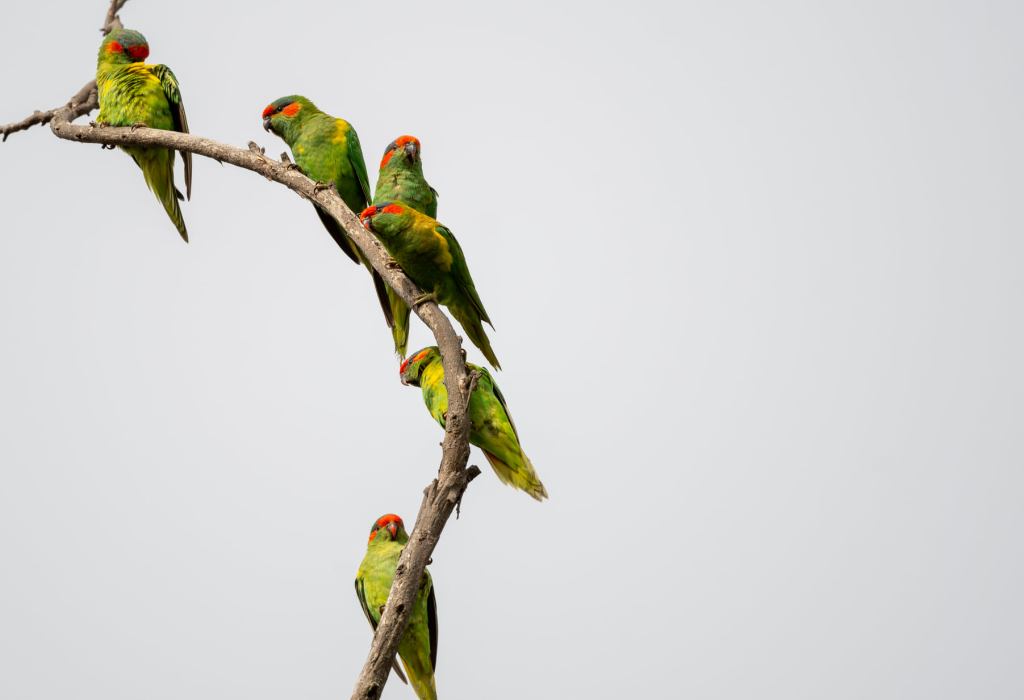
Juveniles are duller than adults, with green all over except for red forehead and ear area, and small yellow flash beside closed wing. Eyes pale brown, bill brown.
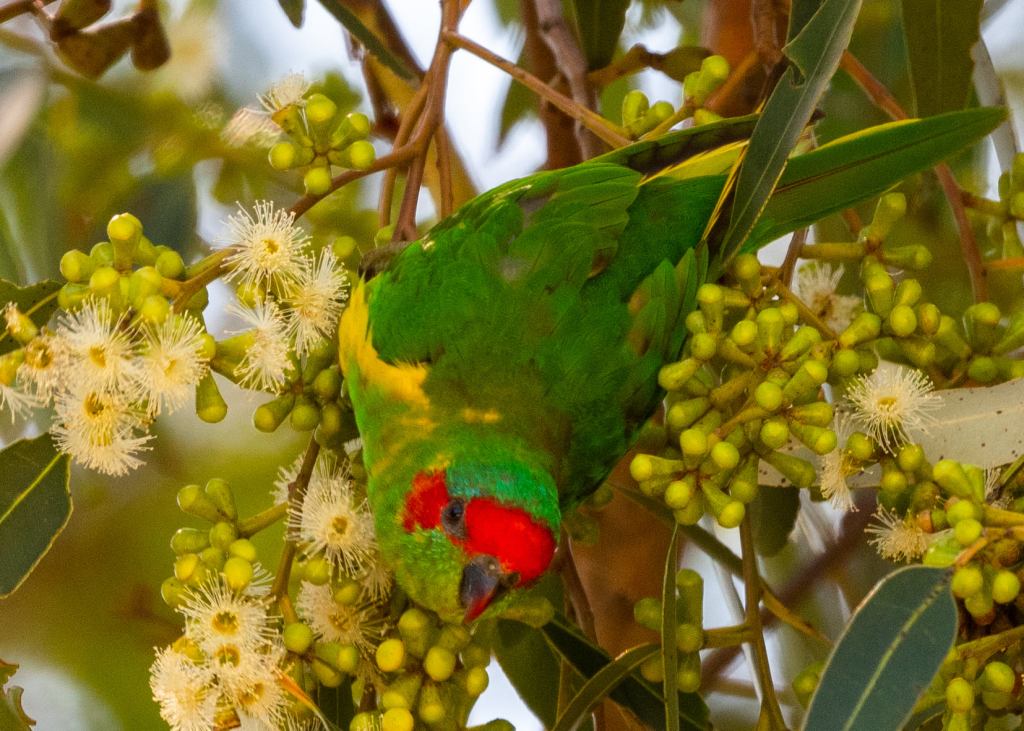
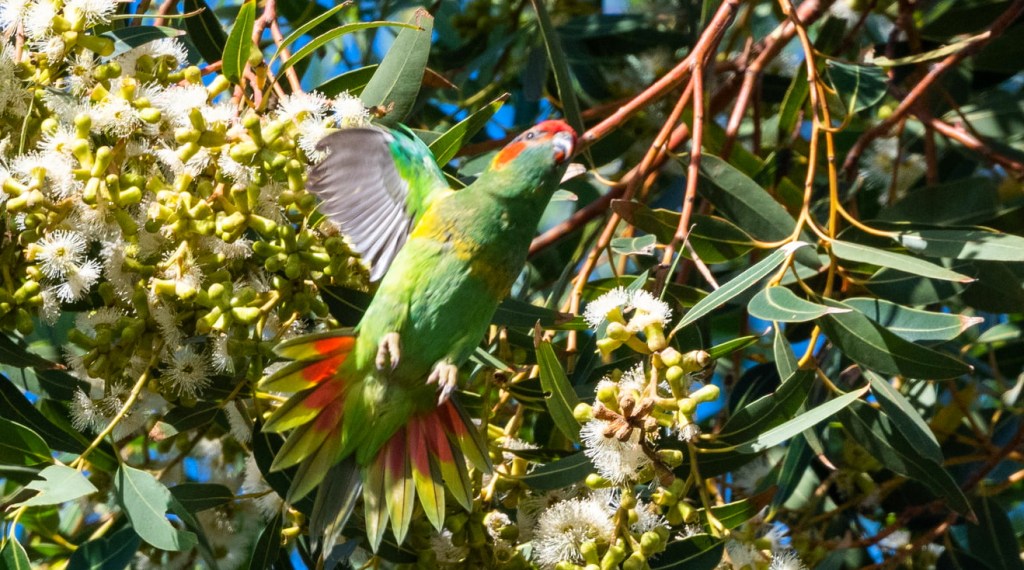
Note: they don’t have a red flash under their wing when they fly. Rainbows & Scaly-breasted Lorikeets do, Swift Parrots do. Musk & Little Lorikeets have green & grey-brownish underwings.
LISTEN TO THE CALLS & Scroll through to see lots of great pics here: https://ebird.org/species/muslor1
Details: Musk Lorikeet Glossopsitta concinna
Location: south-eastern Australia, from SA to south-eastern QLD, including VIC, NSW & TAS
Conservation status/learn more: https://birdlife.org.au/bird-profile/musk-lorikeet
Thanks to Martin Butterfield, Caroline Jones, Michael Barnett, Rob Clay and Martin Maderthaner for your wonderful pics and videos.
 Mallacoota Birds