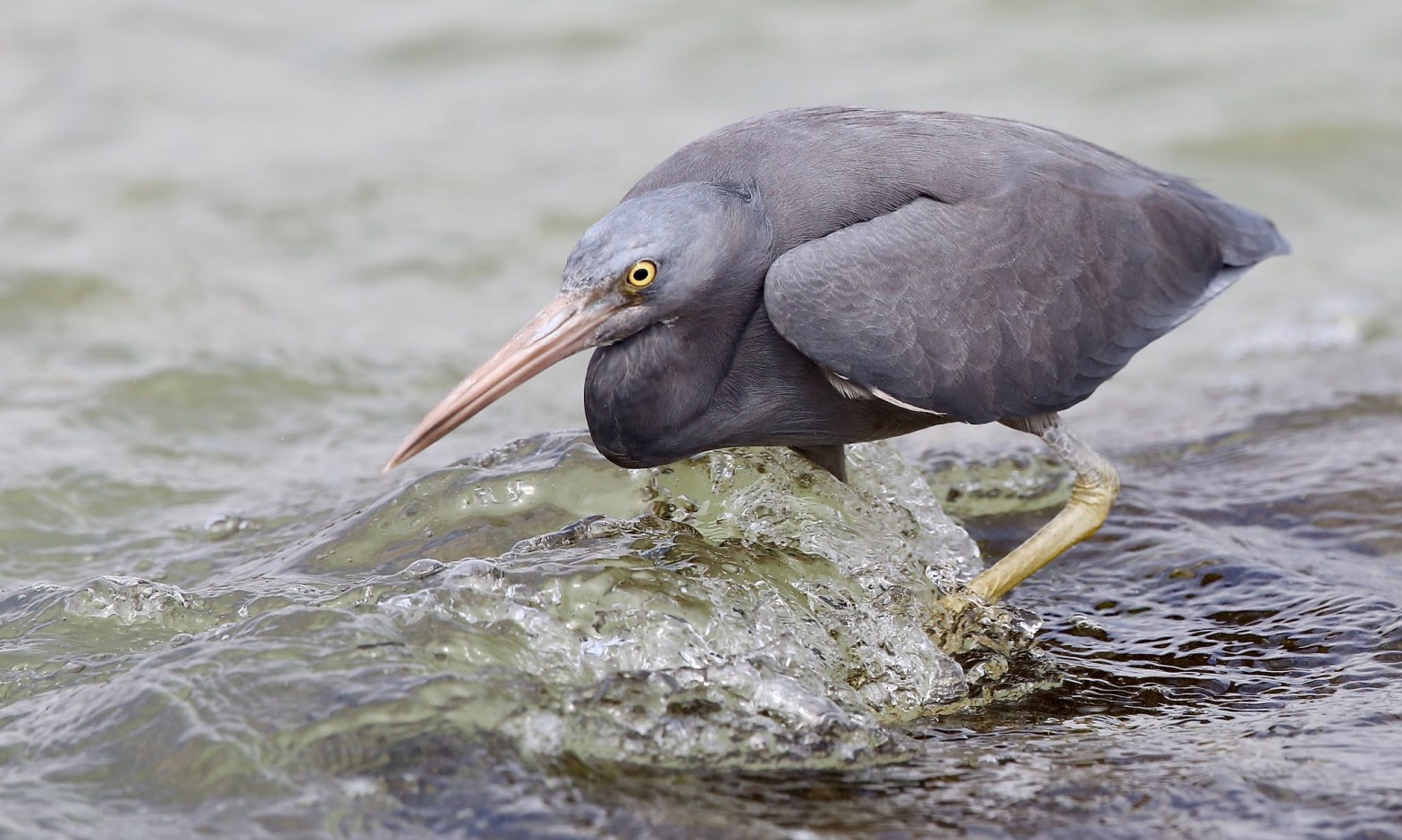
Bird of the Week: Eastern Reef Egret 19 February 2021
This bird is amazing in several ways. First, because the birds we see at Mallacoota are the great adventurers of their kind – they are at their extreme Australian southern limit here. Basically, hardly any Eastern Reef Egrets ever go much further south than Mallacoota. There have been a few records at Tamboon, Cape Conran, Marlo and Lakes Entrance, and 3 around Wilsons Prom, and one at Westernport Bay.
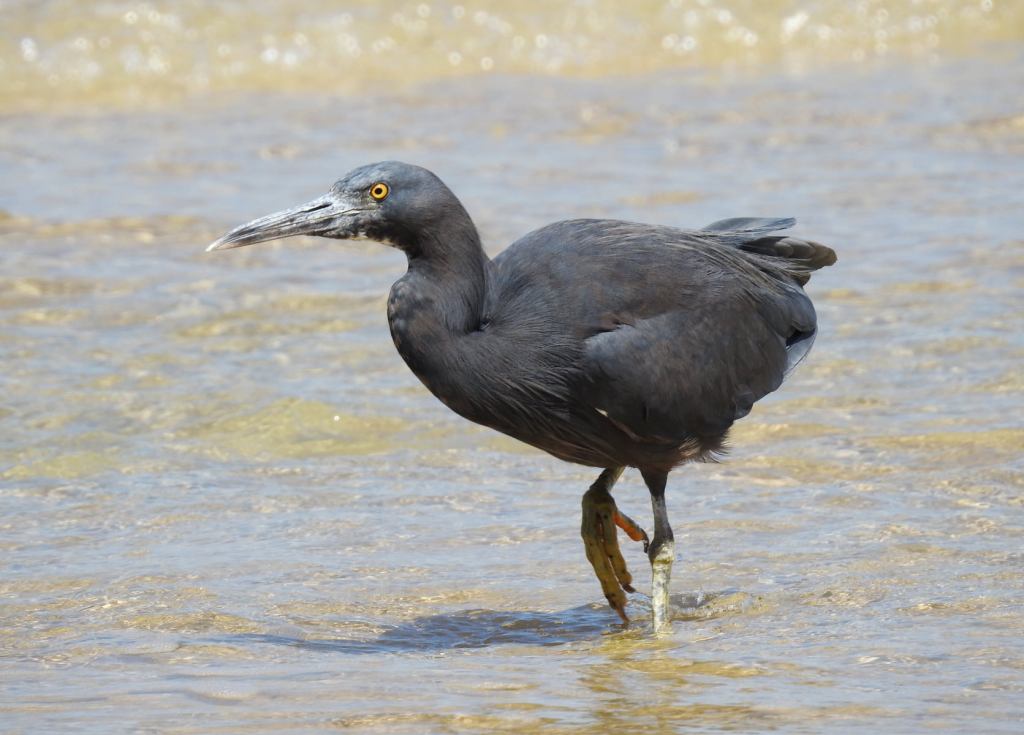
It makes me wonder if they are the same birds visiting different sites every year, or if there’s a bunch of them that check out Victorian shores opportunistically.
See some wonderful photos on John Hutchison’s blog here: https://avithera.blogspot.com/2020/12/eastern-reef-egret-fishing.html
In New Zealand they go a bit further south, and are seen quite regularly on Stewart Island and around Dunedin, Invercargill and Resolution Island in the south west.
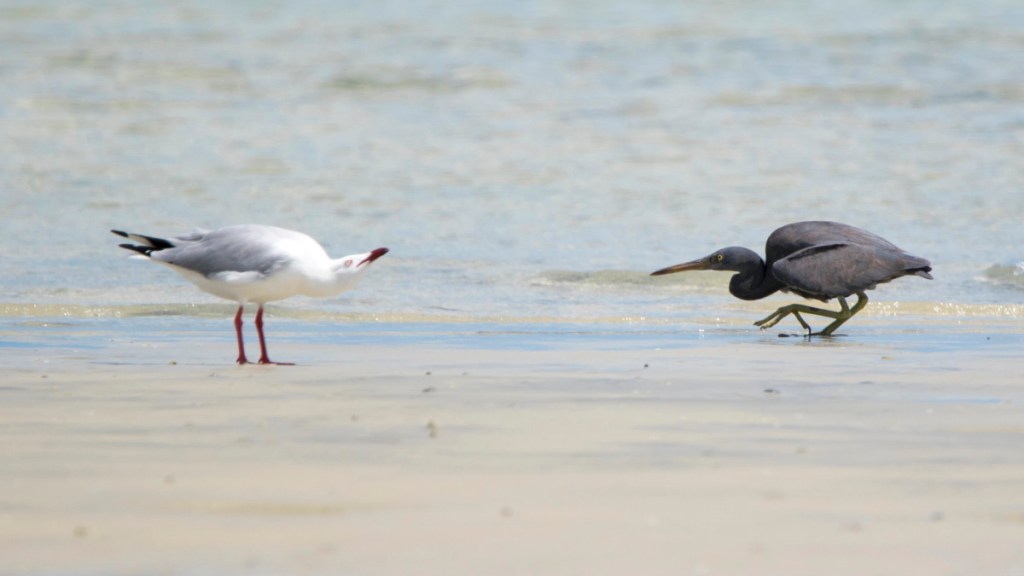
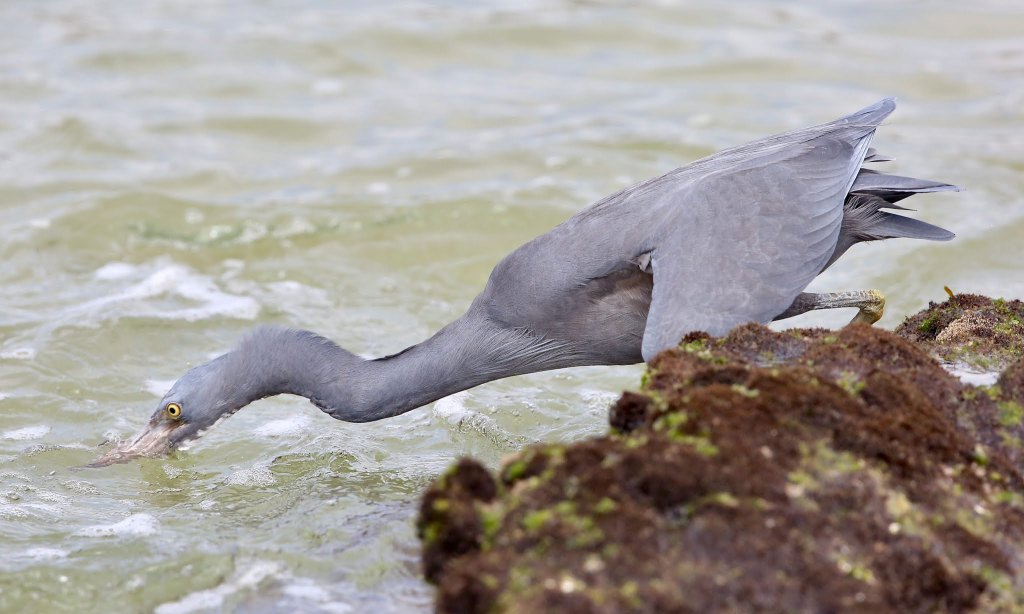
They are clearly not afraid of cold, and breed in Japan and Korea, through Asia, to Australia and New Zealand.
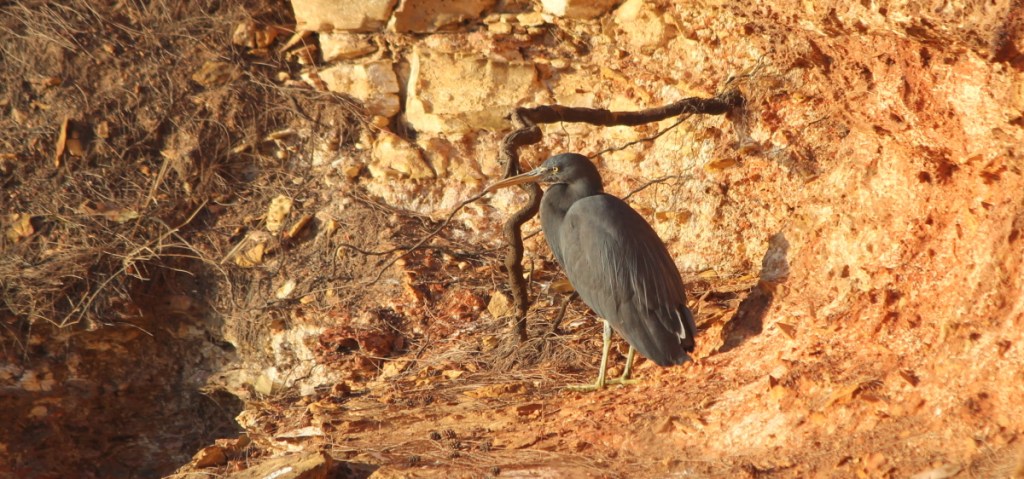
The other amazing thing about them is the colour. In the south and north extremes of their range, we only see the grey morph/phase. But in the tropics there is also a white morph. Why? Studies have been inconclusive, but there is a slight difference in habitat and feeding strategies of the two colour types: white tend to feed in the surf, grey on the reef flat. Our Mallacoota grey birds are usually seen on the rocks.
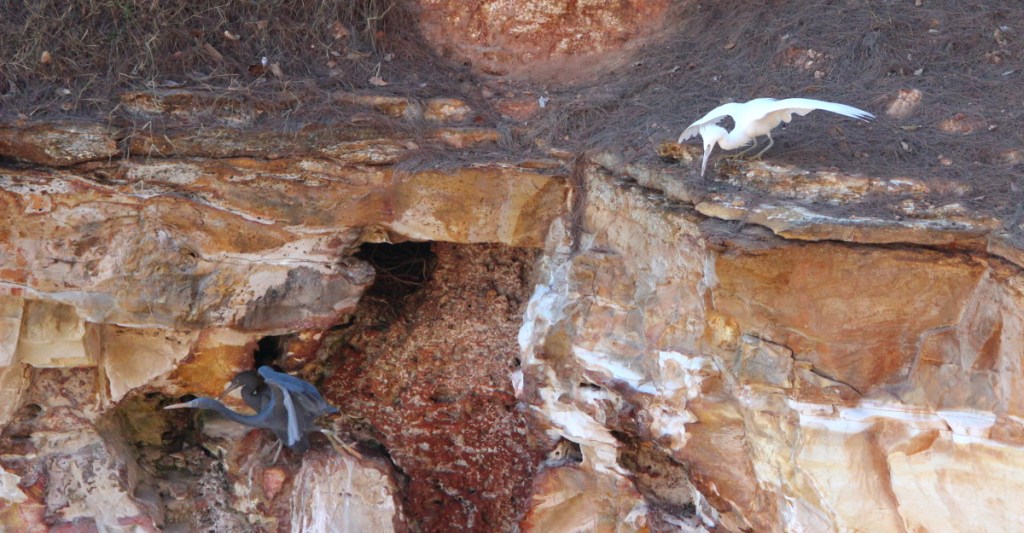
Lots of fantastic information here: Heron Conservation https://www.heronconservation.org/herons-of-the-world/list-of-herons/eastern-reef-heron/
Males are larger than females, so if you can get photos of two together it would be really interesting. They are pretty territorial, so when two are seen harmoniously together it may imply that they are a pair. Others might be able to comment on this?
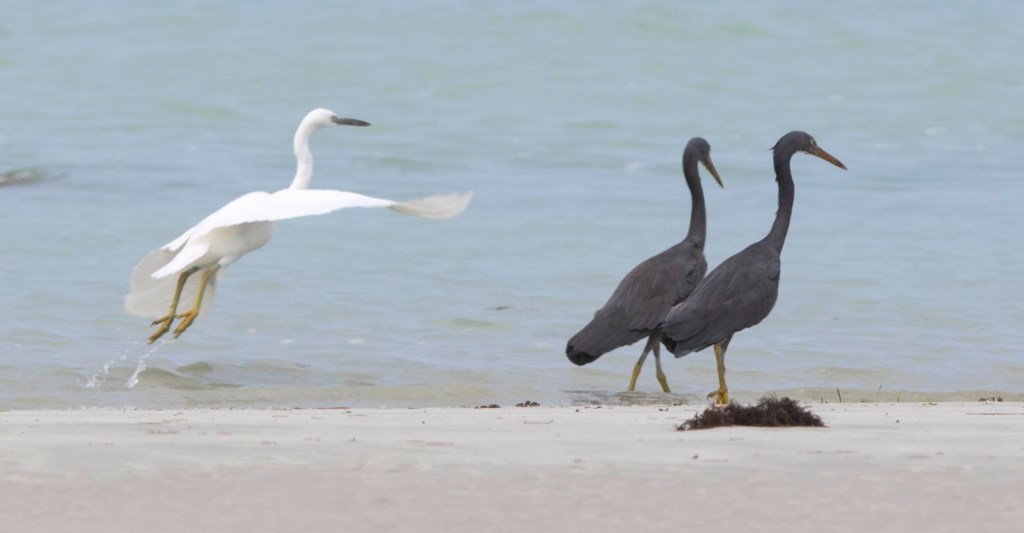
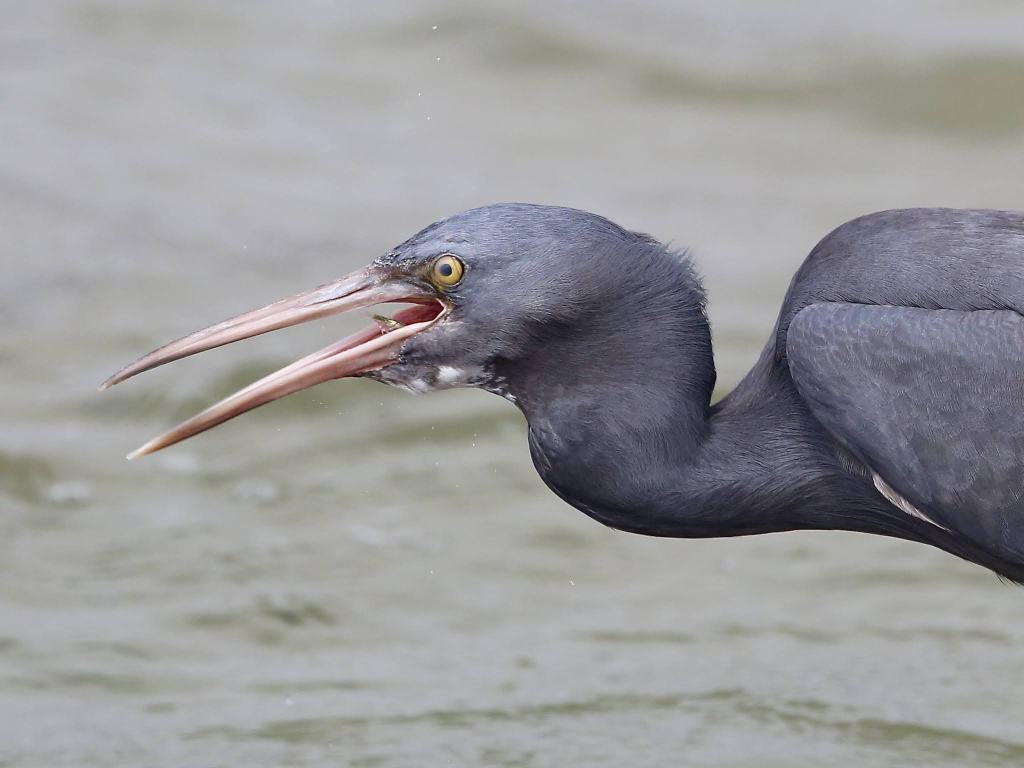
Some variation in plumage is widespread. Some adults have the white chin and throat seen in John’s picture below, others don’t. The bill can be greyish or yellowish. When breeding the bill and legs become more yellow. They all have yellow irises. The legs are usually yellowish, but can be dark in front and light behind. The soles of the feet are yellow.
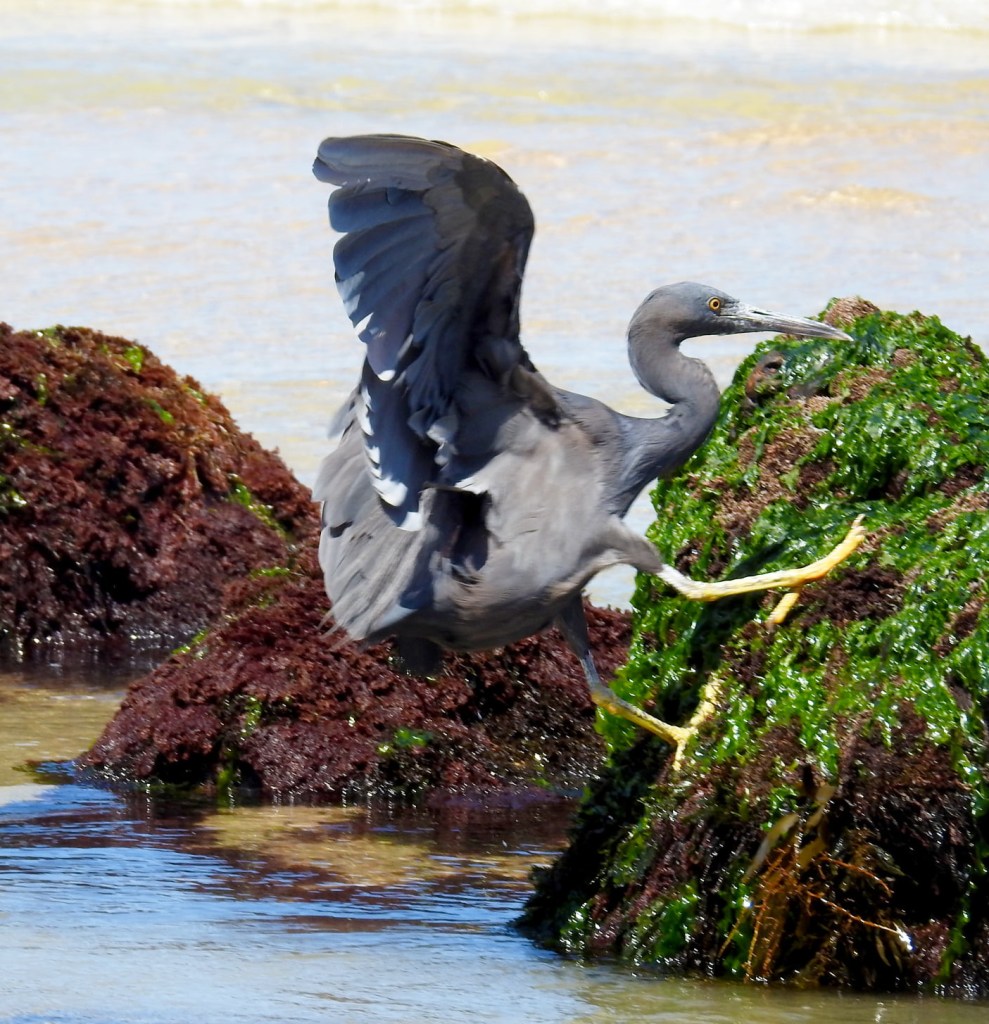
LISTEN TO THE CALLS & Scroll through to see lots of great pics here: https://ebird.org/species/pacreh1?siteLanguage=en_AU
Details: Eastern Reef Egret Egretta sacra
Location: North Asia, South-east Asia west to Myanmar, The Phillipines and Indonesia, New Guinea, Australia, New Zealand and east to French Polynesia & Pitcairn Island.
Conservation status/learn more: https://birdlife.org.au/bird-profile/eastern-reef-egret
Thanks to Caroline Jones, John Hutchison and Jack Winterbottom for your wonderful pics and information.
 Mallacoota Birds