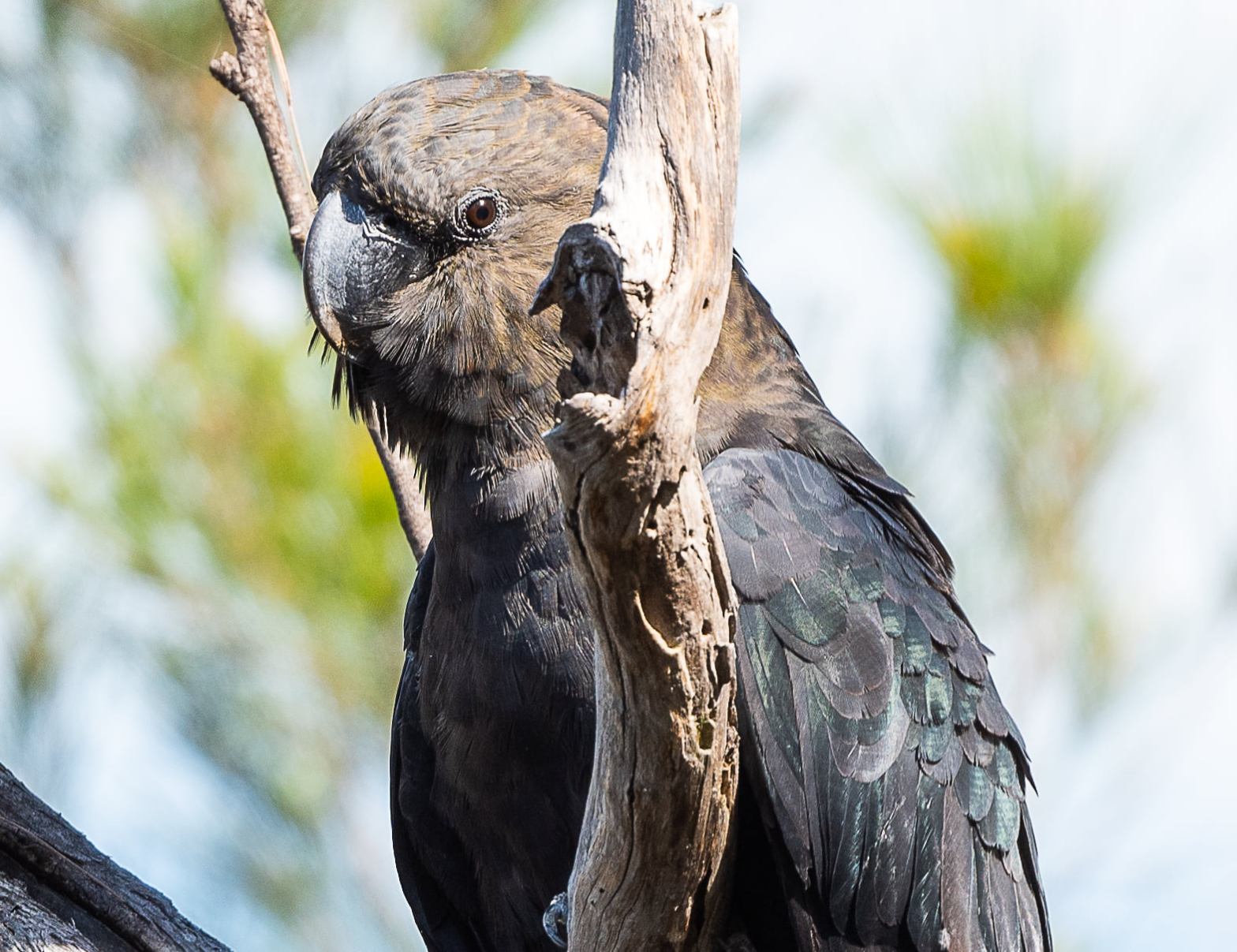
Bird of the Week:Glossy Black-Cockatoo 26 February 2021
Cockatoos and parrots are feature of the Mallacoota/Gipsy Point area – there are many species and they are highly visible. The Glossy Blacks are the top of the list for many, they are rare, quiet and can be difficult to see.
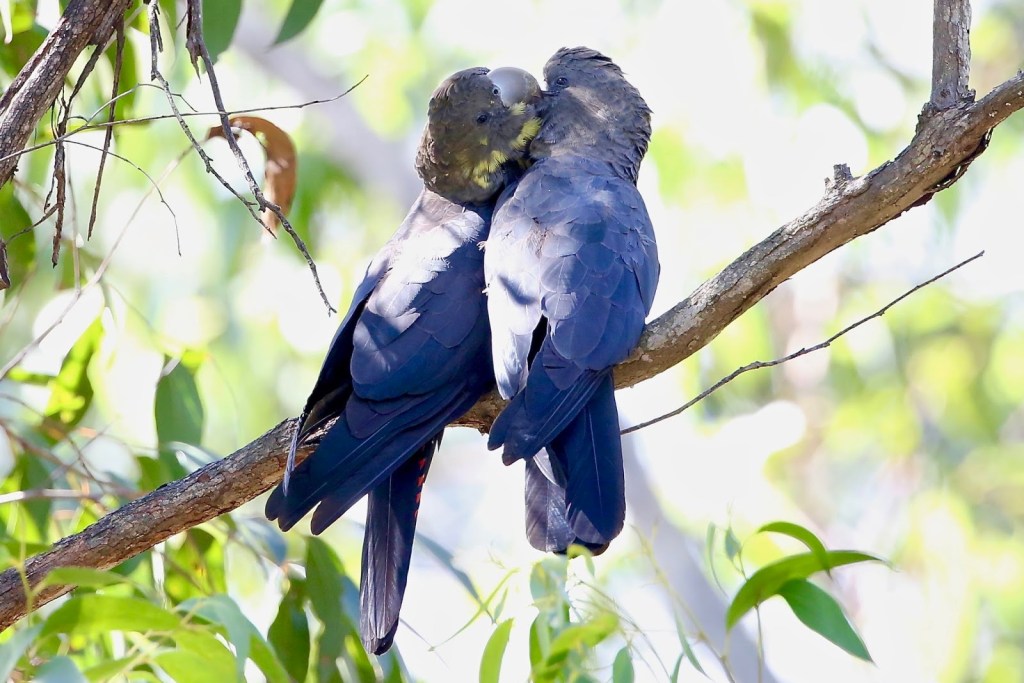
I’ll never forget bringing a group of Canadian birdwatchers to Mallacoota in the 2000’s. We knew that Glossies were a big hope for these visitors, so when I saw them on the Genoa-Mallacoota Road on the first day, I knew we had to stop everything. At the time Bill Nation was driving the Canadians in a bus with a trailer, but he was ahead of me. I radio-ed through anyway. It meant doing a U-turn on that windy road, but I had great faith in Bill.
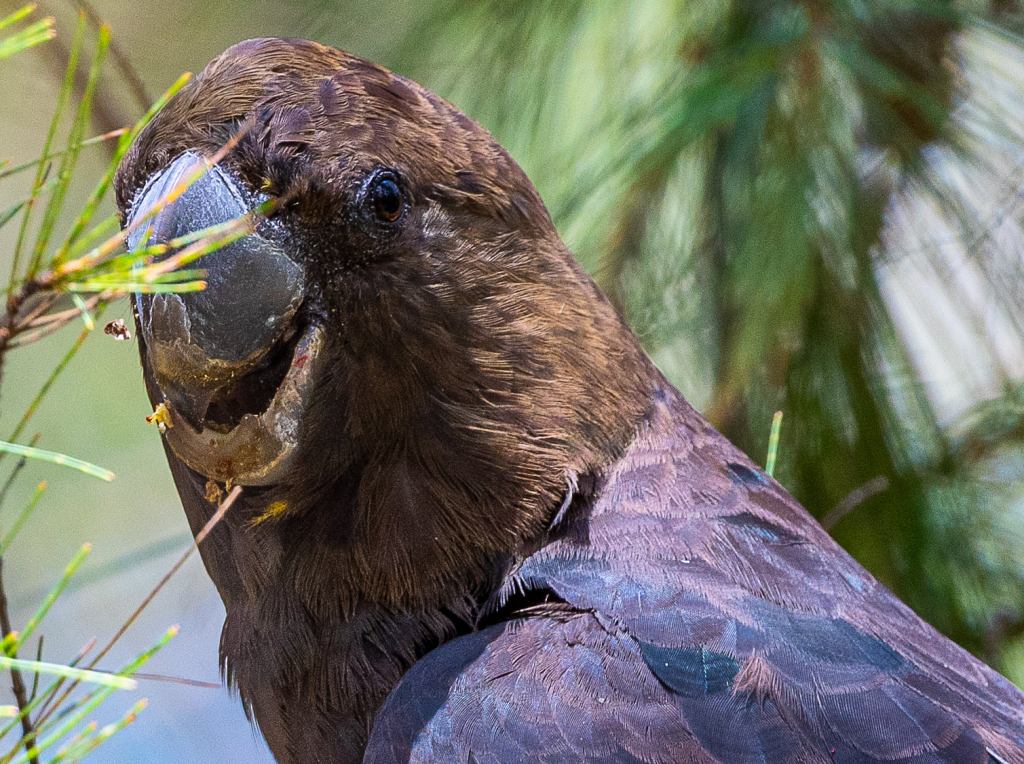
I could hear the hesitation in Bill’s voice at first, then he replied “Okay”. I waited with the birds, hoping they wouldn’t fly off. It took 10 minutes, but Bill did it, and the birds stayed – and entertained a rapturous audience. It was wonderful.
They were already a Vulnerable species in Victoria before the Black Summer fires. So when the 2019-2020 megafires burnt 90% of their Victorian habitat, it would have severely affected these birds.
Any observation of these birds is critical, so please keep an eye out for them, take a photo, note the time and location, and submit to eBird or Birdata or post here so we can have it logged.
Even though they are one of the highlight species of Mallacoota, there have never been a lot of sightings of Glossy Black-cockatoos. October to February this year has seen 10 sightings on eBird in East Gippsland, compared to 8 in the same period in 2019-2020; 11 in 2018-2019 and 14 in 2017-2018.
The best thing you can do for them is protect unburned forest, and plant natives in your garden. They especially love Casuarinas/She-oaks – Black She-oak Allocasuarina littoralis is their favourite. A. paludosa and A. nana also grow in East Gippsland, the former in coastal heaths, the latter in high elevation heaths in the Upper Genoa River area.
Read more about their specialised food preferences here:
http://avithera.blogspot.com/2017/03/glossy-black-cockatoo.html
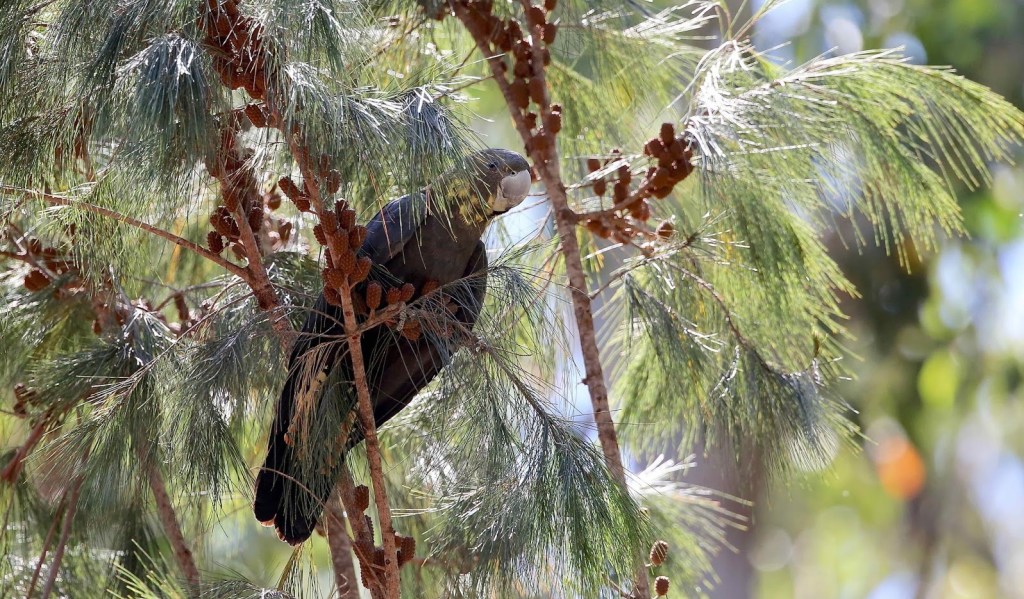
You can often tell their age and sex from their plumage:
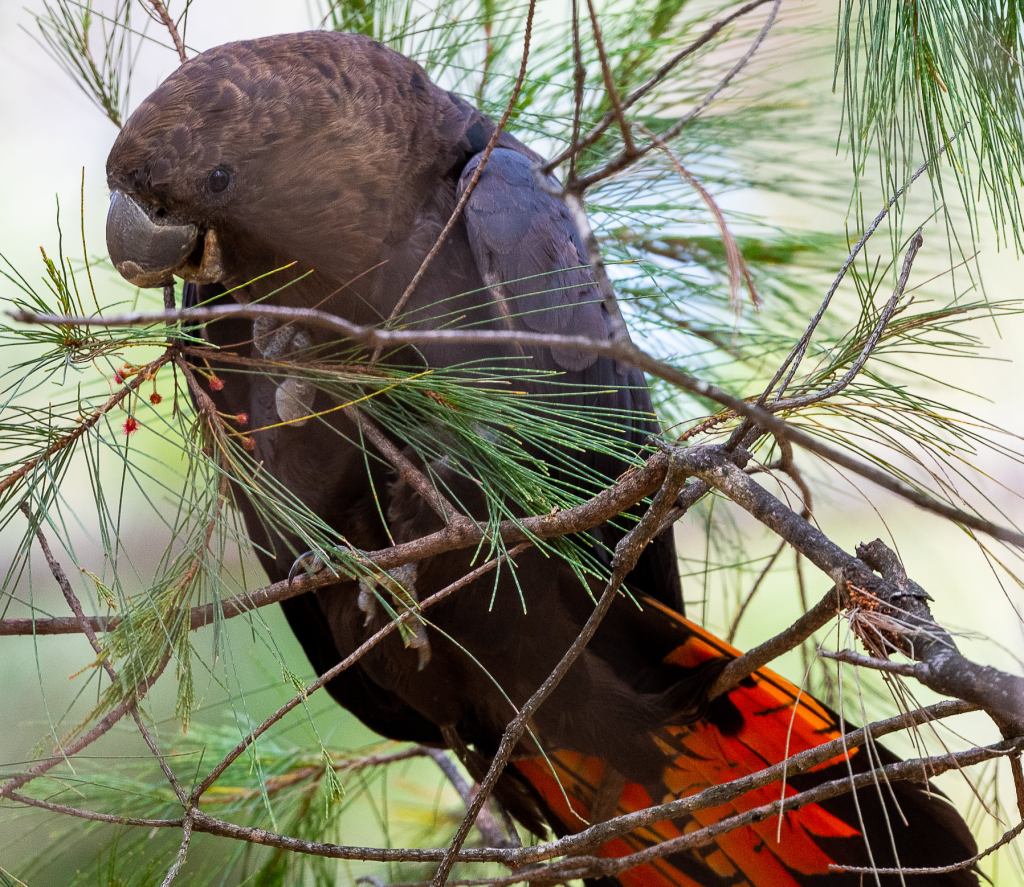
Adult males: brownish head, no yellow feathers*. Tail has a red panel that has no yellow edging. Black bars across the red decrease with age.
(*rarely an adult male has a few yellow feathers)
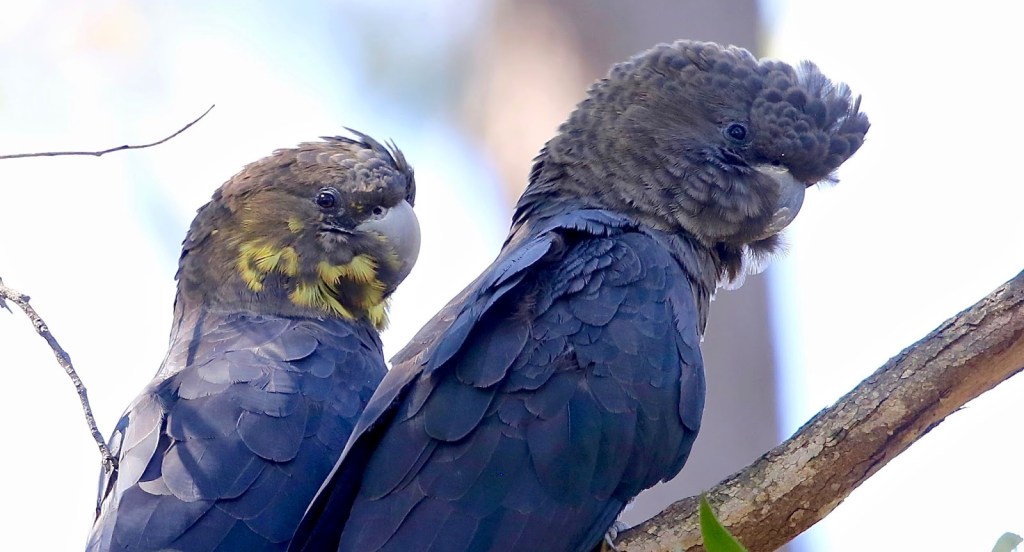
Adult females: Variable amount of yellow on head*. Tail has red panel with yellow edges. Black bars across the red decrease with age.
(*this feature increases from juvenile to immature, then decreases with age)
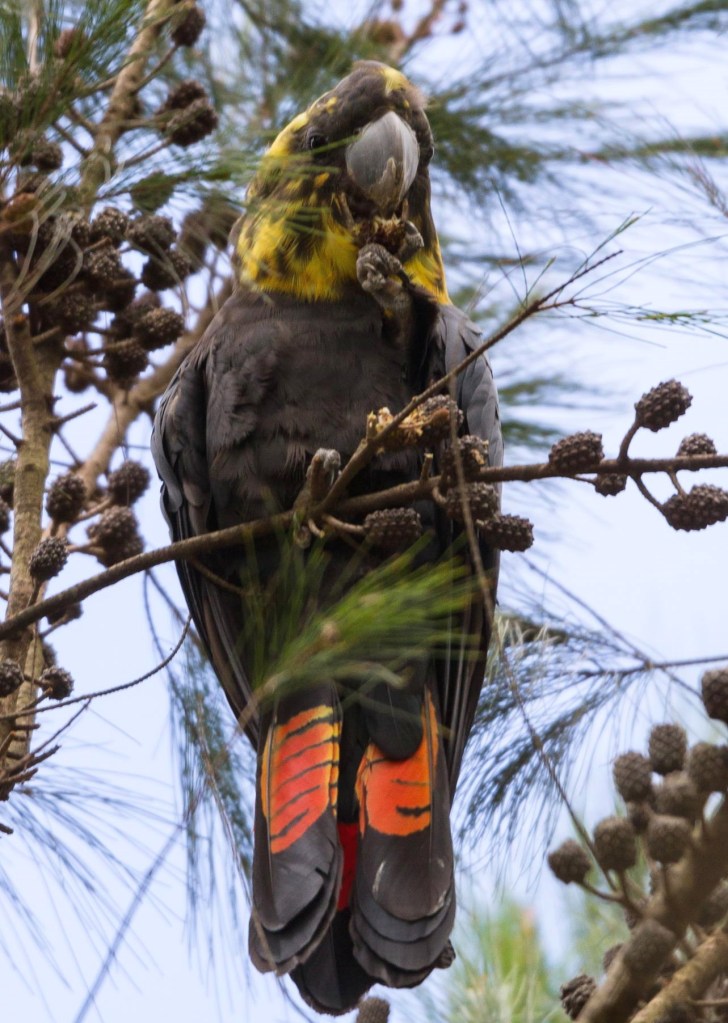
Juveniles: small yellow spots on ear coverts (behind eye) and wing coverts* 1 (shoulder). Yellow bars on breast and belly*2. Tail panel heavily barred black. I don’t have pics of juveniles, but the Glossy Black Conservancy fact sheet does.
(*1 a few females retain some spots throughout adult life; *2 in some juvenile males this feature is sparse or absent)
Immatures: females acquire yellow feathers on the head at 1 year, this increases at 2 years, can be up to 50% of head area, but highly variable in extent.
Learn more from the Glossy Black Conservancy: https://glossyblack.org.au/
LISTEN TO THE CALLS & Scroll through to see lots of great pics here: https://ebird.org/species/glbcoc1
Details: Glossy Black-Cockatoo Calyptorhynchus lathami lathami
Location: eastern Australia, from central QLD to eastern Victoria, with an outlying population (ssp halmaturinus) on Kangaroo Island, SA. Our subspecies lathami from eastern Vic to south-east QLD.
Conservation status/learn more: https://ebird.org/species/glbcoc1?siteLanguage=en_AU
Thanks to Rob Clay, John Hutchison and Karen Weil for your wonderful pics and information.
 Mallacoota Birds