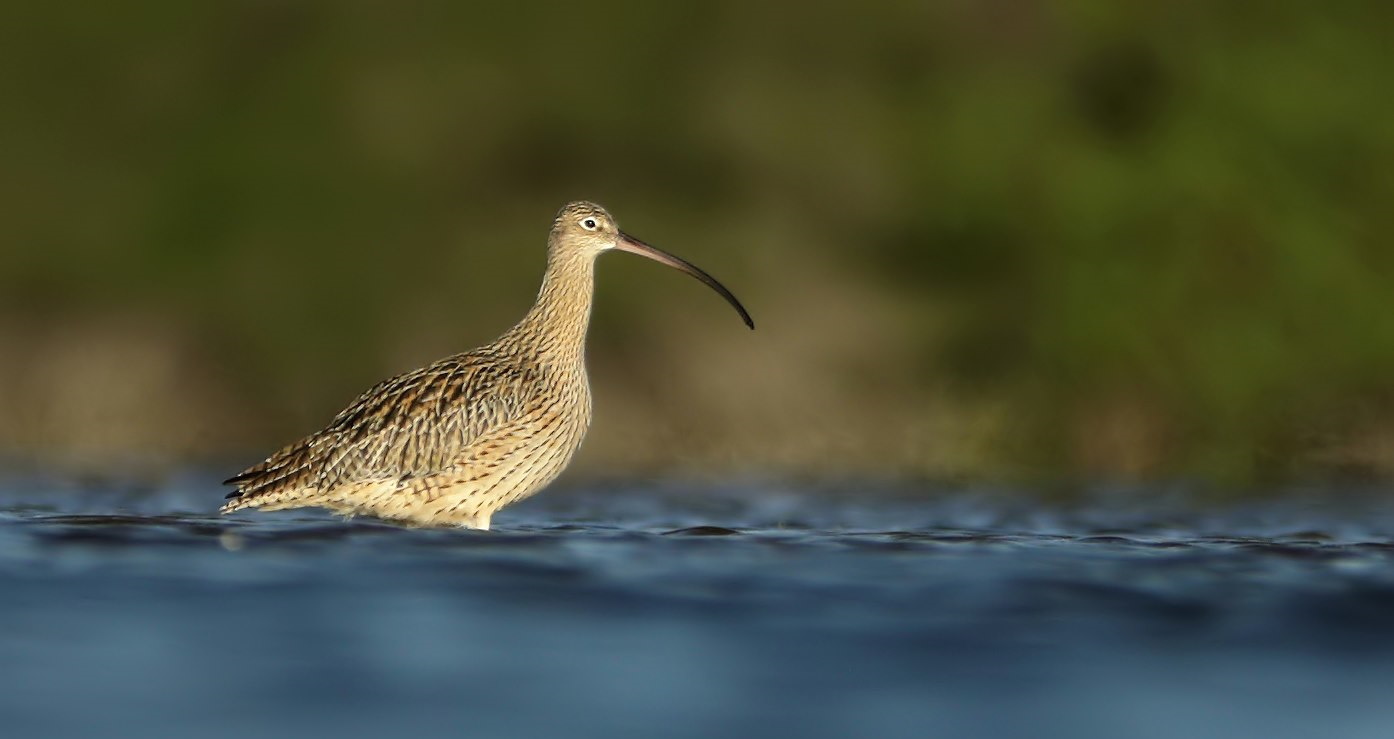
Bird of the Week: Eastern Curlew 9 April 2021
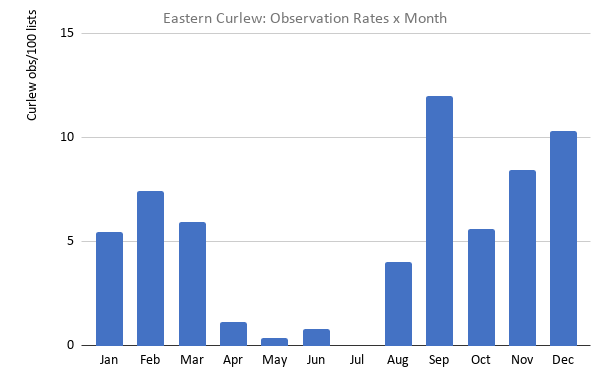
On almost any day from September to March at the Mallacoota mouth you can see an Eastern Curlew – partly because they are big, with a distinctive, extremely-long bill; partly because it is a regular feeding spot for this long-distance migrant.
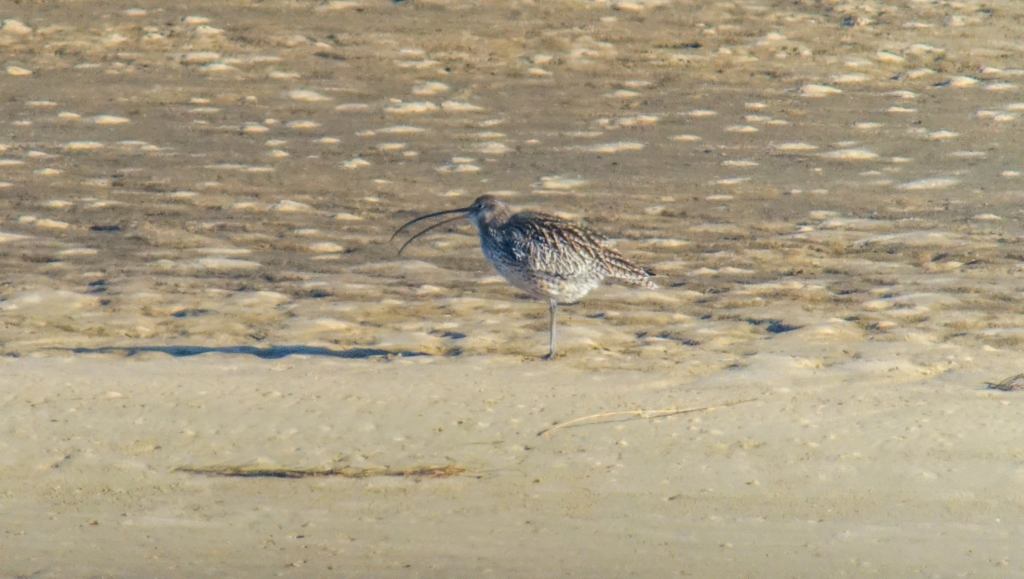
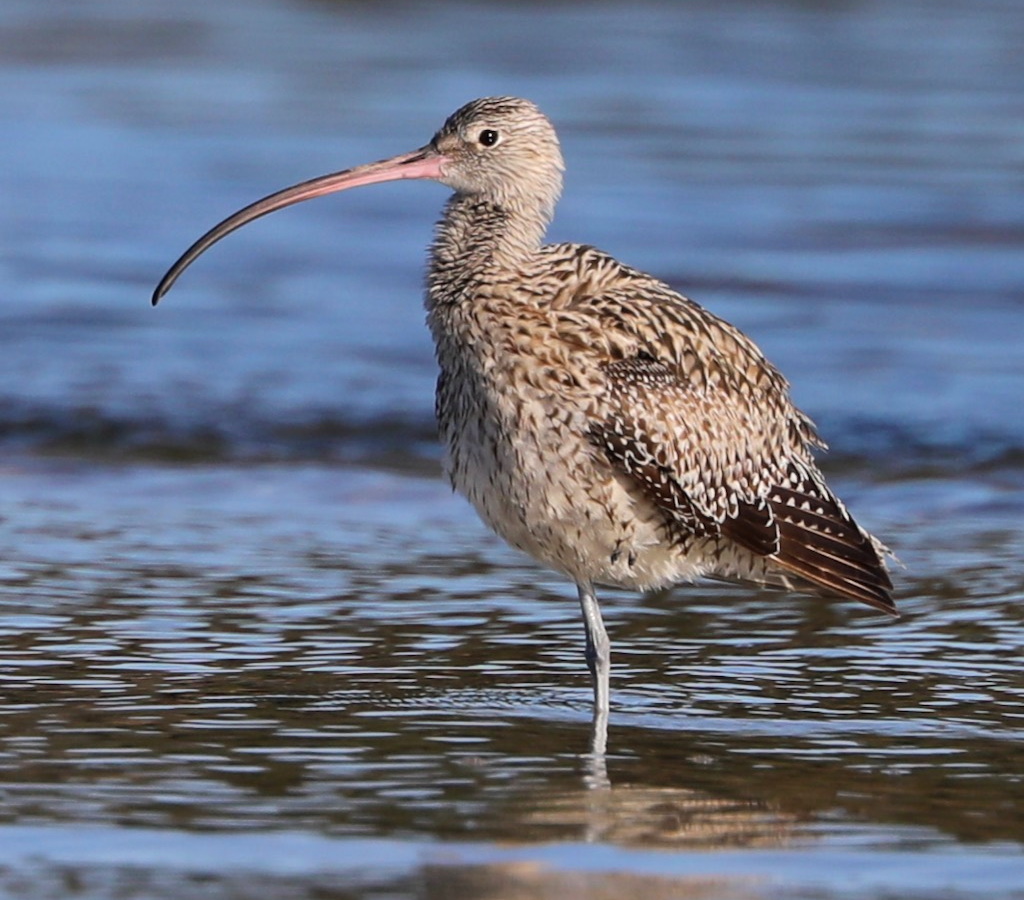
But for how long can I say this? I have never seen an Eastern Curlew at the Western Treatment Plant, one of Australia’s top shorebird sites, despite visiting 30+ times from 2017 – 2019. Yet they were frequently there until the 1990’s. (There was one in March 2021, but I was busy elsewhere.)
They are a pretty rare sight on the Gippsland Lakes as well – read John Hutchison’s informative blog about two seen in January 2019: http://avithera.blogspot.com/2019/01/eastern-curlew.html
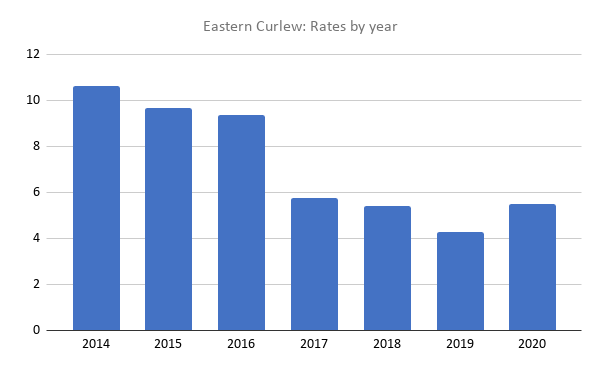
One day in future you will see the last Eastern Curlew at Mallacoota. No-one knows when, but the figures are clear and the trend is unrelenting. Here’s a graph of Eastern Curlew sightings at Mallacoota over time, put together by Martin Butterfield. Though there was a little increase in 2020 it is unlikely that it will continue to improve.
So, next time you can, go out and look across the low water from Captain Stevensons Point, or walk down the steps at Bastion Point. If you see this great bird, smile. She is Critically Endangered, and she has come a long way.
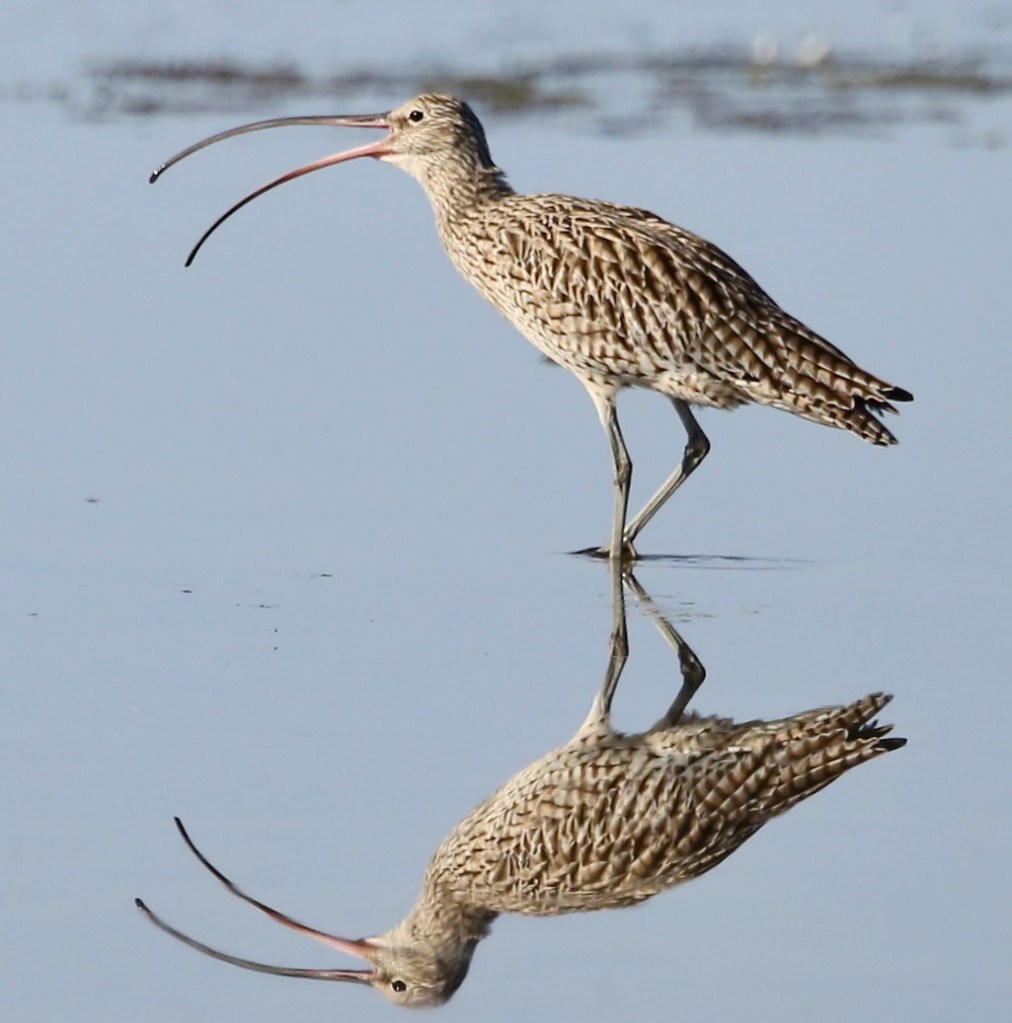
Eastern Curlews live most of their lives in Australia, New Zealand and Southeast Asia. Only a few weeks a year are spent at their breeding site in the Russian Arctic. Every year they fly there, and back, to breed, using the fuel provided by shellfish from our wetlands and mudflats. They fly so fast and hard they don’t have time for mistakes, or exploring. So if a feeding site changes, they die.
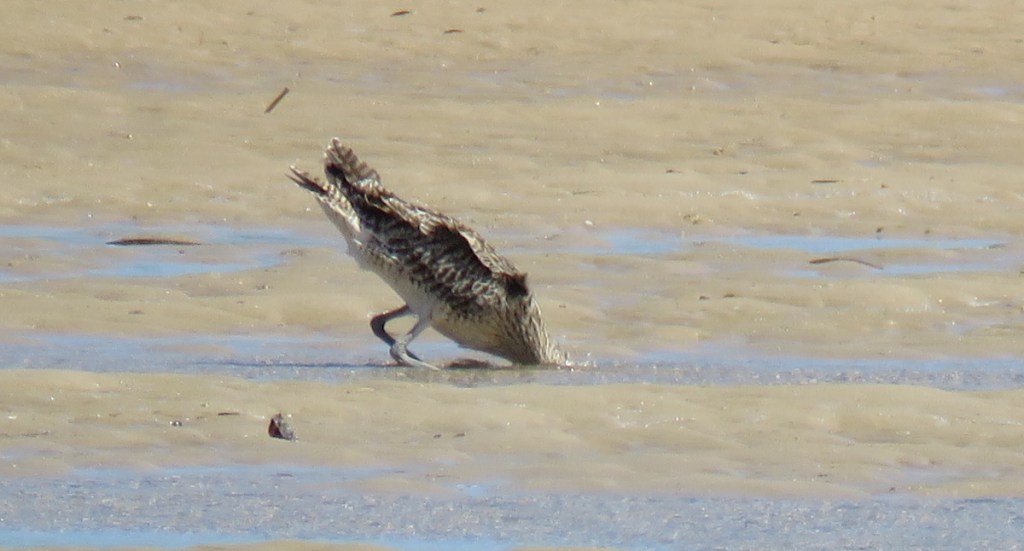
For this bird, feeding sites have been changing too often. Seawalls and reclamation in South Korea and China have destroyed entire inlets. Coastal ‘developments’ in Australia have – and continue to – destroy feeding habitat. Queensland is right now pushing ahead with an insane coastal destruction at Toondah Harbour, Moreton Bay. If it happens, the Eastern Curlews that live or stopover there are goners. Maybe they are ‘our’ Mallacoota mouth curlews – maybe the day that Toondah goes ahead will be the last time we see them.
Help stop this tragedy. Sign this petition https://www.actforbirds.org/toondah or donate. https://www.birdlife.org.au/media/threatened-birds-first-migration-from-toondah-harbour/
And don’t think: “Oh, those terrible Queenslanders. Oh those terrible Chinese.” We’re doing it too, here in Victoria. Shocking loss of intertidal mudflat along the Victorian coast. Check out this amazing site: https://www.intertidal.app/ Search for Melbourne, and then look at all the blue & grey areas on the map – all lost habitat, gone forever.
To know them, look for a huge brown-grey bird, as big as a Pacific Gull or a Great Egret, though not as tall. Bigger than the Australian Pied Oystercatcher. Look for an extremely long downcurved bill. The bill is almost as long as their body.
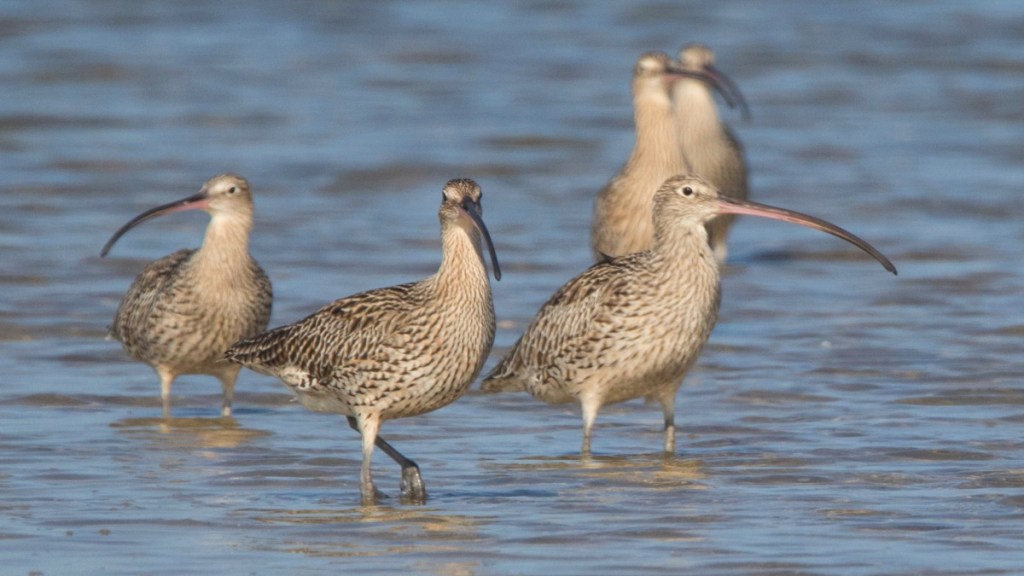
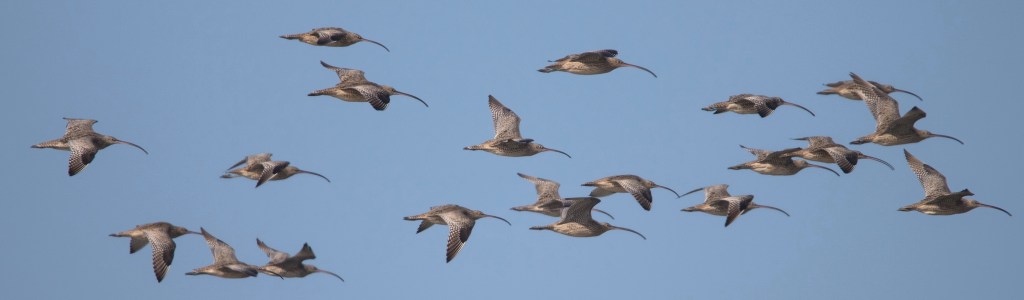
There’s not much else you could confuse them with. The most similar, the Whimbrel, is rare at Mallacoota, about half the size and with a shorter bill. They have a distinctive black cap, and when they fly their feet don’t project out past their tail like the Eastern Curlew’s do. Whimbrels also have a white triangle on their back, visible in flight.
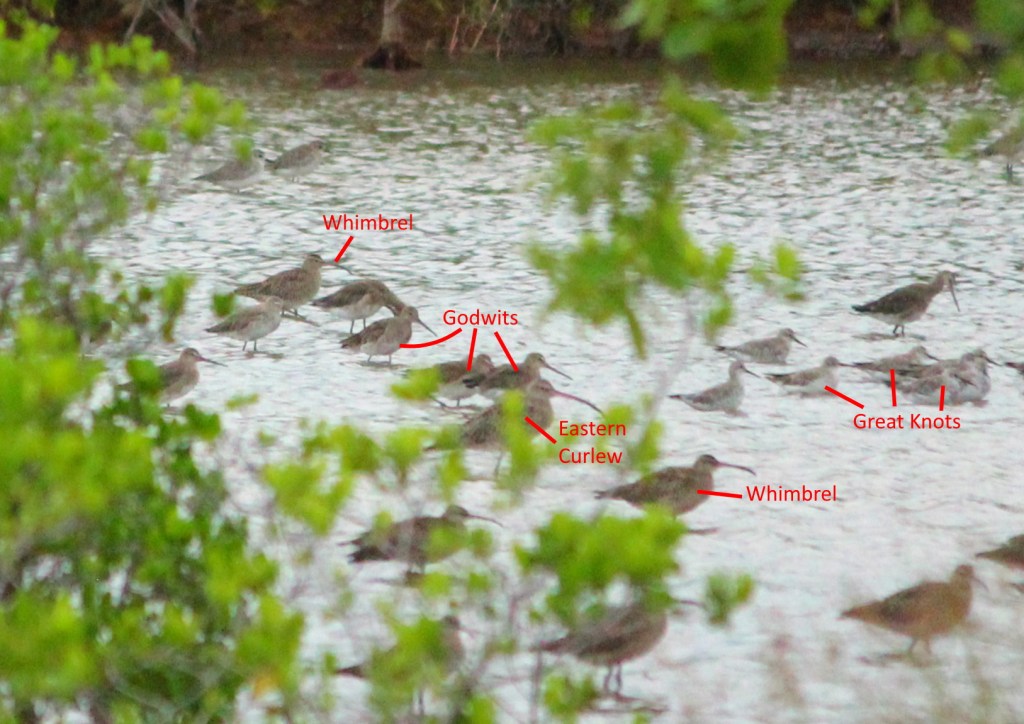
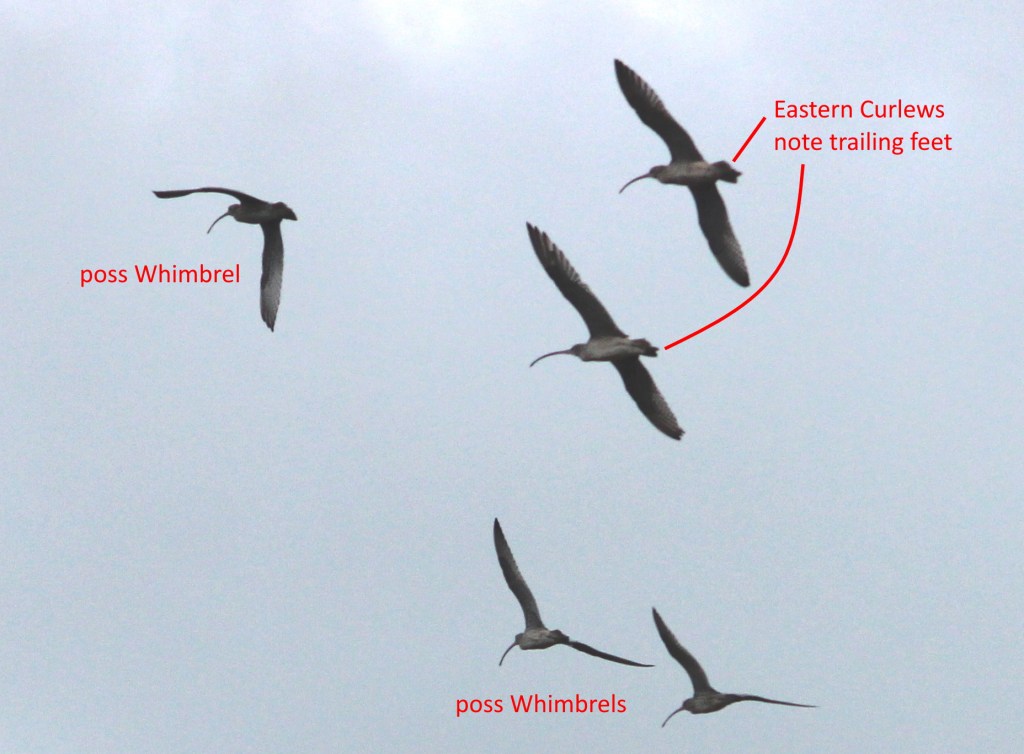
There’s a wonderful book, written by Melbourne author Harry Saddler: The Eastern Curlew. Much of the information above is taken from the book. https://affirmpress.com.au/publishing/the-eastern-curlew/
They are also known as the Far Eastern Curlew. I think the two names are both correct.
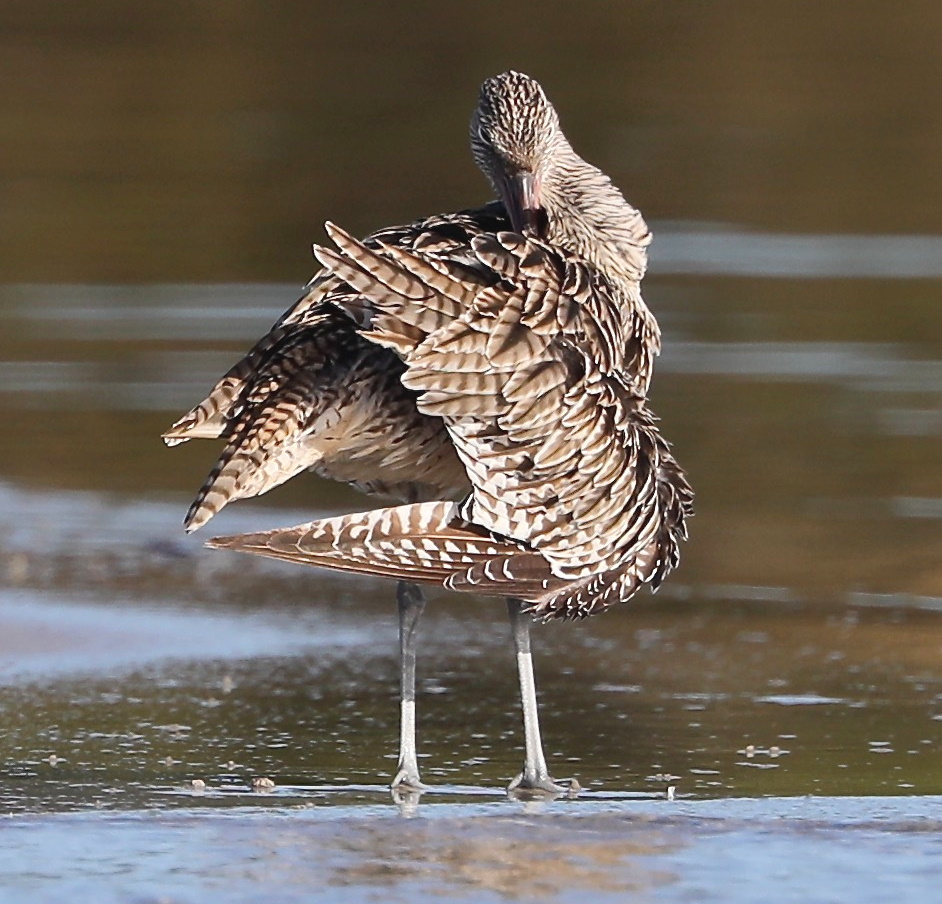
LISTEN TO THE CALLS & Scroll through to see lots of great pics here: https://ebird.org/species/faecur?siteLanguage=en_AU
Details: Eastern Curlew Numenius madagascariensis
Location: Australia, New Zealand, Indonesia, SE Asia, China, Japan, Korea & eastern Russia.
Conservation status/learn more: Federally listed as Critically Endangered
https://www.birdlife.org.au/bird-profile/eastern-curlew
Thanks to Rob Clay, Tim Van Leeuwen, Jack Winterbottom, John Hutchison, and Gary & Judy Smith for your wonderful pics and information.
 Mallacoota Birds