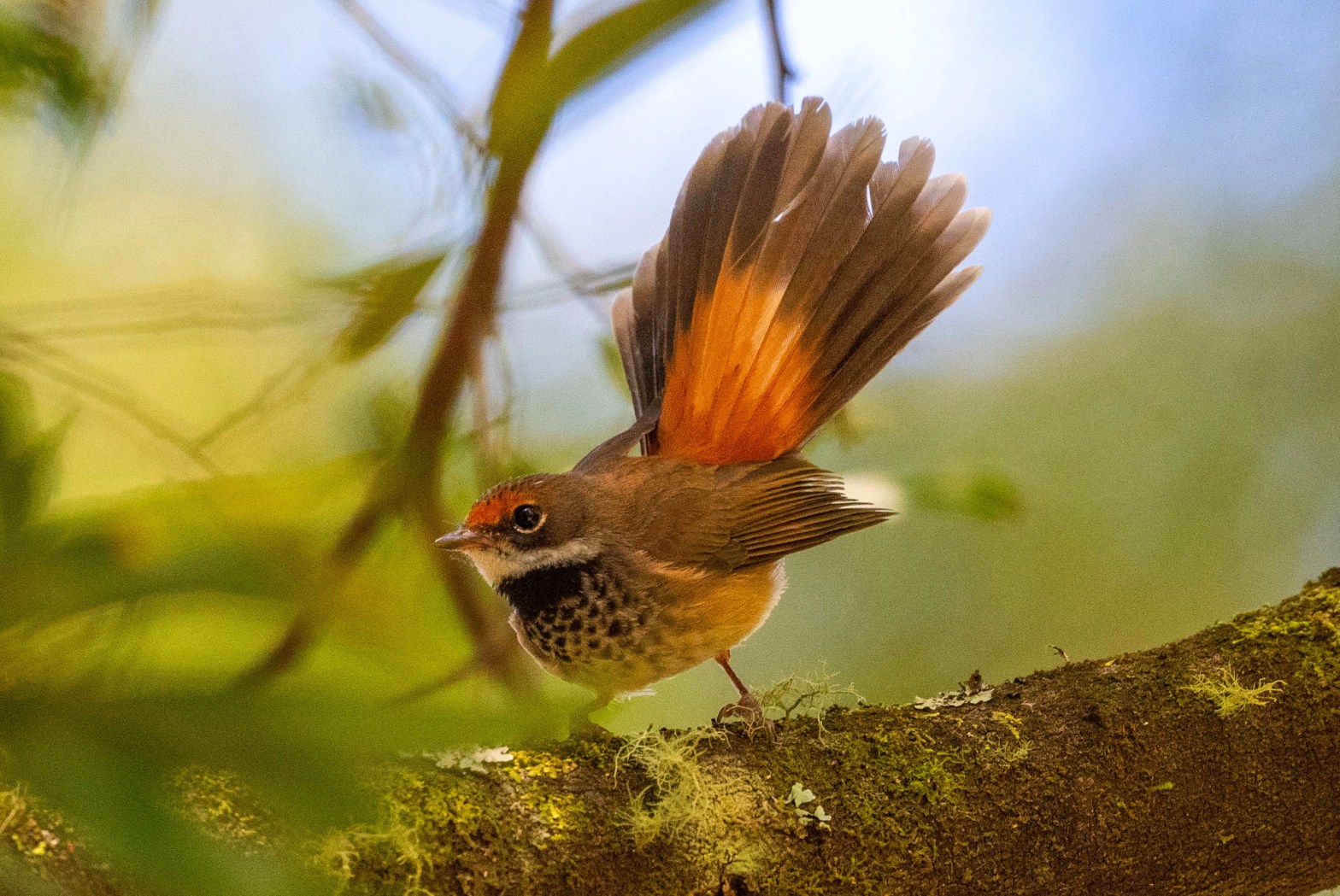
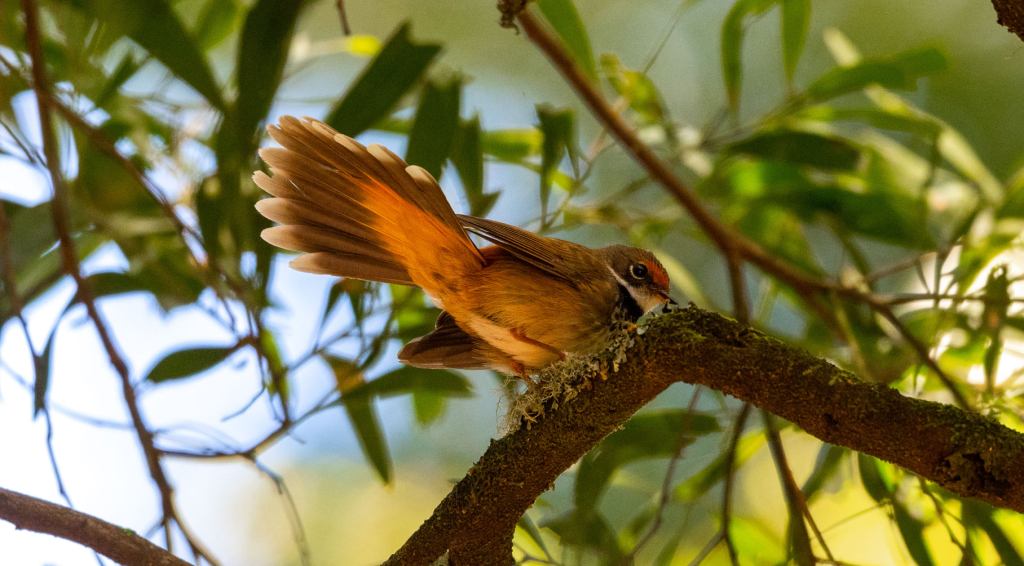
Bird of the Week: Rufous Fantail 23 April 2021
What I find most amazing about these birds is the fact that they migrate. It’s not unusual – many of our small birds undertake a regular migration, including Silvereyes, Flame Robins, Black-faced Monarchs, Yellow-faced and Scarlet Honeyeaters and even the Grey Fantail.
But if you asked most Australians “do our birds migrate?” Most would say no, or just look confused.
Why? Partly because we’ve grown up reading story books from Europe and North America, where, it seems, all the birds migrate south for winter, in massive flocks. Northern areas are left with no birds at all over winter. (In fact some birds – ducks, gulls, crows, magpies and even little bullfinches, chickadees and kinglets – can be seen in winter even in far northern places like Tromso, Norway and Juneau, Alaska. But overall, the numbers of birds is vastly reduced in winter. )
In Australia the migrations are less noticeable, more birds remain over our mild winter, and the migration paths differ. Some migrate from south to north along the coastal ranges (Rufous Fantail, Yellow-faced Honeyeater, Scarlet Honeyeater, Leaden Flycatcher, Black-faced Monarch). Others migrate from coast to inland (Grey Fantail SE birds). Some migrate from mountains to lowlands (Flame Robin). Silvereyes and Striated Pardalotes cross Bass Strait from Tas to Vic.
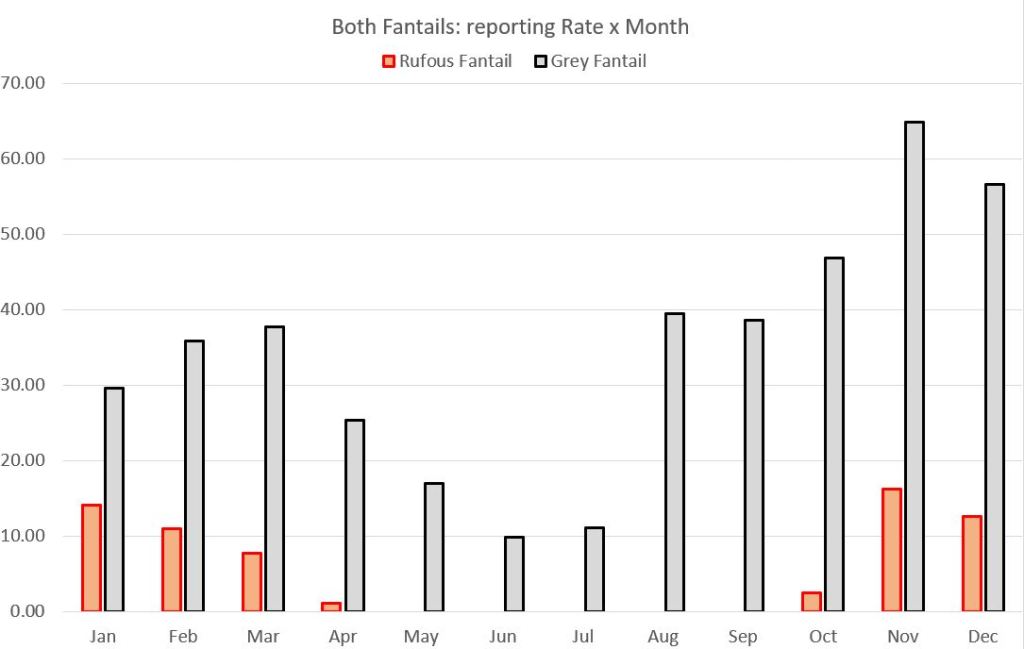
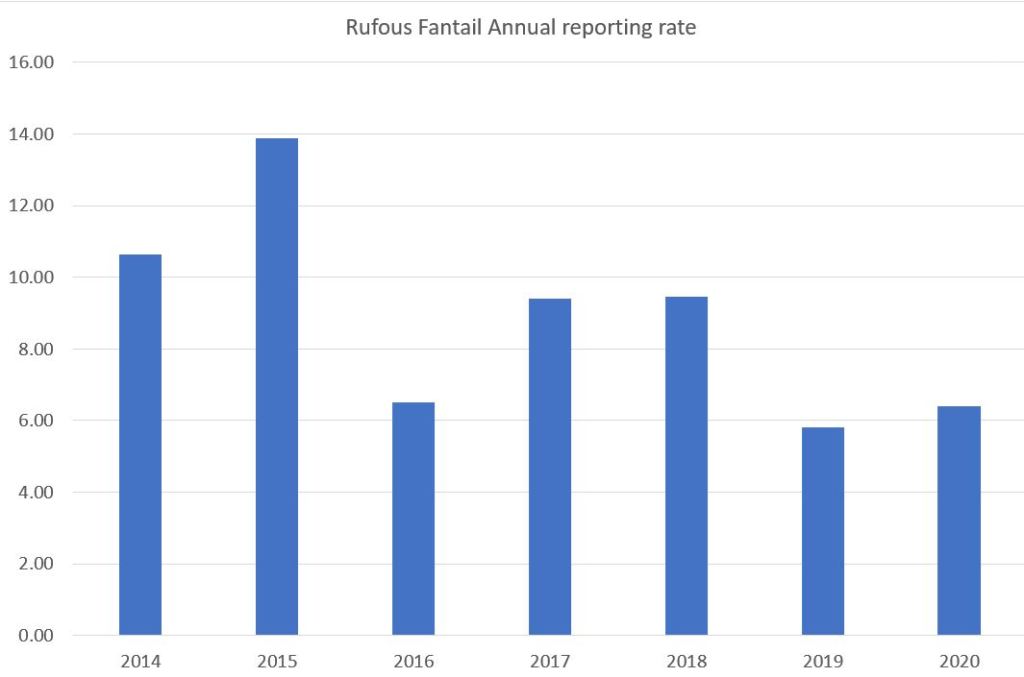
I’ve never seen Rufous Fantails migrating. I’ve just noticed that they are hard to find (almost impossible) in East Gippsland in winter. See Martin’s charts below:
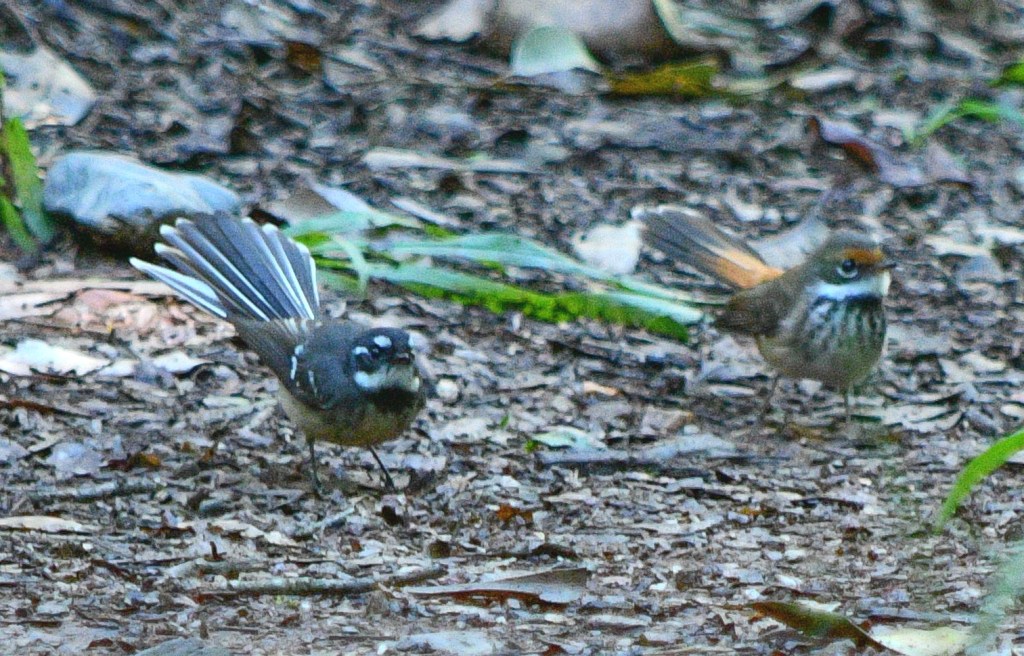
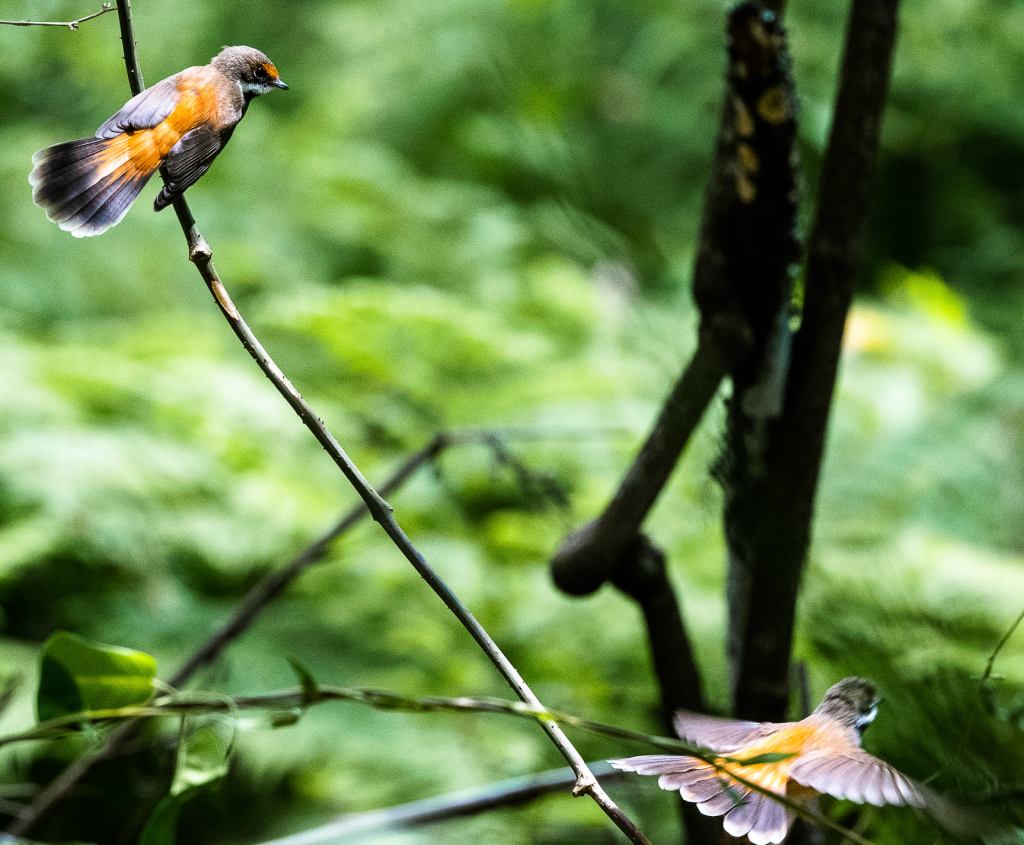
They are active little birds, twisting, leaping, fanning their tails constantly. The rich orange colour of their lower back/upper tail catches your eye like a struck match in a dark room.
They are difficult birds to photograph!
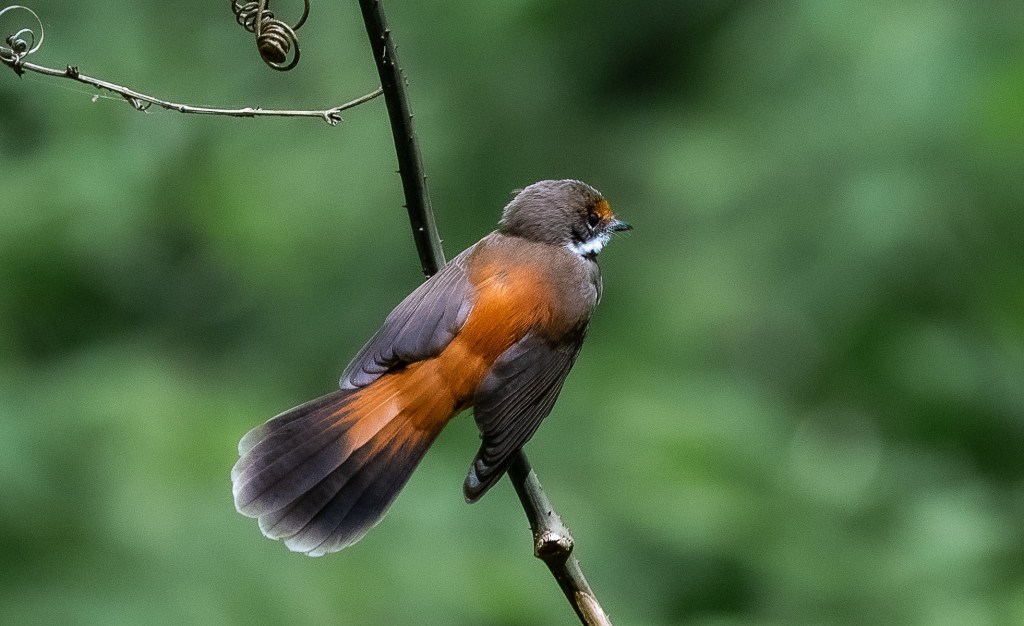
Photography tip from Rob Clay:
“The challenge stems from the fact that they are in thick vegetation areas with low light, meaning you have to use a slow shutter speed, but they never stop moving, so slow shutter speed often means blurry photos! The wildlife photographer’s constant challenge on fast-moving animals in low light conditions: getting sharp images with acceptable ISO.”
Males and females look the same, except that females are slightly smaller.
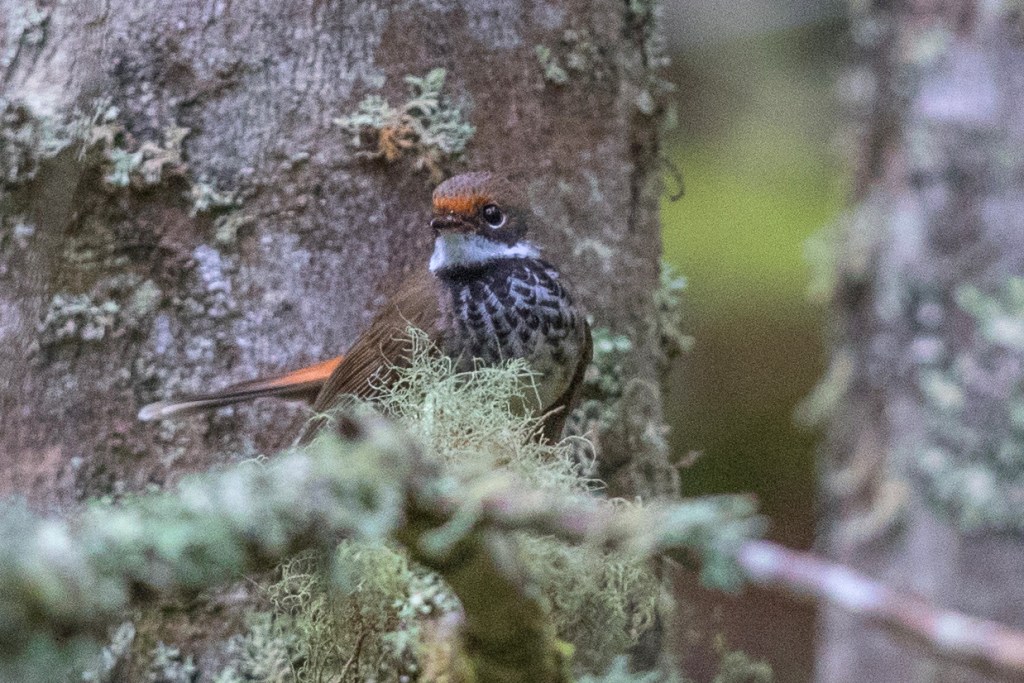
Juveniles have a slightly browner plumage than adults, and their legs are paler.
Our subspecies, rufifrons has pale tips to the tail feathers, brownish-grey under the eye and on the lores (in front of the eye). But in some it is quite a dark brownish-grey, almost black. The northern subspecies intermedia apparently has black under the eye and on the lores. I don’t really know whether you could tell the two apart in all cases.
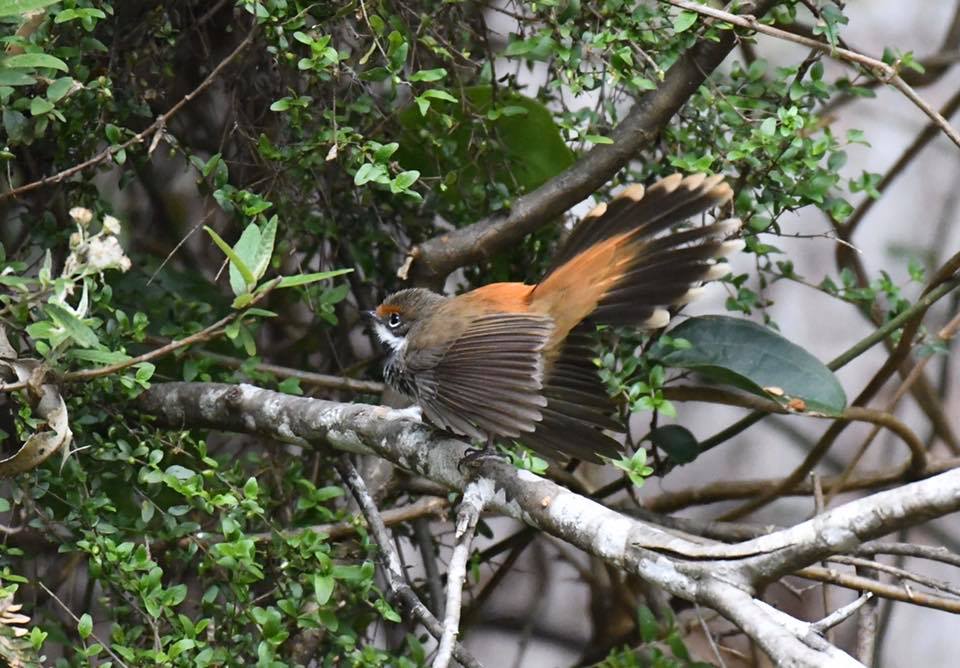
There is a closely related species in Australia in NT Top End: the Arafura Fantail. It has less orange on the tail, less black on the breast and bigger white tips to the tail feathers.
i have not been able to find a lot of research about Rufous Fantail migrations. But I did come across this interesting paper about speciation and diversification in 3 of the Solomon islands subspecies. https://scholarship.miami.edu/discovery/fulldisplay/alma991031447370702976/01UOML_INST:ResearchRepository
LISTEN TO THE CALLS & Scroll through to see lots of great pics here: https://ebird.org/species/ruffan1
Details: Rufous Fantail Rhipidura rufifrons rufifrons
Location: eastern Australia, from VIC, through NSW and QLD to New Guinea, The Solomon Islands, North Maluku (Banda Archipelago), Guam and North Mariana Islands.
Conservation status/learn more: https://birdlife.org.au/bird-profile/rufous-fantail
Thanks to Rob Clay, Penelope Lind, Jack Winterbottom and Martin Butterfield for your wonderful pics and information.
 Mallacoota Birds