Bird of the Month Fan-tailed Cuckoo December 2021
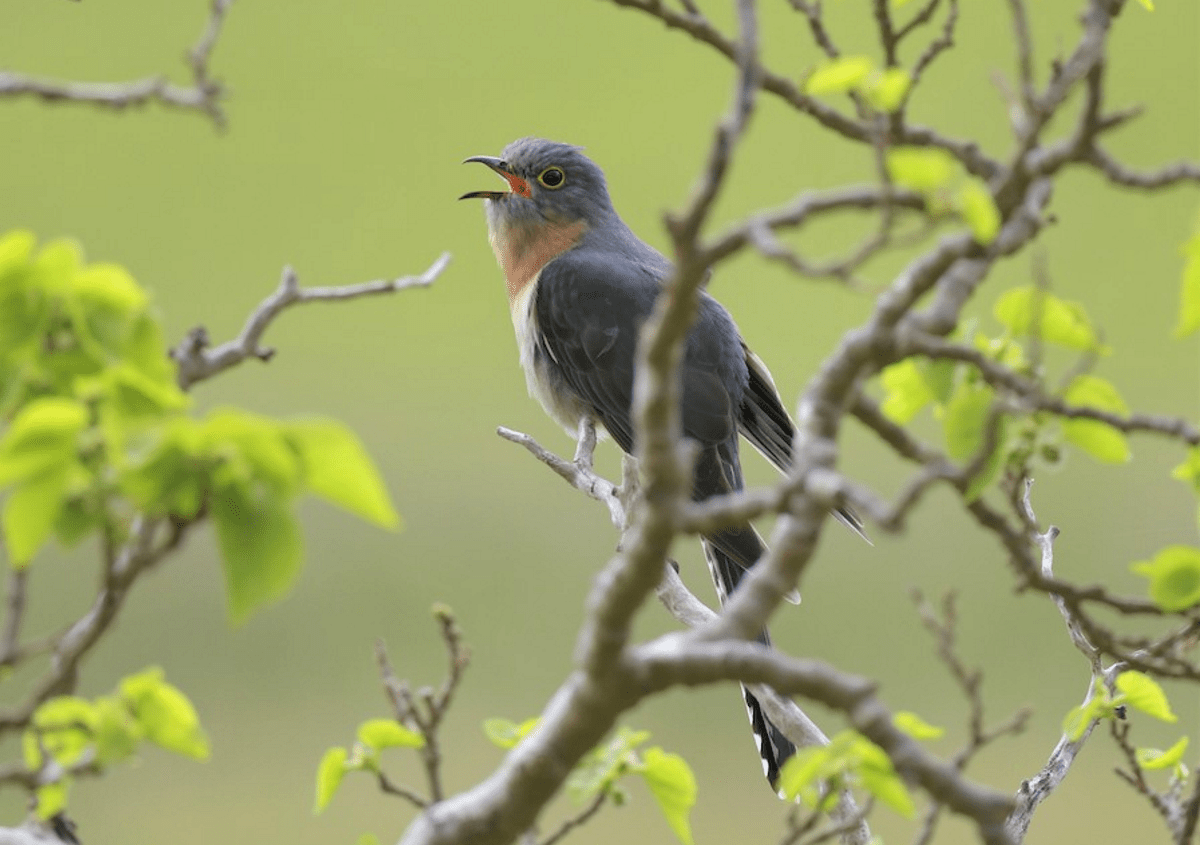
Header image of an adult Fan-tailed Cuckoo singing by Robert Anderson
From August/September to ~March, this bird provides the soundtrack to the forests around Mallacoota. The song – a fast descending whistle – is a little mournful, a little thrilling. It makes me think: “stop rushing, look around and appreciate all this beauty.”
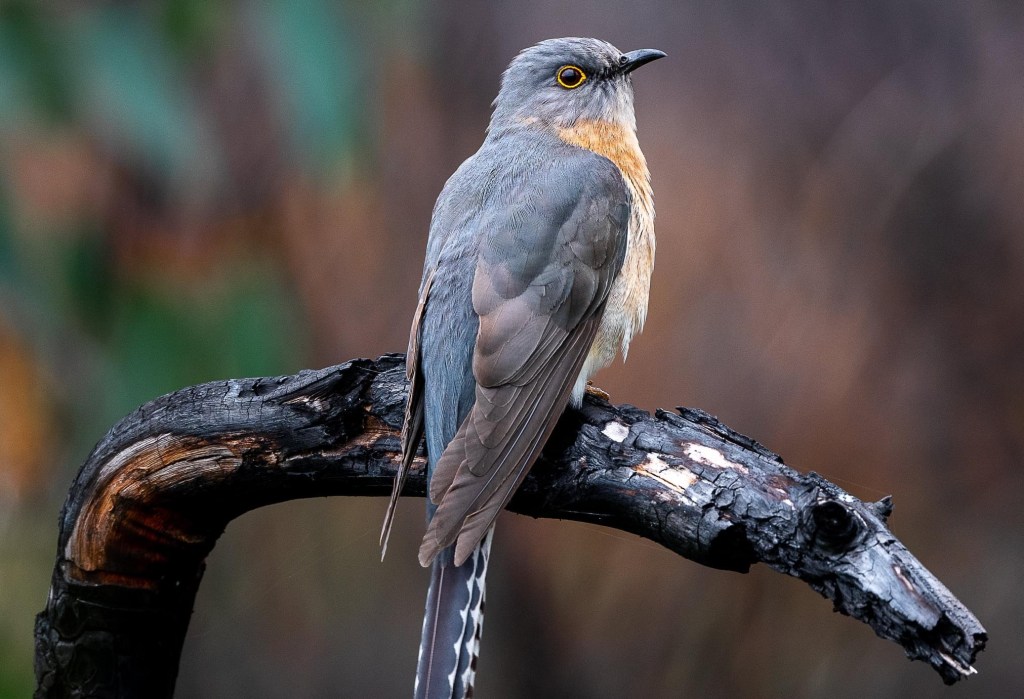
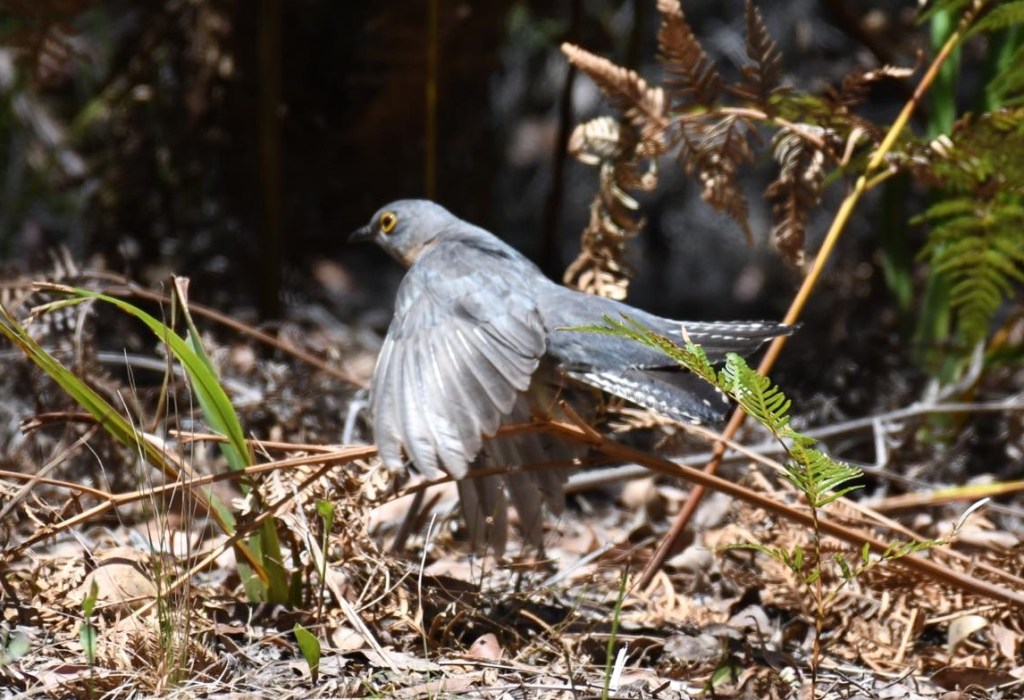
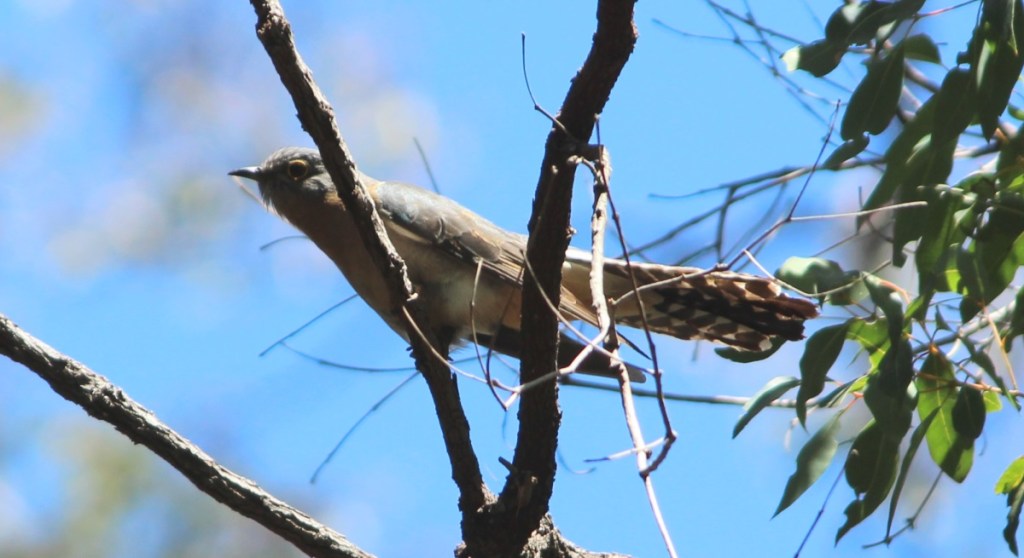
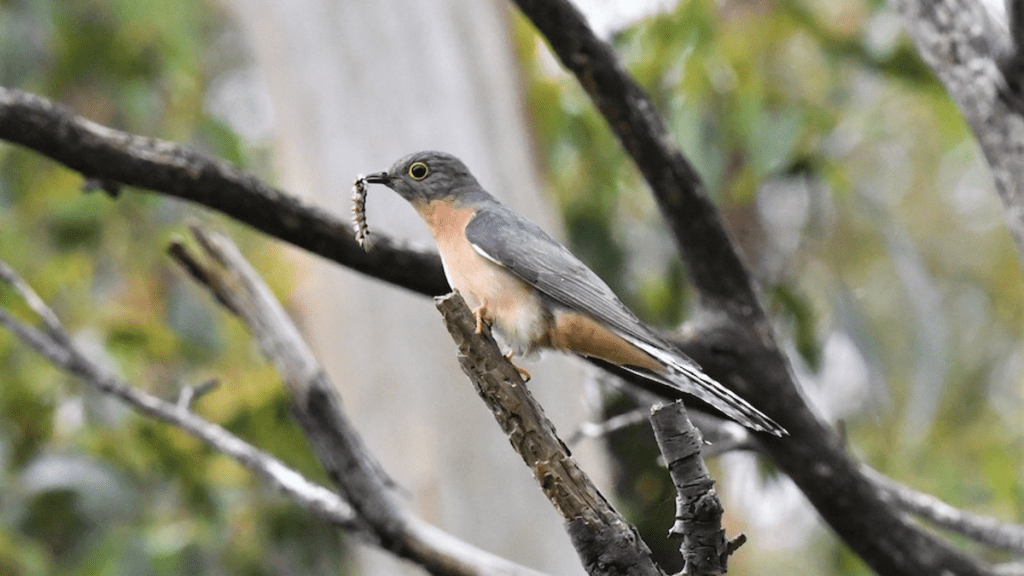
Their song is much more obvious than the bird itself. Like most cuckoos, they don’t flutter about needlessly. They fly fast and stop, and remain motionless for minutes. If you see them fly and perch, you will get great photographic opportunities as they pose in one spot. Conveniently they will change sides, all the while looking at you with those huge, dark, yellow-ringed eyes.
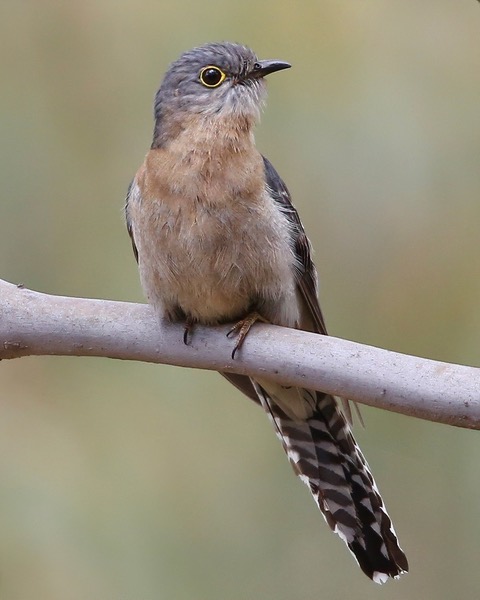
John Hutchison pointed out to me that the name is peculiar – they rarely fan their tails. Read more in his excellent blog: http://avithera.blogspot.com/2018/02/fan-tailed-and-brush-cuckoos.html
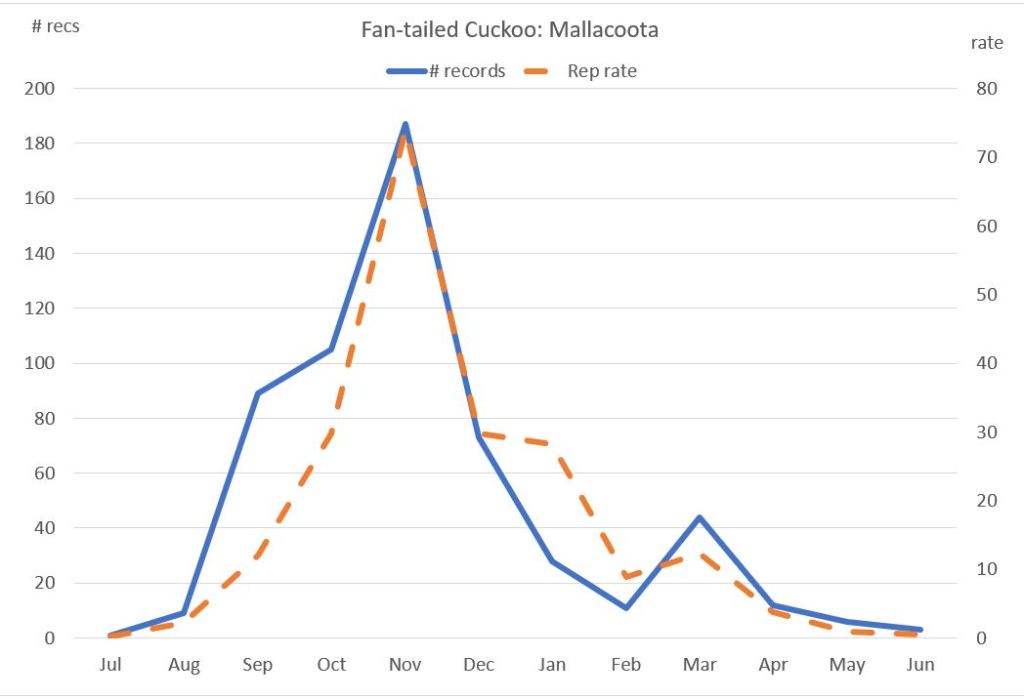
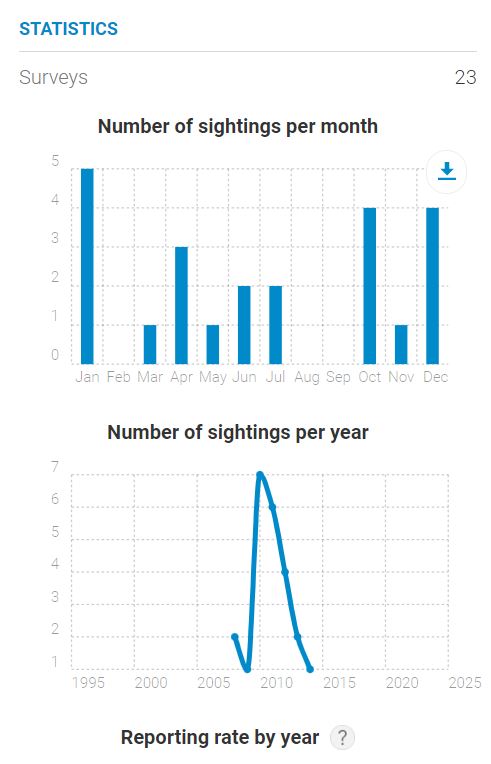
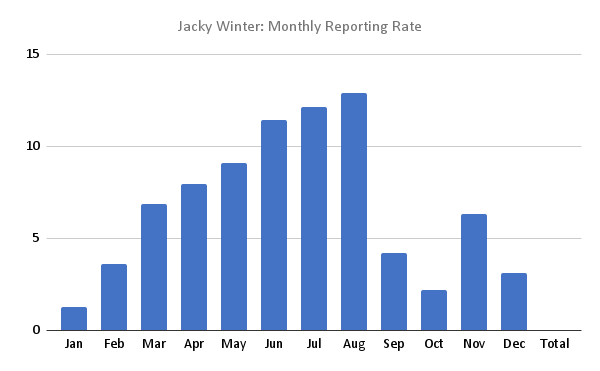
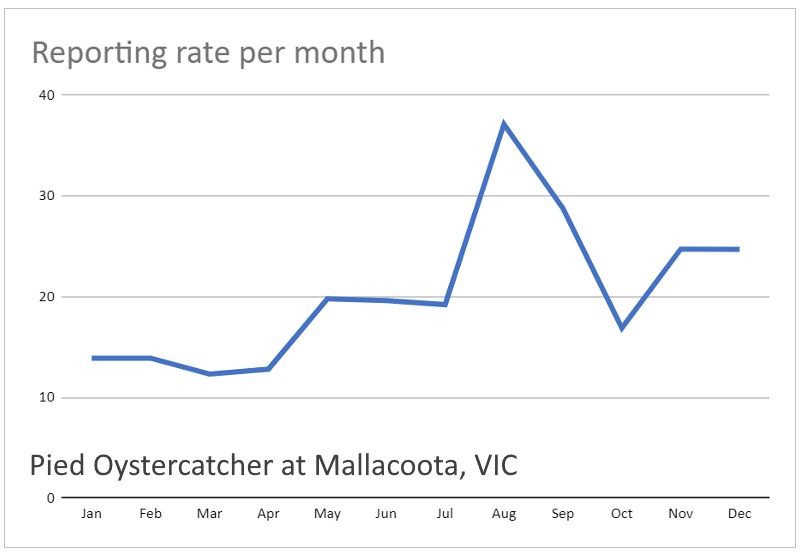
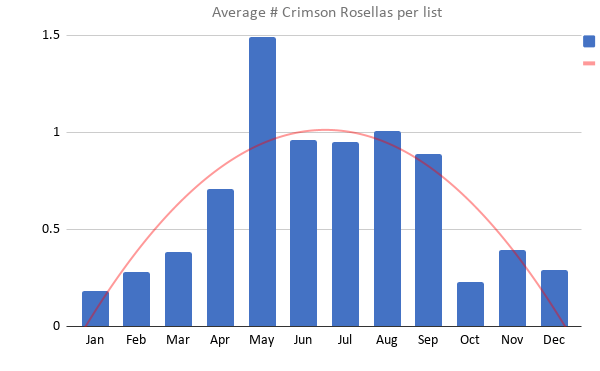
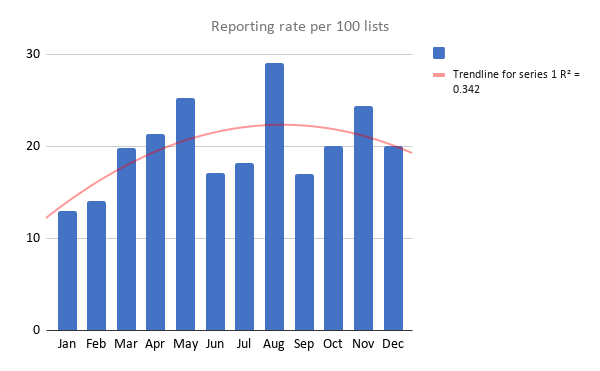
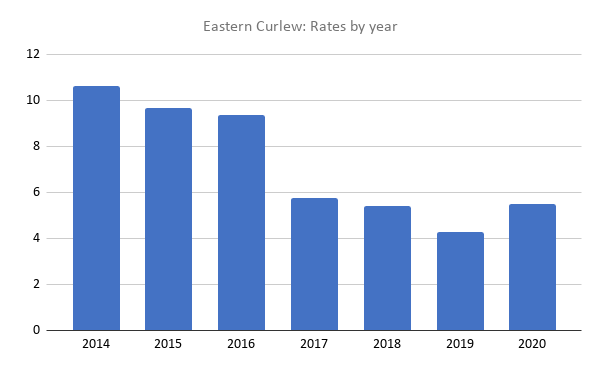
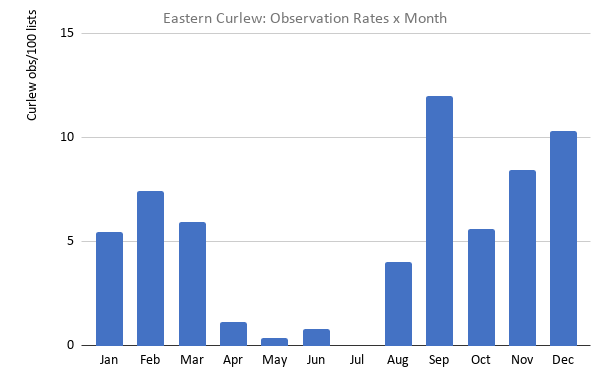
They are a bit migratory, but some stay in Mallacoota all year round. It’s difficult to know how much of the local population leaves the area, as many of the records over summer come from hearing calls. Calling mostly ceases in winter, making them harder to find. Martin Butterfield has put together these charts from eBird, showing far fewer sightings in June – July:
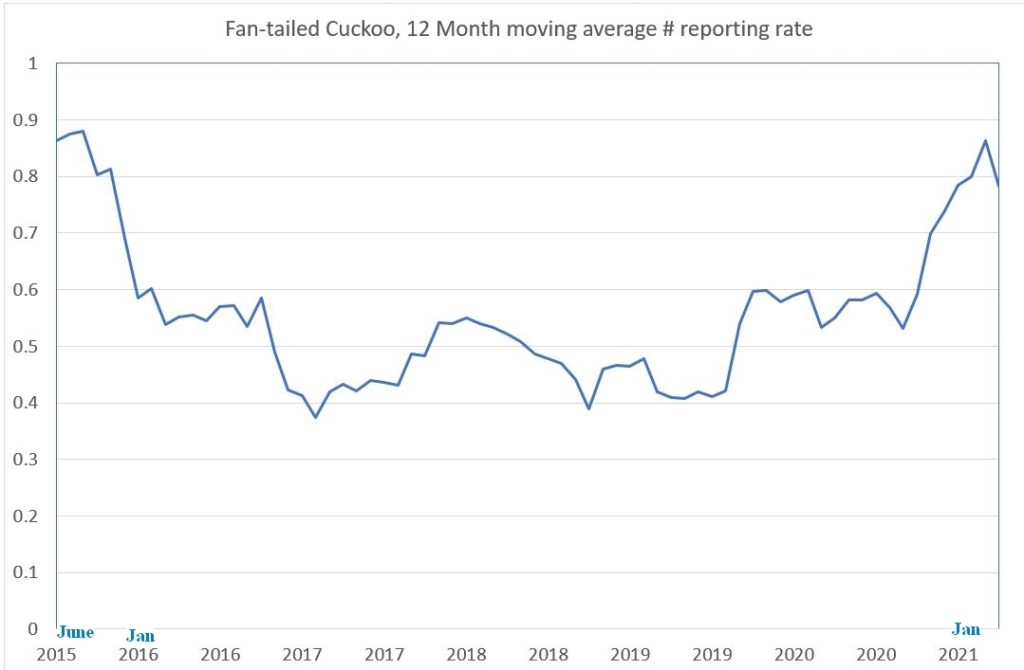
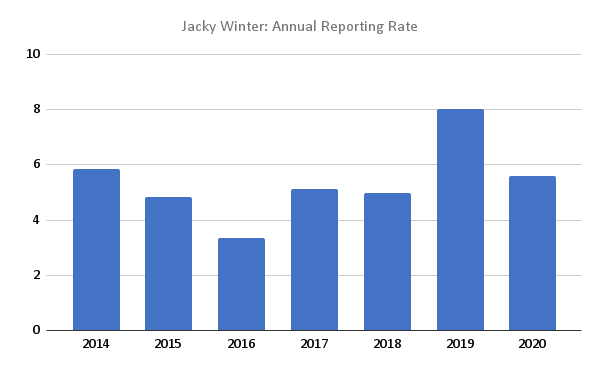
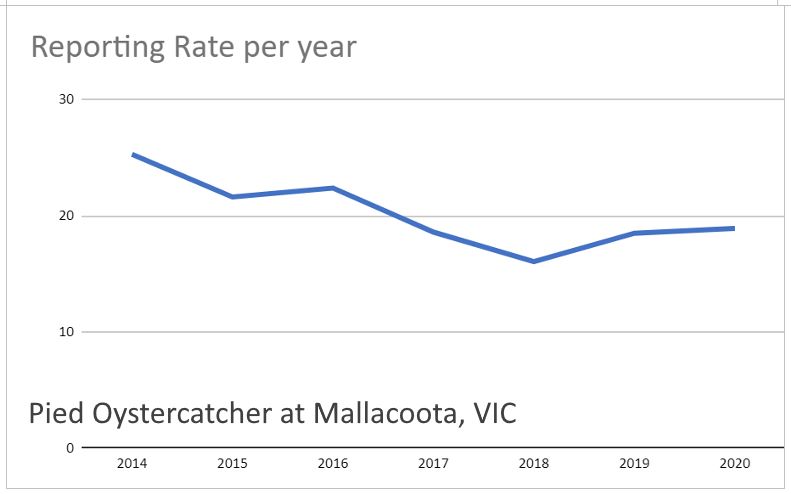
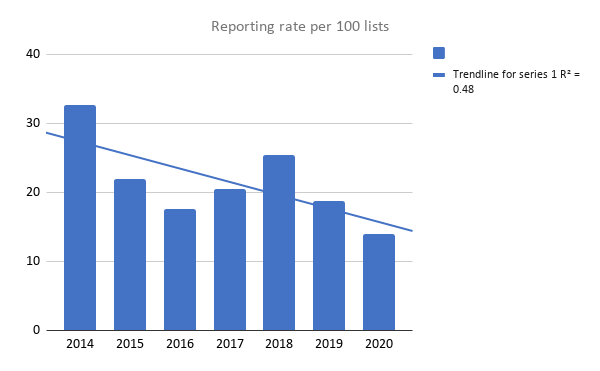
It’s interesting to see how numbers of sightings fell during the drought years:
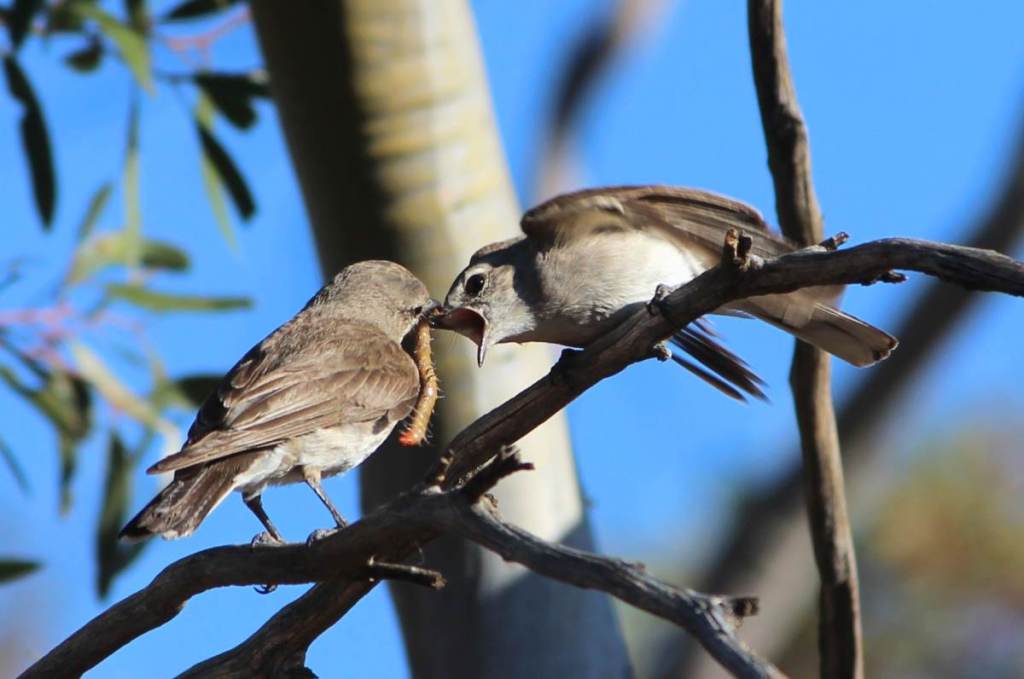
Much is made of their breeding behaviour: as cuckoos, they lay their eggs in the nests of other birds. Small birds that make dome nests: thornbills, scrubwrens, are the preferred adoptive parents for fan-tailed cuckoo children. The adoptive parent birds seem to work hard to feed the cuckoo child, but keep in mind that most of these small birds would normally be feeding 2 to 3 babies. With a fan-tailed cuckoo baby, it is just one.
Read more about their breeding habits in this marvellous Connecting Country blog: https://connectingcountry.org.au/bird-of-the-month-fan-tailed-cuckoo/
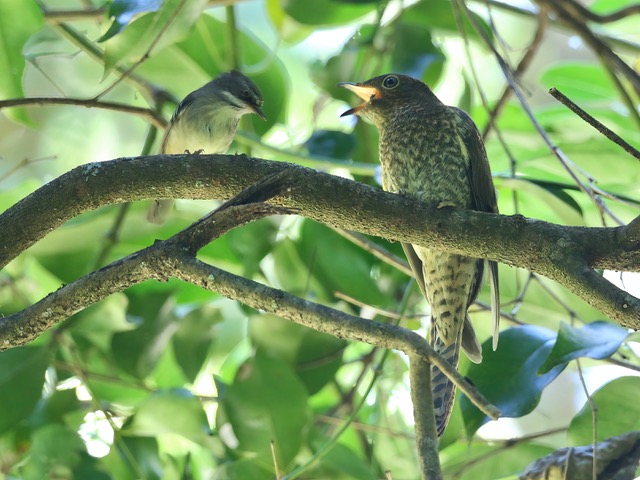
Cuckoos are no better or worse than other predatory birds, and most birds are predatory. Falcons, eagles, goshawks and owls kill other birds for food. Herons, egrets, kookaburras, ravens, currawongs, butcherbirds and magpies eat eggs and kill baby birds. Thornbills, fairy-wrens, whistlers, honeyeaters, robins and scrubwrens kill insects and their babies. Cuckoos remove eggs and replace them with their own egg. Some cuckoos go to great effort to do this, watching the nest closely, being harassed by other birds when found, and even supplementing the food of their chick throughout their development. They could be an important biological control to ensure that small birds don’t overpopulate, and if you think about it, removing eggs is a fair way to do it. They are not bad parents, they are not lazy and they are not cruel. Those are all human motivations. Cuckoos don’t have a choice – this is the only way they can breed.
There’s some fairly new research about them (2019) by Colleen Poje from Griffith University.
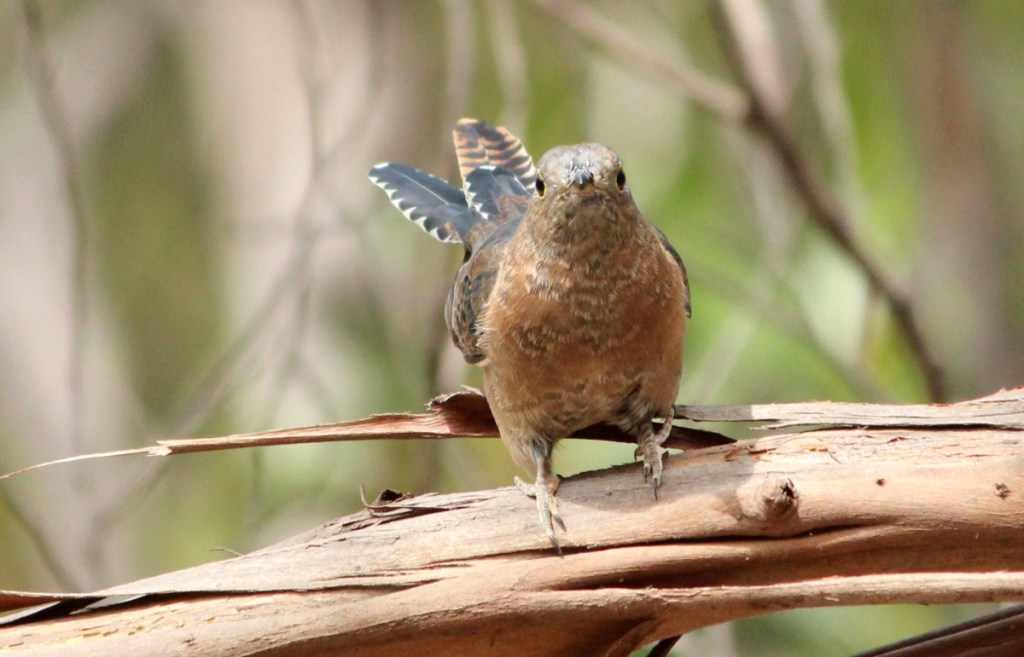
IDENTIFICATION:
The bird that they could be confused with in Mallacoota is the Brush Cuckoo – notes on telling them apart below each heading.
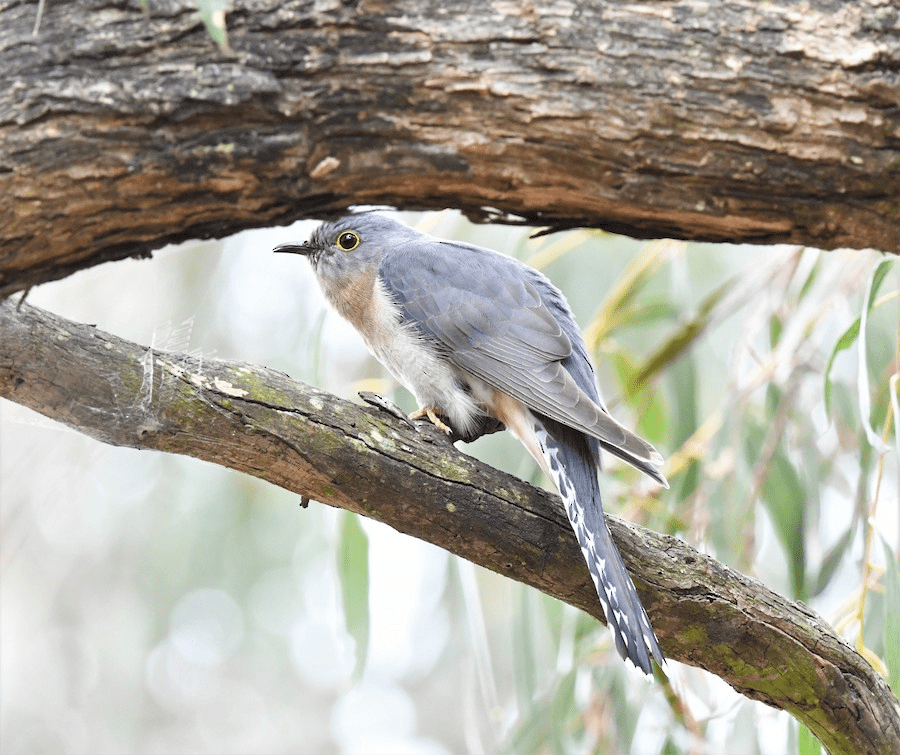
Adult males: Rufous (light orange) throat, breast, belly and vent. Blue grey face, head, back wings. Yellow eye-ring and black iris. Strong, broad dark bars on underside of tail, can be seen at white edge-spotting on upper side of tail.
[Brush Cuckoos are lighter overall, grey on throat and breast, lack the yellow eye-ring. Fewer bars on tail underside.]
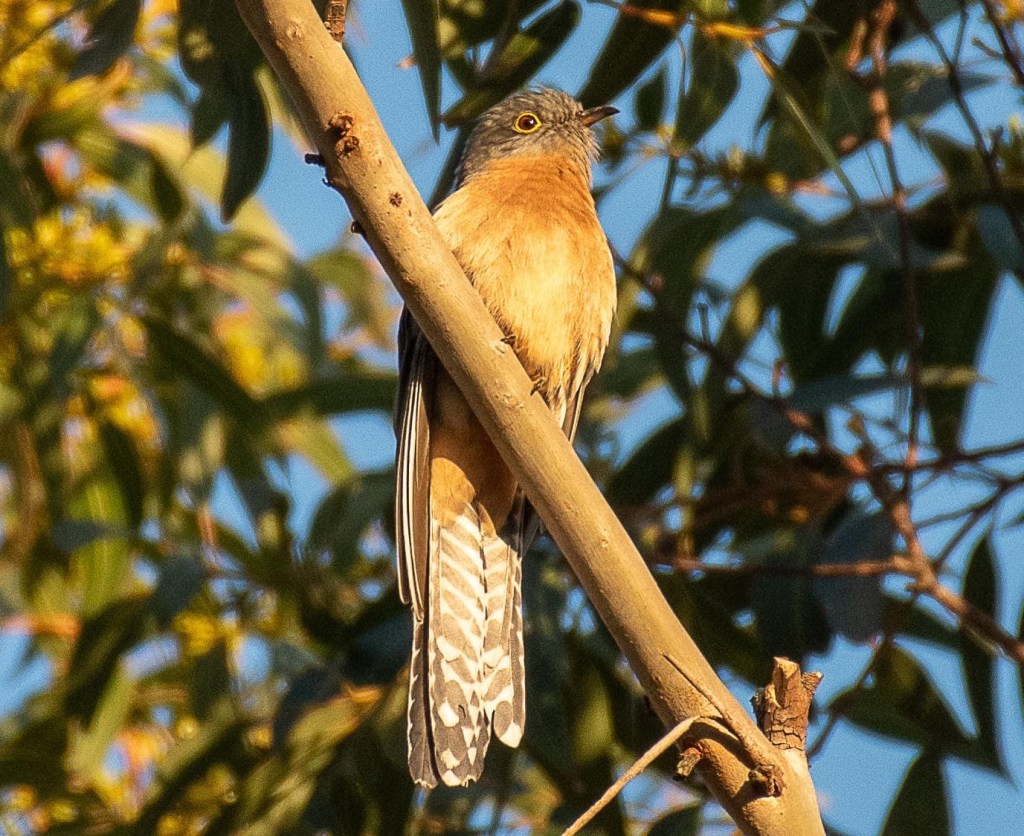
Adult females: Duller rufous throat, usually more pale on belly and vent. Sometimes has fine grey barring on breast and belly.
[Brush Cuckoo females lighter than Fan-tailed females. Some can be quite heavily barred on breast and face]
Juvenile: Fairly smooth warm brown head, face, back, wings. Breast streaked with grey. Tail underside has broad bars alternating with fine bars – this is a good way to tell them apart from Brush Cuckoo juveniles which have all fine bars on their tail.
[Brush Cuckoo juveniles heavily spotted on head, back and front, all the way to tail.] You can see some pics of a Brush Cuckoo juvenile in John’s blog.
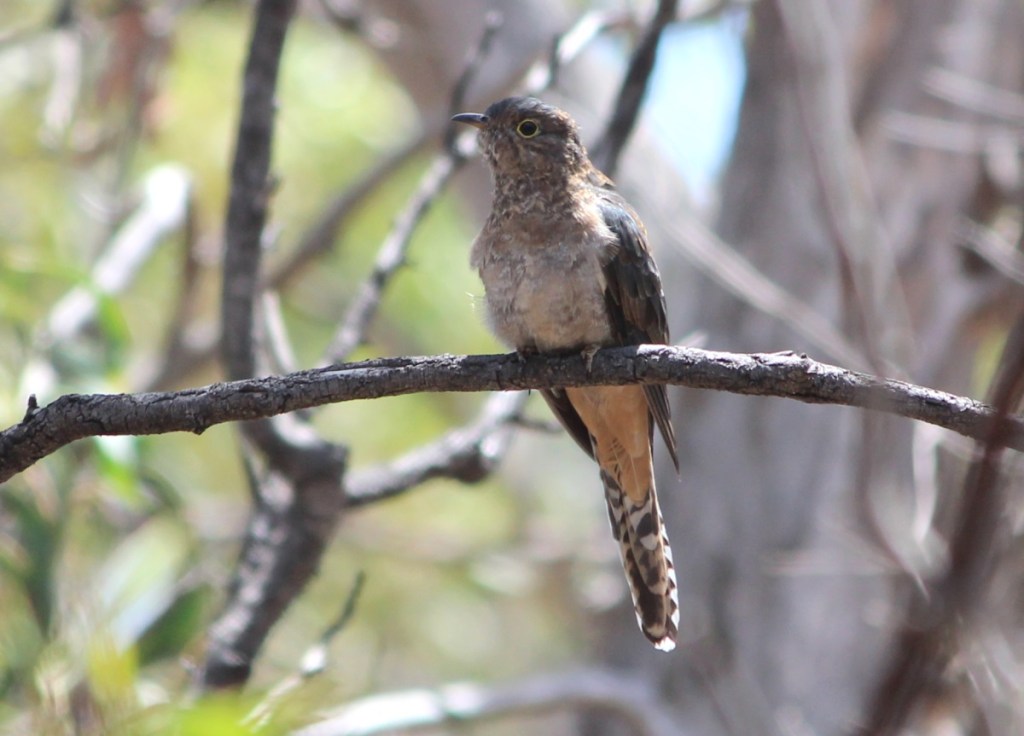
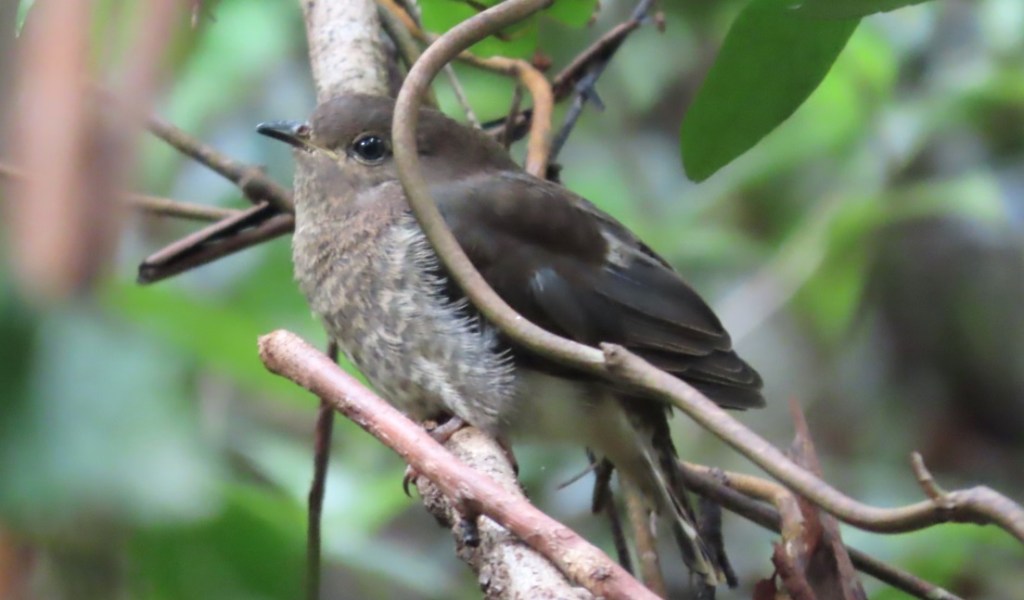
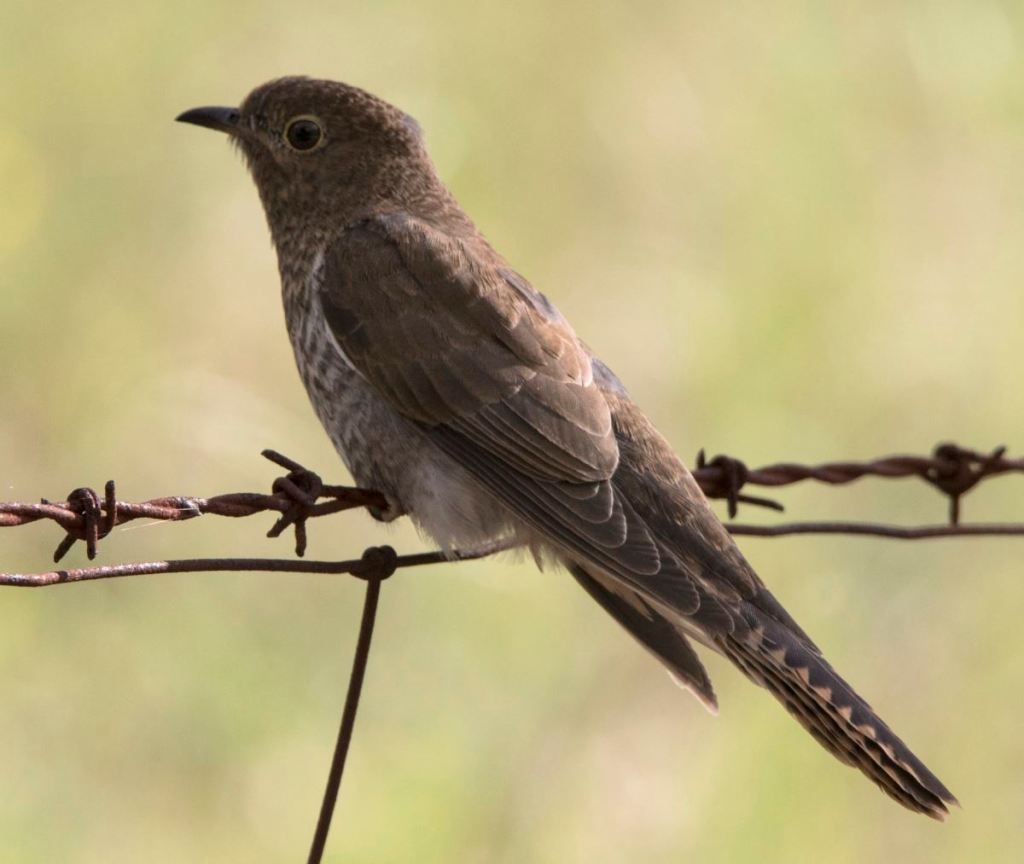
LISTEN TO THE CALLS and scroll through to see lots of great pics here: https://ebird.org/species/fatcuc1?siteLanguage=en_AU
Details: Fan-tailed Cuckoo Cacomantis flabelliformis
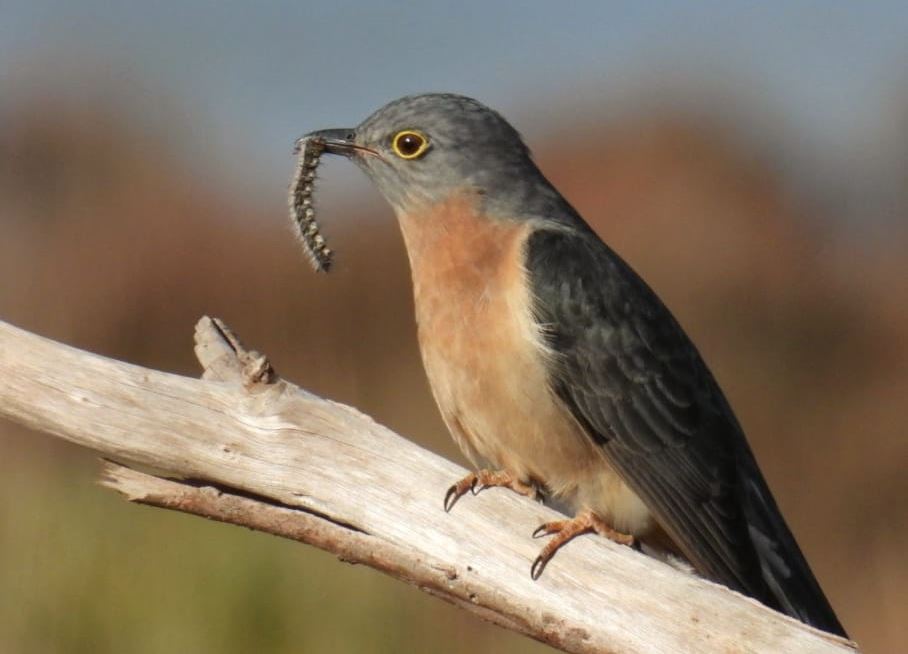
Location: southern, eastern & north-eastern Australia. New Guinea, West Papua, Solomon Islands, New Caledonia, Fiji & Vanuatu. Apparently shows up occasionally in New Zealand.
Conservation status/learn more: https://birdlife.org.au/bird-profile/fan-tailed-cuckoo
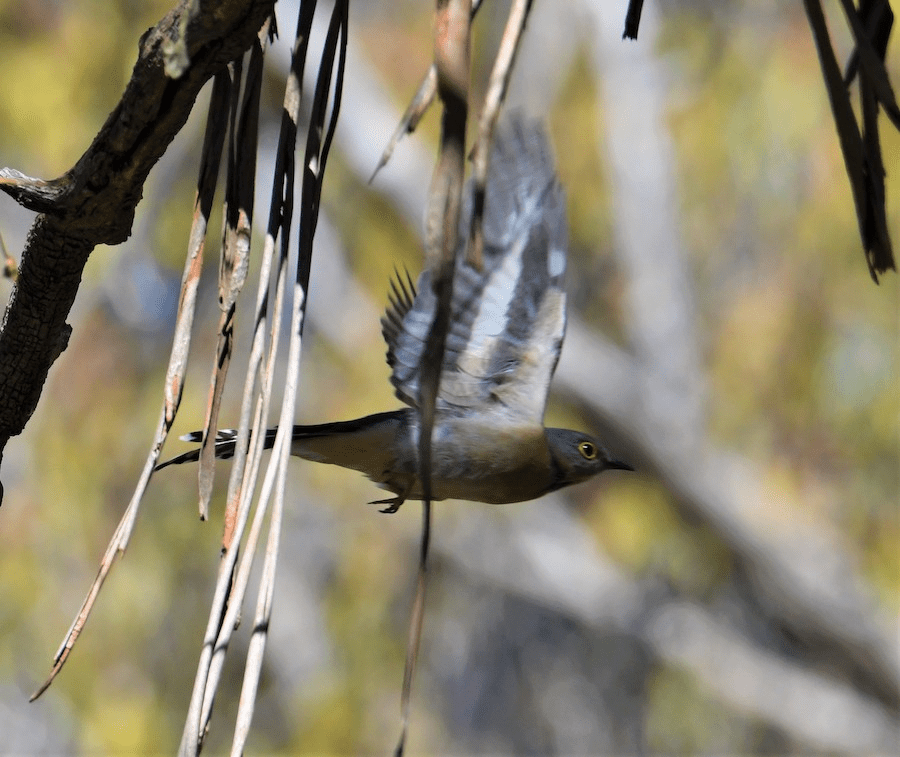
Thanks to Robert Anderson, Rob Clay, Christine Rand, John Hutchison, Michael Williams, Brett Howell, Scott Roberts, Jack Winterbottom, KJ Hocking and Martin Butterfield for your wonderful pics and information.
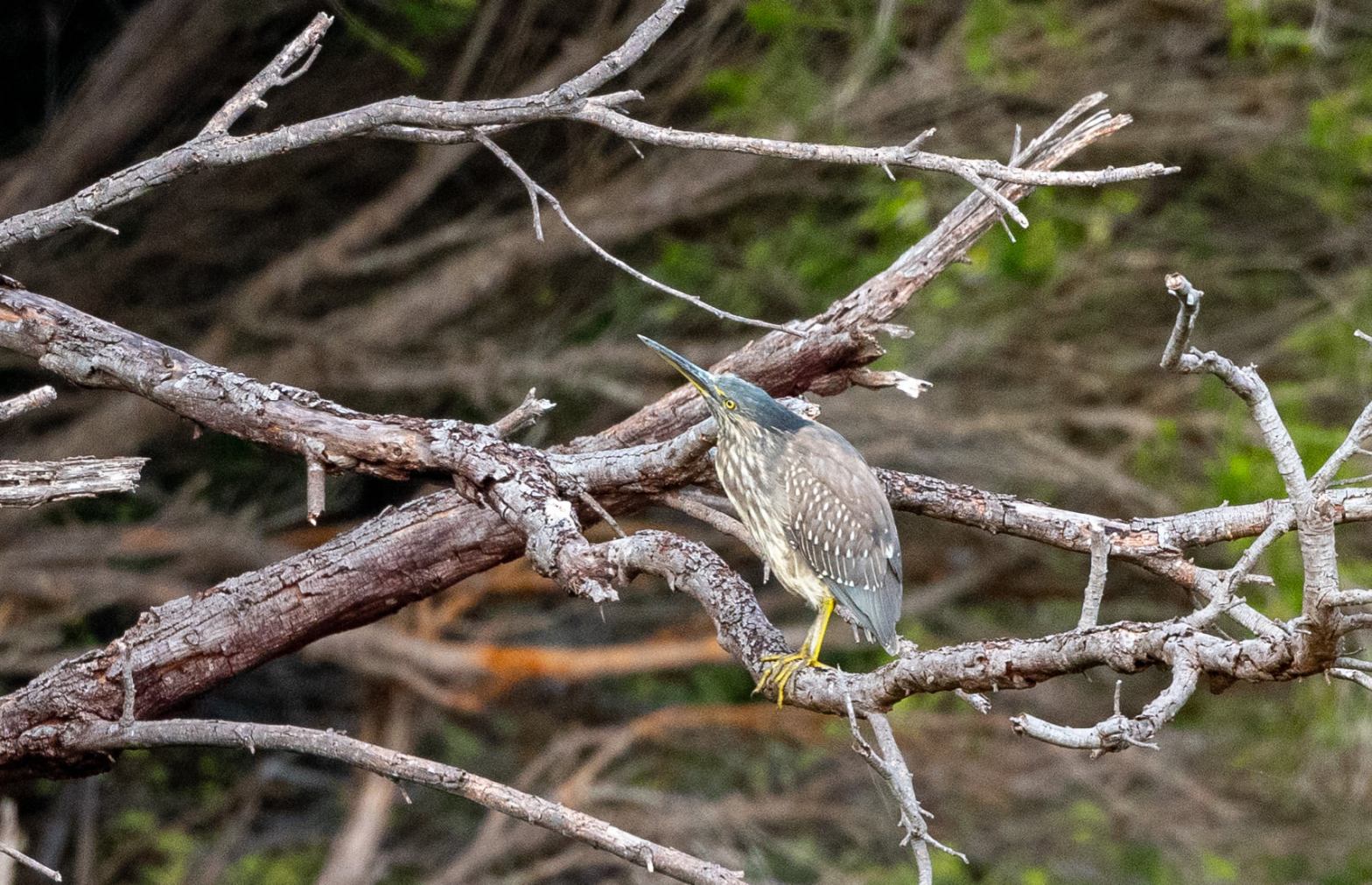
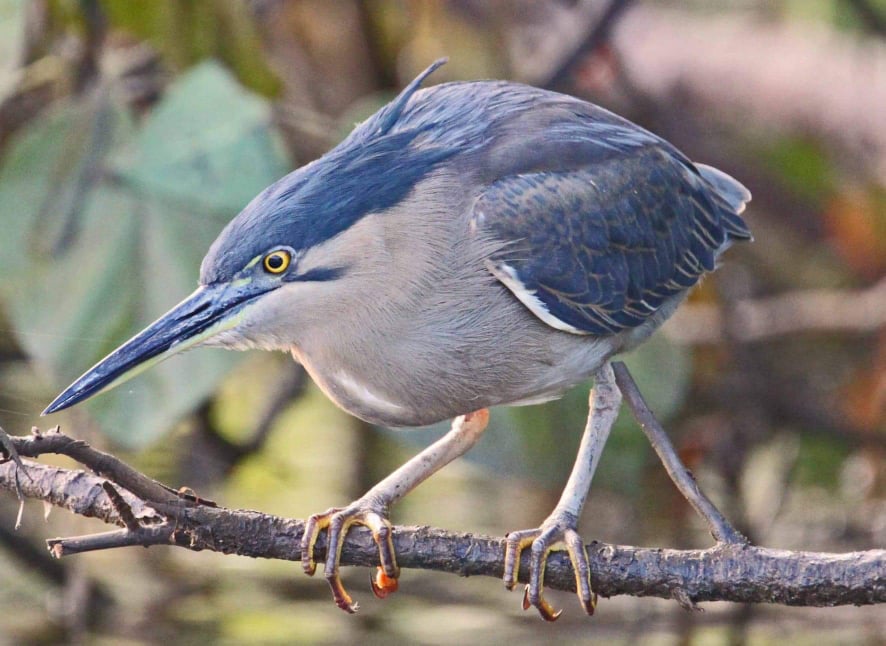
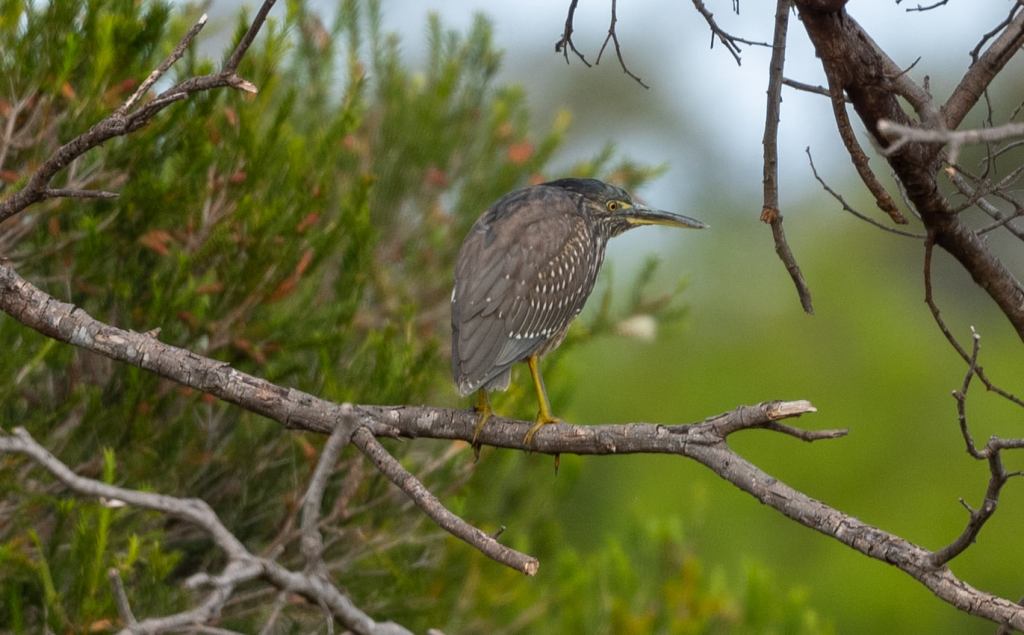
 Mallacoota Birds