Mallacoota Birds: Superb Lyrebird

Bird of the Week: Superb Lyrebird 23 October 2020

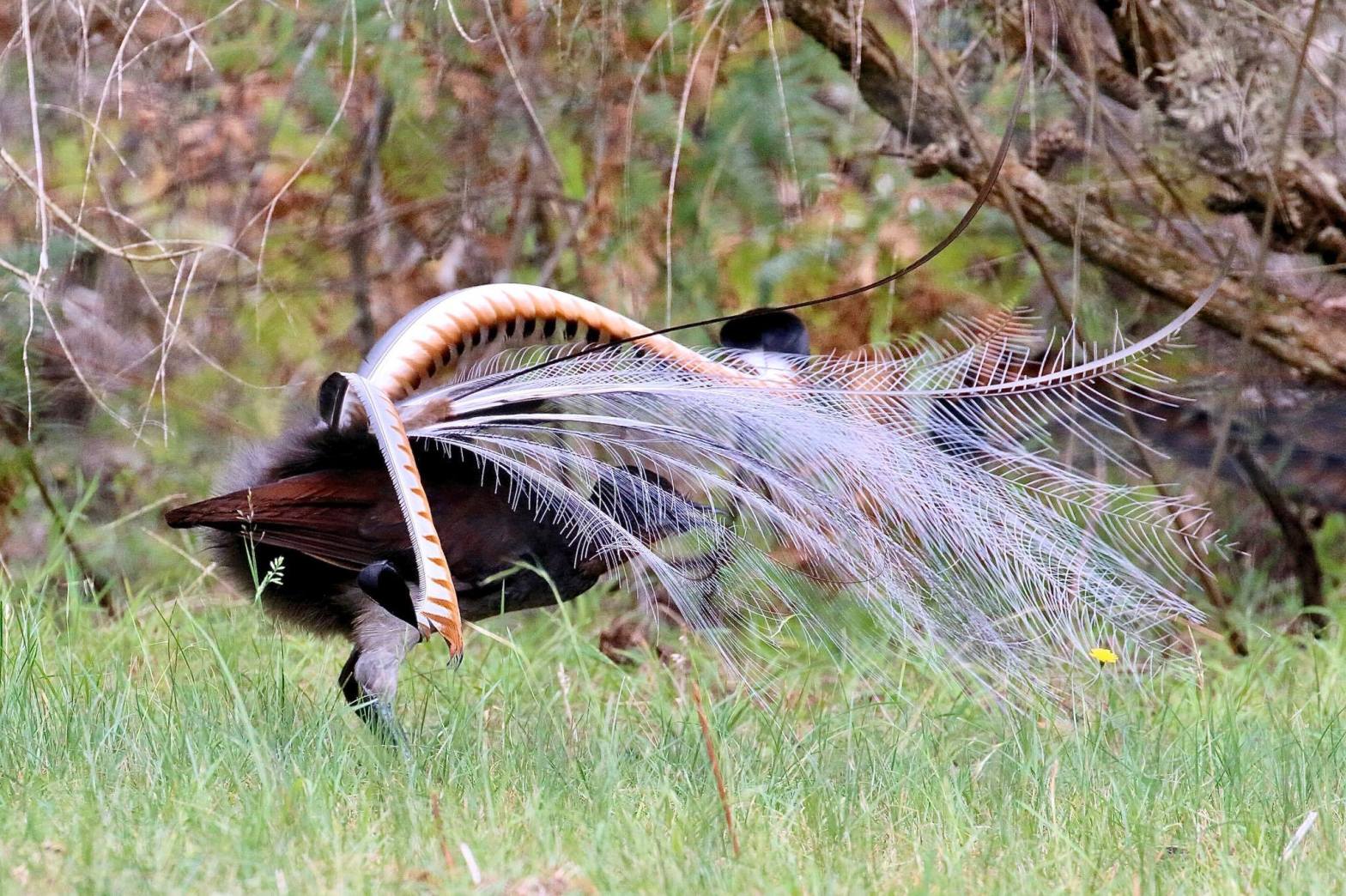
Superb Lyrebirds are a feature of Mallacoota. They can be seen almost anywhere – in town at Devlin’s Inlet (Mortimers Paddock), in the gully near the foreshore caravan park, Shady Gully, Karbeethong, and many locals see them in their gardens. They are well distributed through the bushland as well, and can often be heard well before they are seen.
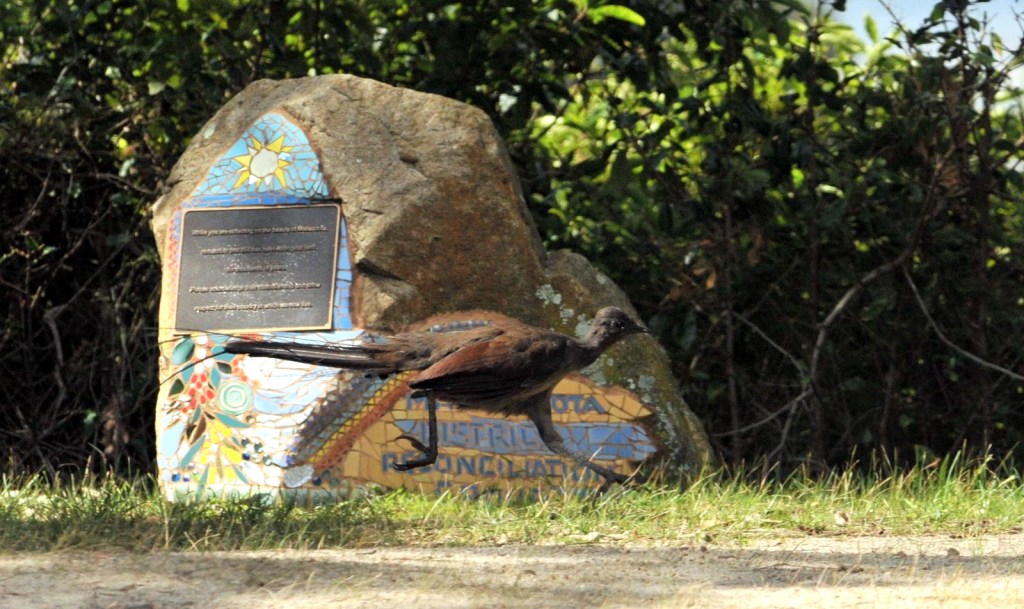
Superb Lyrebird Menura novaehollandiae Mallacoota Gregory Storer Michael Barnett
Superb Lyrebird Mallacoota by Gregory Storer & Michael Barnett

Superb Lyrebirds are best known for their thrilling song and powerful voice. They are considered the world’s finest songbird, which is strange because they are also one of the oldest types of songbird. A lyrebird fossil Menura tyawanoides was found at Riversleigh, QLD from the early Miocene (~23 million years ago).

Lyrebirds, like most songbirds, can produce two different sounds at once, due to their syrinx: a structure like a voice box, but placed and structured differently to ours. It is located at the point where the windpipe forks towards the lungs, so by using the left side and the right side differently, they can produce two totally different sounds at once.

This is why they can almost mimic a kookaburra!
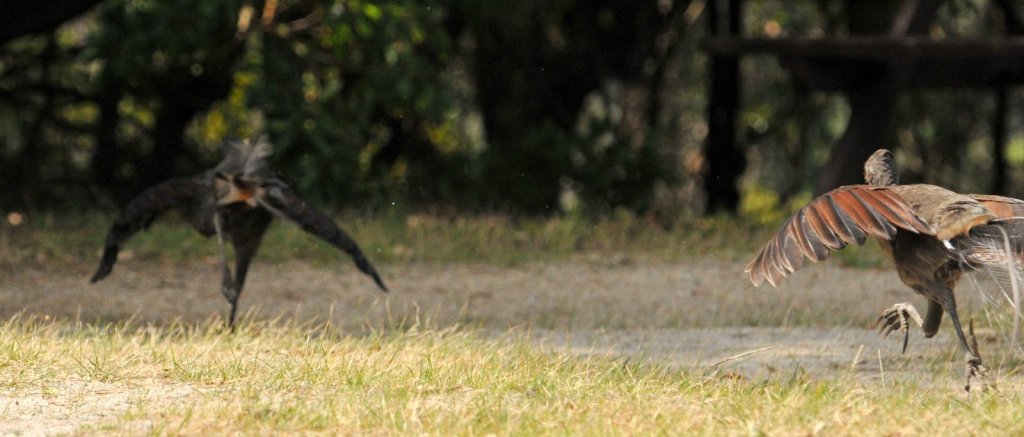
Male Superb Lyrebird chasing another, Mallacoota Gregory Storer Michael Barnett
Male Superb Lyrebird chasing another, Mallacoota by Gregory Storer & Michael Barnett

Lyrebirds are an old form of songbird so their syrinx is a bit different to the other songbirds like magpies, honeyeaters, shrike-thrushes and whistlers. Though the lyrebird has fewer muscles in the syrinx, they seem to be very strong and work very well. Here’s a diagram: http://people.eku.edu/ritchisong/ritchiso/birdcommunication.html

There’s also a cool diagram here, comparing a normal songbird (oscine) syrinx against a simpler version that suboscines (eg. pittas) have: https://meetings.ami.org/2018/project/syrinx-musculature-compared-in-oscine-vs-suboscine-passerines/

Lyrebirds can sort-of fly, and like to spend the night in the tops of trees. They have broad, round wings, and by a combination of flapping and jumping they make it up to the canopy. In the morning they use their round wings to parachute down!
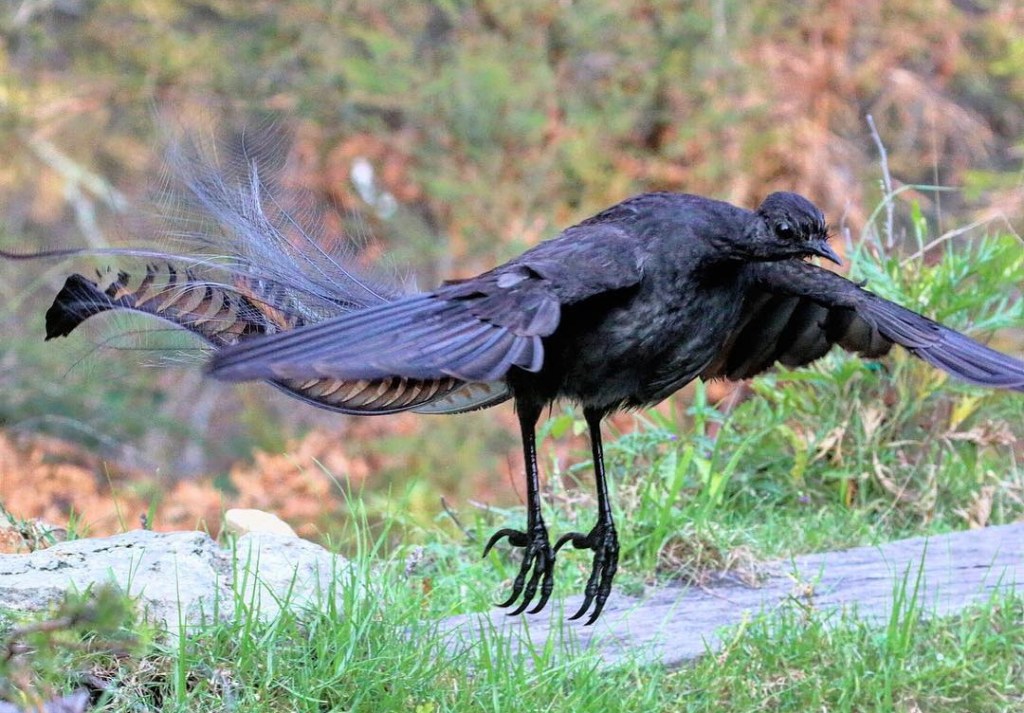
Superb Lyrebird male flying Lakes Entrance VIC Goldsmiths in the Forest
Superb Lyrebird male flying Lakes Entrance VIC by Goldsmiths in the Forest

They also have huge strong feet and legs.
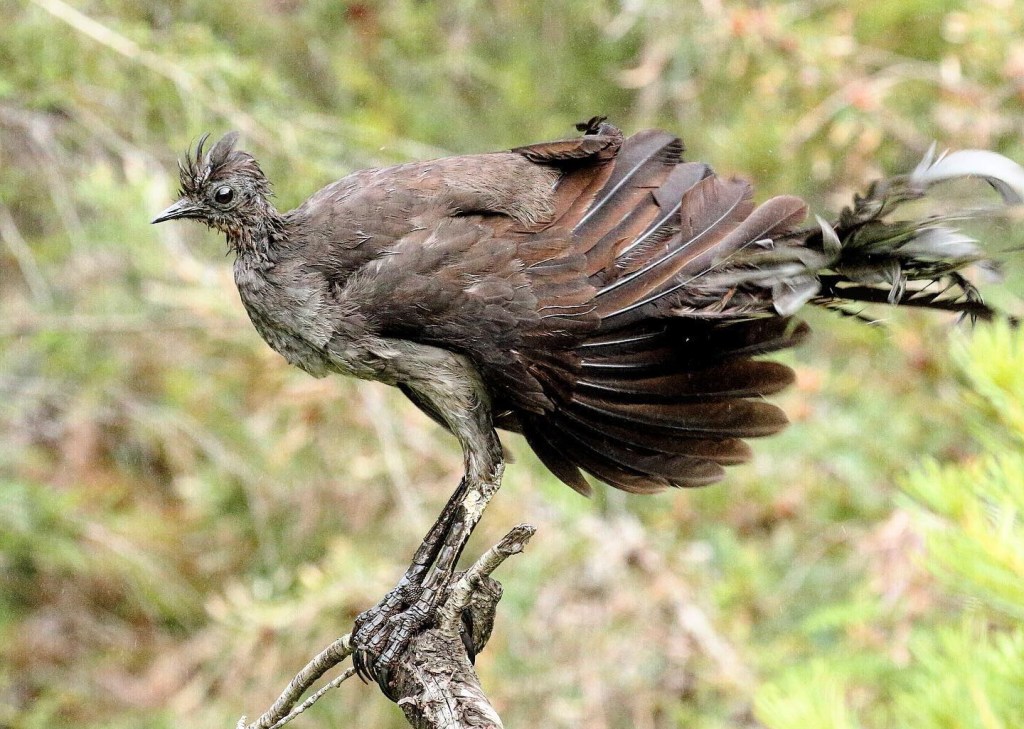
Superb Lyrebird perched huge feet & legs Lakes Entrance VIC Goldsmiths in the Forest
Superb Lyrebird showing huge feet & legs Lakes Entrance VIC by Goldsmiths in the Forest

If you see an adult male with a full, magnificent tail, you know he’s been around for a long time. It takes a male 7 to 9 years to develop that tail.
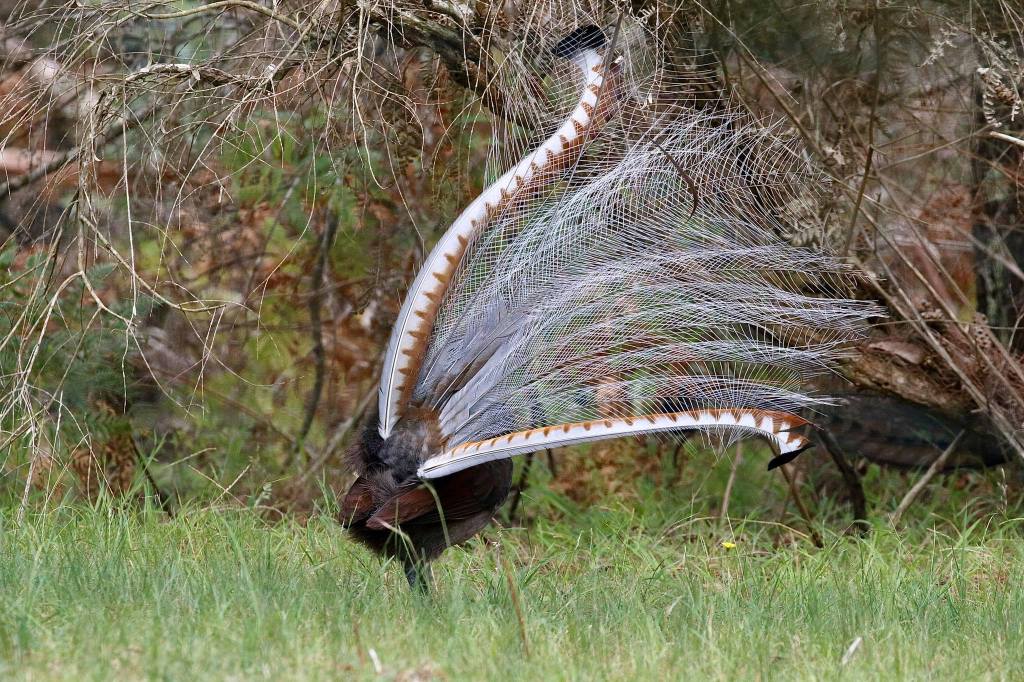
Superb Lyrebird male displaying Lakes Entrance VIC Goldsmiths in the Forest
Superb Lyrebird male displaying Lakes Entrance VIC by Goldsmiths in the Forest

Juvenile lyrebirds start out with short plain brown tails. The tail grows longer after leaving the nest, and chick soon resembles female in size and appearance. They have a rufous forehead (1st – 2nd year) and throat (1st to 3rd year).
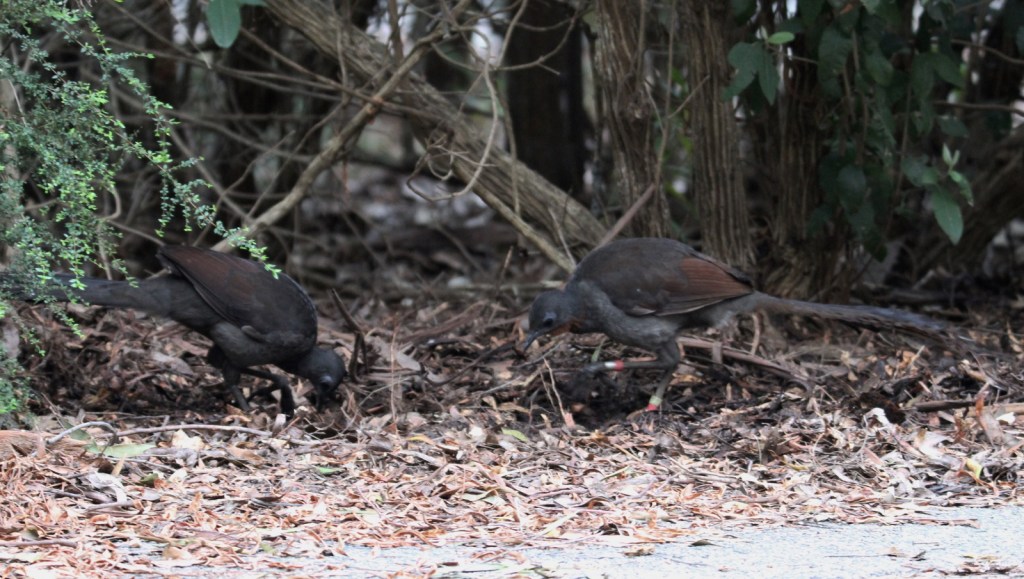
Superb Lyrebird chick with mother Sherbrooke VIC, Karen Weil
The same Superb Lyrebird chick as above, with mother on left, at Sherbrooke VIC, pic by Karen Weil.

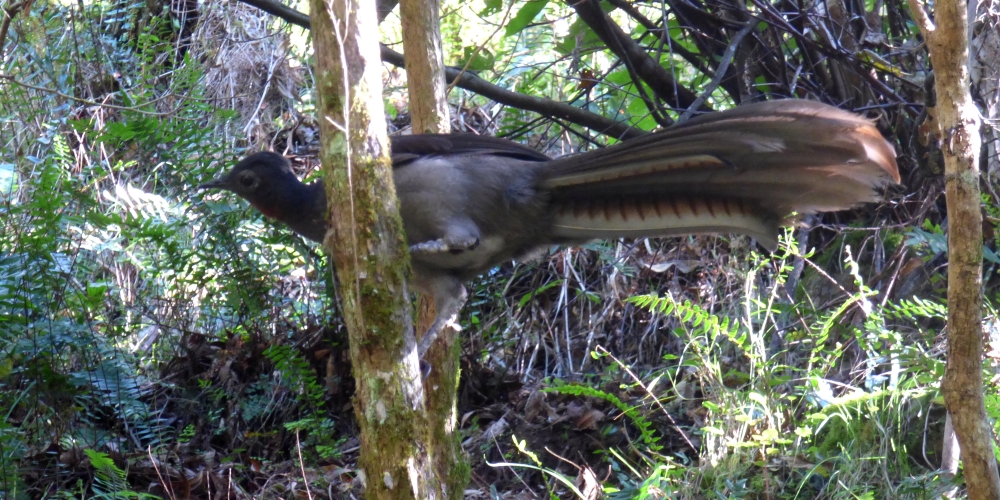
If female, the two outer feathers of the tail (the lyrates) will develop bars with transparent windows. They will always be shorter than the other tail feathers and not as colourful as an adult male’s. To develop a full adult female tail will take her 3 to 5 years. All the other tail feathers will remain brown and broad, with rounded tips.
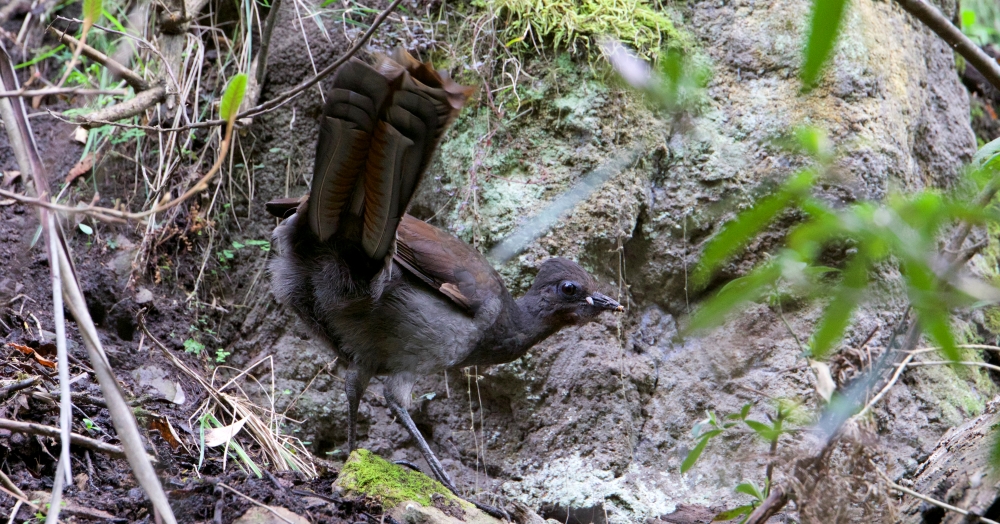
Superb Lyrebird possibly female carrying food, Buchan VIC Janine Duffy
Superb Lyrebird possibly female with food for chick, Buchan VIC by Janine Duffy
Superb Lyrebird female or immature male, Buchan VIC Scott Roberts Echidna Walkabout
Superb Lyrebird female or immature male, Buchan VIC by Scott Roberts

However, you can never really tell if a lyrebird with short lyrates is an adult female or an immature male, unless you see the bent tail that happens when she is nesting.

If the baby is a male, his tail will at first look like a female’s, then over time the two lyrates (outer feathers) will become longer, develop bars and transparent windows and become a beautiful rich white and chestnut brown. They will develop an eye (bell) at the tip. At around 4 to 5 years of age the filamentous feathers will develop, and the two middle tail feathers (medians) will become wire-like. By 7 – 9 years the full tail set will be complete.
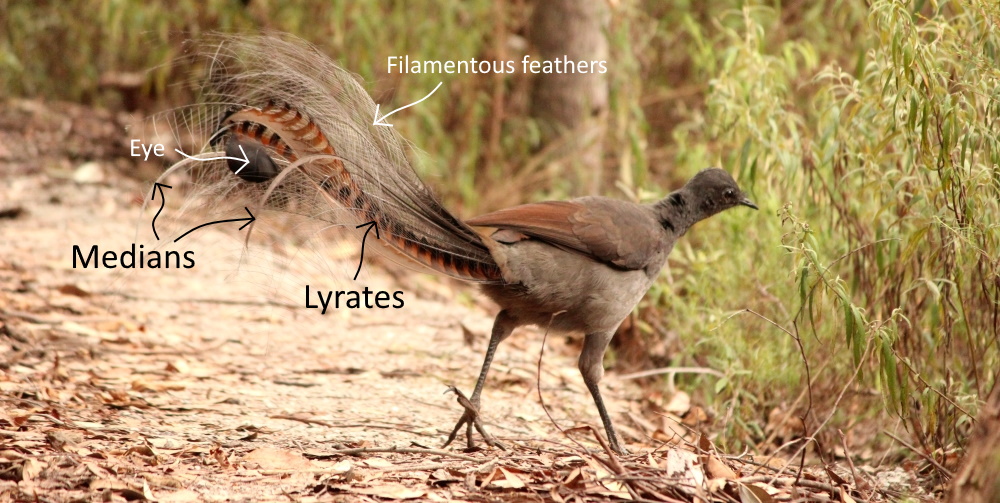
Superb Lyrebird male feather diagram Buchan East Gippsland Janine Duffy
Superb Lyrebird male feather diagram Buchan, East Gippsland by Janine Duffy

Tragically, 45% of Superb Lyrebird habitat was burnt in the Black Summer bushfires.
That means that our lyrebird is now threatened species, and one of 17 birds listed for emergency intervention. https://theconversation.com/click-through-the-tragic-stories-of-119-species-still-struggling-after-black-summer-in-this-interactive-and-how-to-help-131025

How can you help? Watch out for lyrebirds in areas where you used to see them before the fires. Report any sightings to eBird, Birdata or here on the Mallacoota Birds facebook group.

In the Mallacoota area the subspecies is presumably victoriae, the darkest.

LISTEN TO THE CALLS: https://wildambience.com/wildlife-sounds/superb-lyrebird/

This amazing site includes recordings of Superb Lyrebird mimicry compared against a recording of the original bird.

Scroll through to see lots of great pics here: https://ebird.org/species/suplyr1/

Details: Superb Lyrebird Menura novaehollandiae victoriae
Location: east of Melbourne VIC through Gippsland, NSW coast to Queensland border. Introduced to Tasmania. Subspecies victoriae in Victoria & inland NSW, subspecies novaehollandiae in coastal southern to central NSW, subspecies edwardi northern NSW.
Conservation status/Learn more: Conservation status under review. https://www.birdlife.org.au/bird-profile/superb-lyrebird

More information about the new threatened status and how to help here.

Thanks to Karen Weil for information on the plumage stages of lyrebirds, Darilyn & Les Goldsmith from Goldsmiths in the Forest B&B, and Michael Barnett, Martin Maderthaner & Scott Roberts for use of photos.
Mallacoota Birds: Australian Pelican

Bird of the Week: Australian Pelican 16 October 2020

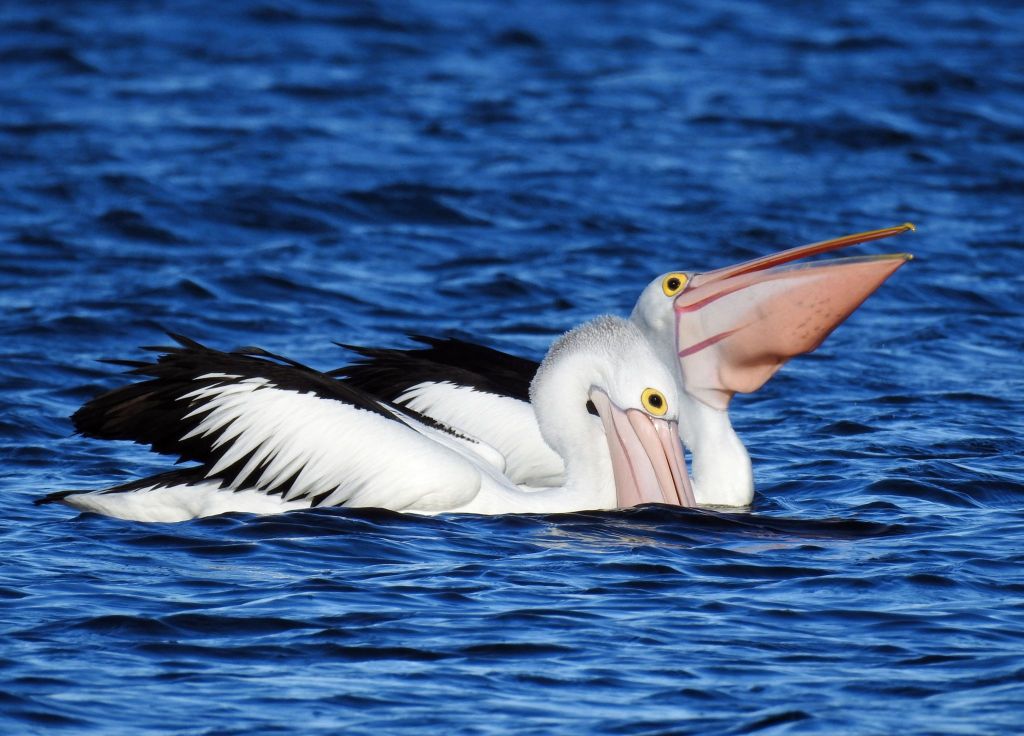
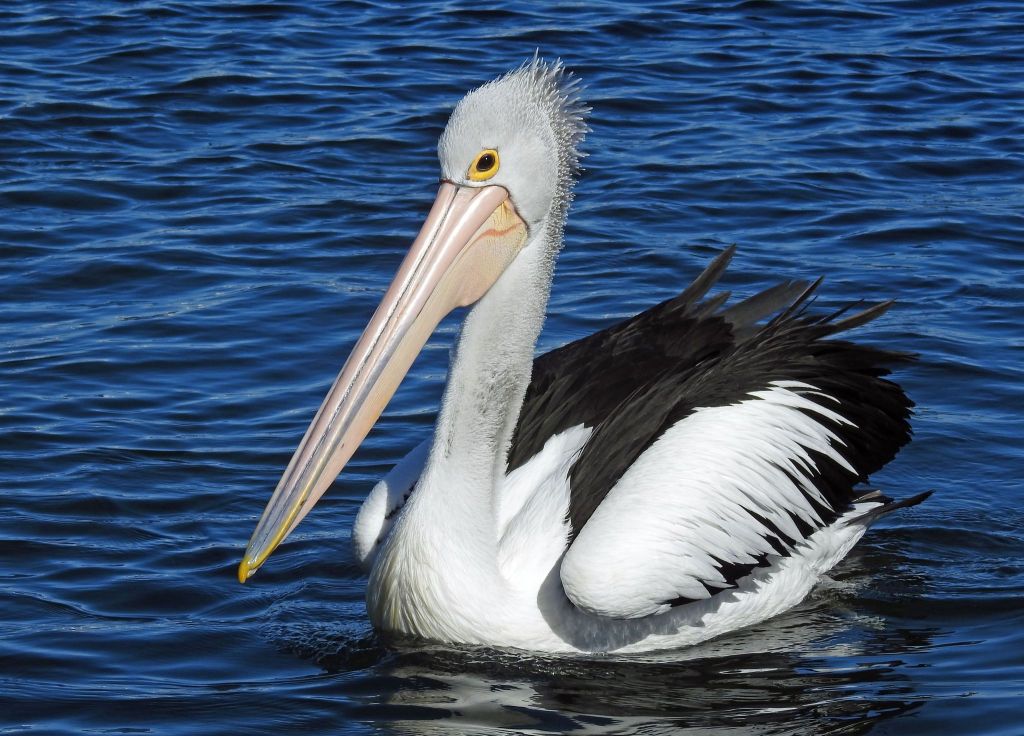
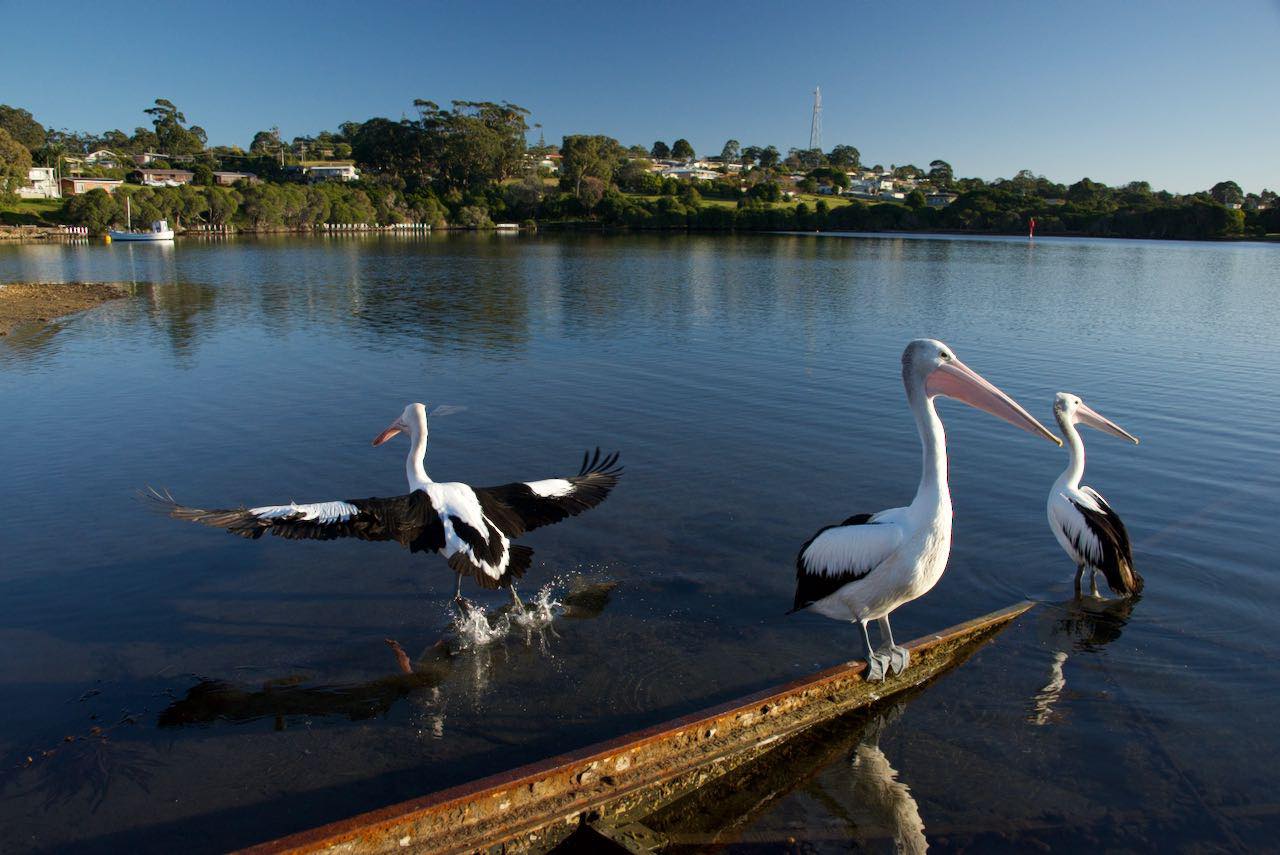
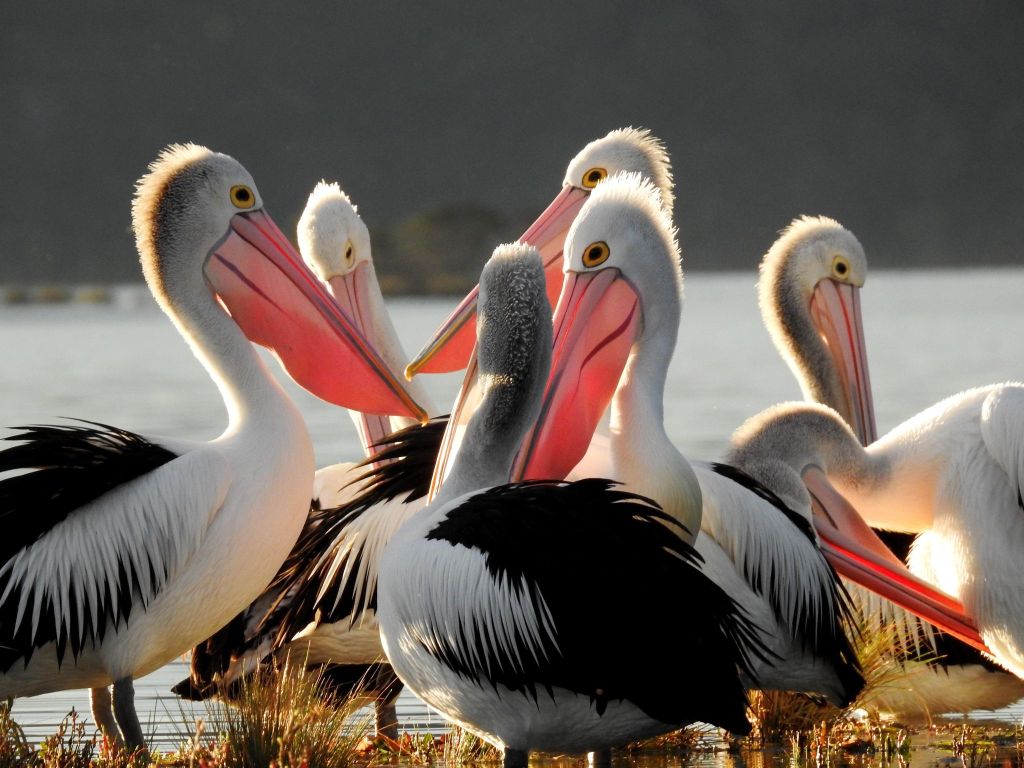
Everyone knows this bird! They are one of the most photogenic and noticeable birds in Mallacoota, seen everywhere on the Inlet and often hanging out on the jetties.

Australian Pelicans, Mallacoota Caroline Jones
Australian Pelicans, Mallacoota by Caroline Jones

But how much do we really know about this magnificent bird? Where do they breed? How big are they compared to other pelicans? Do they change colour when they are breeding? Luckily we have several very knowledgable researchers in the Mallacoota Birds community: Martin O’Brien, Debbie Sullivan, Andrew Murray, Greg Johnston.

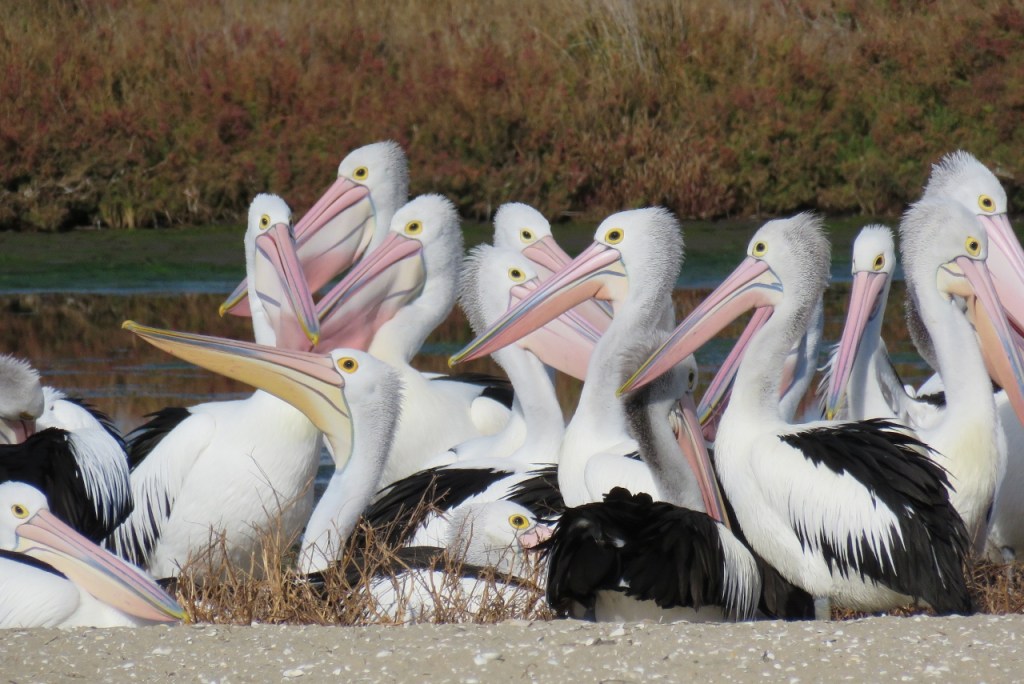
Australian Pelicans, Mallacoota Cameron Waithman
Australian Pelicans, Mallacoota by Cameron Waithman
Australian Pelicans at breeding site, East Gippsland by Gary & Judy Smith

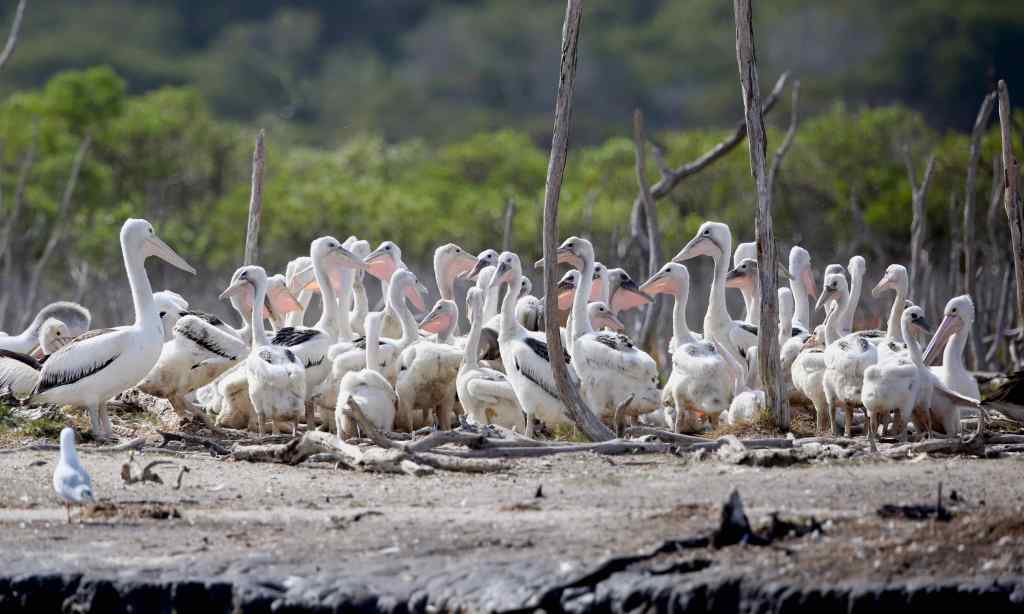
Has anyone seen a baby Pelican? No? Well, you’re not alone. Australian Pelicans don’t breed just anywhere. There are only ~ 10 sites in Victoria that have hosted a pelican breeding event, and 4 of those are/were in East Gippsland. The Gippsland Lakes still have pelicans breeding.

Juvenile Australian Pelicans, East Gippsland John Hutchinson
Juvenile Australian Pelicans, East Gippsland by John Hutchinson

They used to breed at Mallacoota on the Goodwin Sands, but haven’t successfully raised chicks there since 1997*.

Disturbance by humans really upsets breeding pelicans. Something as simple as a couple of fishing boats approaching, a curious photographer, or a dog off leash could be enough to make pelicans quit that site, and abandon their chicks. Fluctuating water levels are also a factor.

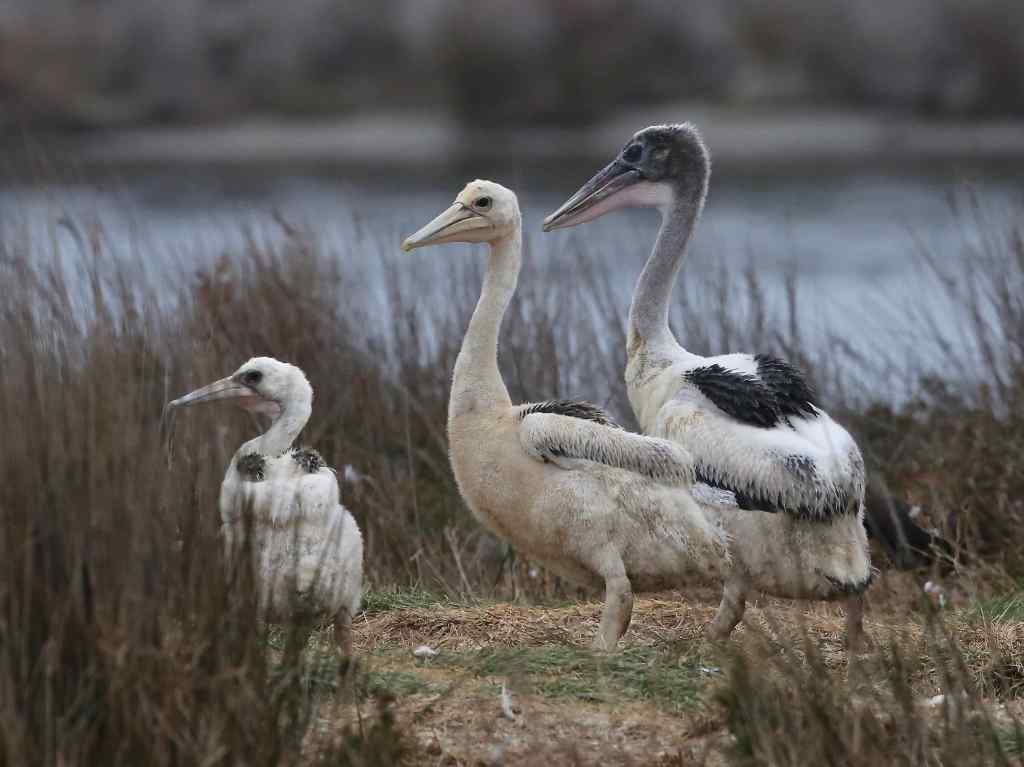
Juvenile Australian Pelicans, Gippsland Lakes John Hutchinson
Juvenile Australian Pelicans, Gippsland Lakes by John Hutchinson

If you do see a sign of pelicans breeding at Mallacoota, please report it and stay well away.

You can read Martin O’Brien’s paper about Pelican breeding here: https://www.birdlife.org.au/afo/index.php/afo/article/view/461/446

Australian Pelican normal (non-breeding) coloured bill, Mallacoota Cameron Waithman
Australian Pelican with normal (non-breeding) coloured bill, Mallacoota by Cameron Waithman

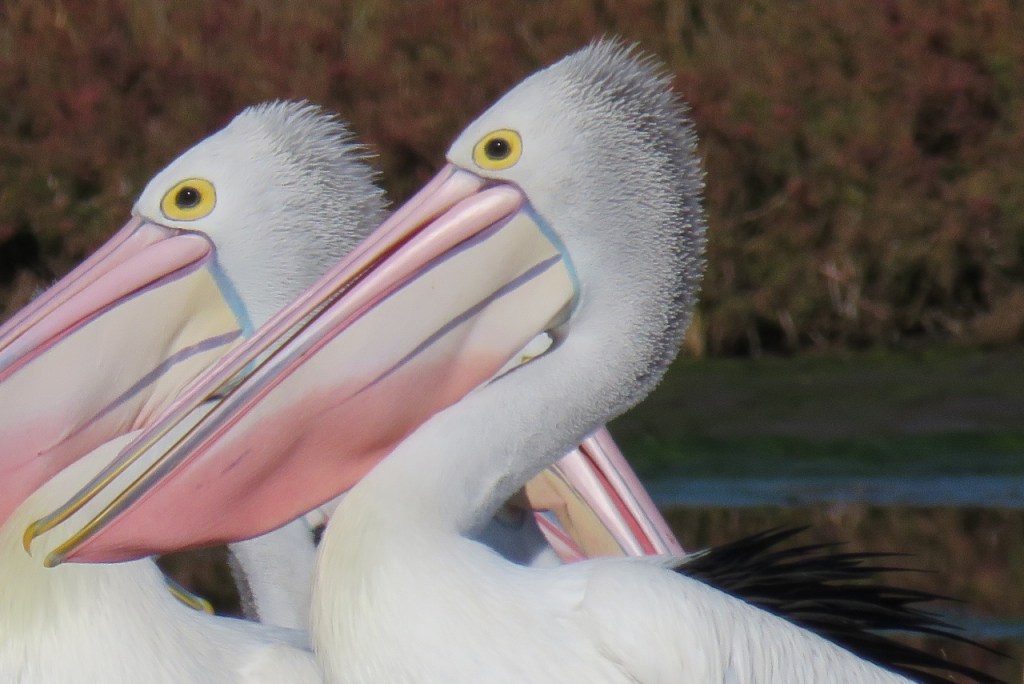
Like many birds, pelicans do change colour a bit when they are breeding, but this ‘breeding flush’ is brief and confined to the bill area. Watch out for it – mostly we see pelicans with a pale pink bill, but in breeding flush the bill goes rainbow: salmon pink, blue and yellow. You can see it in this pic by J Waithman.

Australian Pelican flying breeding flush, East Gippsland Cameron Waithman
Australian Pelican in breeding flush, East Gippsland by Cameron Waithman
Australian Pelicans breeding flush, East Gippsland Gary Judy Smith
Australian Pelicans in breeding flush, East Gippsland by Gary & Judy Smith

I’ve heard a myth that they are the largest pelican in the world, but it’s not true. They are big, yes, but the Dalmatian Pelican and the Great White Pelican are bigger. (wingspan of both species can be up to 3.5m, and weight up to 15kg – by comparison our Aussie Pelican has a wingspan up to 2.6m and weight up to 13kg)

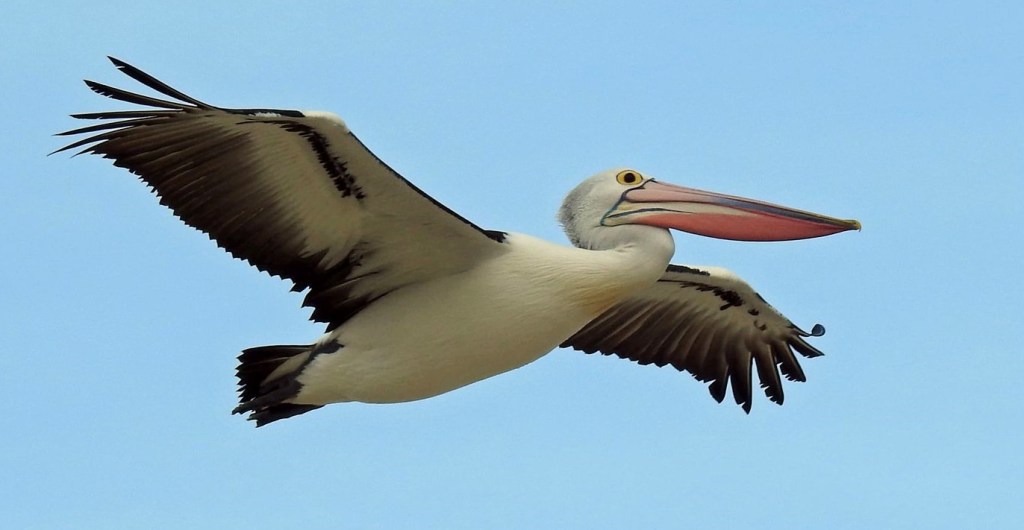
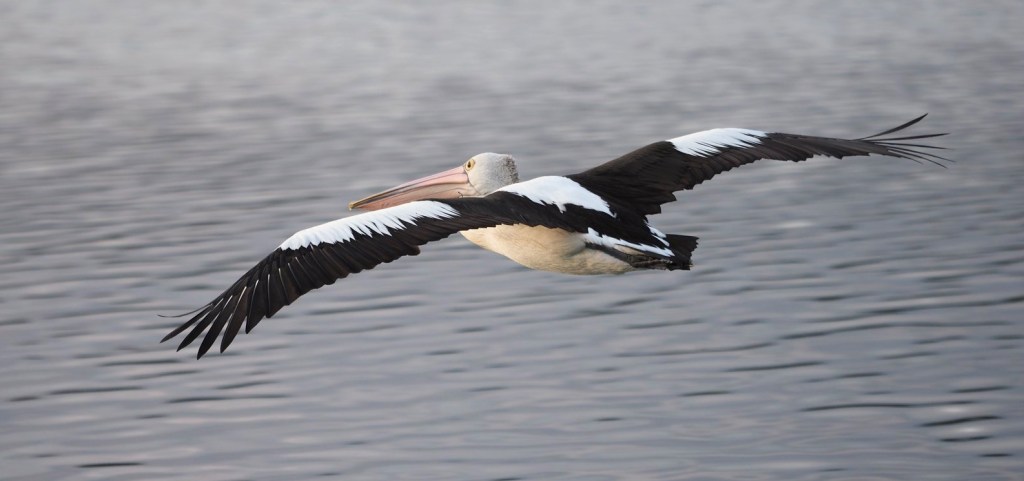
Australian Pelican flying, Mallacoota Michael Barnett
Australian Pelican flying, Mallacoota by Michael Barnett

However the Australian Pelican does have the longest bill of any bird.

There are 8 species of pelican around the world. They have a patchy distribution on all continents except Antarctica. Our Aussie Pelican ranges over the New Guinea, the Solomon Islands and eastern part of Indonesia (including Timor L’este, Bali). I might be biased, but our pelican is by far the most handsome of them all.

Scroll through to see lots of great pics here: https://ebird.org/species/auspel1/

Details: Australian Pelican Pelecanus conspicillatus
Location: Most of Australia, but not seen much in inland WA, NT & SA, or in heavily forested land of TAS & VIC/NSW alps.
Learn more: https://birdlife.org.au/bird-profile/australian-pelican

From Debbie Sullivan, Pelican researcher at BirdLife Australia:

“Thank you for your great post. We are indeed fortunate that we still have a breeding rookery in East Gippsland. I’m very fortunate to be working with these great characters. My project population and movement dynamics, as well as health includes a colour banding component. There has been so many highlights to date (out of 3 years) but most impressively is a 6 month old we banded (at 3mths) in East Gippsland was reported and photographed near the QLD border!!

So…If anyone see’s a Pelican with a red and white color band – I would love to hear about it! Please record the number on the band, time, date and where you saw it. How many other birds it was with. A photo would be a great addition to the information if possible.
Information can be sent to me via greatpelicancount@birdlife.org.au or via the project facebook page Love our Pelicans or via Greg Johnston

Stay safe in these crazy times and happy birding. Look forward to meeting many of you in near future.”

..

Thankyou to Martin & Mariska Ascher, Caroline Jones, Jennifer & Cameron Waithman, John Hutchinson, Michael Barnett and Gary & Judy Smith for the use of your beautiful photos.
Mallacoota Birds: Scarlet Honeyeater

Bird of the Week: Scarlet Honeyeater 9 October 2020

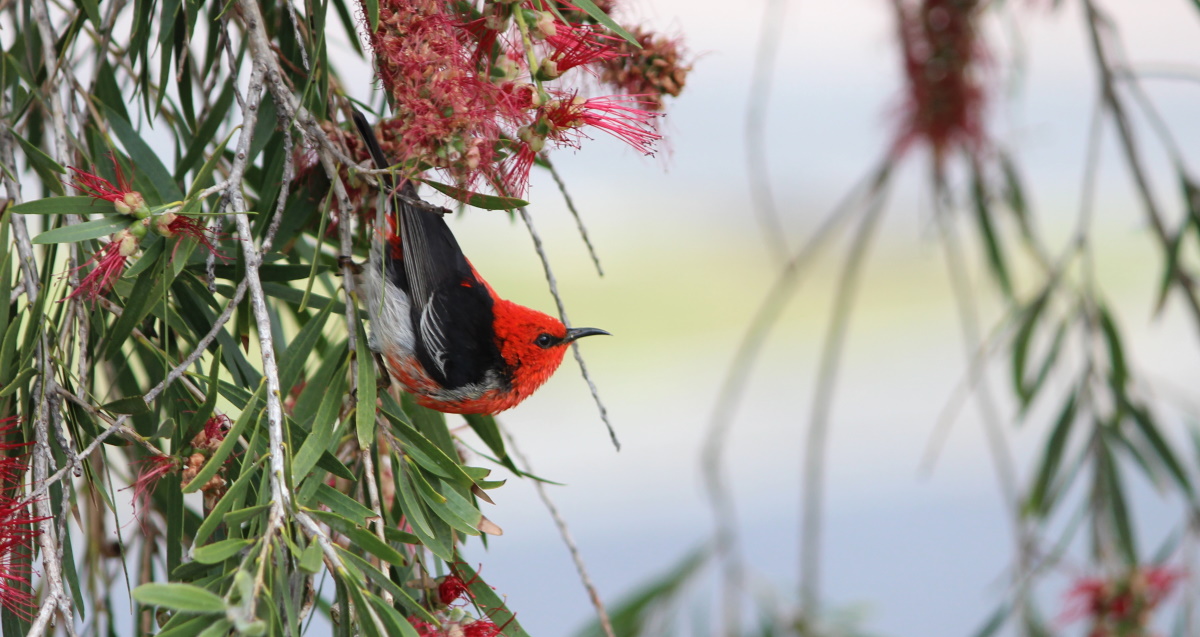
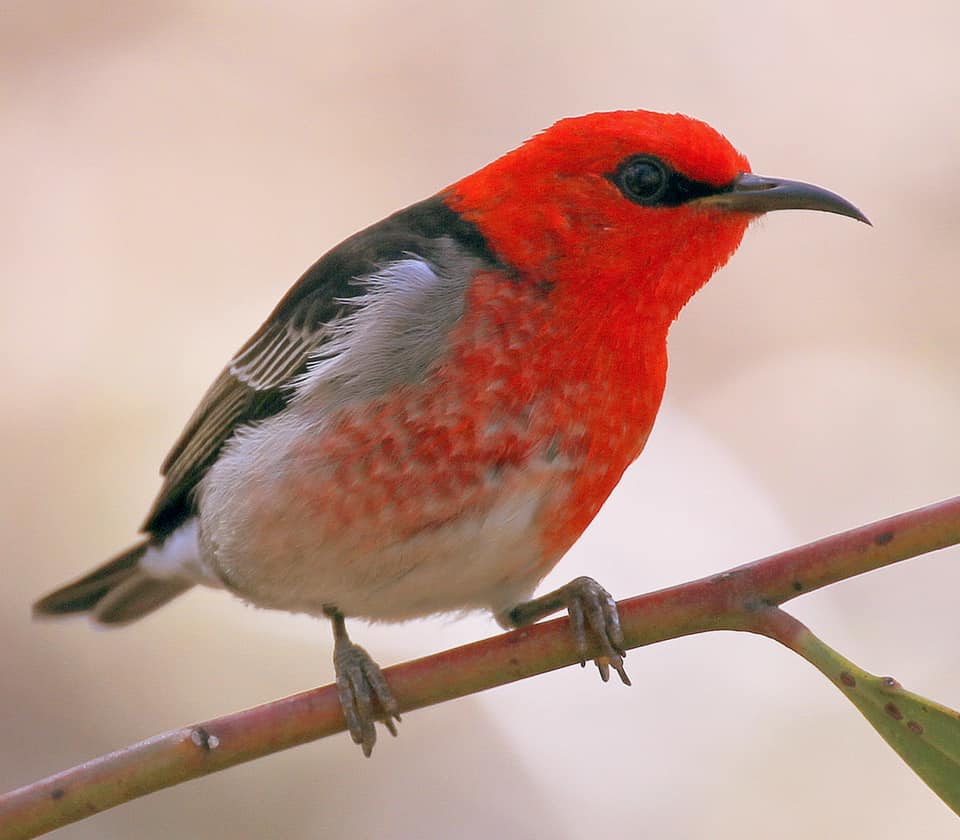
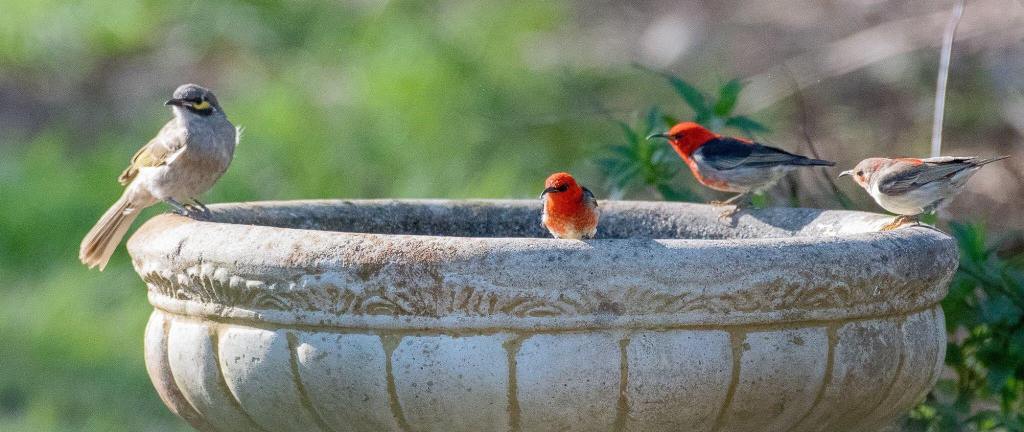
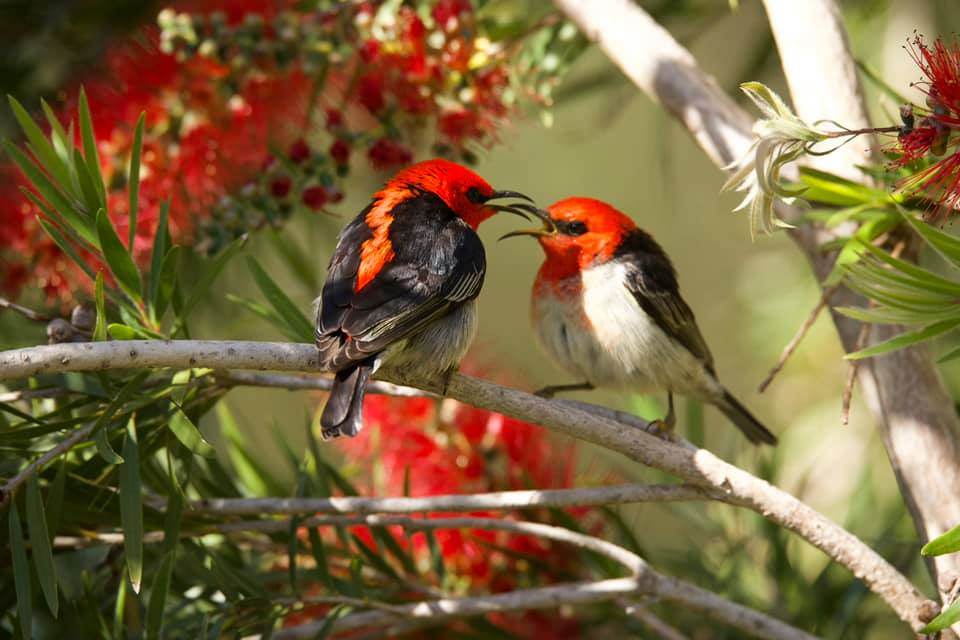
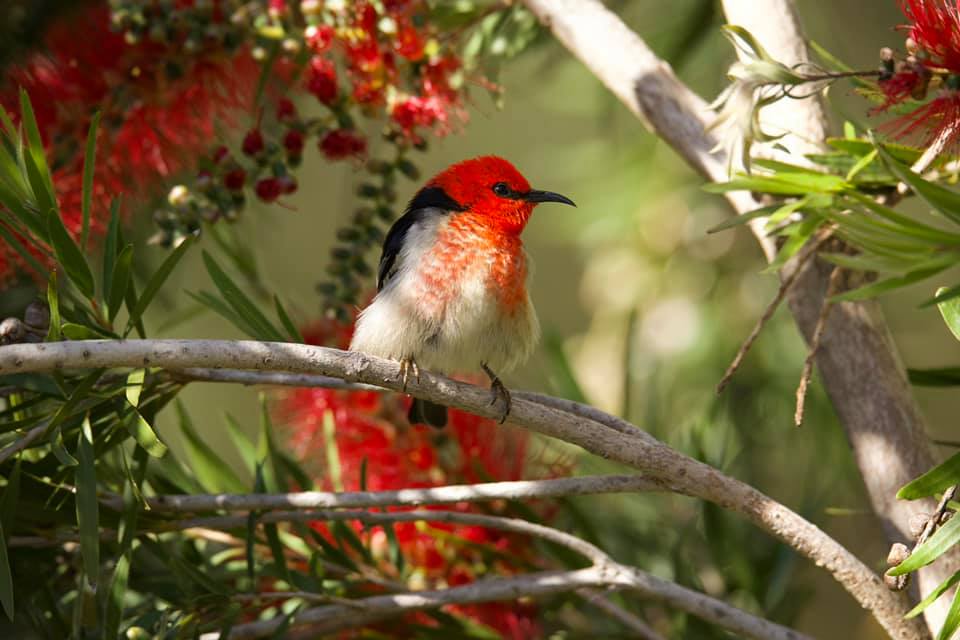
These adorable birds are really tiny – they are half the size of a Yellow-faced Honeyeater.

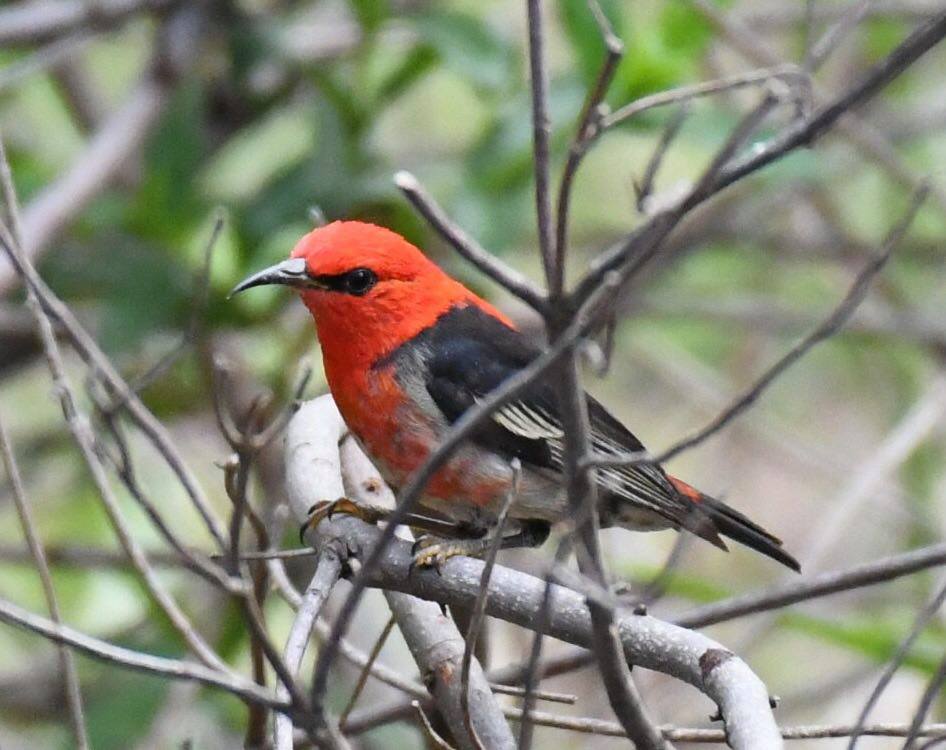
Male Scarlet Honeyeater Mallacoota  Tim Dolby
Male Scarlet Honeyeater at Mallacoota VIC, by Tim Dolby

Scarlet Honeyeaters Yellow-faced Honeyeater Marlo East Gippsland Rob Clay
3 Scarlet Honeyeaters with a Yellow-faced Honeyeater (left) at Marlo VIC, by Rob Clay

Some sites call them Scarlet Myzomela.

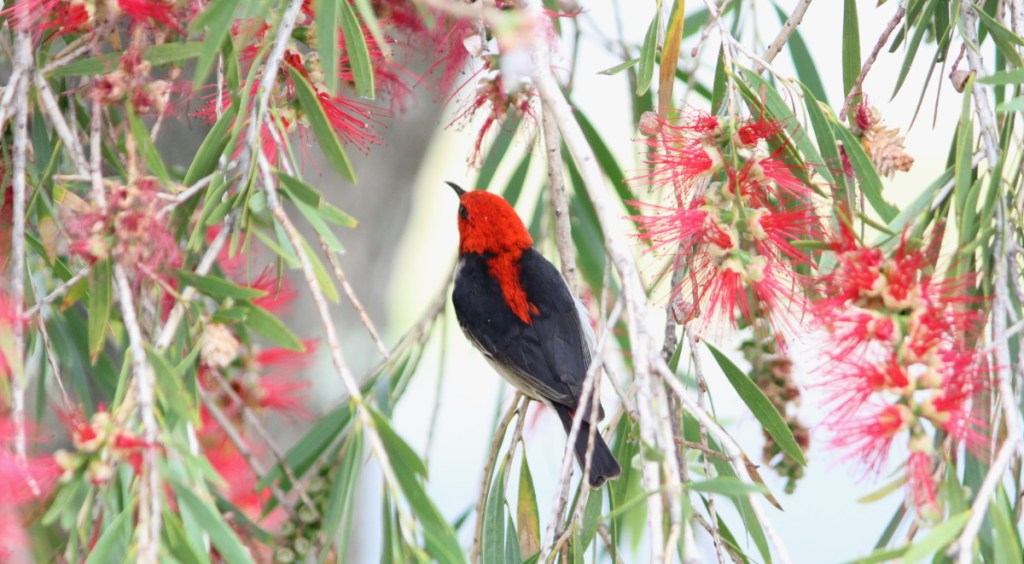
Adult males have red on the head, back, rump and some on the breast – though the extent of that seems to vary. I’d be interested to hear if anyone knows if that’s an age thing, or just individual variation. The pic below shows a male with a mostly white breast. He is still quite young, with a touch of yellow on the gape and patchy pale juvenile feathers around his head.

Male Scarlet Honeyeater Mallacoota Janine Duffy
Immature Male Scarlet Honeyeater with mostly white breast, Mallacoota by Janine Duffy

Adult and immature male Scarlet Honeyeaters Mallacoota Mariska Ascher
Two male Scarlet Honeyeaters, one immature with yellow gape (right) at Mallacoota by Martin Ascher
Male Scarlet Honeyeater with extensive red breast at Marlo VIC, by Rob Clay

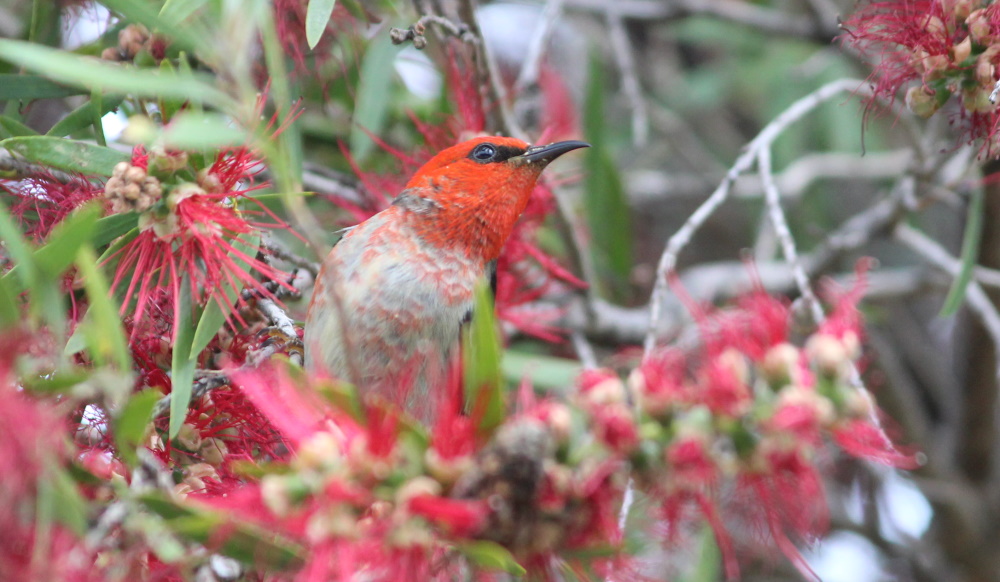
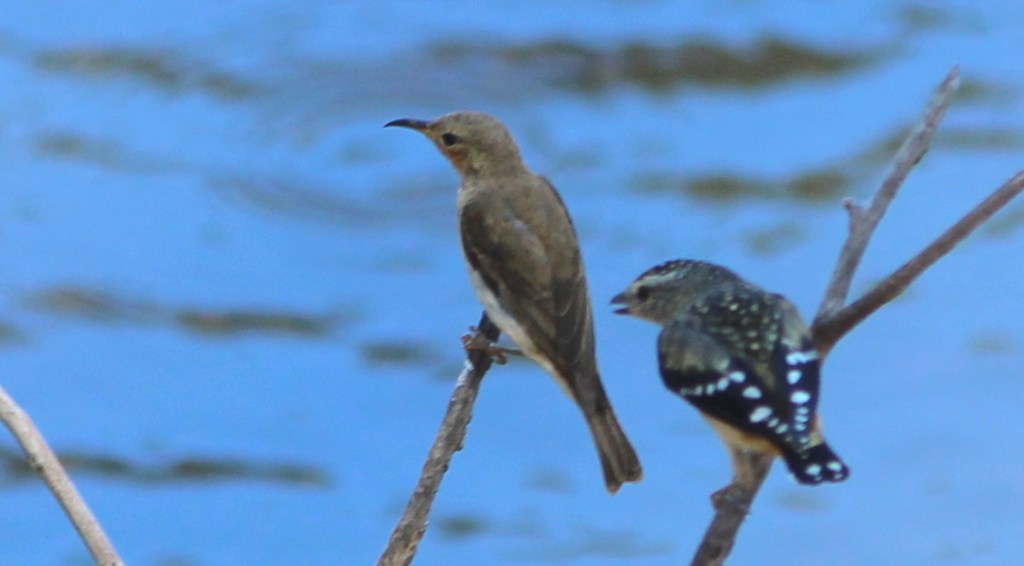
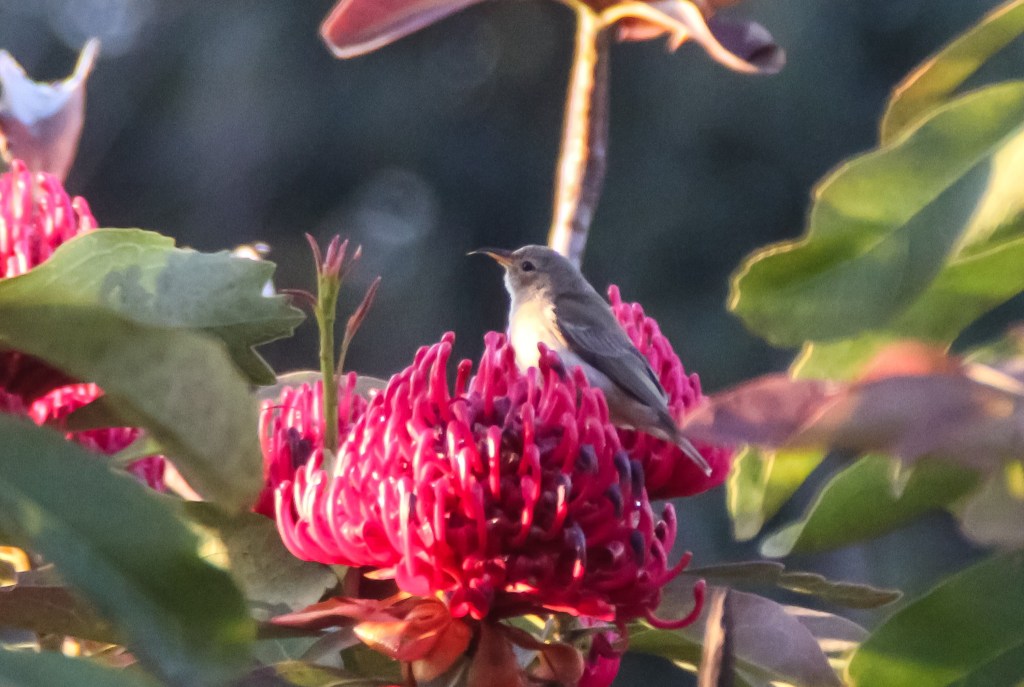
Adult females have an orange blush to the face, particularly under the eye and on the chin. It can be very faint, almost non-existent. But they don’t have red feathers scattered elsewhere.

Female Scarlet Honeyeater You Yangs, Spotted Pardalote Janine Duffy
Female Scarlet Honeyeater at the You Yangs, with a Spotted Pardalote by Janine Duffy

Young males can have patchy red on the face, back, breast & rump. If you see a Scarlet Honeyeater with bright red feathers anywhere, it’s probably a male.

Immature Male Scarlet Honeyeater Marlo Rob Clay
Immature male Scarlet Honeyeater at Marlo VIC, by Rob Clay

In the 1990’s, far East Gippsland was really the only place in Victoria you could see them, and only in summer. See this eBird map 1990-1999. Now they start arriving in August and by now, October, they are already being seen in Pakenham. Compare the eBird map of this decade.

They really seem to love the Crimson Bottlebrushes that are planted throughout the streets of Mallacoota.

Male Scarlet Honeyeater Mallacoota Mariska Ascher
Male Scarlet Honeyeater at Mallacoota by Martin Ascher
Male Scarlet Honeyeater Crimson Bottlebrush Mallacoota Janine Duffy
Male Scarlet Honeyeater on Crimson Bottlebrush at Mallacoota by Janine Duffy

Here’s some stories about them:

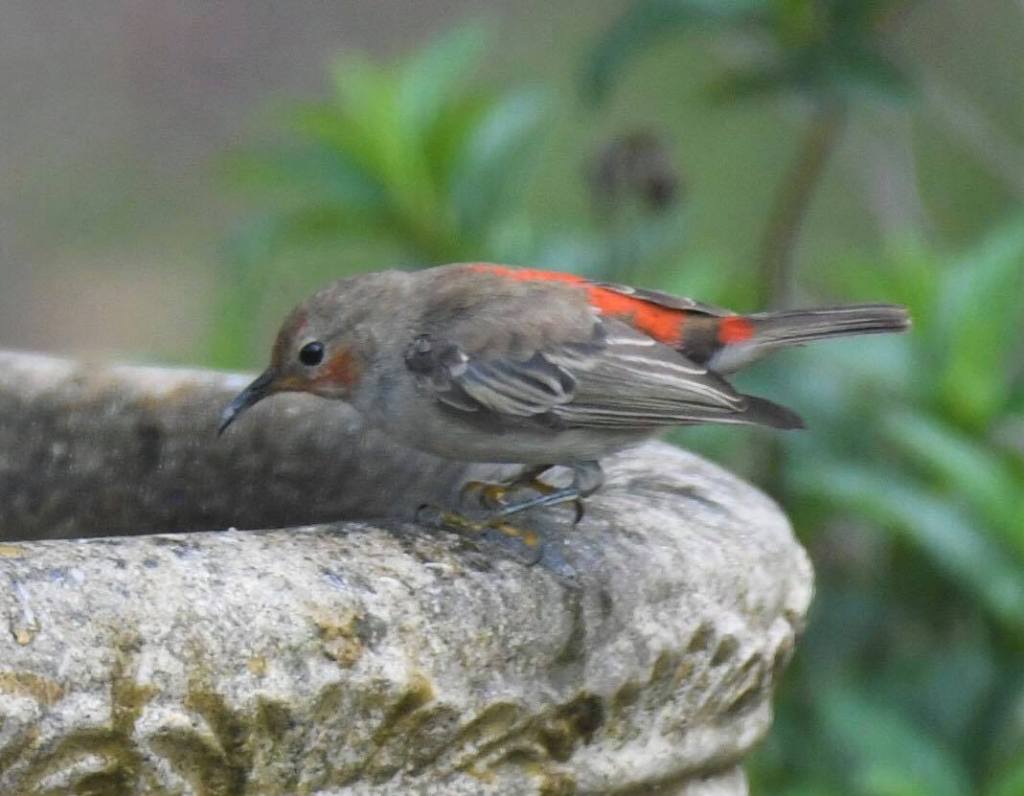
Karen Weil: When I built my home in Gembrook, near Melbourne, I planted my pride, the Waratah Bush, which I could sit at my front window and watch the birds feed. One day in October 2016, there was so much activity, so many honeyeaters, I just kept taking photos. When I looked back, there was one I could not identify. I put this picture on social media and started a twitching frenzy because this little bird didn’t come to Gembrook…..this was a female Scarlet Honeyeater. The following year was the famous influx – Scarlet Honeyeaters everywhere!
Female Scarlet Honeyeater Gembrook VIC Karen Weil
Female (possibly young?) Scarlet Honeyeater at Gembrook VIC, by Karen Weil

Tim Dolby’s family have summer holidayed in Mallacoota for the last 20 years. He says: “After the long drive from Melbourne, we’d turn off the Princes Hwy onto the Genoa-Mallacoota Rd (the road into Mallacoota). Winding down the window, I’d listen out for the sounds of bird calls. Once I’d heard the sweet call of the Scarlet Honeyeater, I’d think ‘We’re here!’ The start of our holiday. Definitely my favourite Australian bird!”

I’ve also written a story about their lovely scarlet heads flitting amongst the Crimson Bottlebrush flowers: https://www.echidnawalkabout.com.au/scarlets-of-mallacoota/

They are one of three Myzomela species in Australia, the others are the similar Red-headed Honeyeater in the Top End, and the Dusky Honeyeater in coastal Qld & NT. All have dramatically curved, slender bills like spinebills but a bit shorter.

Myzomela is the largest genus of honeyeaters, with 33 species. They are present throughout Indonesia, New Guinea, Australia and some Pacific Islands as far east as Samoa. Every island seems to have its own species. Most are combinations of black, red and white like ours, but three are all black, another is all red, and several are ashy grey or brown.

Check out the gorgeous Ruby-throated Myzomela: https://ebird.org/species/retmyz1/ and Red-collared Myzomela of New Guinea: https://ebird.org/species/recmyz1/
How about the stunning Cardinal Myzomela of New Caledonia, Vanuatu & the Solomons: https://ebird.org/species/carmyz1/

They remind me of the sunbirds of Africa, which are also small & brightly coloured with curved bills, but they are not related – the similarities are just a result of convergent evolution.

LISTEN TO THE CALLS: https://www.xeno-canto.org/578218 and more here: https://www.xeno-canto.org/species/Myzomela-sanguinolenta

Scroll through to see lots of great pics here: https://ebird.org/species/scamyz1

Details: Scarlet Honeyeater Myzomela sanguinolenta
Location: Coastal east coast Australia from Qld to Victoria.
Conservation status: considered secure in their home states.

Thanks to Karen Weil, Tim Dolby, Mariska Ascher and Rob Clay for providing information and photographs for this post.

Mallacoota Birds: White-browed Scrubwren

Bird of the Week: White-browed Scrubwren 2 October 2020

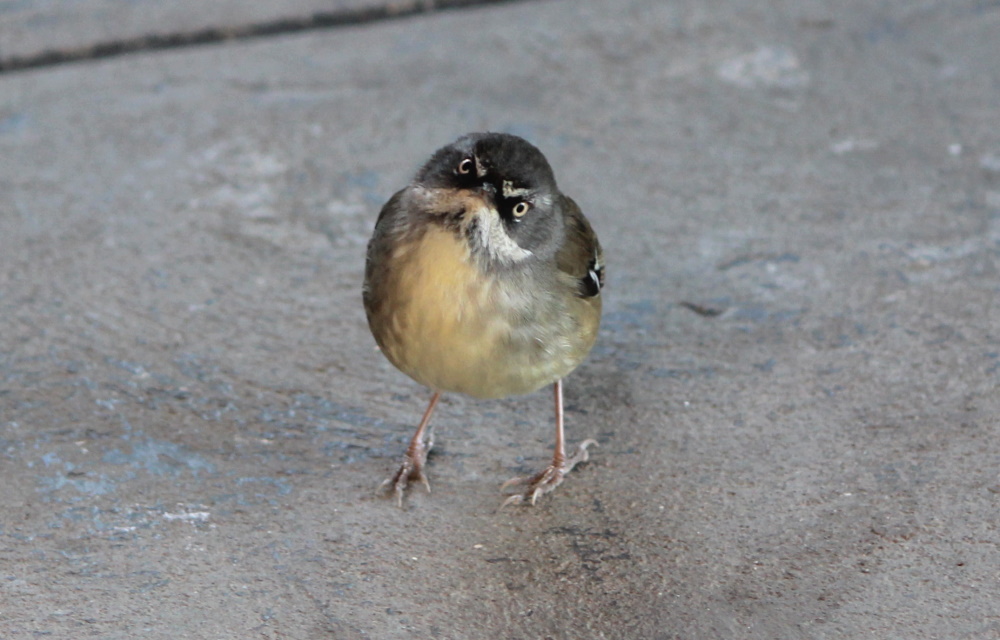
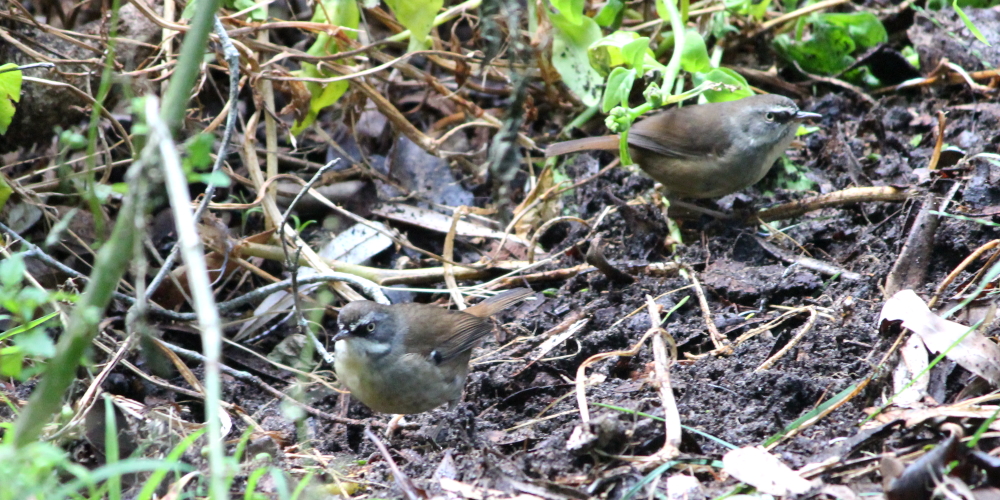
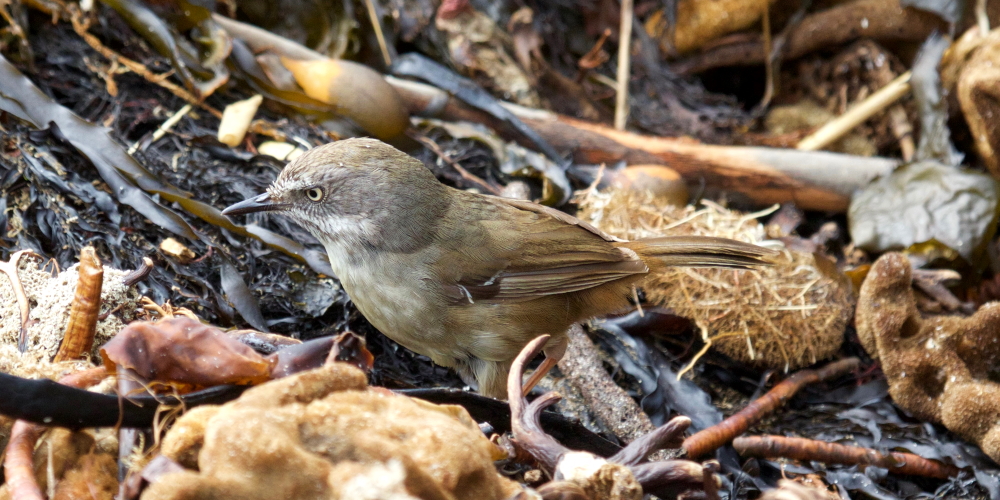
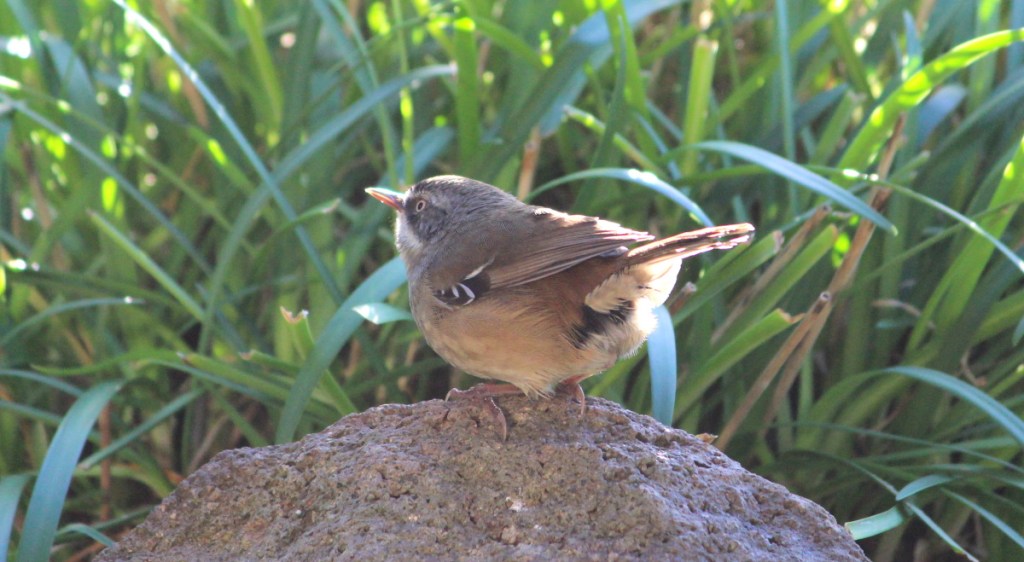
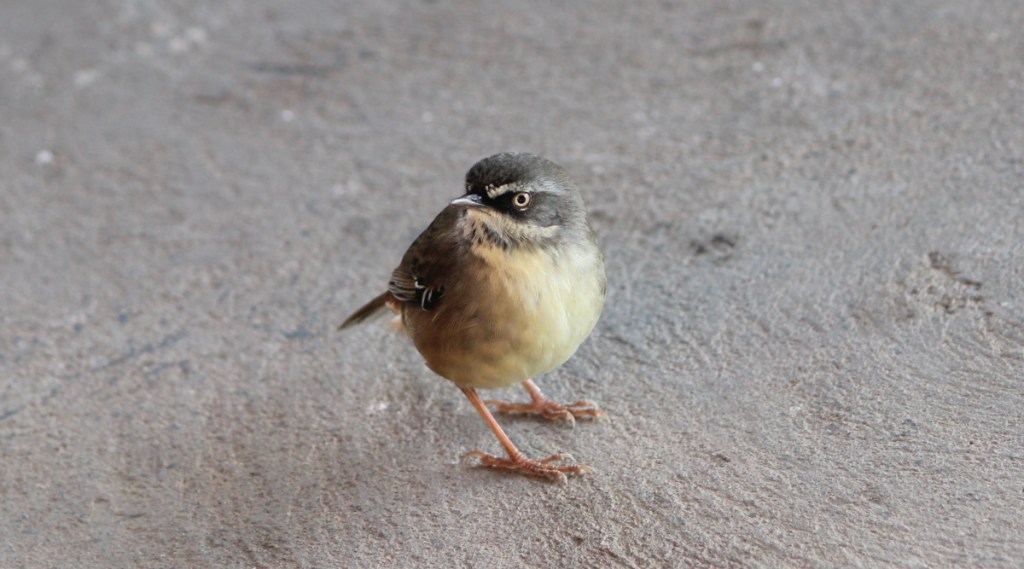
I really like these little guys. They seem brave, bossy and confident. They live mostly near the ground in dark, damp forests but they don’t seem shy. You will often hear them chattering and scolding, like they are irritated, and then they will hop out into the open almost at your feet and go about their business as if you’re not there.

White-browed Scrubwren Sericornis frontalis frontal view Janine Duffy
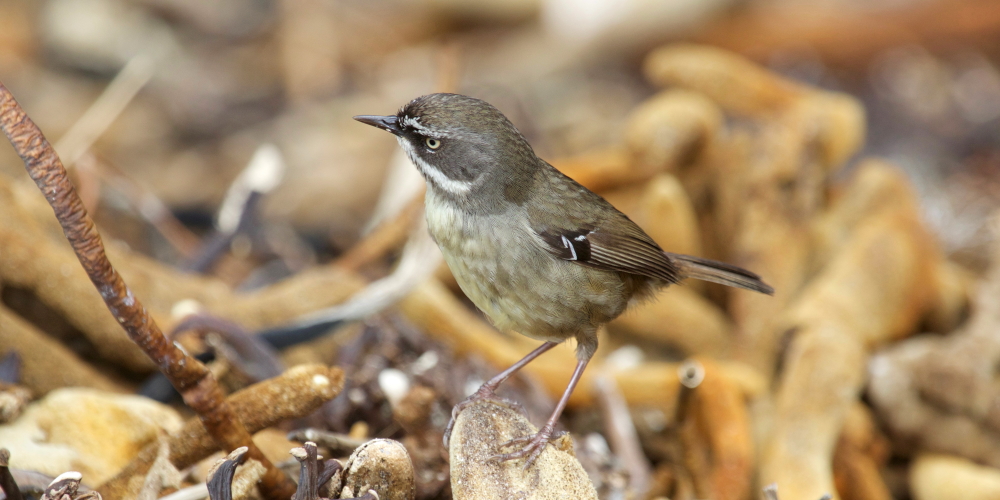
White-browed Scrubwren adult male, Brisbane Ranges VIC by Janine Duffy

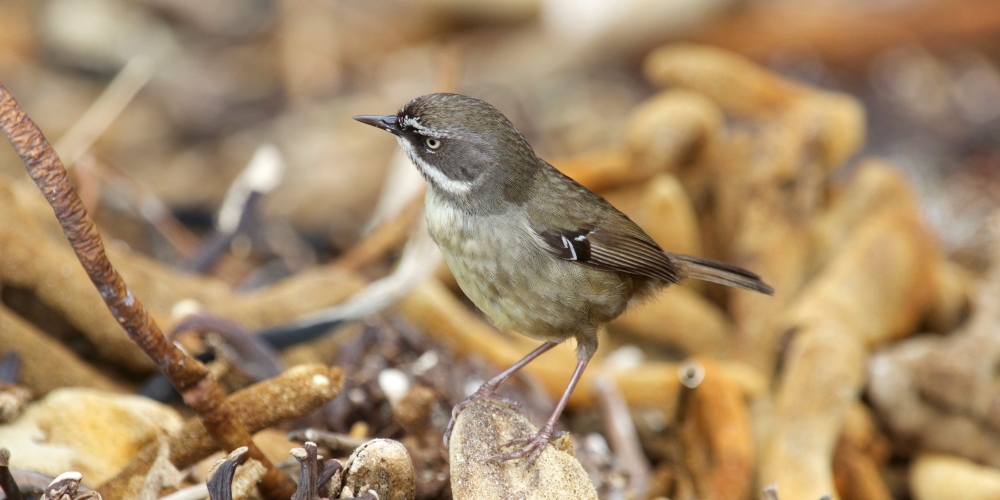
Adult males have a severe dark-edged white eyebrow that adds to the impression that they are grumpy. Females and juveniles look less grumpy, as their faces are a lighter grey and their eyebrows are less striking. All sexes and ages have pale eyes.

White-browed Scrubwren  adult male & female Mallacoota Janine Duffy
White-browed Scrubwren adult male left, female right, Mallacoota VIC by Janine Duffy

They have shorter tails than fairy-wrens & emu-wrens, and they can hold their tail straight, down or up a bit. In shape they are most like a Brown or Buff-rumped Thornbill, but they are bigger, and more often on the ground.

White-browed Scrubwren adult Mallacoota East Gippsland Martin Maderthaner
White-browed Scrubwren adult Mallacoota East Gippsland VIC by Martin Maderthaner

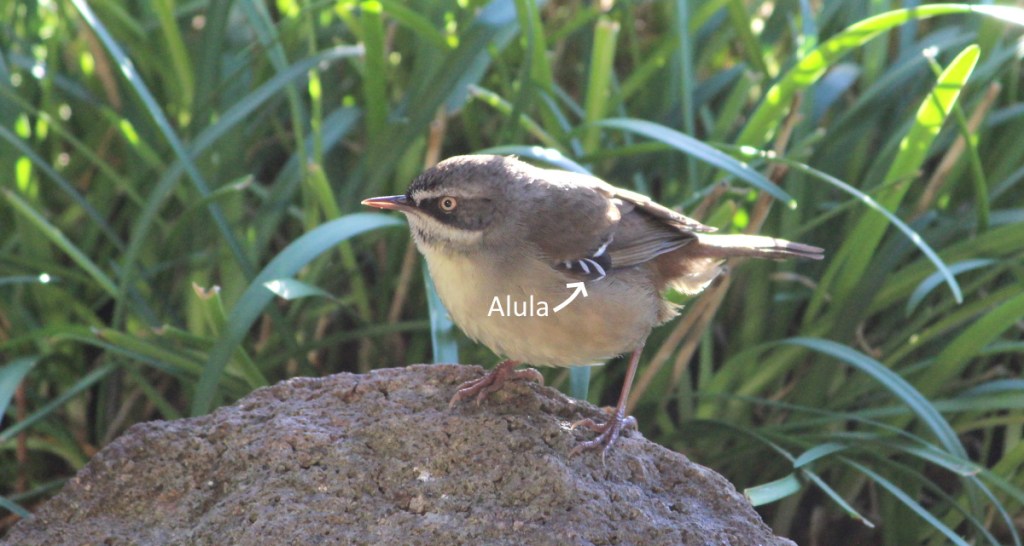
The single thing that sets them apart from all other birds is their alula: Two/three small feathers on the bend of the wing (sort of their shoulder when wing is folded). They have a black patch at this point, with white fringes to the alula feathers, which gives them neat little ‘epaulettes’. If you’re ever not sure if you’re seeing a scrubwren or a gerygone, thornbill, heathwren or pilotbird – look for that. None of the others have it, except Tasmanian Scrubwren which is only in Tas. (Though heathwren has a single pale spot but not on a black background)

White-browed Scrubwren diagram showing alula VIC Janine Duffy
White-browed Scrubwren showing alula VIC by Janine Duffy

The other scrubwren in our area – the Large-billed Scrubwren – doesn’t have the alula epaulettes, doesn’t have any streaking, no strong facial markings, and a dark eye. They are rarely on the ground, fast-moving and behave much more like gerygones & thornbills. They are really quite different, and much harder to find. See them here: https://ebird.org/species/labscr2

Our subspecies frontalis is medium-sized in the group, with only a little streaking on the pale throat and quite a rich grey-yellow-brown underside.

White-browed Scrubwren juvenile Mallacoota Martin Maderthaner Echidna Walkabout
White-browed Scrubwren juvenile Mallacoota VIC by Martin Maderthaner
LISTEN TO THE CALLS:

Their song is quite a high-pitched squeaky single note repeated many times, and they have a range of songs/calls that are like short, interrupted bursts – a little like Grey Fantail or Superb Fairywren but never as long or complete. Here’s one: https://www.xeno-canto.org/366976

But the call I seem to hear most is the scolding call (the last one on the list on eBird) It really sounds like a nagging school teacher tut-tutting at a naughty kid. https://www.xeno-canto.org/366975

Scroll through to see lots of great pics here: https://ebird.org/species/whbscr1

White-browed Scrubwren from rear tail slightly up, Janine Duffy
White-browed Scrubwren tail slightly up, Brisbane Ranges VIC by Janine Duffy

Details: White-browed Scrubwren Sericornis frontalis frontalis
Location: coastal QLD, NSW, VIC. Subspecies frontalis all of Victoria, most of NSW & eastern SA. The former subspecies in WA & western SA have now been split into a full species Spotted Scrubwren Sericornis maculatus (Thanks Steve Davidson for the tip).
Conservation status: Considered secure. https://birdlife.org.au/bird-profile/White-browed-Scrubwren

White-browed Scrubwren adult male Brisbane Ranges VIC by Janine Duffy

by Janine Duffy

Mallacoota Birds: Restless Flycatcher

Bird of the Week: Restless Flycatcher 25 September 2020

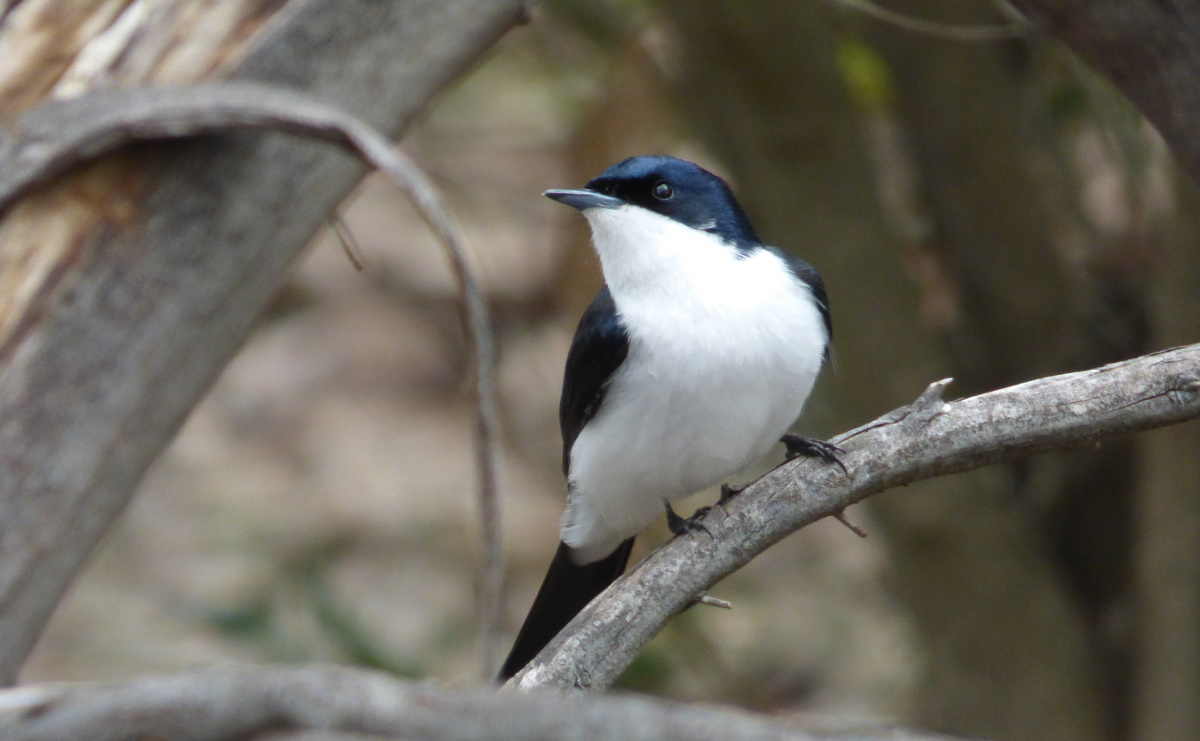
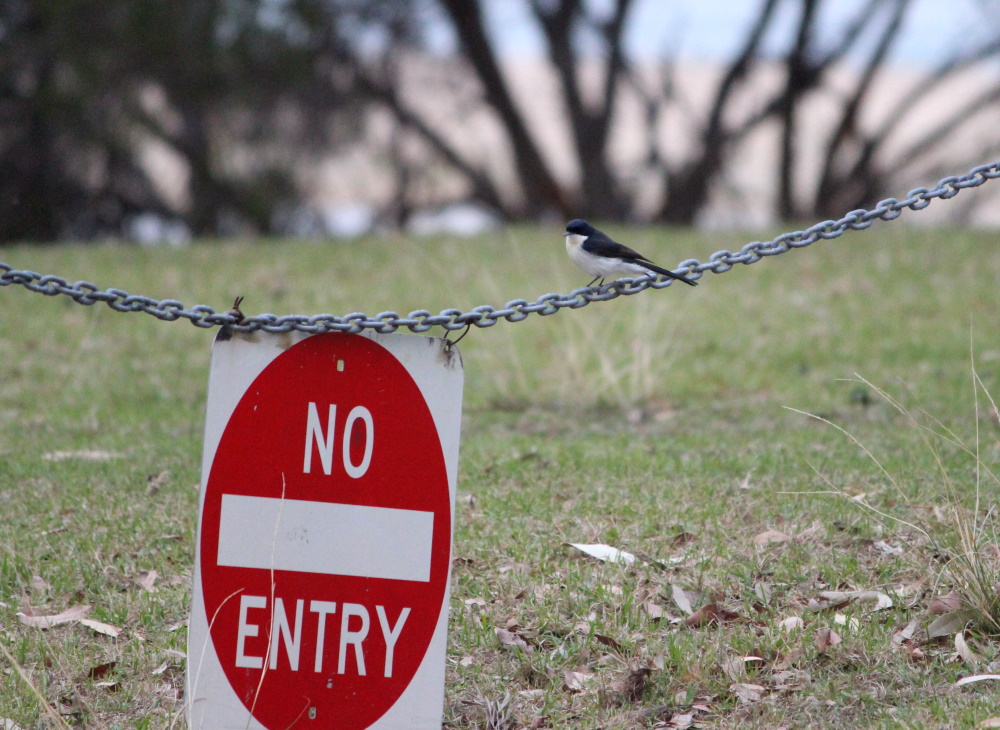
This is a well named bird, always busy and restless. They make a cute scolding call, that is somehow a bit cheerful. I always think “chewy, chewy, chewy”.

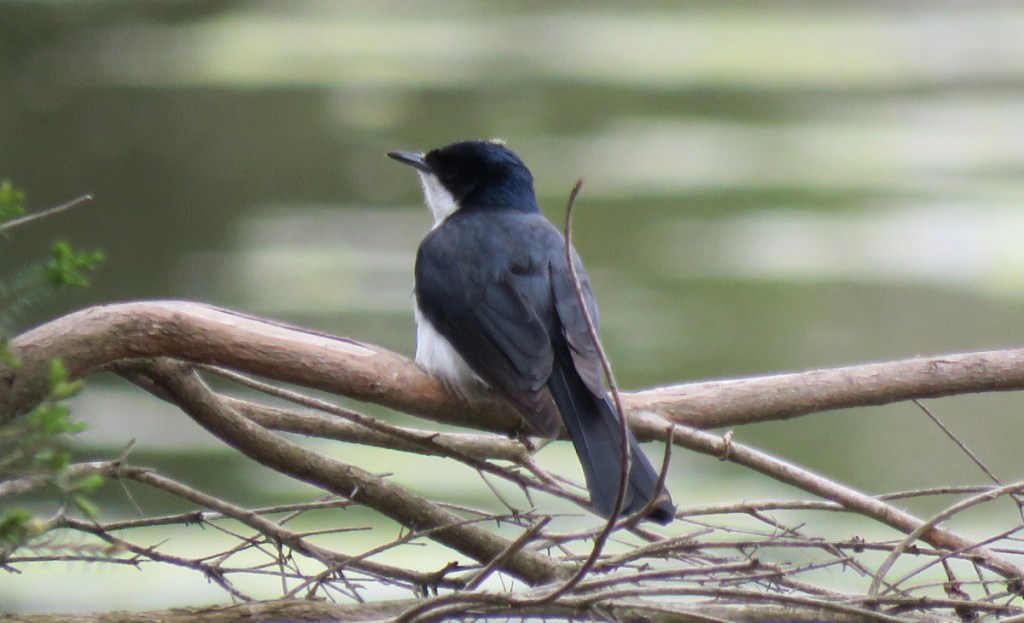
Restless Flycatcher Myiagra inquieta Mallacoota
Restless Flycatcher at Mallacoota by Janine Duffy
Restless Flycatcher Myiagra inquieta rear view
Restless Flycatcher Serendip, by Brett Howell, Echidna Walkabout

They are seen around Mallacoota and through East Gippsland at all times of year. Most sightings seem to be around the town, parks or farmland, but they like the open bushland as well.

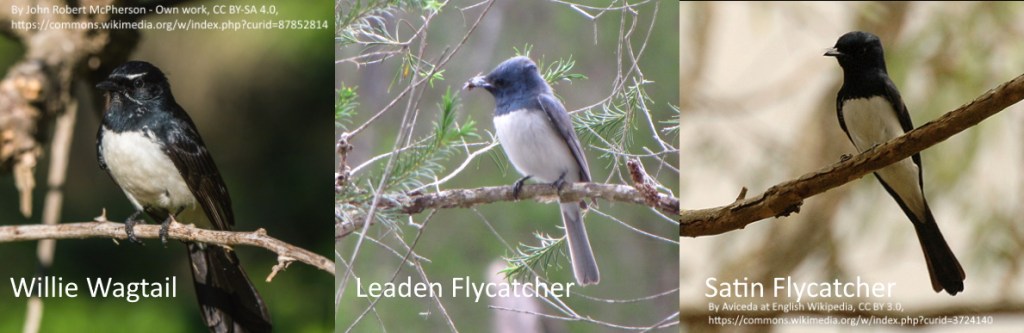
The birds you could confuse them with are other small black-and-white birds like Willie Wagtail, Leaden or Satin Flycatcher, White-winged Triller or Hooded Robin (unlikely). Male White-winged Triller and Hooded Robin always have some white on their wings.

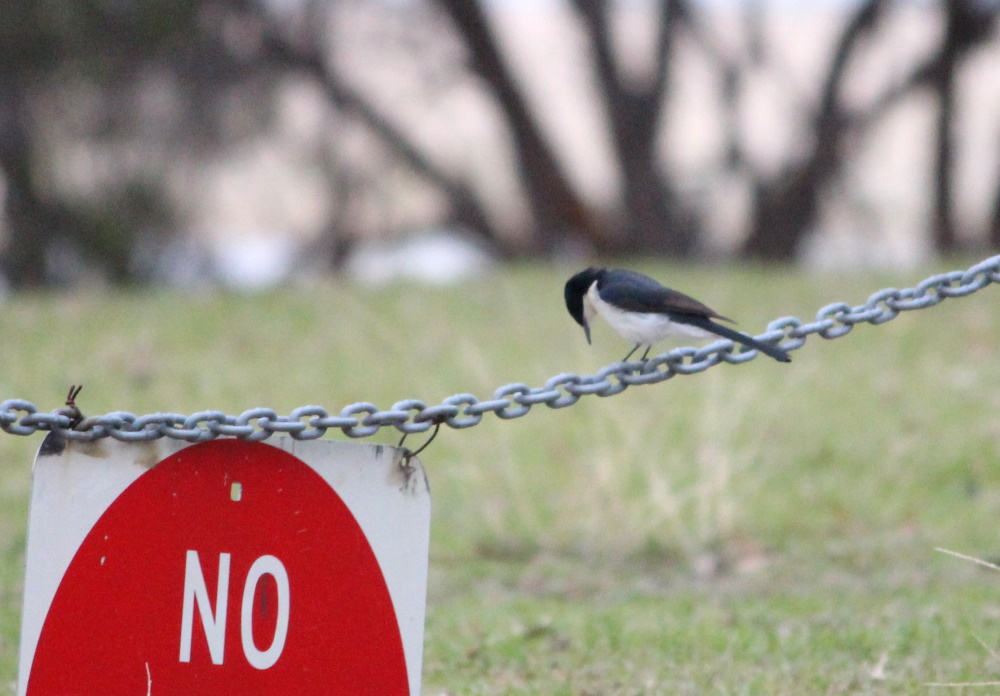
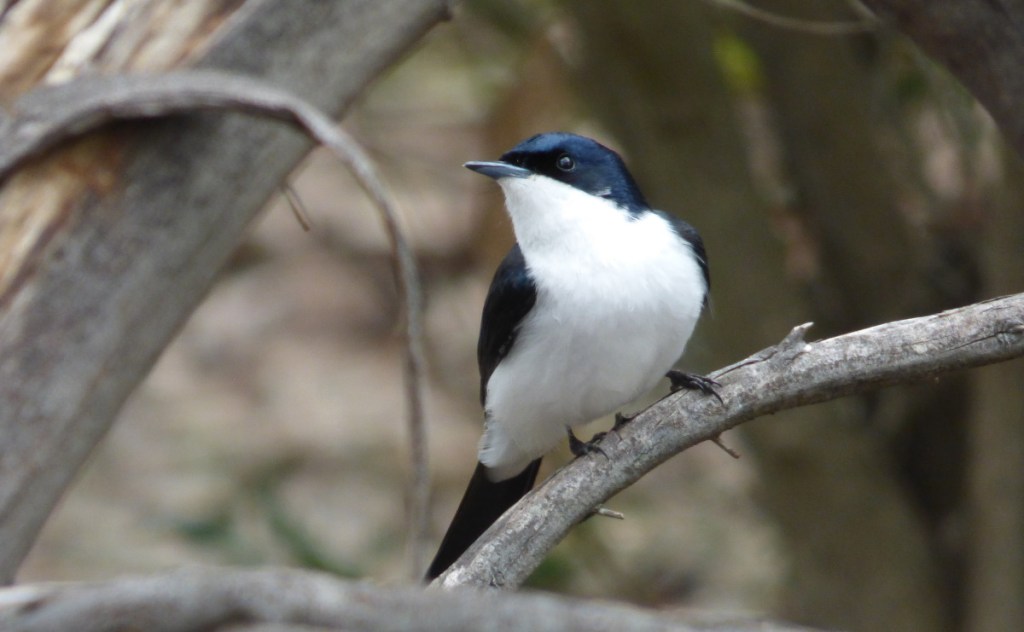
After those two have been eliminated, look for the chin/throat. Restless Flycatcher has a white chin & throat, no matter if it’s adult or immature. Willie Wagtail, Leaden & Satin Flycatcher all have dark or orange chin & throat.

Restless Flycatcher Myiagra inquieta Victoria, Echidna Walkabout
Restless Flycatcher, showing white throat. Serendip VIC by Scott Roberts, Echidna Walkabout
Willie Wagtail, Leaden Flycatcher, Satin Flycatcher comparison to Restless Flycatcher

Willie Wagtail has a white eyebrow, a little white malar* stripe and a longer, broader tail. Their head, chin, throat and upper breast are black. They often hop around on the ground with their tail raised. I don’t think I’ve ever seen a Restless Flycatcher doing that.

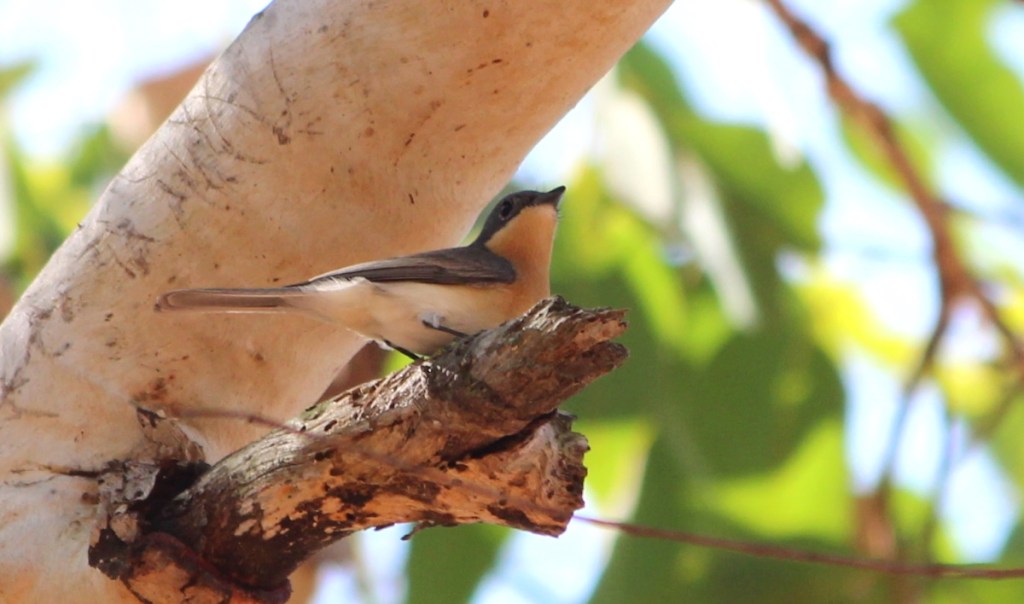
Leaden & Satin Flycatcher are the most similar, and most closely related to Restless Flycatcher. Males of Leaden & Satin have a dark chin, throat and upper breast. Females have an orange chin & throat. Immature and female adult Restless Flycatchers can have an orange tinge to their upper breast, but their chin and throat are white. You can see a handsome female Restless Flycatcher here: https://images.app.goo.gl/Y2WU6BDMmRwTywpH6

Restless Flycatcher Myiagra inquieta Mallacoota
Restless Flycatcher, even with head down you can see the white throat. Janine Duffy
Female Leaden Flycatcher, Holmes Jungle Darwin NT, by Janine Duffy
Female Leaden Flycatcher, showing orange throat, Holmes Jungle Darwin NT, by Janine Duffy

Restless Flycatchers are part of the Monarch Flycatcher family Monarchidae, genus Myiagra “satiny or broad-billed flycatchers”. There are 20 species worldwide, 6 of those in Australia, the rest spread across from Palau, the Philippines, Guam, eastern Indonesia, New Guinea, Melanesia & Fiji.

..

LISTEN TO THE CALLS:
https://www.xeno-canto.org/species/Myiagra-inquieta

Scroll through to see lots of great pics here: https://ebird.org/species/resfly1

Details: Restless Flycatcher Myiagra inquieta. No subspecies, but until recently the Paperbark Flycatcher M nana of the Top End was considered a subspecies. It is very similar to the Restless, but smaller and glossier.

Location: QLD, NSW, VIC, east & south SA, southwest WA

Conservation status: Considered secure in all states where it occurs. Learn about them:
http://birdlife.org.au/bird-profile/restless-flycatcher

*malar stripe: the malar area is on a bird’s lower cheek, extending from the bill towards the breast.

Mallacoota Birds: White-bellied Sea-Eagle

Bird of the Week: White-bellied Sea-Eagle 18 September 2020

A bird you all know! If Mallacoota was to have a signature bird, this one would be a strong candidate.

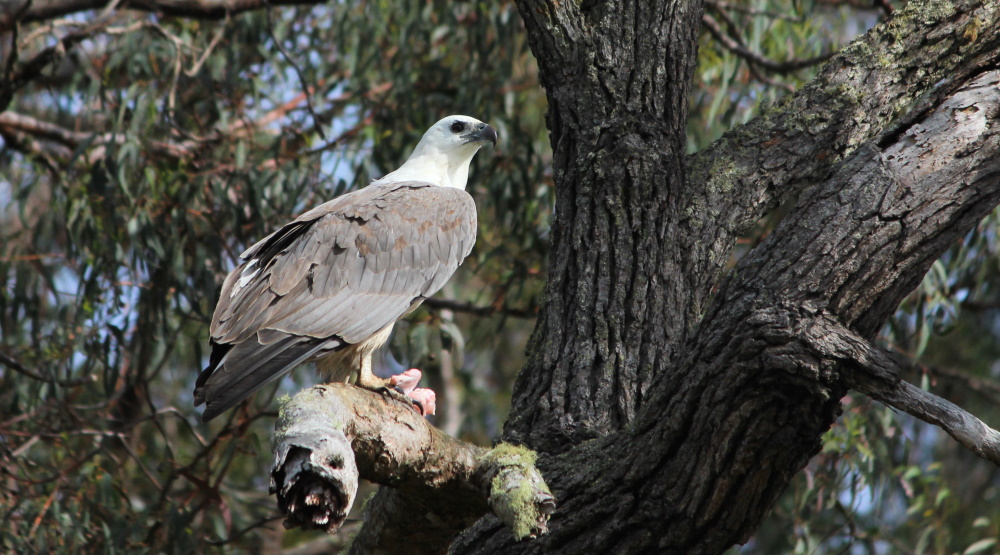
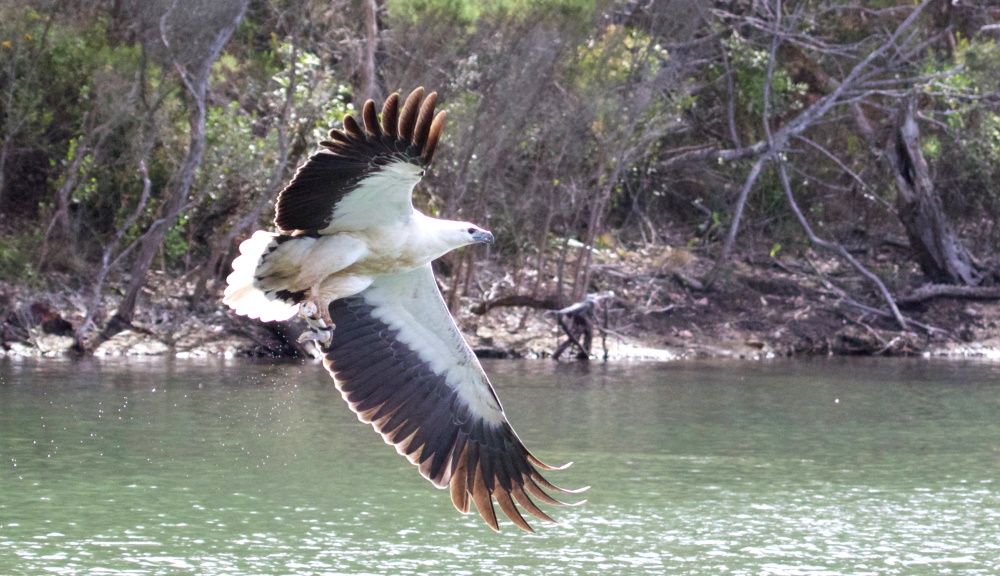
Knowing the adults is easy – they are the only white, grey & black, very large, bird of prey in the area.

Adult White-bellied Sea-Eagle perched with prey, Mallacoota Inlet VIC by Janine Duffy
Adult White-bellied Sea-Eagle flying, Mallacoota Inlet VIC by Martin Maderthaner

But knowing the immatures and juveniles is much harder. Especially as Mallacoota is home to Wedge-tailed Eagles, Little Eagles, Whistling Kites, Square-tailed Kites and even rarely, an Osprey – all of which have similarities.

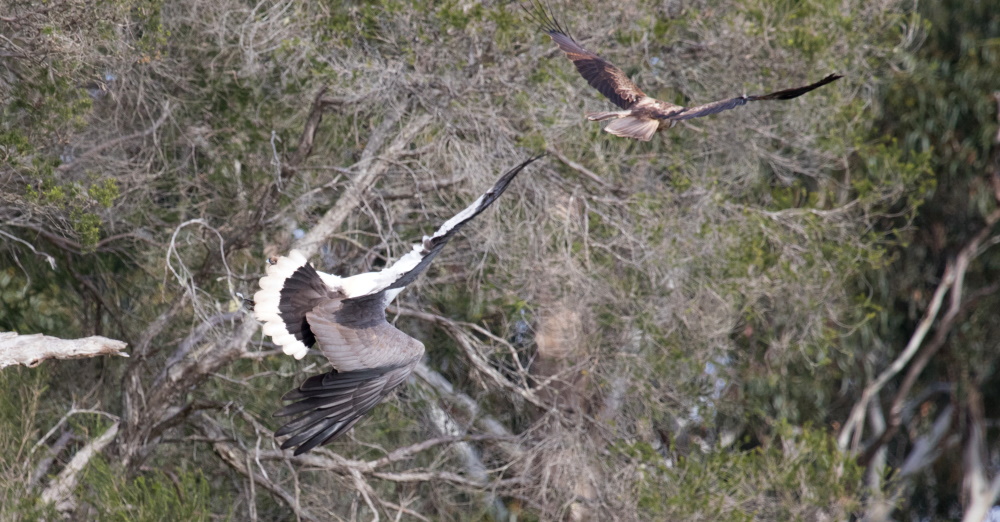
The first thing to look for is the size. White-bellied Sea-Eagles are massive birds. Only Wedge-tailed Eagles are a similar size. But size can be hard to pick when there’s nothing around for comparison.

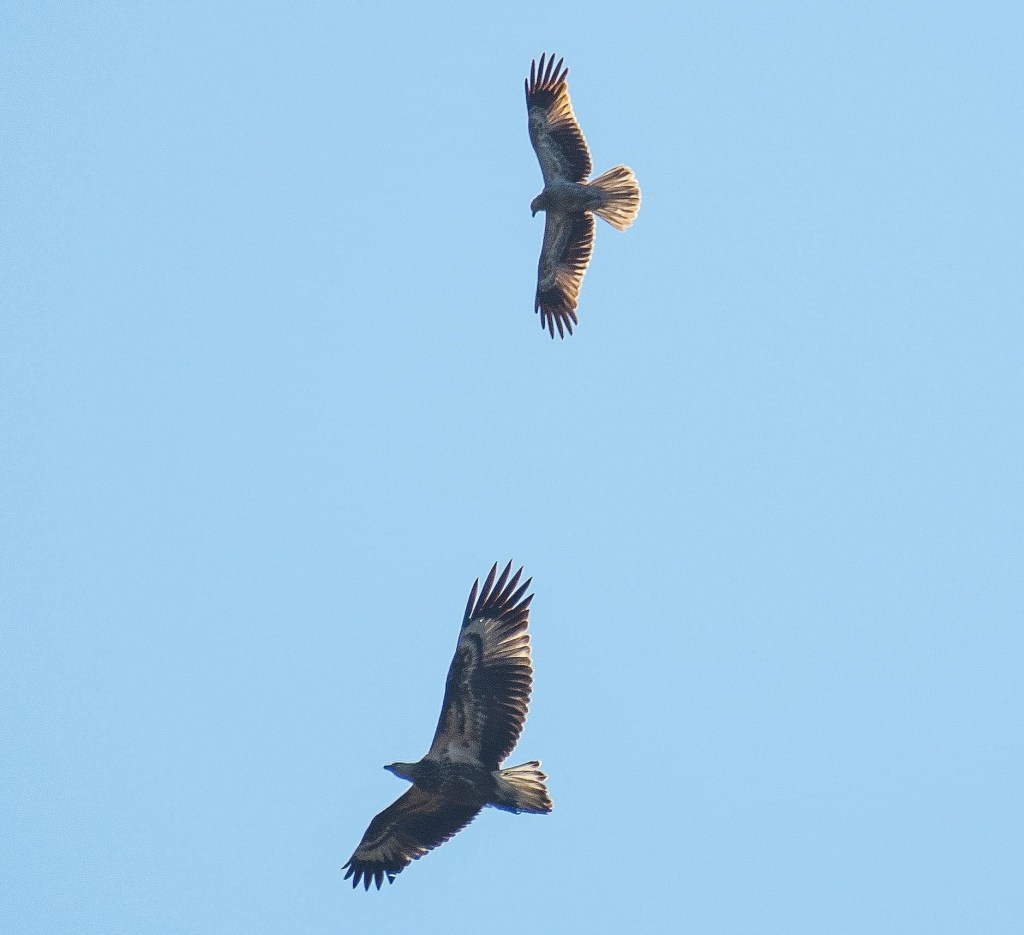
Juvenile White-bellied Sea-Eagle flying with Whistling Kite, Marlo VIC by Rob Clay
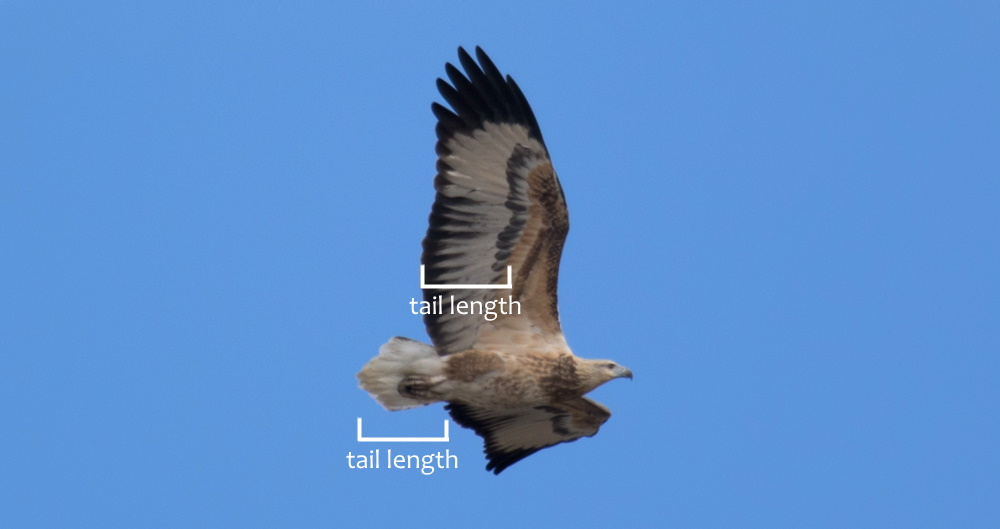
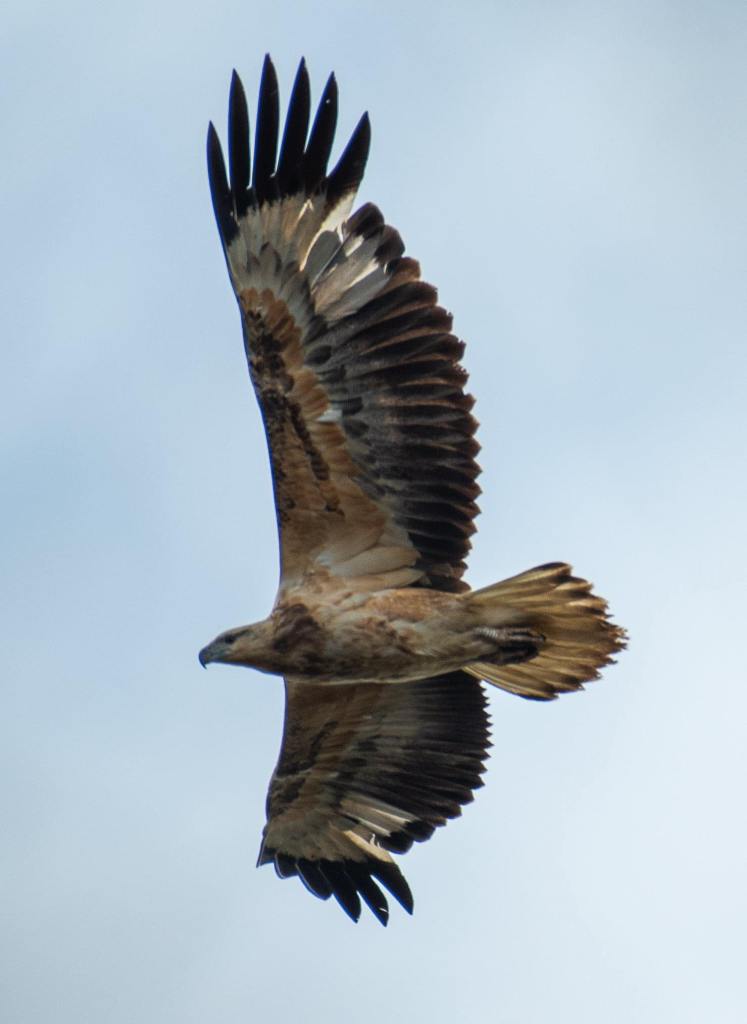
Immature White-bellied Sea-Eagle in flight, with tail measurement compared to wing, East Gippsland VIC by Martin Maderthaner

The second thing to look for is the short tail. Compared to the wings, the White-bellied Sea-Eagle has quite a short tail.

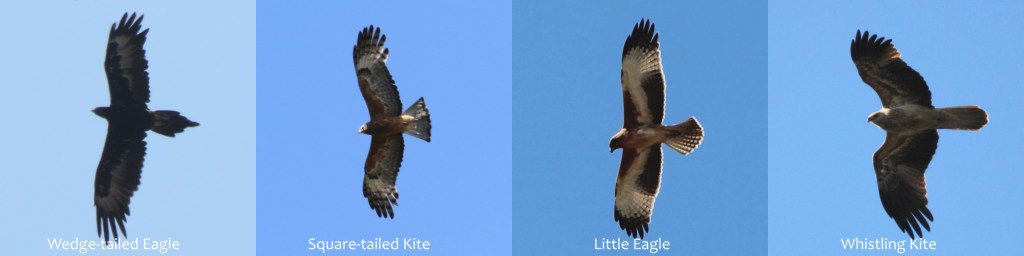
Compare this to the Wedge-tailed Eagle’s very long tail, and the Whistling Kite’s long blonde tail.

Tail comparisons: Wedge-tailed Eagle, Square-tailed Kite, Little Eagle, Whistling Kite

The tail ends in a bit of a triangle, but its a shallow triangle, not a long pointy diamond like a Wedge-tailed Eagle has. Whistling Kites, Little Eagles and Osprey have a rounded end to their tails. Square-tailed Kites have a flat, square end to their tails.

Also look for the broad wings, often held upwards in a triangle.

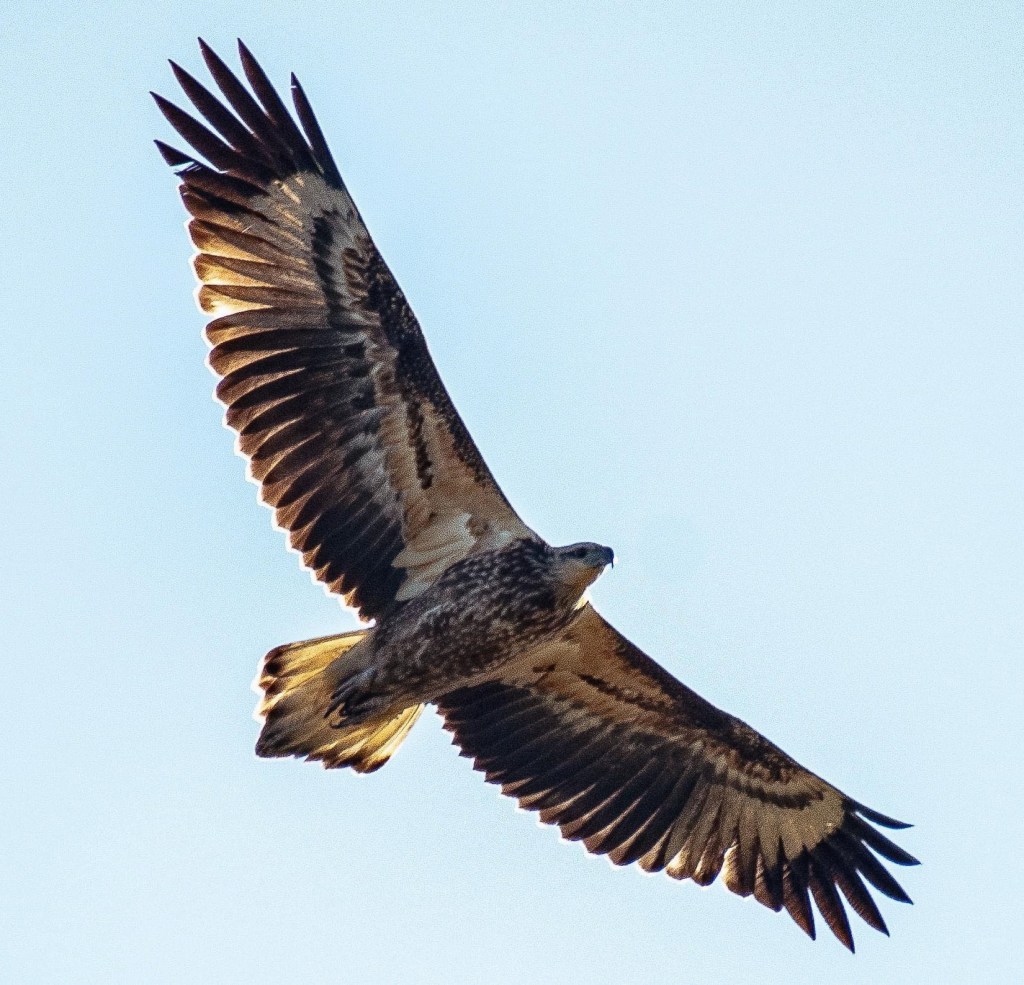
Juvenile White-bellied Sea-Eagle in flight, Marlo VIC by Rob Clay. Note dark body colour & dark-tipped tail

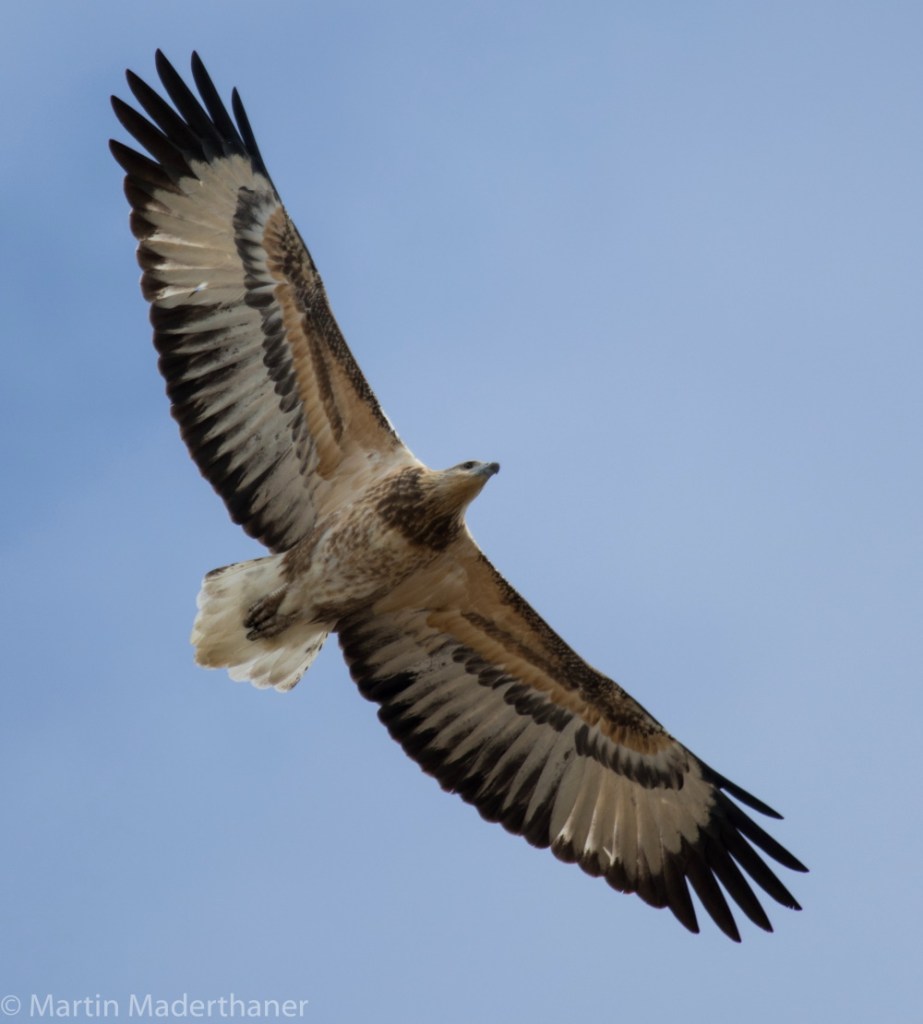
Colour is difficult. Young White-bellied Sea-Eagles are brown, as are most of the others. There are times when the light is bad and they can look quite dark, almost like a Wedgie. So shape is the key.

Immature White-bellied Sea-Eagle flying, Mallacoota VIC by Martin Maderthaner. At this stage the tail is almost white

They don’t just eat fish. They are known predators of flying-foxes, seabirds, freshwater turtles and even occasionally rabbits. They will eat carrion, and anything suitable washed up on the beach.

Juvenile – close to immature White-bellied Sea-Eagle, Marlo VIC by Rob Clay

White-bellied Sea-Eagles are a shy and wary bird, and don’t respond well to disturbance or development near their habitat. Breeding success is highest in remote areas. They have been known to abandon nests and chicks if people get too close.

Did you know that ‘our’ White-bellied Sea-Eagle is not exclusively Aussie? They also occur in India, south-east Asia & New Guinea. Debus (2012) says that Sanford’s Sea-Eagle H. sanfordi from the Solomon Islands is a subspecies, but I can’t find further references so I think that information may be superceded. Do others know?

In Mallacoota we are very lucky to have several breeding pairs. It is estimated that the whole of Victoria only has 100 pairs.

Adult White-bellied Sea-Eagle having a go at a Whistling Kite, Mallacoota Inlet VIC by Martin Maderthaner

Scroll through to see lots of great pics here: https://ebird.org/media/catalog?taxonCode=wbseag1&sort=rating_rank_desc&mediaType=p&regionCode=

DETAILS:

White-bellied Sea-Eagle Haliaeetus leucogaster

Location: All of the Australian coastline, and inland along major rivers especially in VIC, NSW, QLD, TAS, NT and northern WA. India, south-east Asia, New Guinea.

Conservation status: Endangered in Victoria, Vulnerable in TAS & SA.

Learn about them: http://www.birdlife.org.au/bird-profile/white-bellied-sea-eagle

Watch Sea-Eagle Cam: https://www.sea-eaglecam.org/video.html

Threats: https://www.environment.nsw.gov.au/threatenedspeciesapp/profile.aspx?id=20322

Information from Debus, Stephen Birds of Prey of Australia, A Field Guide and
Menkhorst, Rogers, Clarke et al The Australian Bird Guide.

Thanks to Rob Clay, Marlo and Martin Maderthaner, Echidna Walkabout for the terrific photos.
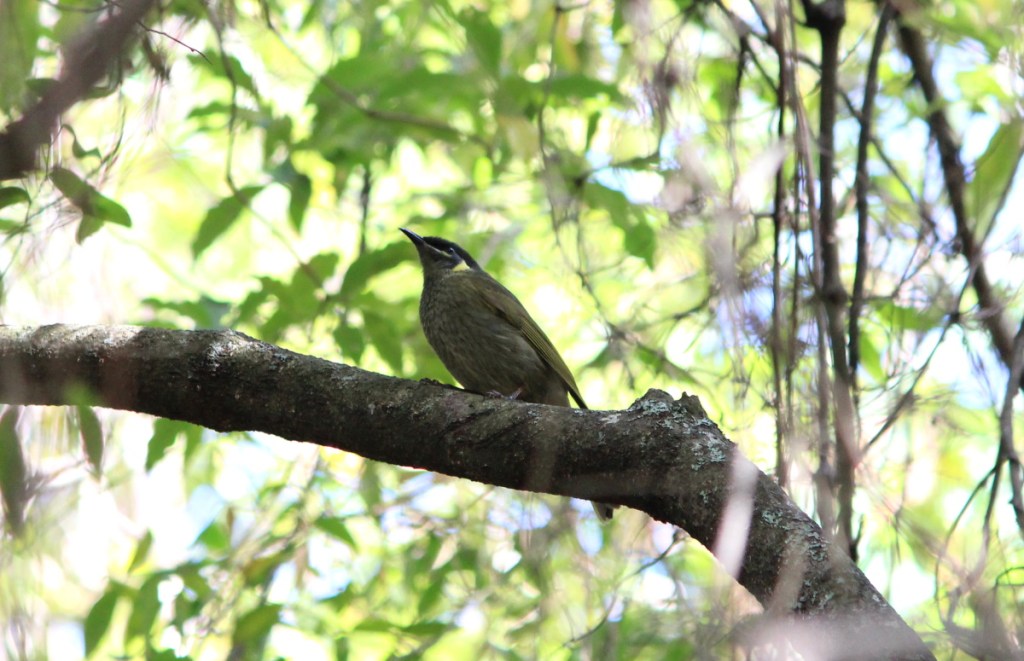
Mallacoota Birds: Lewin’s Honeyeater

Mallacoota Bird of the Week: Lewin’s Honeyeater 11 September 2020

The call of this bird is one of the sounds of East Gippsland. So often the machine gun rattle is the backdrop for any walk in the rainforest or wet forests.
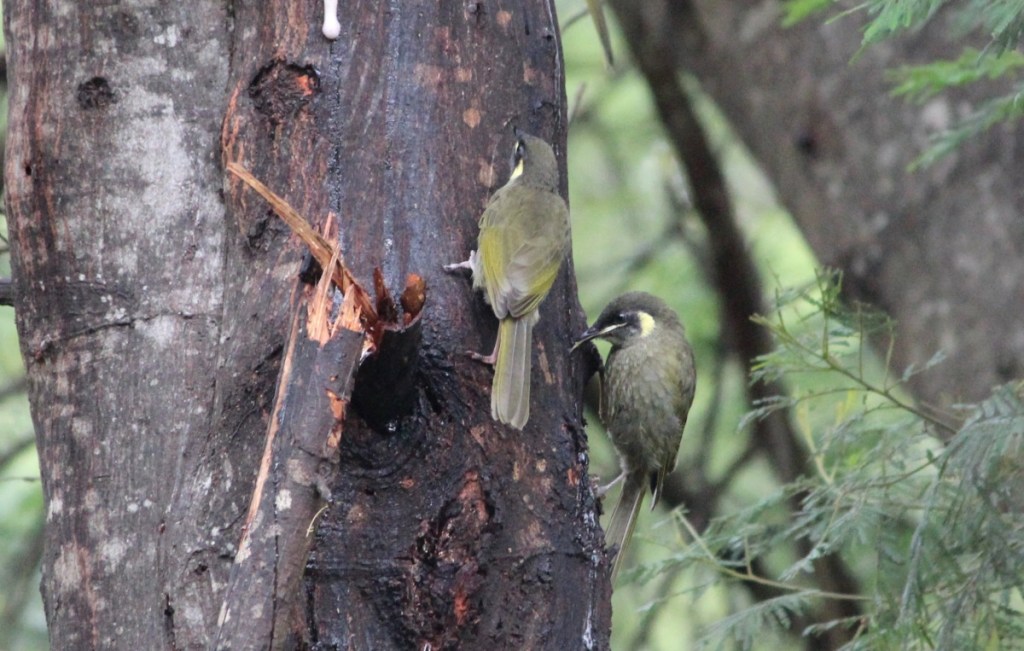
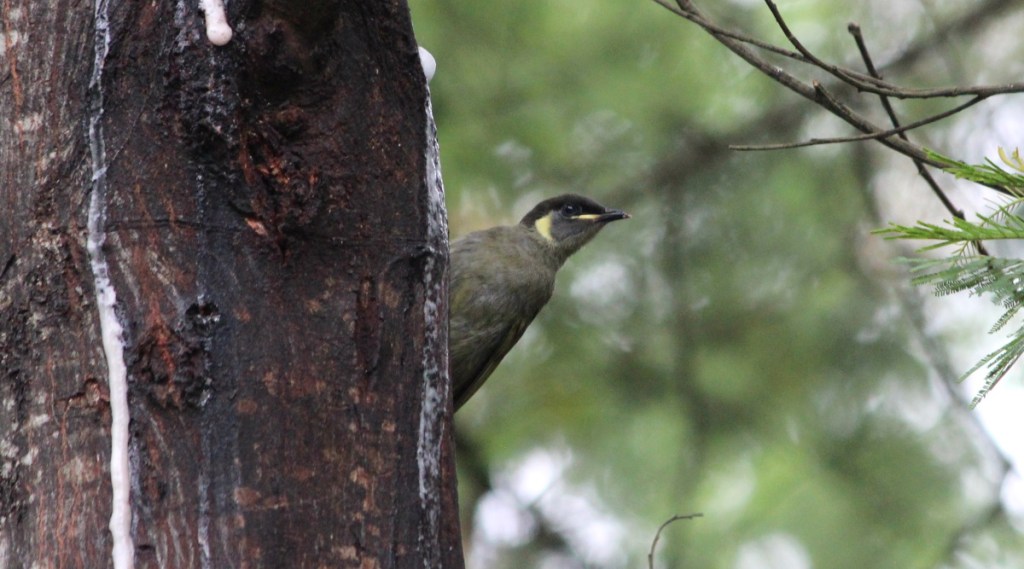
Two Lewin’s Honeyeaters licking sap from a big Acacia at Cabbage Tree Creek, VIC by Janine Duffy

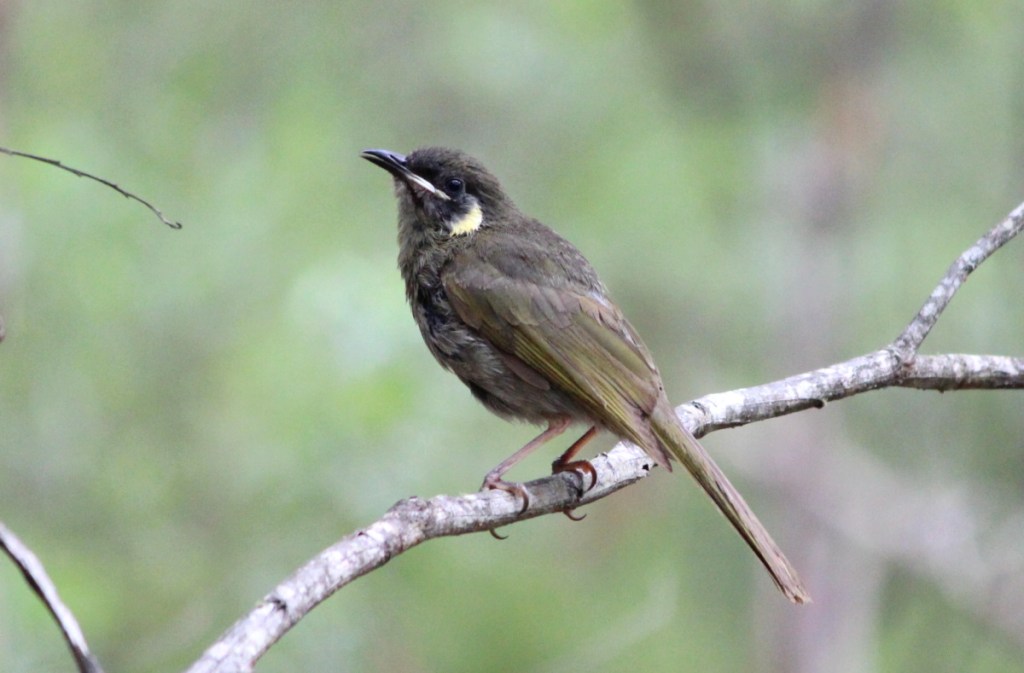
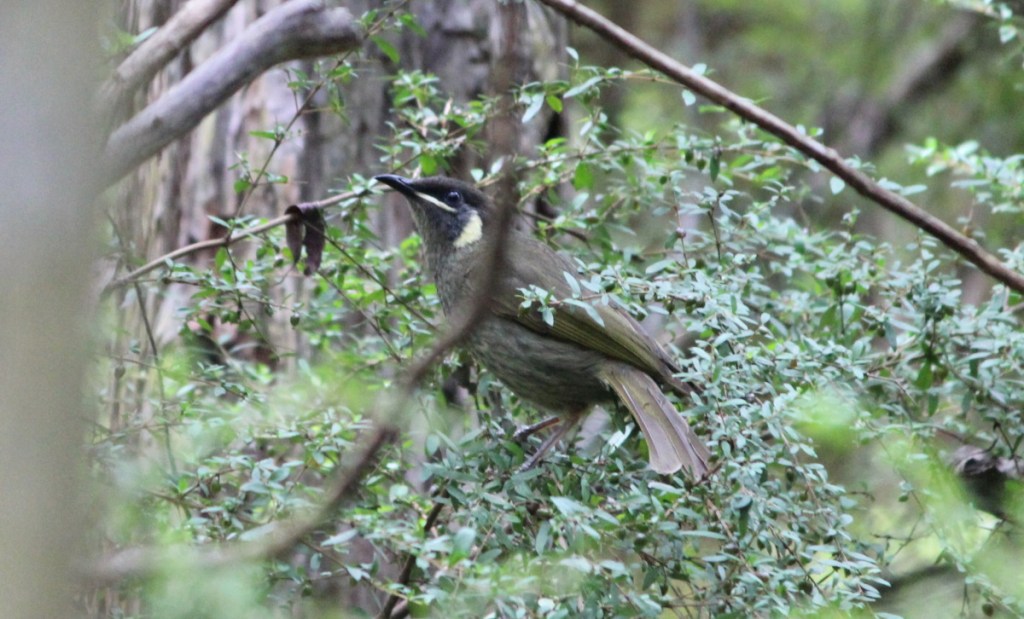
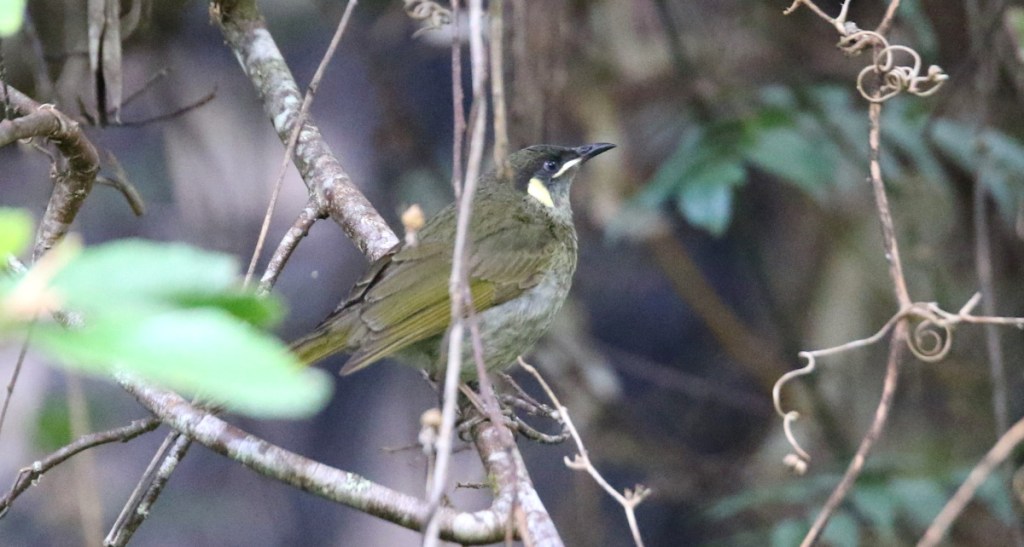
They are more often heard than seen, though, as their dark olive green, grey and yellow plumage blends into the shadows in the damp forests they love. They eat fruits, insects and nectar, and I have seen them licking sap from a wattle. We’d love to hear from you what you’ve seen them eating.
A slightly damp Lewin’s Honeyeater at Mallacoota VIC by Janine Duffy

They live in the Mallacoota area year-round. It is possible that they go higher up the hills in summer, and descend closer to the coast in winter – so you are possibly a bit more likely to see them in Mallacoota in winter. They also like gardens, so some of you lucky people might see them in your backyard.

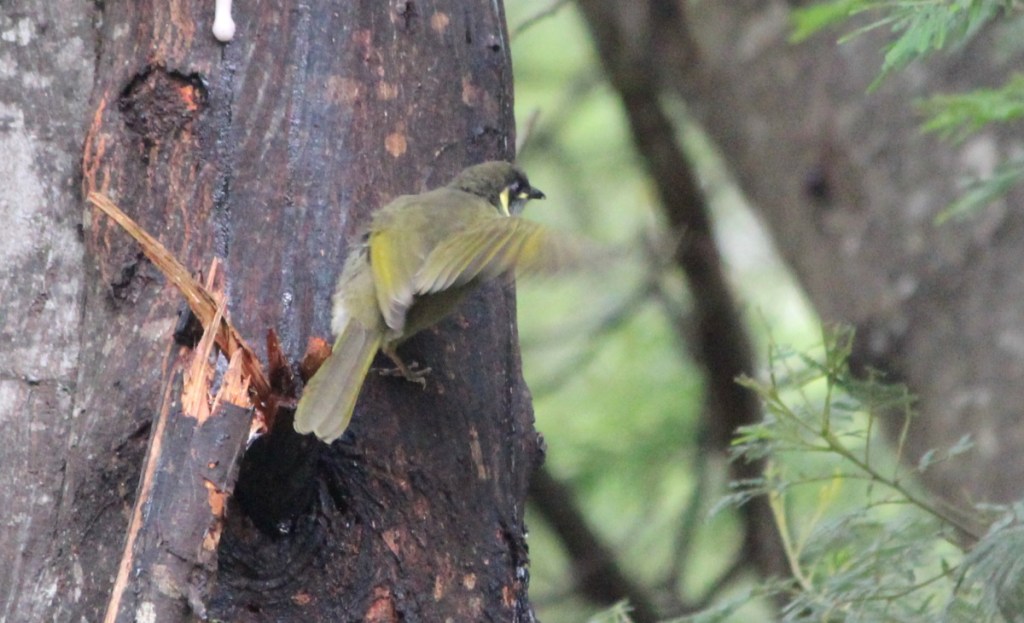
Lewin’s Honeyeater, showing the pale gape, East Gippsland VIC by Janine Duffy

Adult females and males look the same, and have blue eyes. Juveniles have brown eyes, their forehead and face are blackish. All of them, adults included have a fleshy pale gape.

Lewin’s Honeyeater Meliphaga lewinii lewinii Mallacoota
An adult Lewin’s Honeyeater, showing the blue eyes, at Mallacoota VIC by Martin Maderthaner

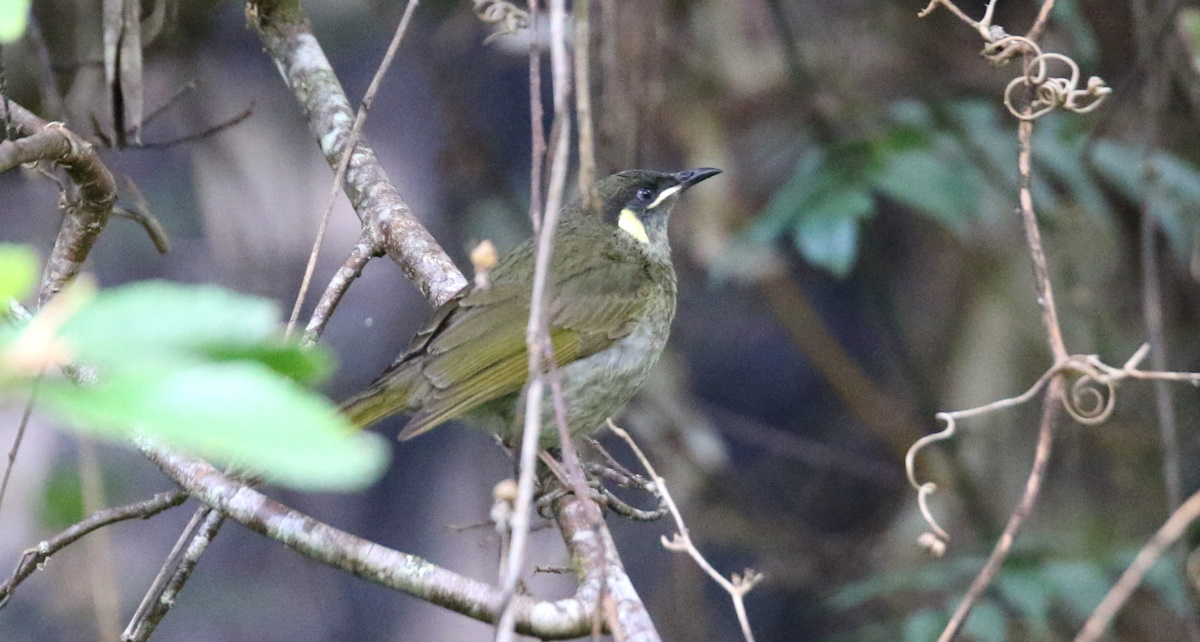
There is really no other bird that looks just like them in Mallacoota. The dark olive colour and yellow crescent on the cheek are super distinctive. Eastern Whipbird has that same dark olive colouring when seen in good light, but they look much darker (adults have a black head & bright white cheek), and even juveniles have a little crest. They are most often near the ground too.

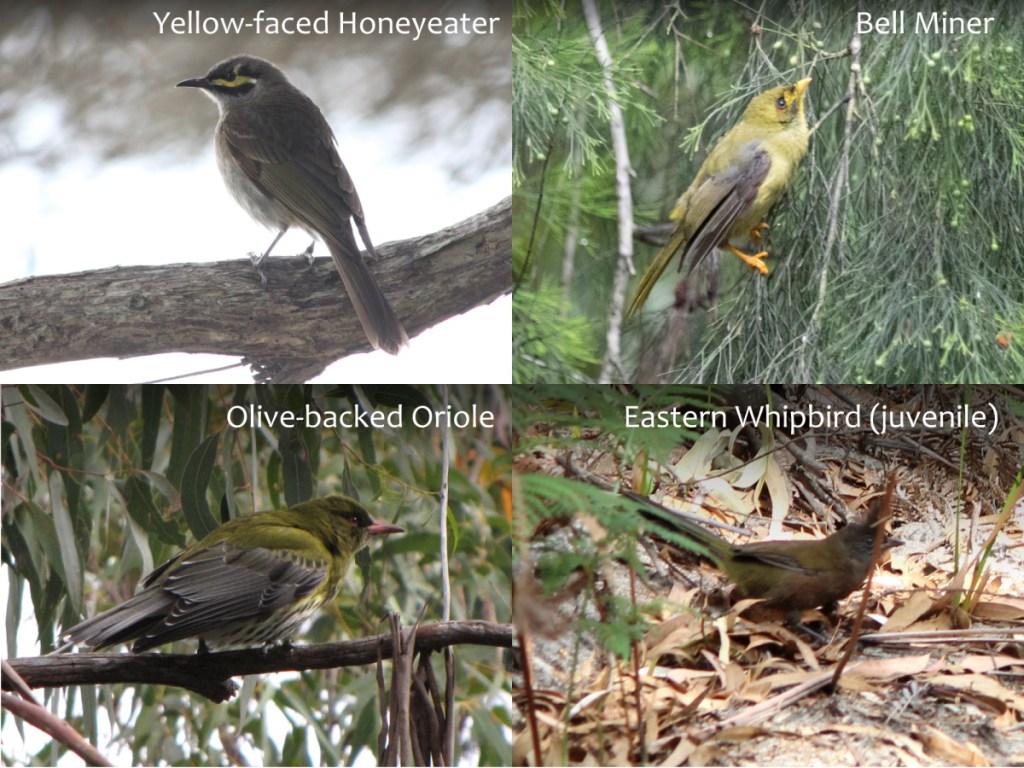
Other greenish birds in Mallacoota, to compare against: Yellow-faced Honeyeater, Bell Miner, Olive-backed Oriole & Eastern Whipbird juv.

Yellow-faced Honeyeater is lighter overall, and the yellow goes from their bill, below the eye and past the cheek. Bell Miners live in similar forests, but have a stubby orange beak and orange legs. Olive-backed Oriole juvenile is bigger, lighter and has a white belly with black streaks. No other bird has that yellow crescent on the cheek.

Lewin’s Honeyeater, Mallacoota VIC by Janine Duffy

Listen to the calls:

Normal call: https://www.xeno-canto.org/244287

High pitched call: https://www.xeno-canto.org/218063

Scolding call: https://www.xeno-canto.org/146117

See some great pics on this site:
https://www.graemechapman.com.au/library/viewphotos.php?c=258&pg=1

Scroll through tonnes of images here: eBird

Learn about them from BirdLife Australia: http://www.birdlife.org.au/bird-profile/lewins-honeyeater

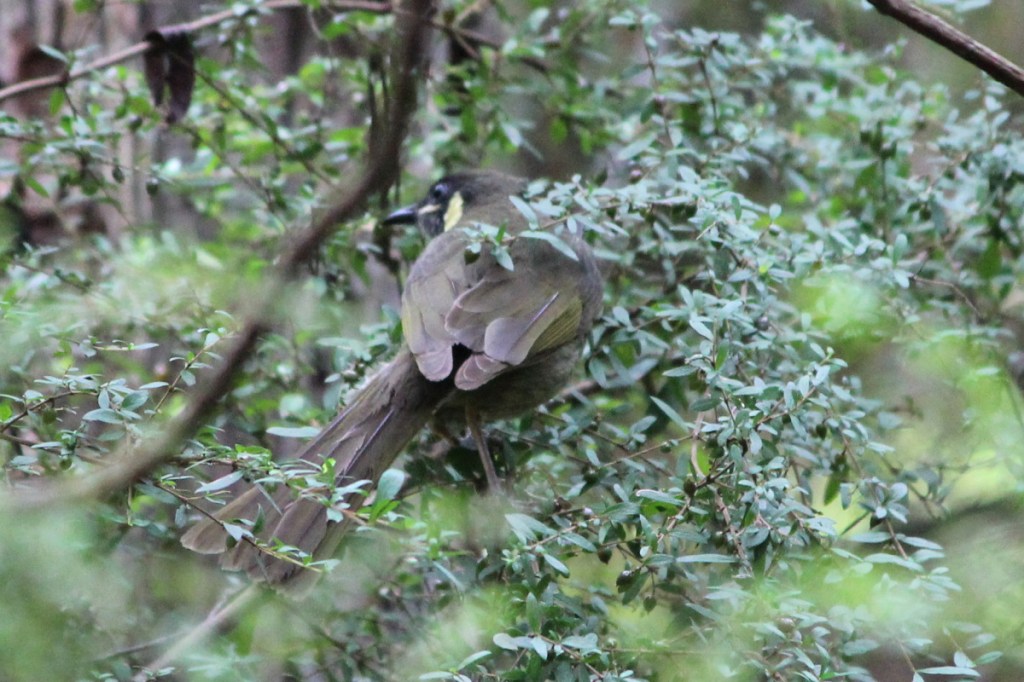
Note the yellow-edged primaries and tail, Lewin’s Honeyeater, Cabbage Tree Creek VIC by Janine Duffy
Another pic showing the yellow-edged primaries, and square-ended tail, Lewin’s Honeyeater, East Gippsland VIC by Janine Duffy

..

Details:

Lewin’s Honeyeater Meliphaga lewinii lewinii

Location: Overall, the species ranges from east of Melbourne to near the tip of Cape York QLD, on the coast side of the Great Divide. Our subspecies lewinii extends to southern Qld.

Conservation status: Considered secure in Victoria.

Lewin’s Honeyeater, Cabbage Tree Creek VIC by Janine Duffy

Mallacoota Pelagic Birds possible March

Birds possible on a Mallacoota Pelagic in March.

This list is based on the two other pelagics from Mallacoota: one in March 2018, another in May 2019; lists from Eden Pelagic 60km to north; and Kiama Pelagics added in, though its 300km to north so therefore quite different.

March 2018 Mallacoota Pelagic list: https://ebird.org/checklist/S43393375 and same day from Dan Ashdown: https://ebird.org/checklist/S46867738

May 2019 Mallacoota Pelagic list: https://ebird.org/checklist/S56674435

https://docs.google.com/spreadsheets/d/e/2PACX-1vT1YMkouio1IKJk0ul3Jm6DZldPu-VEOrrDwPEeX62DWImmktL7HKc5b2USzwngGInaScN9cCOzmy0R/pubhtml


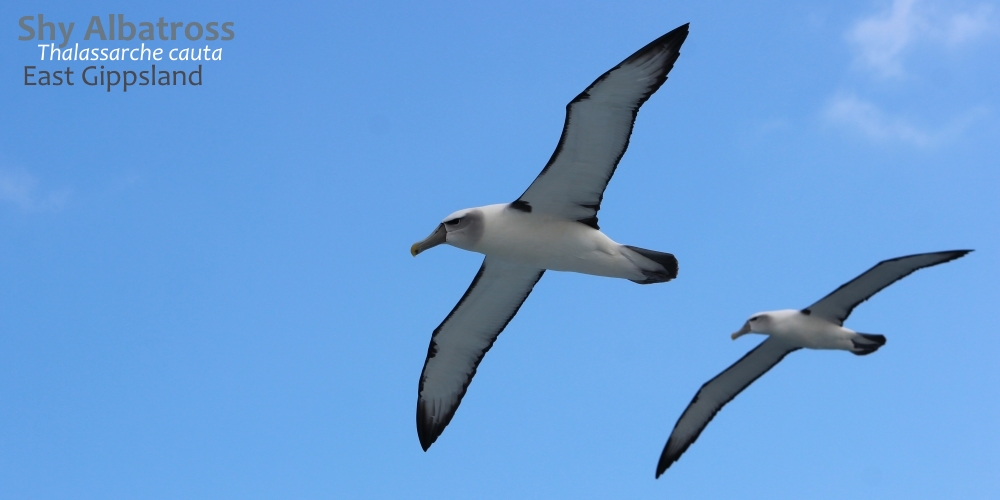
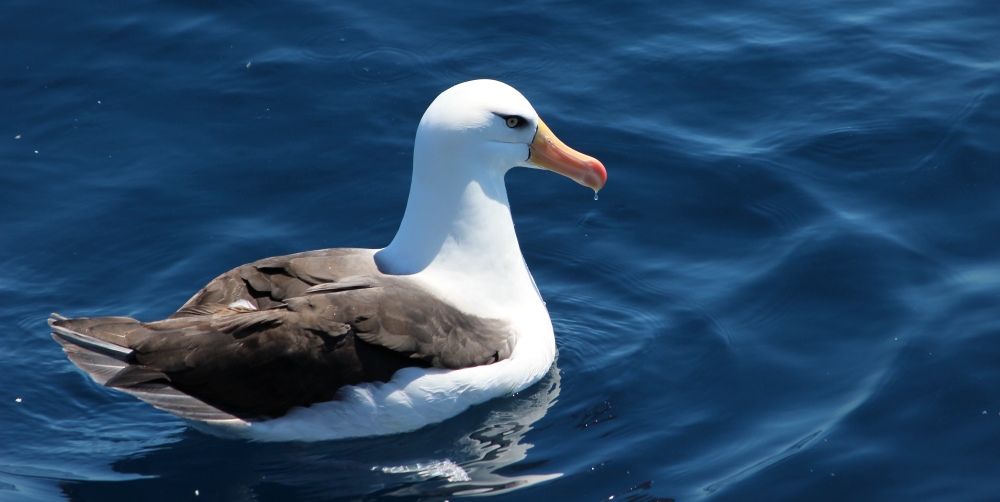
Campbell Albatross
Campbell Albatross off Merimbula

shy-albatross-040318p08lowtext


Mallacoota Area Bird Report: February 2020

Mallacoota Area Bird Report: February 2020

by Martin Butterfield

The big ticket item is that an extraordinary 134 species were observed in the area in February 2020.  This requires a little commentary!

I usually don’t name observers in these reports as a policy of privacy.  However a major factor underlying this month’s report is the eBird lists submitted by Rohan Clarke for 4 – 6 February as a result of his mission with a primary purpose to save Eastern Bristlebirds in the Howe Flat area.

In addition to that species a number of other species which specialise in the heath habitat of the Flat including Ground Parrot and Southern Emuwren were recorded and some birds infrequently recorded in Mallacoota including Brush Bronzewing and Olive Whistler.
On the morning of 6 February Rohan birded in the area around town recording 88 species in ~4 hours.   eBird list

I think that in total he added 42 species to the month list.

Read about why Rohan was here: ABC News Bristlebirds rescued by Chinook

64 species were common to Rohan’s lists and those of other observers.  The others recorded an additional 28 species. These included smaller species (Red-capped Plovers, Red-necked Stints and Little Terns) visible from the ocean shore from Bastion Point and some less common species (including Ruddy Turnstone, White-bellied Cuckooshrike, Grey Goshawk and Emu – from Nauta Tce!) seen around town.

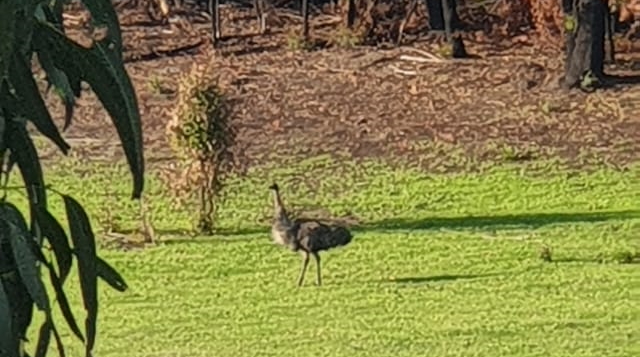
Emu Mallacoota
Emu by Leanne Phillips

That is the good news.  The less-good news is that the birds not tightly linked to water (ducks, waders etc) were largely restricted to the unburnt area in the centre of the town.  The burnt areas of heath and woodland – where able to be assessed – were largely devoid of birds. Thus any analysis of the recovery of birds after the bush fires needs to look closely at a site x site analysis rather than the overall outcome.

By way of example I have driven the area around the airport 3 times this month recording a total of 5 species.  As the area is well endowed with grasshoppers I would have expected a wide range of insectivorous species.

To try to get a handle on the types of birds found more, or less, frequently I have used my set of 14 broad categories again.  5 categories seem worthy of comment.

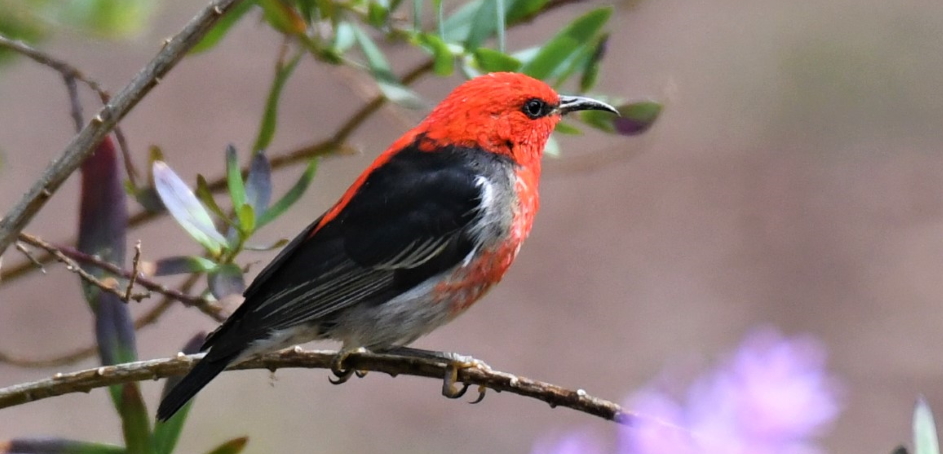
scarlet honeyeater male east gippsland
Scarlet Honeyeater by Rob Clay

It is important to remember that a % distribution is a zero-sum game: if some elements are below normal others must be above.

Looking at the chart above that is a partial explanation for the good result for waders and ducks.  As the Inlet and the ponds at the Mallacoota Recycled Water Treatment Plant were not greatly affected by the fires seeing all the usual suspects at those locations made those categories look better than the other categories which were depressed.

The good result for flycatchers may be a reflection of the fire forcing the birds into town and thus them being more easily observed.  That being said there are some less common species in the list (Olive Whistler, Black-faced Monarch, and Satin Flycatcher).

White-throated Treecreeper on burnt tree Mallacoota
White-throated Treecreeper by Flying Parrot

Of the two categories with particularly poor outcomes it appears that the result for Kingfishers etc is influenced by the almost complete absence of the Cuckoo family.  In past Februaries 6 species have been recorded: this year, none.

Seabirds are a small category in February, but only 1 (Australasian Gannet) of the 6 possible species was reported.  Unlike January this year no flocks of shearwaters were noted inshore.

List of birds seen around Mallacoota post fire February 2020:

Species Australian conservation status
Emu  
Pink-eared Duck  
Black Swan  
Australian Shelduck  
Hardhead  
Australasian Shoveler  
Pacific Black Duck  
Grey Teal  
Chestnut Teal  
Australian Wood Duck  
Hoary-headed Grebe  
White-headed Pigeon  
Spotted Dove Introduced
Wonga Pigeon  
Brush Bronzewing

Common Bronzewing

 
Crested Pigeon  
Topknot Pigeon  
Australian Owlet-nightjar  
White-throated Needletail

Eurasian Coot

 
Australian Pied Oystercatcher  
Sooty Oystercatcher  
Grey Plover Near threatened
Pacific Golden-Plover  
Red-capped Plover  
Double-banded Plover  
Hooded Plover Vulnerable
Masked Lapwing  
Eastern Curlew Critically Endangered
Bar-tailed Godwit  
Ruddy Turnstone Near threatened
Red Knot Endangered
Sharp-tailed Sandpiper  
Red-necked Stint Near threatened
Silver Gull  
Little Tern  
Caspian Tern  
Common Tern  
Crested Tern  
Crested Tern  
Australian Pelican  
Nankeen Night-Heron  
Great Egret  
White-faced Heron  
Little Egret  
Australian White Ibis  
Royal Spoonbill  
Australasian Gannet  
Little Pied Cormorant  
Great Cormorant  
Little Black Cormorant  
Australasian Darter  
Wedge-tailed Eagle  
Spotted Harrier  
Grey Goshawk  
White-bellied Sea-Eagle  
Whistling Kite  
Sooty Owl  
Southern Boobook  
Azure Kingfisher  
Laughing Kookaburra  
Nankeen Kestrel  
Australian Hobby  
Peregrine Falcon  
Yellow-tailed Black-Cockatoo  
Gang-gang Cockatoo  
Galah  
Australian King-Parrot  
Crimson Rosella  
Ground Parrot  
Musk Lorikeet  
Little Lorikeet  
Rainbow Lorikeet  
Superb Lyrebird  
Satin Bowerbird  
White-throated Treecreeper  
Superb Fairywren  
Southern Emuwren  
Eastern Bristlebird Endangered
Scarlet Honeyeater.

Crescent Honeyeater

 
New Holland Honeyeater

White-eared Honeyeater

 
White-naped Honeyeater  
Eastern Spinebill  
White-fronted Chat  
Lewin’s Honeyeater  
Little Wattlebird  
Red Wattlebird  
Yellow-faced Honeyeater  
Bell Miner  
Spotted Pardalote  
Striated Pardalote  
Brown Gerygone  
White-browed Scrubwren  
Striated Thornbill  
Brown Thornbill  
Black-faced Cuckooshrike  
White-bellied Cuckooshrike  
Rufous Whistler  
Golden Whistler  
Grey Shrikethrush  
Eastern Whipbird  
Australasian Figbird   
Pied Currawong  
Australian Magpie  
Grey Butcherbird  
Dusky Woodswallow  
Willie Wagtail  
Rufous Fantail  
Grey Fantail  
Little Raven  
Australian Raven  
Satin Flycatcher  
Magpie-lark  
Black-faced Monarch  
Rose Robin  
Jacky Winter  
Eastern Yellow Robin  
Mistletoebird  
Beautiful Firetail  
Red-browed Finch  
House Sparrow Introduced
Australasian Pipit

Little Grassbird

 
Fairy Martin  
Tree Martin  
Welcome Swallow  
Silvereye  
Common Starling Introduced
Bassian Thrush  
Common Blackbird Introduced


Guidelines for post-fire bird surveys

By Janine Duffy


Surveys and observations of birds after the bushfires of 2020 will be valuable in helping scientists and land managers protect wildlife.

Any observation is valuable.  If you can, submit a list to eBird.org – that is the easiest and best way to get the information into the hands that need it.  If you don’t feel up to that, or if you’re not sure of the names of the birds, post a pic on Mallacoota Birds and others will help.  We will try to keep records of birds posted on facebook.

If you’re not into facebook you are welcome to email photos and notes to me: janine@echidnawalkabout.com.au

Thankyou!

Here’s some guidelines for post fire surveys from eBird:

  1. Once it is safe to do so, we ask the eBird community to stay on paths and roads when conducting post-fire surveys in burnt areas to avoid disturbing habitat in any fire-affected areas.
  2. We encourage you to visit and survey birds at the same locations more than once, e.g. once a week, and use the same method each time, so that we can monitor bird community recovery over time.
  3. We recommend using standard survey protocols. For example, a standard method commonly used in eBird and Birdlife is a 20 minute-2 hectare survey protocol. You can do your eBird survey using this standard protocol by recording birds as you walk along a transect, such as on a path or road, covering a distance of 200 m in 20 minutes time and recording all the birds you see or hear along the way (in an area about 50 m on each side of your transect). Submit this as a ‘Traveling’ list if you are using the eBird phone app (with distance 0.2 km and time 20 minutes), or if submitting from the eBird AU website, you can choose Observation Type ‘Other’ and select ‘Birdlife Australia 20min-2ha survey’ if this is the protocol you used.
  4. We also encourage eBirders to locate and survey vegetation remnants that were not affected the fires, and submit surveys from both burned and unburned areas of (formerly) similar habitat. We want to evaluate recovery by comparing bird community response to these devastating fires in burned and unburned habitat.
  5. We also hope to collaborate with any groups keen on conducting analyses in their own communities, especially in places with eBird lists from before the fires. Contact us at eBirdAustralia@gmail.com to discuss.


Design a site like this with WordPress.com
Get started