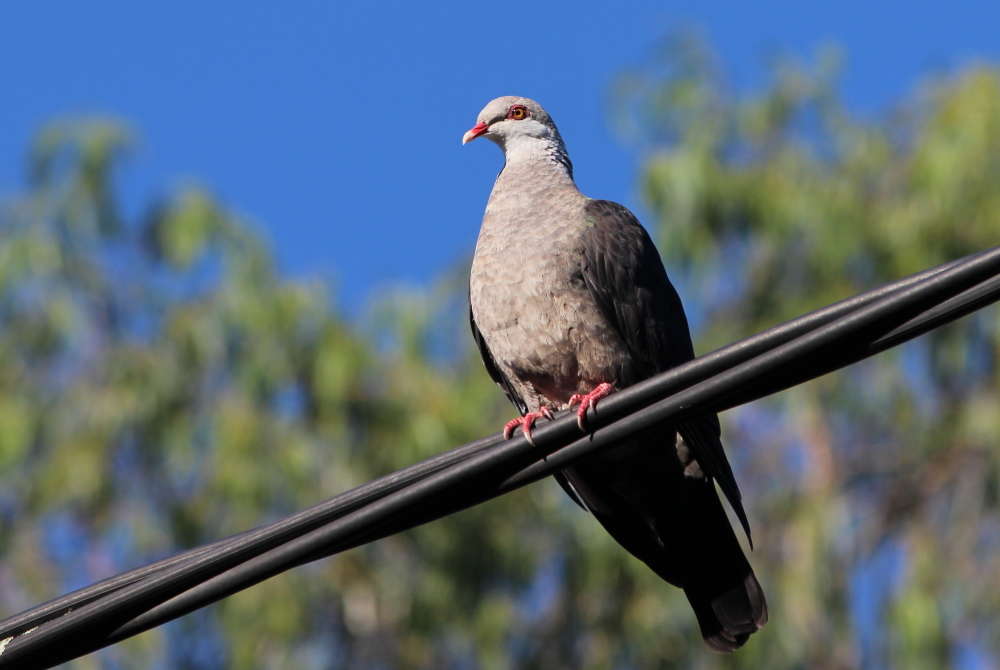
By man-on-the-spot Martin Butterfield, and Janine Duffy
Accessible Birding sites in Mallacoota Feb-March 2020
Basically anywhere you go in Mallacoota that hasn’t been burnt has the potential to give interesting bird observations. The following is a list of sites known to the author with commentary as to their status post bush fire. The sites are grouped into north (town & Karbeethong) and south, with map for each area, and overall map at bottom. Geo-coordinates – mainly of the areas to park – are given for those who use GPS for navigation.
The large trees in the main street and the parkland (Lions Park) around ‘The Muddie’ and the Skate Park can be good sites for three species of lorikeet as well as the local hotspot for Australian Figbird. A flock of Little Lorikeets were resident before the fire but seem to have moved on.
The big extended roundabout in town (with the Caltex on the corner) has some large trees which Aust Figbirds have been seen in.
Some trees beside the bakery (opposite the main wharf -37.555; 149.757) are reliable for Nankeen Night Heron (hint: whitewash!)
The main wharf is reliable for Australian Pelicans, and check islands for roosting gulls, terns, oystercatchers and ducks.
Dorron Avenue has some beautiful Crimson Bottlebrush which Scarlet Honeyeaters love to feed on when flowering. Read how Scarlet Honeyeater observations have grown over the years in Mallacoota here.
There’s a fruitful spot just north of the junction of Lakeside Dr, Bruce St & Buckland Dr (-37.5568,149.75326) which has been great for birds in the past. There’s a small memorial plaque on the roadside and a carpark.
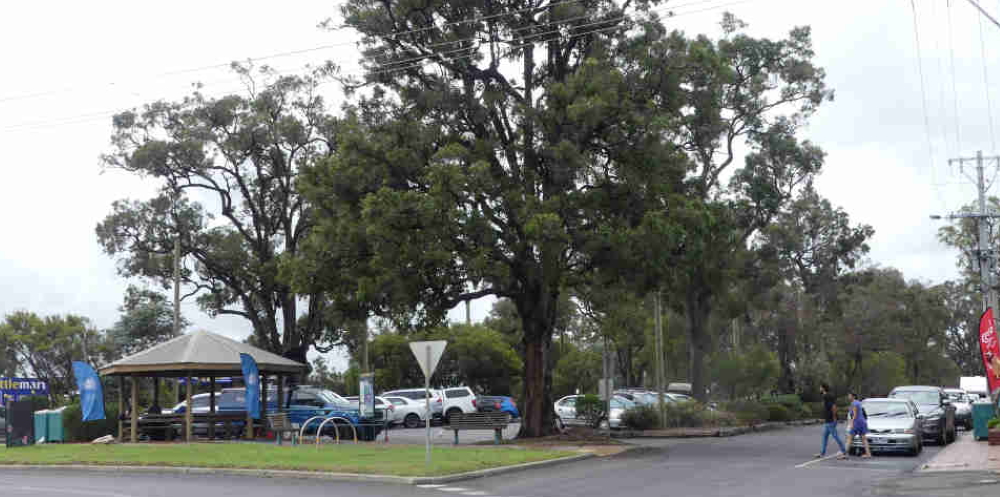
-37.558, 149.756
..
Captain Stevenson’s Point
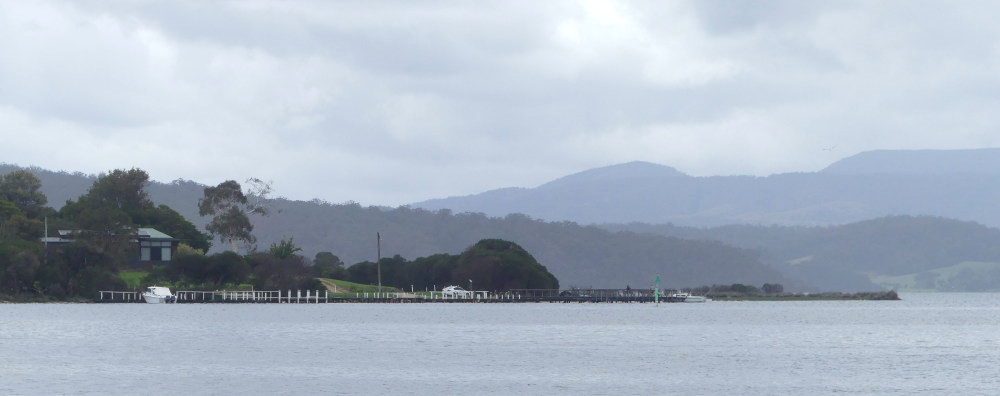
A great headland to look over the mouth of Mallacoota Inlet (currently closed by a sand bar) and into Bottom Lake. Several vantage points. A scope is helpful.
Waders: Eastern Curlew are a Summer special; Bar-tailed Godwit and Red Knot have been present in large numbers this year; Red-necked Stint, Double-banded Plover, Sharp-tailed & Curlew Sandpiper. Occasional Grey Plover and Pacific Golden Plover seen.
Terns: at least 7 species have been recorded in the last 6 months and Crested; Caspian and Little should be expected at any time;
Cormorants: 5 species possible (Great, Little Black and Little Pied every visit)
Gulls: Silver and Pacific
-37.559; 149.762
..
Mallacoota Foreshore Camping Reserve
Undamaged by fire although it approached the western edge of the Reserve.
This area has woodland/forest on the edges and a good range of mature trees between the sites. The park around ‘The Muddie’ (Mudbrick Community Centre) has mature trees mostly unaffected. This area has always been very good for birds. Recent highlights have included Glossy Black-Cockatoos feeding on Casuarinas and a Common Cicadabird calling from the singed woodland on the Western edge.
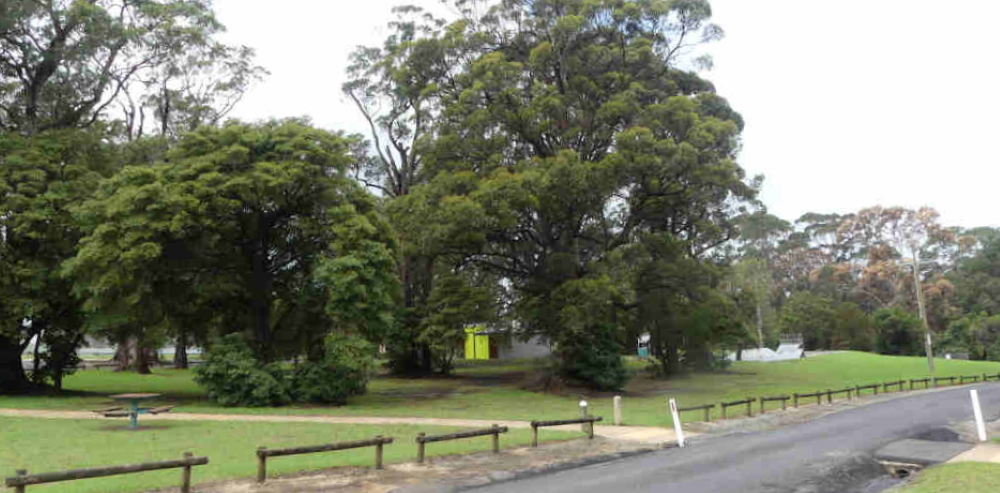
..
Bastion Point
Walking south towards (and past) the breakwater/boat ramp the rocks are good sites for Eastern Reef Egret and Sooty Oystercatcher. Tip Beach (ocean beach west of the point) can offer sightings of shearwaters (mainly in Summer) and gannets.
Going north along Big Beach takes you to the sand bars visible from Captain Stevenson’s Point. As well as all the species listed under that site Red-necked Stint and Red-capped Plover are easily found with Hooded Plover possible year round and the first Double-banded Plover likely to have migrated in. (It is possible to extend the walk along the Big Beach as far as your interest and fitness allow. If this done a fresh checklist should be started as any birds observed in that area – either on the beach or in the bush – would be of particular interest.)
-37.569, 149.762
..
Mallacoota Main Wharf to Broome St around Coull’s Inlet
Wharf (-37.554; 149.757) to Broome St (-37.549: 149.757).
This is mainly on a designated mixed use path and 2 small stretches of road walking are needed as boardwalks were burnt out. Gives good views over the waters of Coull’s Inlet where several large wading species (White-faced Heron; Australian White Ibis. Great Egret are possible). The area from Shady Gully onwards, while fire damaged, is a good site for Azure Kingfisher. The vegetation near Broome St can have a range of bush birds and Beautiful Firetail have been occasionally recorded there. The Lagoon can have large numbers of Teal and the resident flock of Royal Spoonbills (see next entry).
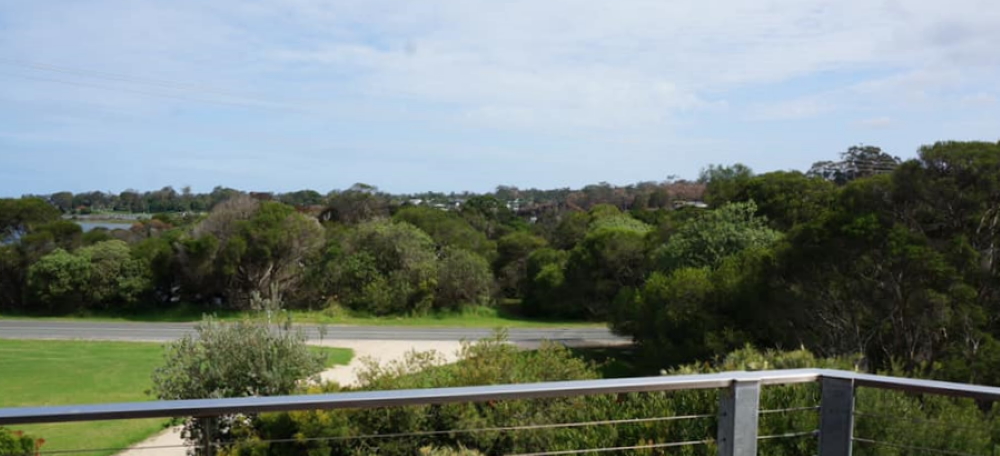
..
Broome St Lagoon
Visible from a boardwalk over the water (access from Lakeside Dr near Broome St), this partly-hidden lagoon is a popular refuge for waterbirds. Many species seem to roost here overnight, so could be seen in early morning and late evening. In addition, many bush birds come to this site for a drink and a wash, including White-headed Pigeons.
Some of the roosting birds can’t be seen from the boardwalk, so walk along Lakeside Drive to the west (towards town) until you see a break in the paperbarks. Please don’t walk in, you will scare the birds, just look through the vegetation.
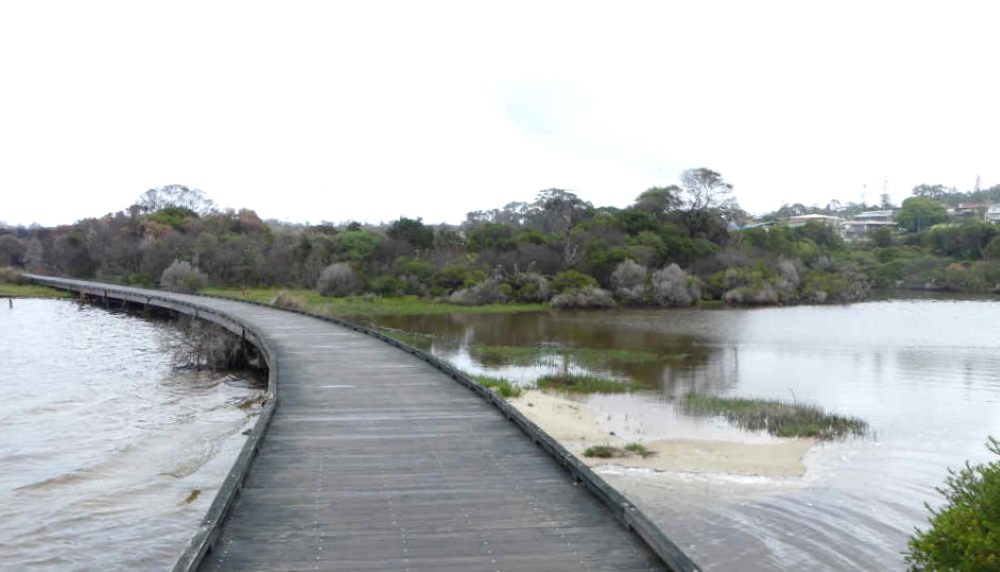
-37.549378, 149.755806
..
Radley Place to Lakeside Drive via Hodson St bush
This was one of my favourite walks before the fire, and its not burnt. Start wherever you can safely park on Raheen Drive or Radley Place, take a look at the huge fig tree at 13 Radley Pl. This tree has hosted many Satin Bowerbirds, Topknot Pigeons & Australian Figbirds when in fruit. Please be respectful of the home owners and don’t invade their privacy.
See an eBird lists from this area in March 2018, morning: https://ebird.org/checklist/S43599998 and evening: https://ebird.org/checklist/S43599758
From the fig tree looking downhill towards the Inlet you will see a path leading through a small grassy park at the back of homes. Have a good look in trees here – there’s lots of natives, and also many garden plants & fruit trees. Walk along west, then north towards an area of thick bush. This little patch seems to be an important overnight roost for White-headed Pigeons. I’ve also seen juvenile figbirds in here. The lower part of the bush is public land, but further up to the west it becomes private land. Its easy to tell.
Eventually you can walk out of the bush to the Broome St Lagoon. There is a tiny carpark here and a substation at -37.548934, 149.755279. This is an alternative start point.
..
Karbeethong
This area could be approached by parking at the gravel turn-out on Lakeside Drive, walking past the rainforest of Mullet Creek (somewhat accessible from the bottom of Karbeethong Avenue) and walking along Lakeside Drive to the parking lot past Bucklands Boat Hire (about 3km return). Again Azure Kingfisher is possible. Karbeethong is the hotspot for White-headed Pigeons and Rose Robin is often heard – less frequently seen – in the bush on the inland side of Lakeside Dr. At the Bucklands parking area check the Pittosporums for Nankeen Night Heron.
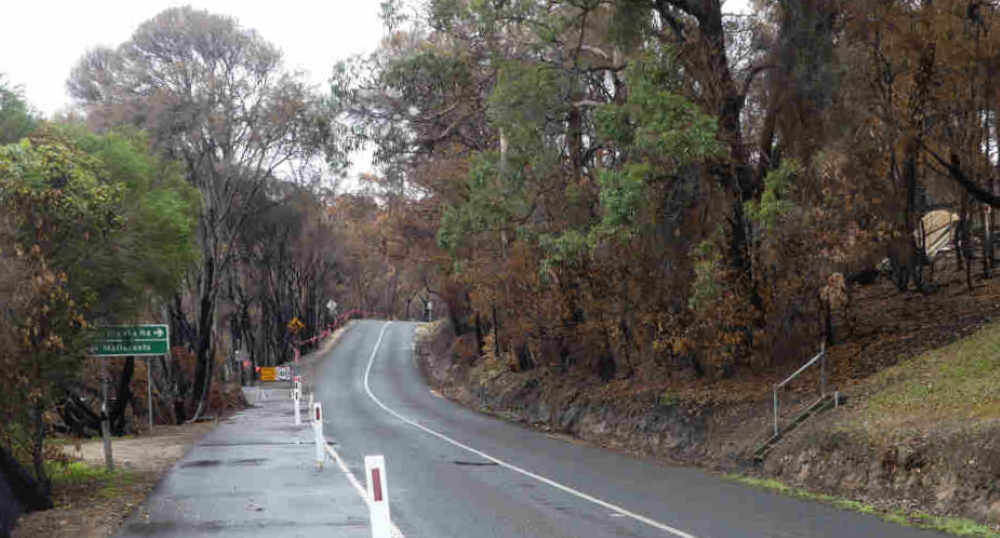
Shady Gully is closed due to fire damage. Mullet Creek and Two Mile creek are unburnt but access is limited. A small patch is at the bottom of Angophora Drive (-37.544 149.755) but be aware of nearby private property. The area can have Superb Lyrebirds, Satin Bowerbirds and Common Bronzewings.
Any unburnt patch of forest along Lakeside Drive is worth a look.
..
Mallacoota Wastewater Treatment Plant
While the surrounding area was burnt the ponds were not damaged. To avoid damage to the roads and particularly the banks of the ponds people should park at the entrance on Watertrust Rd (see map) and walk in the 500m. East Gippsland Water have been extremely good in allowing access to this facility and we must respect their property. The main attraction is large numbers of ducks and other waterbirds. Maximum counts are Grey Teal 1300; Hardhead 600; Hoary-headed Grebe 350; Eurasian Coot 340; Pink-eared Duck 142. Less common ducks reported occasionally include Australian Shoveler, Musk Duck, Blue-billed Duck and Freckled Duck.
-37.5635, 149.728
..
SOUTH OF TOWN:
..
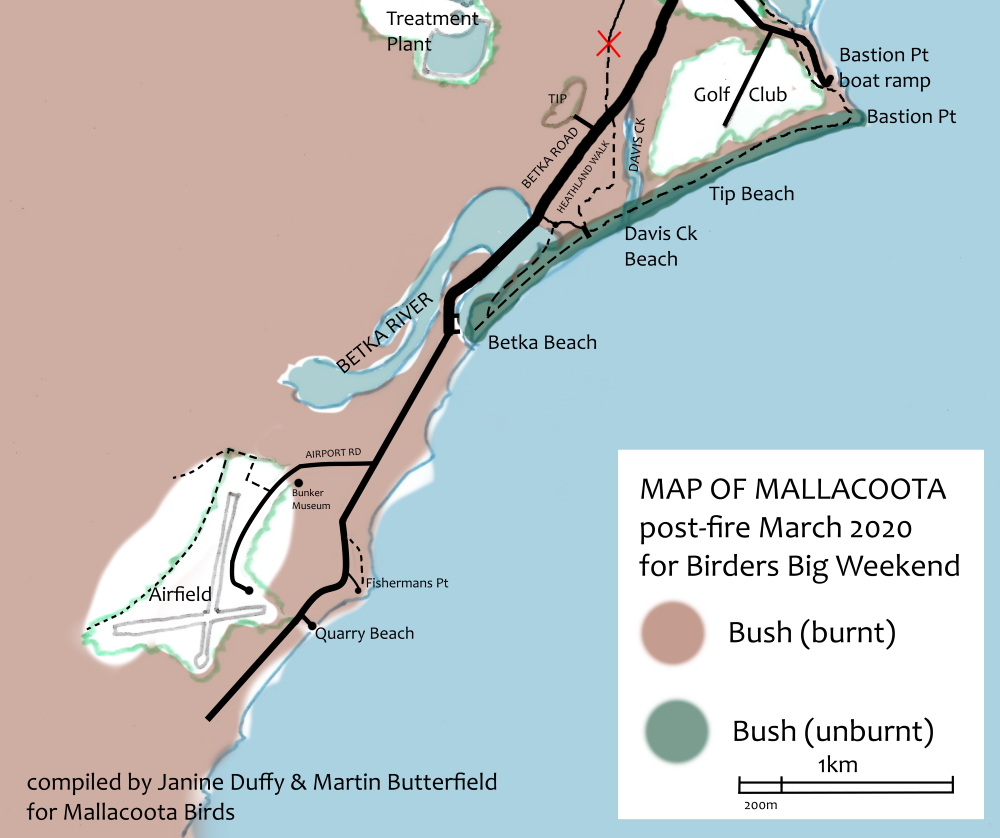
Turn off Betka Rd to south, just before the bridge. There’s a very short track to a small carpark. Again 2 options.
On leaving the carpark go towards the sea and down the steps to the beach. Turn right (west) and walk about 1km towards the mouth of the Betka River. Waders and seabirds are possible along the way. Stop at the end of the dune and scan the area around the (closed) mouth for Hooded Plovers and check the Terns for anything uncommon. Go back about 100m before the end of the dune and take the sandy track through the dunes. See map. A bit burnt in some spots but could be common bush birds. About half way back look at a dead tree in the water: usually roosting cormorants and the local hotspot for Australian Darter. Go back though the melaleucas to the carpark.
From the car park turn right (south-west? MB?) towards an area of heath. I expect it to have been burnt but it might be interesting to see what is there. The track enters woodland which I expect to be impassable.
-37.579, 149.746
..
Mallacoota Airfield and Gun Club Track
This area has, in my experience before the fires, been very variable. The heath and Casuarinas were burnt and since the fires I have seen very few birds there. It might be worth a drive early in the morning but no guarantees. In past Tawny-crowned Honeyeaters and Jacky Winters could be seen here.
Park in the open gravel area opposite the road to the bunker museum. You can walk along a track to the west and around the fenceline of the airport. See map.
-37.594, 149.720
..
Fisherman’s Point
Follow Betka Rd past the estuary and it turns to gravel. About 1 km further a road to the left (south) leads to a parking area where a short track gives access to a lookout over the ocean. If the wind is strong this can be productive for pelagic species blown inshore. Telescope highly recommended.
-37.598, 149.731
Mallacoota Coastal Walk.
Much of this track is closed due to fire damage. However it might be possible to make an assessment of the returning birds by walking along the shoulder of Betka Rd from the entrance to the tip to the turn off to Davis Beach. Note: no guarantees are offered of observing any birds.
..
Loch Ard cruise:
This is a commercial operation and very good value and may be of interest to participants. If a cruise is offered on the Sunday it would start at the Wharf and could give access to areas of the Inlet not otherwise available including the Goodwin Sands in the middle of Bottom Lake or up the Narrows. The operator (Dale) is keen on birds and I think will guarantee close views of White-bellied Sea Eagles.
 Mallacoota Birds