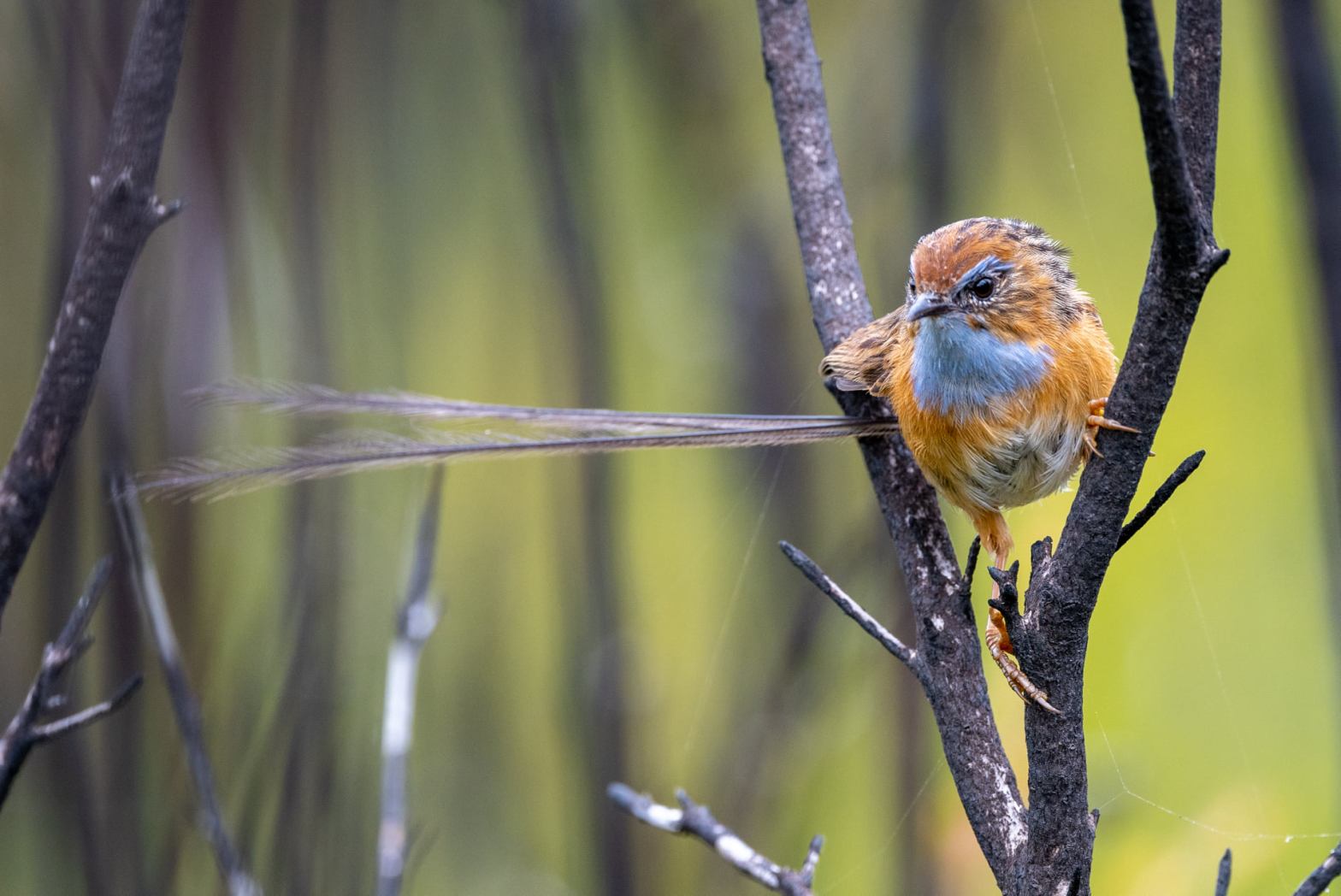
Bird of the Week: Southern Emu-wren 26 March 2021
Years ago, at Double Creek near Mallacoota I saw my first Southern Emu-wren. I remember thinking “I reckon I’ve become a birder now”.
Some Australian birds are not generally noticed by the public. They are hard to see, secretive, live in remote locations, or look superficially like another bird. The Southern Emu-wren is all of those – small, quiet, living in boggy saltmarshes and impenetrable heaths in coastal Australia. If you saw one as a passerby you might have passed it off as a female Superb Fairywren. True, it looked a bit more orange, and the tail seemed overlong, but it was so brief….
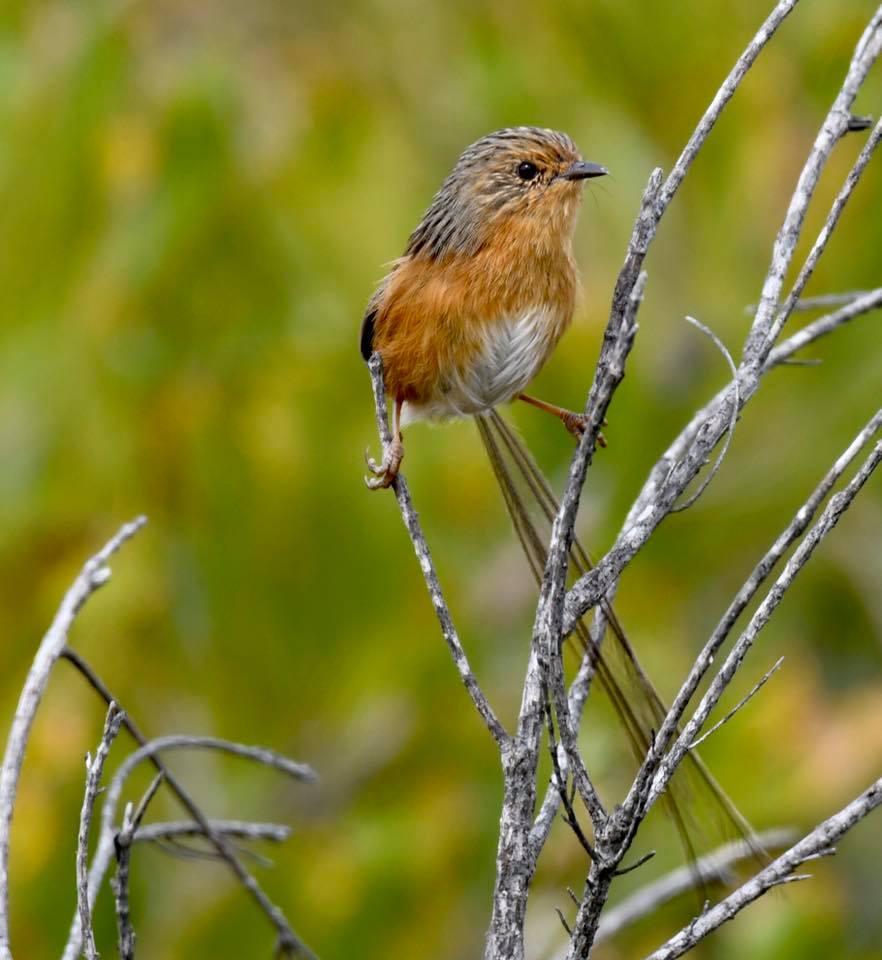
It takes good eyes, fast action on binoculars or a close view to see the stunning details of this beauty. Luckily we have superb photographers in our midst to capture the details.
Read Craig Boase’s blog about how hard they are to photograph: https://wildsoutheast.wordpress.com/2017/06/10/southern-emu-wren/
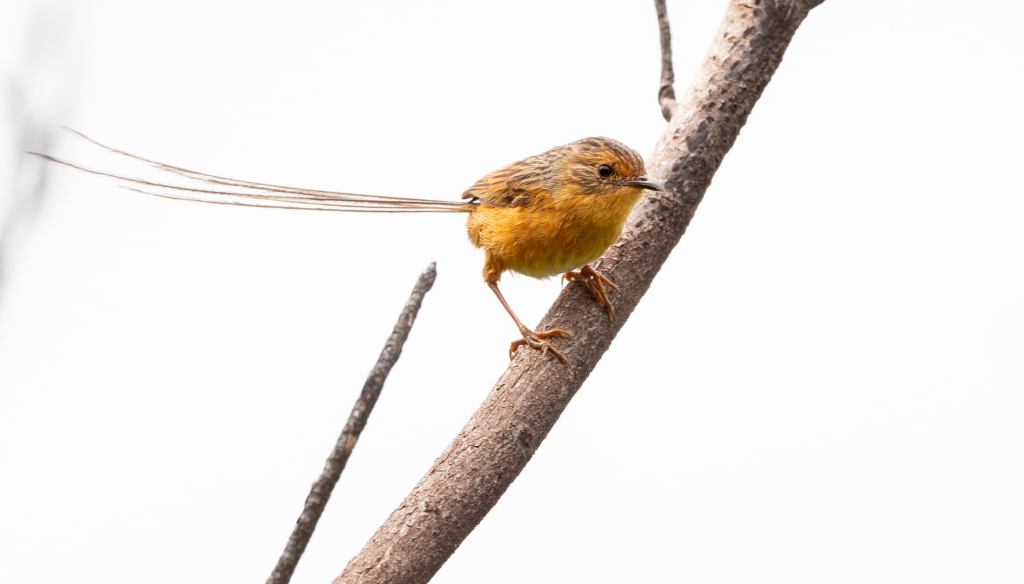
The tail fascinates me. Why is it so long? Why is it so widely-branched, like an emu feather? Why does it have only six feathers? Why, why, why?
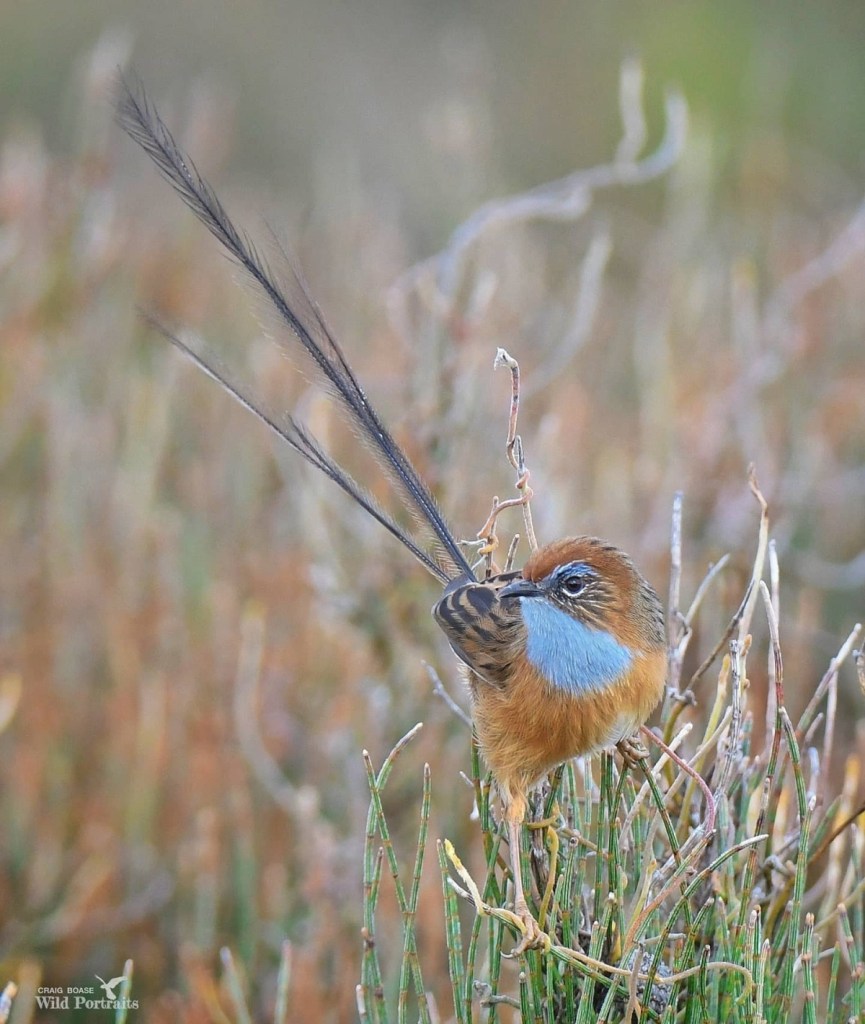
Many birds around the world have ridiculously long tails, and some of them only retain them – at length – for breeding season impact. Check out the Long-tailed Widowbird of southern Africa. It’s mostly (only?) males that do that. But both female and male Southern Emu-wren have the long tails, and at all times of year.
Most birds have 12 tail feathers, but as few as 6 and as many as 32 are known to occur. So the Southern Emu-wren is one of those with the fewest tail feathers of any bird. Read more about bird’s tails: https://www.birdwatchingdaily.com/beginners/birding-faq/numbers-tail-feathers/
Tails are important for flight, but not critical – we’ve all seen birds flying without tails. Feathers don’t weigh much, so a long tail is not weighing them down as much as you might think, but the Southern Emu-wren only weighs 6 – 9g, so any extra weight could be costly. There is probably some extra drag from such a long tail too, which makes flying less easy. The webs don’t mesh together either, which means the tail is not an aerodynamic asset at all.
Surely the tail has a purpose.
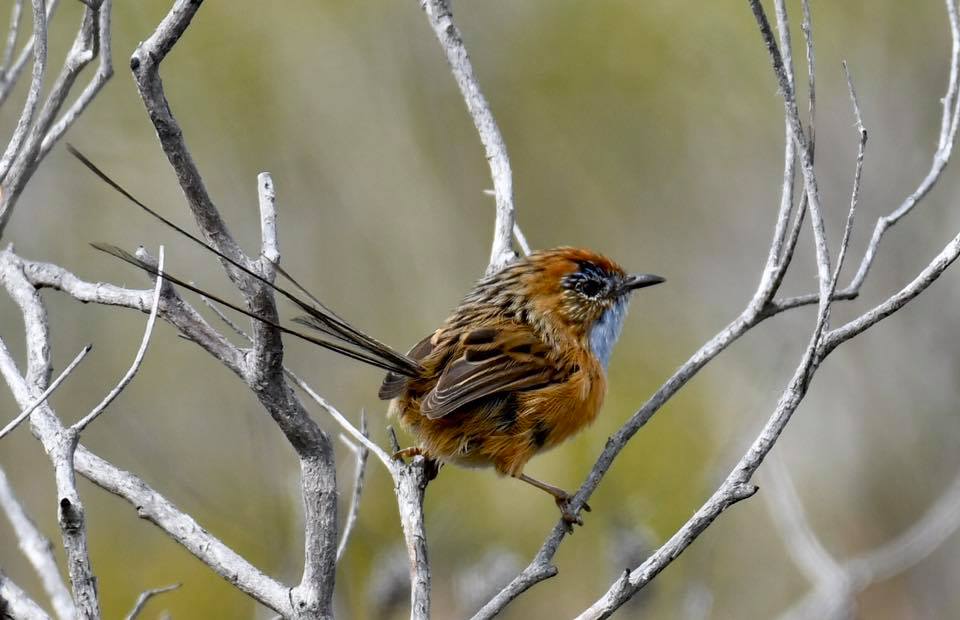
It is often mentioned that Southern Emu-wrens run like a mouse along the ground. Could the long, thin, soft tail be mimicking a mammal tail? If so, what is the advantage? Bird predator overlooks perceived mammal? Mammal predator misjudges defensive action by bird-appearing-to-be-mammal?
If anyone has any answers, I’d love to hear them!
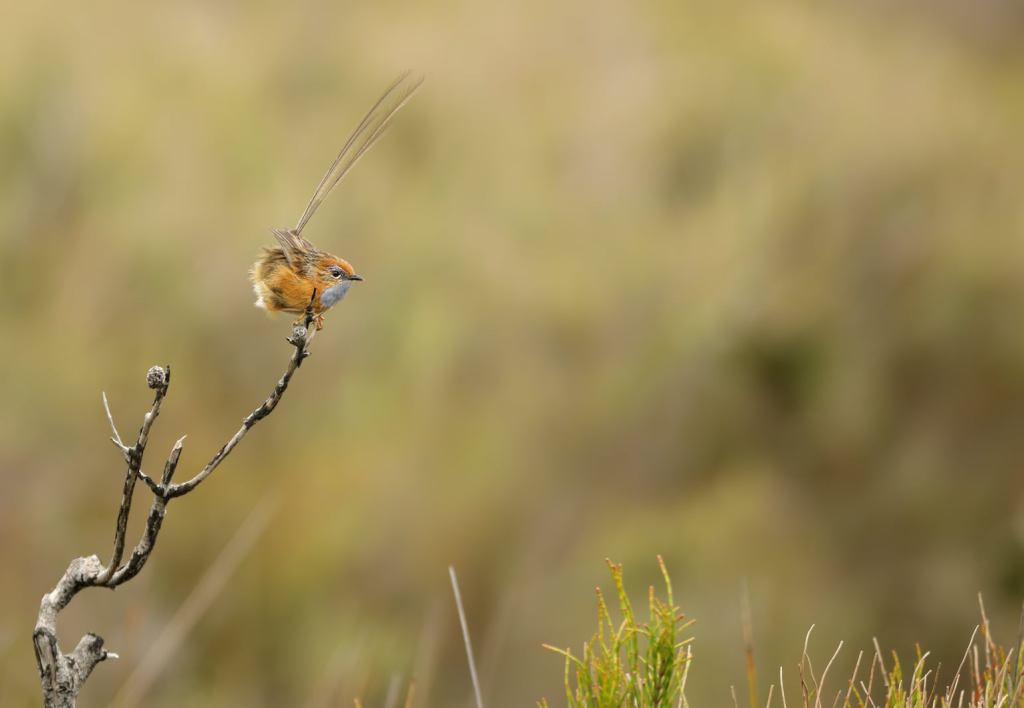
Adult males have a sky blue throat and chin, and some blue above the eye. Below their eye they have a white half ring highlight. Rich orange forehead, mostly unstreaked. Black bill, pinkish-orange legs. Breast and underbody mostly orange, but with a white belly. Even juvenile males show some blue from a very young age.
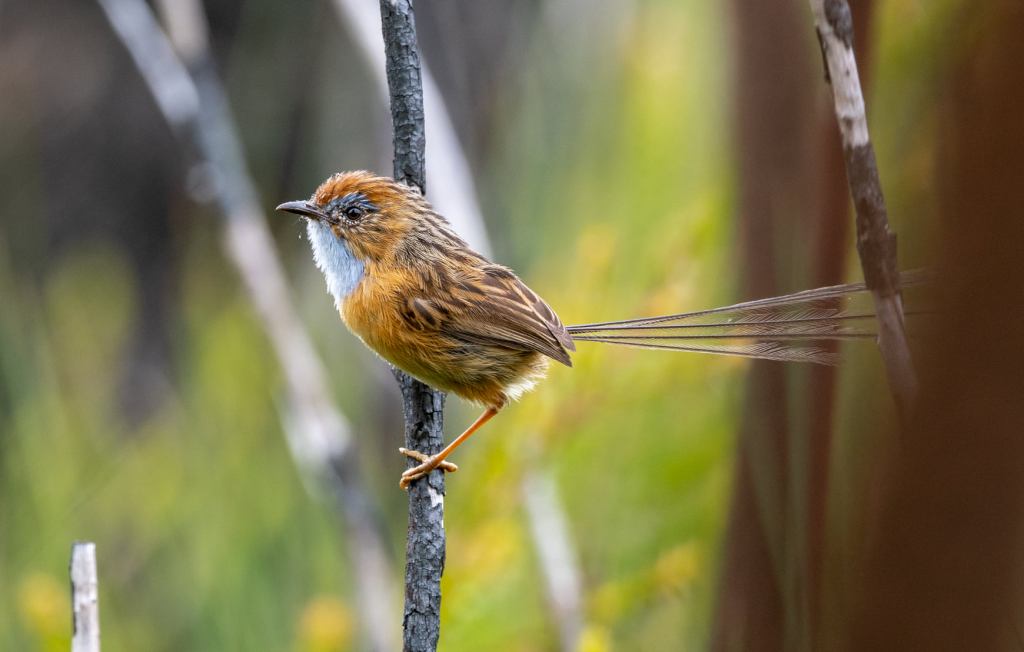
Adult females have an orange throat, breast and flanks and white belly patch. Ear coverts (feathers behind the eye) streaked with white, and rufous eyebrow.
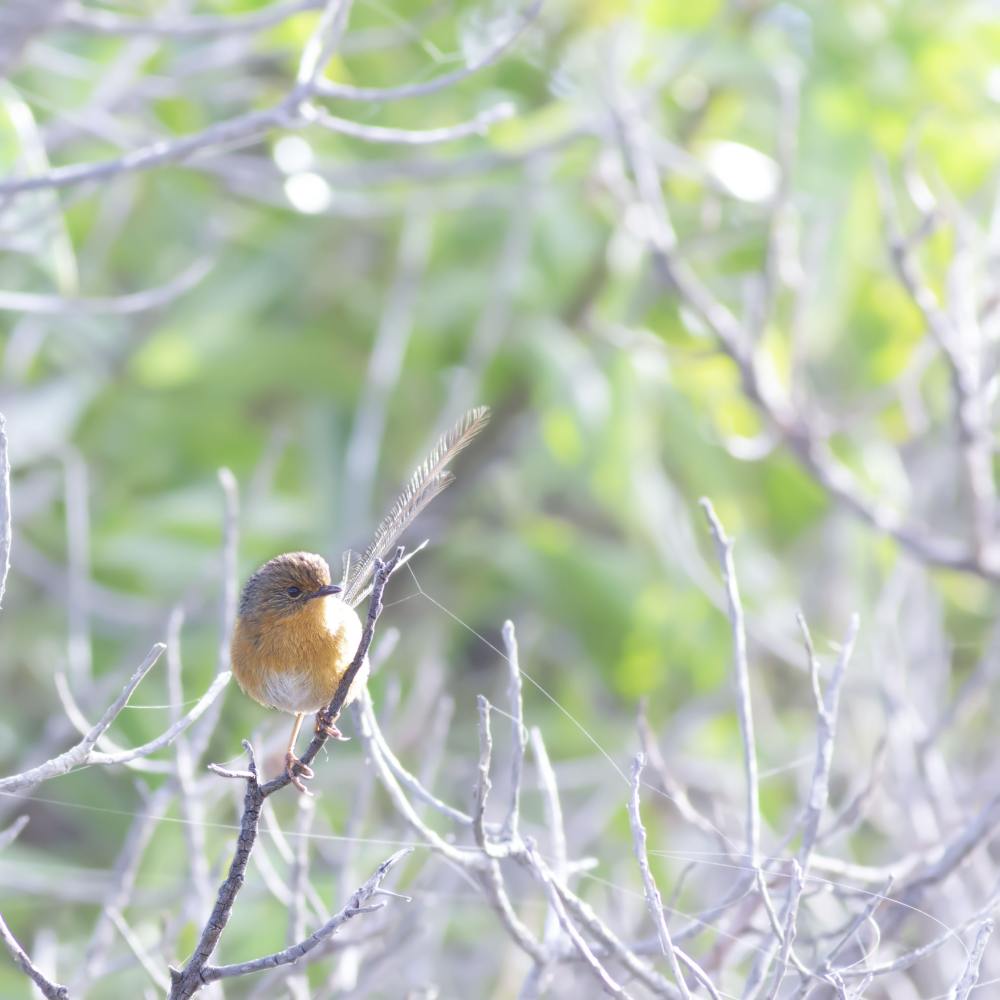
Juveniles like females or dull males except that they lack the streaked ear coverts and rufous eyebrow.
LISTEN TO THE CALLS & Scroll through to see lots of great pics here: https://ebird.org/species/souemu1?siteLanguage=en_AU
Details: Southern Emu-wren Stipiturus malachurus malachurus. 8 subspecies – our ssp. malachurus occurs from southern Qld to the Otways west of Melbourne.
Location: coastal south-eastern and south-western Australia, including VIC, TAS, NSW, southern QLD, SA & WA
Conservation status/learn more: https://www.birdlife.org.au/bird-profile/southern-emu-wren
Thanks to Rob Clay, Jess Waaleboer, Craig Boase and Tim Van Leeuwen for your wonderful pics and information.
 Mallacoota Birds
Great article and images. Thanks
LikeLike